⏱ 15 min read
📄 #2,806 words
Learn how often commercial buildings need floor maintenance. Get specific schedules for VCT, carpet, tile, and stone floors by facility type and traffic level.
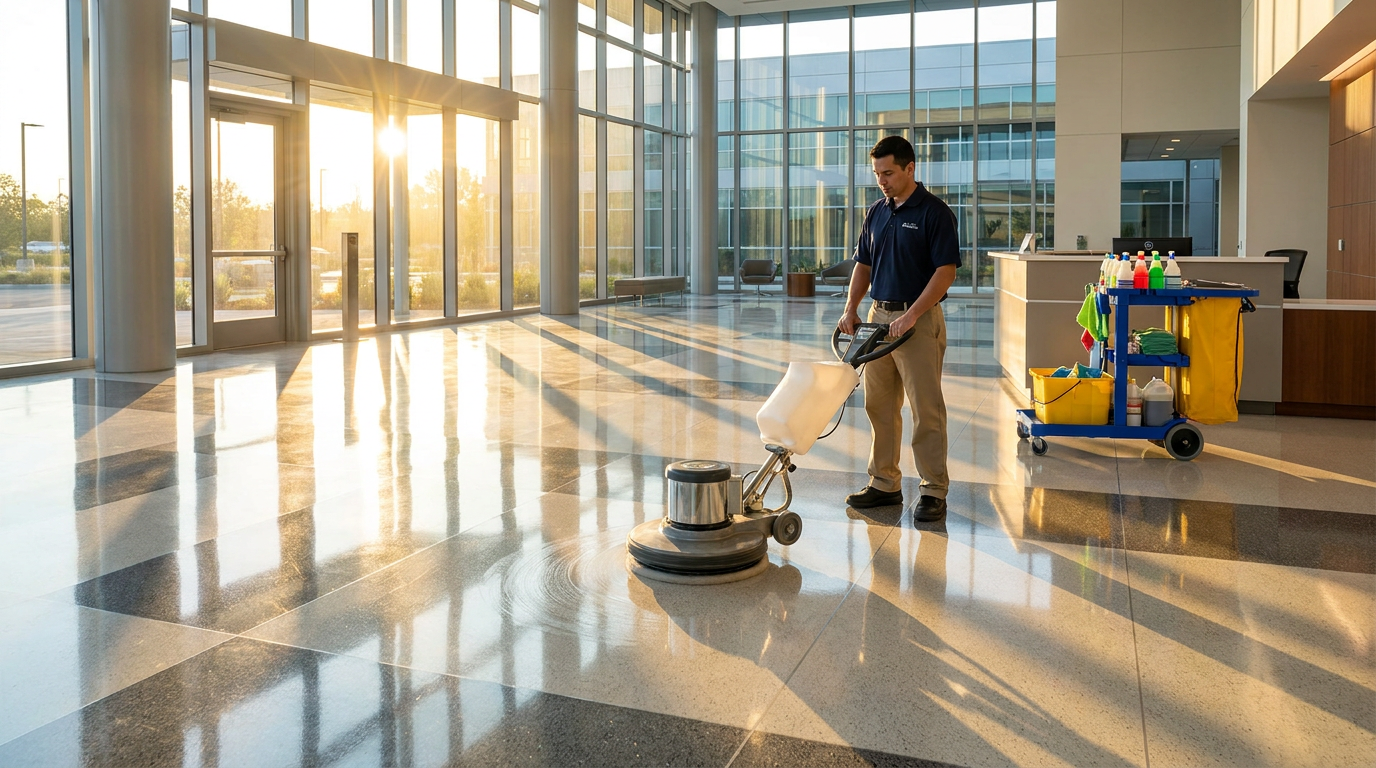
Commercial buildings should schedule floor maintenance on a layered cadence: daily cleaning for routine soil removal, weekly to monthly deep cleaning, and quarterly to annual restorative services like stripping, waxing, or polishing. The exact frequency depends on floor type, foot traffic volume, and industry requirements.
Key Points:
- VCT floors need stripping and waxing every 6 to 18 months depending on traffic levels
- Commercial carpets require professional cleaning every 3 to 12 months based on foot traffic
- High-traffic areas like lobbies and entrances may need restorative services 2 to 3 times more often than standard spaces
- Healthcare and food service facilities typically require 30% to 50% more frequent maintenance than standard offices
- Proper daily maintenance extends time between costly restorative services by 25% to 40%
Understanding the Three-Tier Floor Maintenance System
Professional floor maintenance operates on three distinct tiers that work together to protect your investment. According to Reliable Floor Care’s commercial maintenance guide, facilities that follow this tiered approach reduce total floor care costs by 20% to 35% compared to reactive maintenance alone.
The first tier involves daily cleaning tasks like dust mopping, spot cleaning, and removing debris before it scratches or embeds into floor surfaces. The second tier covers weekly to monthly services including auto-scrubbing, buffing, and targeted deep cleaning. The third tier addresses quarterly to annual restorative work such as stripping, waxing, carpet extraction, and stone polishing.
Each tier serves a specific purpose. Daily maintenance prevents 80% of floor damage caused by tracked-in grit and moisture. Periodic deep cleaning removes embedded soils that daily cleaning cannot address. Restorative services rebuild protective coatings and restore appearance when wear becomes visible.
Floor Maintenance Frequency by Surface Type
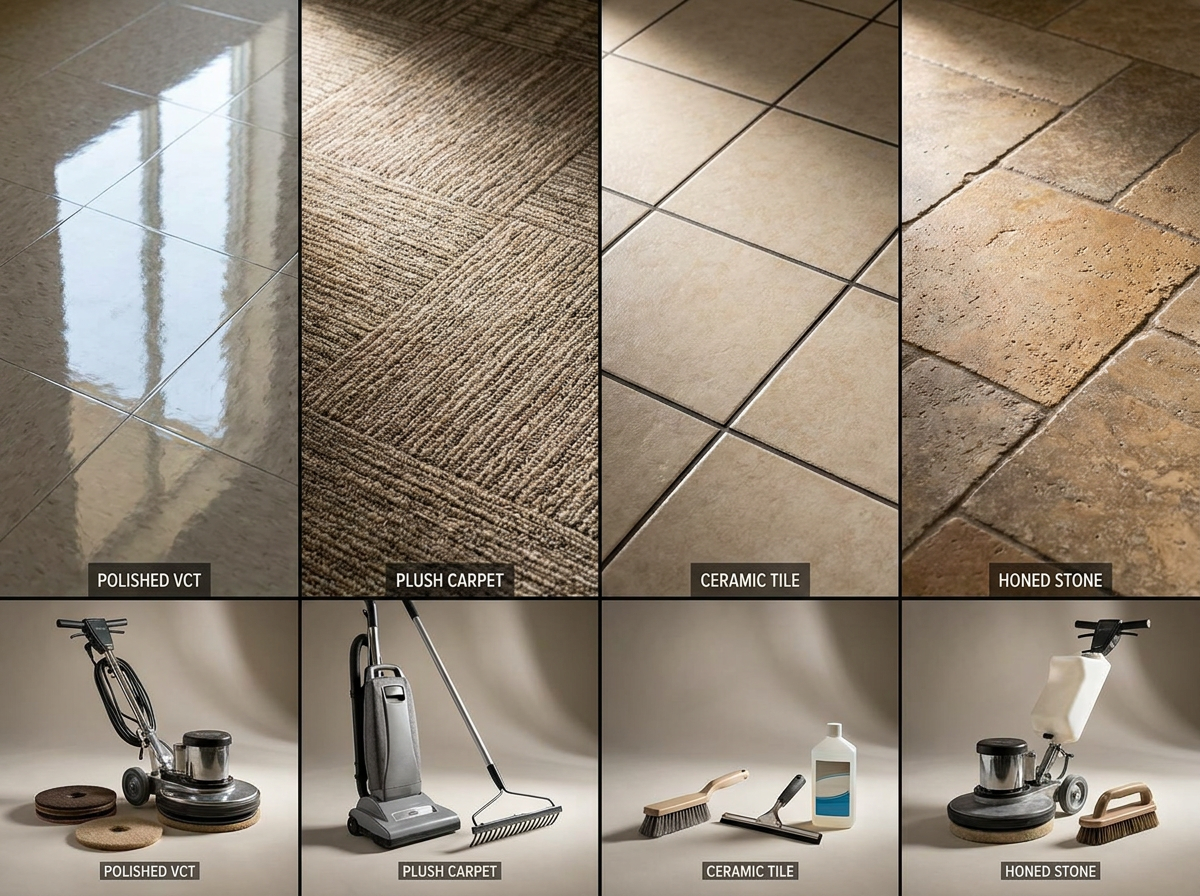
Different flooring materials require distinct maintenance schedules. A VCT floor in a school hallway needs completely different care than marble in a hotel lobby or carpet in a corporate office. The table below provides baseline frequencies that facility managers can adjust based on their specific conditions.
| Floor Type | Daily Care | Deep Clean | Restorative Service |
|---|---|---|---|
| VCT/Vinyl | Dust mop, spot clean | Auto-scrub monthly | Strip and wax 6 to 18 months |
| Commercial Carpet | Vacuum traffic lanes | Bonnet clean quarterly | Extract 6 to 12 months |
| Ceramic Tile and Grout | Damp mop | Machine scrub monthly | Deep extraction 6 to 12 months |
| Marble/Terrazzo | Dust mop with microfiber | Buff weekly to monthly | Diamond polish 6 to 12 months |
| Polished Concrete | Dust mop, auto-scrub | Burnish monthly | Re-polish 12 to 24 months |
| Epoxy Coating | Sweep, spot mop | Auto-scrub weekly | Recoat 24 to 36 months |
VCT and Resilient Flooring Maintenance Schedule
Vinyl composition tile remains the most common commercial flooring in schools, healthcare facilities, and retail environments. According to RBM Building Services, standard offices should schedule commercial floor stripping and waxing every 12 to 18 months, while high-traffic retail and healthcare spaces need service every 6 to 9 months.
Between full strip cycles, scrub and recoat services extend floor finish life significantly. Most facilities benefit from scrub and recoat every 3 to 6 months. This maintenance approach costs $0.35 to $0.55 per square foot compared to $0.80 to $1.20 per square foot for full stripping, representing savings of 50% to 60% per service cycle.
Daily dust mopping removes 80% of abrasive particles that cause finish wear. Facilities that skip daily maintenance typically need stripping 30% to 40% sooner than those with consistent daily care programs.
Commercial Carpet Cleaning Frequency
Commercial carpets trap soil, allergens, and bacteria deep within fibers where vacuuming alone cannot reach. The Carpet and Rug Institute recommends professional extraction cleaning every 12 to 18 months for light-traffic offices and every 6 months for moderate-traffic environments.
High-traffic areas like building entrances, elevator lobbies, and break rooms may require professional carpet cleaning every 1 to 3 months. Interim maintenance using low-moisture bonnet cleaning between extractions keeps carpets presentable while extending time between deep services.
Healthcare facilities, schools, and hospitality properties typically follow more aggressive schedules. A 50,000 square foot medical office building might schedule extraction quarterly in waiting areas while maintaining 6-month cycles in administrative spaces.
Tile and Grout Maintenance Intervals
Ceramic and porcelain tile floors are durable, but porous grout lines absorb soil, bacteria, and moisture over time. Professional tile and grout cleaning every 6 to 12 months prevents permanent discoloration and maintains sanitary conditions.
Restrooms, commercial kitchens, and food service areas require more frequent attention. These spaces often need deep cleaning every 3 to 6 months due to moisture exposure, grease accumulation, and bacterial growth concerns. Applying penetrating sealer after cleaning extends protection by 40% to 60%.
Daily mopping with pH-neutral cleaners prevents soap residue buildup that attracts soil and creates hazy appearances. Facilities using improper cleaning chemicals often need professional restoration 2 to 3 times more frequently than those following manufacturer guidelines.
Natural Stone and Terrazzo Polishing Schedule
Marble, terrazzo, and other natural stone floors require specialized maintenance that differs significantly from resilient flooring. These surfaces cannot be stripped and waxed like VCT. Instead, they need periodic diamond honing and polishing to maintain appearance.
Most commercial lobbies and corridors benefit from professional polishing every 6 to 12 months. High-traffic hotel lobbies, hospital entrances, and retail spaces may need touch-up polishing every 3 to 6 months in wear patterns while maintaining annual full-floor service.
Daily maintenance for natural stone requires pH-neutral cleaners specifically formulated for stone surfaces. Acidic cleaners, including many common cleaning products, etch marble and limestone within minutes of contact. This damage requires professional restoration costing $3 to $8 per square foot to correct.
Maintenance Frequency by Facility Type
Industry requirements and operational patterns significantly influence maintenance schedules. A corporate office with 50 employees has vastly different needs than a hospital emergency department or a retail store with 500 daily visitors. The following guidelines help facility managers establish baseline schedules for their specific environments.
Corporate Office Buildings
Standard corporate offices with 8 to 12 hours of daily operation typically follow moderate maintenance schedules. Daily cleaning includes vacuuming main traffic paths, dust mopping hard floors, and spot cleaning visible soils. Weekly tasks add detail vacuuming of all carpet areas and damp mopping of hard surfaces.
Monthly auto-scrubbing maintains VCT and tile floors between deeper services. Quarterly carpet cleaning addresses traffic lanes and high-use areas. Annual or semi-annual restorative services include full carpet extraction, strip and wax for VCT, and stone polishing for lobby areas.
According to GFC Tampa Bay’s maintenance guide, office buildings with 100 or more employees should budget for strip and wax every 9 to 12 months in common areas and every 15 to 18 months in private offices with lower traffic.
Healthcare Facilities
Hospitals, clinics, and medical offices face the most demanding floor maintenance requirements. Infection control protocols, regulatory compliance, and 24/7 operations create unique challenges. The Centers for Disease Control and Prevention guidelines recommend daily cleaning and disinfection of all patient care area floors.
VCT floors in healthcare settings typically need stripping and waxing every 6 to 9 months in high-traffic corridors and every 9 to 12 months in administrative areas. Scrub and recoat cycles occur every 1 to 3 months in patient care zones. Tile and grout in restrooms and procedure rooms requires deep cleaning every 3 to 6 months.
Healthcare facilities must coordinate maintenance with patient care schedules. After-hours and overnight service minimizes disruption while ensuring proper cure times for floor finishes. Most healthcare floor coatings require 24 to 48 hours before heavy equipment can roll across newly finished surfaces.
Retail Stores and Shopping Centers
Retail environments experience concentrated foot traffic during business hours with seasonal peaks around holidays. A typical big-box retailer with 10,000 or more daily visitors needs aggressive daily maintenance and accelerated restorative schedules.
Strip and wax cycles for retail VCT floors range from 6 to 9 months in main aisles to 12 months in back-of-house areas. Entrance zones may need monthly scrub and recoat services during peak seasons. Carpet in fitting rooms and office areas follows standard 6 to 12 month extraction schedules.
Seasonal adjustments matter significantly for retail. The November through January holiday period often requires doubling daily maintenance frequency and scheduling major restorative work for January or February when traffic decreases.
Schools and Educational Facilities
K-12 schools and universities present unique scheduling opportunities due to academic calendars. Summer breaks, winter recesses, and spring breaks provide windows for intensive restorative work without disrupting operations.
Hallways and cafeterias in schools typically need strip and wax every 6 to 9 months due to high traffic volumes. Classrooms with lower traffic may extend to 12-month cycles. Most schools schedule full strip and wax during summer break with mid-year scrub and recoat during winter recess.
The Florida Department of Education recommends daily cleaning of all classroom floors with weekly deep cleaning of restrooms and cafeterias. School and university cleaning compliance requirements also mandate specific documentation for health inspections.
Restaurants and Food Service
Commercial kitchens and dining areas face grease, moisture, and food debris that accelerate floor degradation. The National Restaurant Association recommends daily deep cleaning of kitchen floors with professional degreasing services monthly.
Dining room floors need more frequent maintenance than standard commercial spaces. Tile and grout cleaning every 3 to 6 months prevents bacterial growth and maintains appearance. VCT in food service areas typically requires strip and wax every 6 to 9 months due to chemical exposure from cleaning products.
Health inspection requirements add urgency to floor maintenance in food service. Florida DBPR inspectors specifically evaluate floor condition, grout cleanliness, and the presence of standing water or debris. Facilities preparing for inspection should review the 72-hour health inspection cleaning protocol for comprehensive preparation guidance.
Factors That Increase Maintenance Frequency
Several variables push maintenance schedules toward more frequent service intervals. Understanding these factors helps facility managers anticipate needs and budget appropriately rather than reacting to visible deterioration.
Foot Traffic Volume
Traffic volume is the single largest determinant of maintenance frequency. A lobby processing 1,000 daily visitors wears 3 to 4 times faster than a private office with 20 occupants. High-traffic zones often need service 50% to 100% more frequently than adjacent low-traffic areas.
Tracking traffic patterns helps optimize maintenance spending. Installing floor counters at building entrances provides data for adjusting schedules. Many facilities discover that 20% of their floor area accounts for 80% of their maintenance needs.
Climate and Weather Conditions
South Florida’s climate creates specific floor maintenance challenges. High humidity accelerates adhesive breakdown, promotes mold growth, and extends cure times for floor finishes. Salt air near coastal areas corrodes metal components in floor equipment and can damage certain floor coatings.
Rainy season from May through October increases soil tracking significantly. Facilities in Miami-Dade, Broward, and Palm Beach counties often need 25% to 40% more frequent deep cleaning during these months. The summer cleaning challenges guide addresses humidity-specific maintenance strategies.
Industry-Specific Requirements
Regulatory standards mandate minimum maintenance frequencies for certain industries. Healthcare facilities must comply with Joint Commission and CMS requirements. Food service operations follow FDA Food Code guidelines. Schools adhere to state Department of Education standards.
These requirements often exceed what appearance alone would dictate. A floor may look acceptable while failing to meet sanitation standards. Facility managers in regulated industries should document all maintenance activities to demonstrate compliance during inspections.
Cost Considerations for Maintenance Scheduling
Floor maintenance represents a significant facility expense, but proper scheduling reduces total costs over floor lifespan. Deferred maintenance creates exponentially higher restoration costs when floors deteriorate beyond routine repair.
| Service Type | Typical Cost Range | Frequency | Annual Cost per 10,000 SF |
|---|---|---|---|
| Daily Cleaning | $0.05 to $0.15/SF/month | Daily | $6,000 to $18,000 |
| Scrub and Recoat | $0.35 to $0.55/SF | Quarterly | $1,400 to $2,200 |
| Strip and Wax | $0.80 to $1.20/SF | Annual | $8,000 to $12,000 |
| Carpet Extraction | $0.15 to $0.35/SF | Semi-annual | $3,000 to $7,000 |
| Tile and Grout Deep Clean | $0.50 to $1.50/SF | Annual | $5,000 to $15,000 |
| Stone Polishing | $3.00 to $8.00/SF | Annual | $30,000 to $80,000 |
Strategic scheduling reduces costs significantly. Combining services during single visits eliminates mobilization charges. Scheduling restorative work during low-traffic periods allows faster completion and better results. Annual maintenance contracts typically provide 10% to 20% savings compared to on-demand pricing.
The guide to extending floor finish lifespan details specific strategies for reducing annual maintenance costs by 25% to 40% through proper daily care and optimized service intervals.
Creating Your Floor Maintenance Schedule
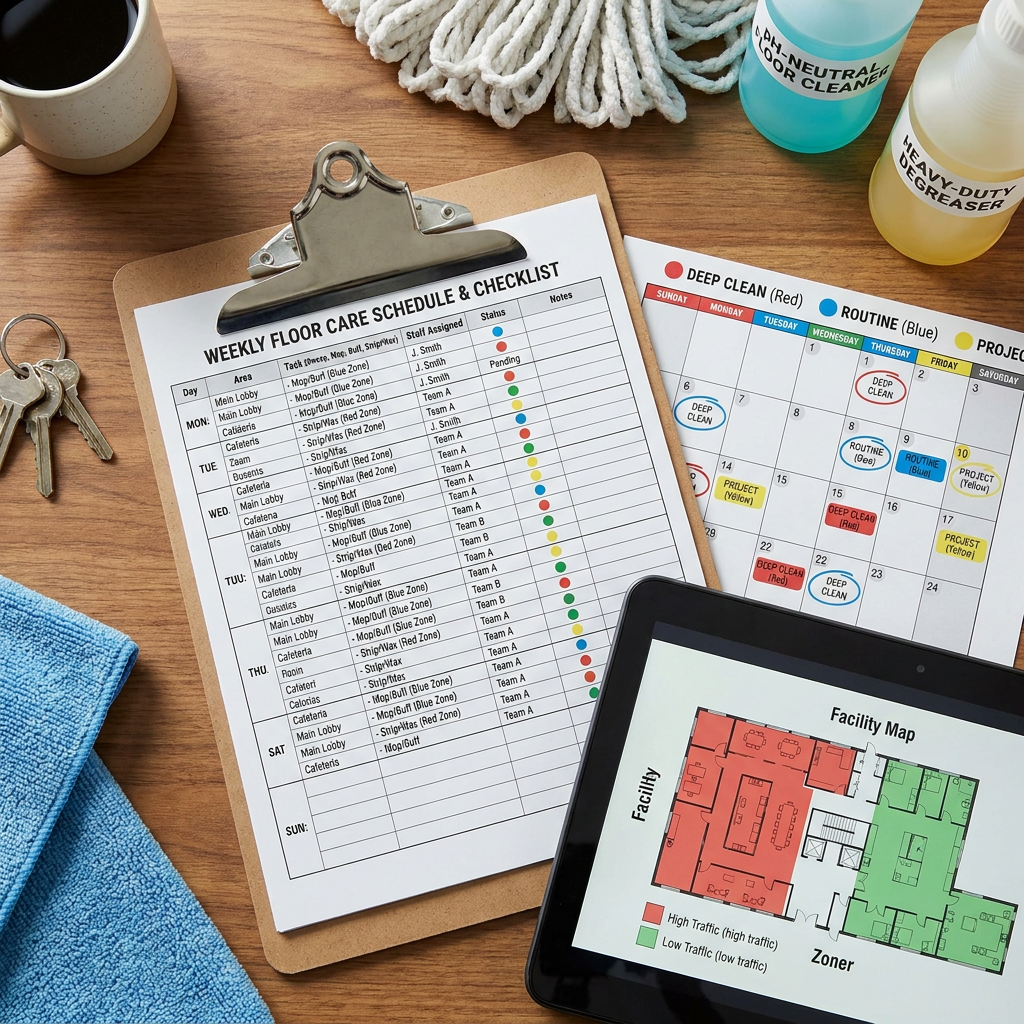
Effective maintenance scheduling requires documenting current conditions, establishing baselines, and adjusting based on observed wear patterns. The following framework helps facility managers develop customized schedules for their specific environments.
Step 1: Assess Current Floor Conditions
Begin with a thorough inspection of all floor surfaces. Document floor types, square footage, current condition, and visible wear patterns. Photograph problem areas for baseline comparison. Note any areas requiring immediate restoration before implementing routine maintenance.
Professional floor care companies offer free on-site assessments that provide detailed condition reports. These assessments identify issues that untrained observers might miss, such as finish breakdown, grout deterioration, or stone etching in early stages.
Step 2: Map Traffic Patterns
Identify high-traffic zones, moderate-traffic areas, and low-traffic spaces. Building entrances, elevator lobbies, restrooms, and break rooms typically experience the heaviest use. Private offices, storage areas, and conference rooms used occasionally represent low-traffic zones.
Create a floor plan marking each zone with its traffic classification. This map guides maintenance frequency decisions and helps cleaning crews prioritize daily tasks appropriately.
Step 3: Establish Service Intervals
Using the guidelines in this article, assign service intervals to each floor area based on surface type, traffic level, and industry requirements. Build a 12-month calendar showing when each service should occur. Schedule major restorative work during periods of lowest building occupancy.
The office cleaning checklist for facility managers provides a template for organizing daily, weekly, monthly, and annual maintenance tasks.
Step 4: Monitor and Adjust
Review floor conditions quarterly and compare against baseline documentation. If floors show accelerated wear, increase service frequency. If floors maintain condition longer than expected, consider extending intervals to optimize spending.
Document all maintenance activities including dates, services performed, and costs. This record supports budget planning, demonstrates compliance for regulated industries, and provides data for continuous improvement.
Frequently Asked Questions
How often do floors need to be swept?
Commercial floors in high-traffic areas need sweeping or dust mopping at least once daily, with some environments requiring multiple cleanings per day. Retail entrances, hospital corridors, and school hallways may need sweeping every 2 to 4 hours during peak periods. Low-traffic private offices can maintain cleanliness with sweeping every 2 to 3 days. The key is removing abrasive grit before it scratches floor surfaces or embeds into carpet fibers.
What is the 20/10 rule for cleaning?
The 20/10 rule is a time management technique where you clean for 20 minutes, then take a 10-minute break. While useful for residential cleaning motivation, commercial floor maintenance follows different protocols based on square footage, soil levels, and equipment capabilities. Professional auto-scrubbers cover 15,000 to 30,000 square feet per hour, making time-based rules less relevant than coverage-based planning for commercial applications.
How often should ducts be cleaned in a commercial building?
Commercial HVAC ducts should be professionally cleaned every 3 to 5 years under normal conditions. Buildings with higher contamination risk, such as healthcare facilities, manufacturing plants, or properties with recent construction, may need cleaning every 1 to 2 years. The National Air Duct Cleaners Association recommends inspection every 2 years with cleaning based on observed contamination levels. The commercial air duct cleaning cost guide provides detailed pricing information.
How often should a cleaning service come to a commercial building?
Most commercial buildings require professional cleaning 3 to 5 times per week for daily maintenance tasks. High-traffic buildings with 100 or more daily occupants typically need daily service. Smaller offices with 10 to 25 employees may maintain acceptable conditions with 2 to 3 weekly visits. Healthcare facilities, food service operations, and retail stores generally require daily or even twice-daily cleaning to meet operational and regulatory requirements.
Working With Professional Floor Maintenance Providers
Selecting the right floor maintenance partner significantly impacts results and costs. Look for providers with experience in your specific floor types and industry. Verify insurance coverage including general liability and workers compensation. Request certificates of insurance naming your property as additional insured.
Professional providers should offer free on-site assessments, written quotes with detailed scope of work, and flexible scheduling including after-hours and weekend service. Ask about employee screening, as cleaning crews access your facility during and after business hours.
For South Florida facilities in Miami-Dade, Broward, and Palm Beach counties, MB Floor Solutions provides comprehensive floor maintenance programs tailored to each facility’s specific needs. Services include VCT stripping and waxing, carpet cleaning, tile and grout restoration, marble and terrazzo polishing, and ongoing maintenance contracts with 24/7 scheduling availability.
Schedule Your Free Floor Assessment
Get a customized maintenance schedule and written quote for your commercial facility. MB Floor Solutions serves Miami-Dade, Broward, and Palm Beach counties with flexible scheduling and transparent pricing.