Complete 72-hour cleaning protocol to prepare commercial facilities for health inspections. Day-by-day checklist covering floors, HVAC, restrooms, and documentation.
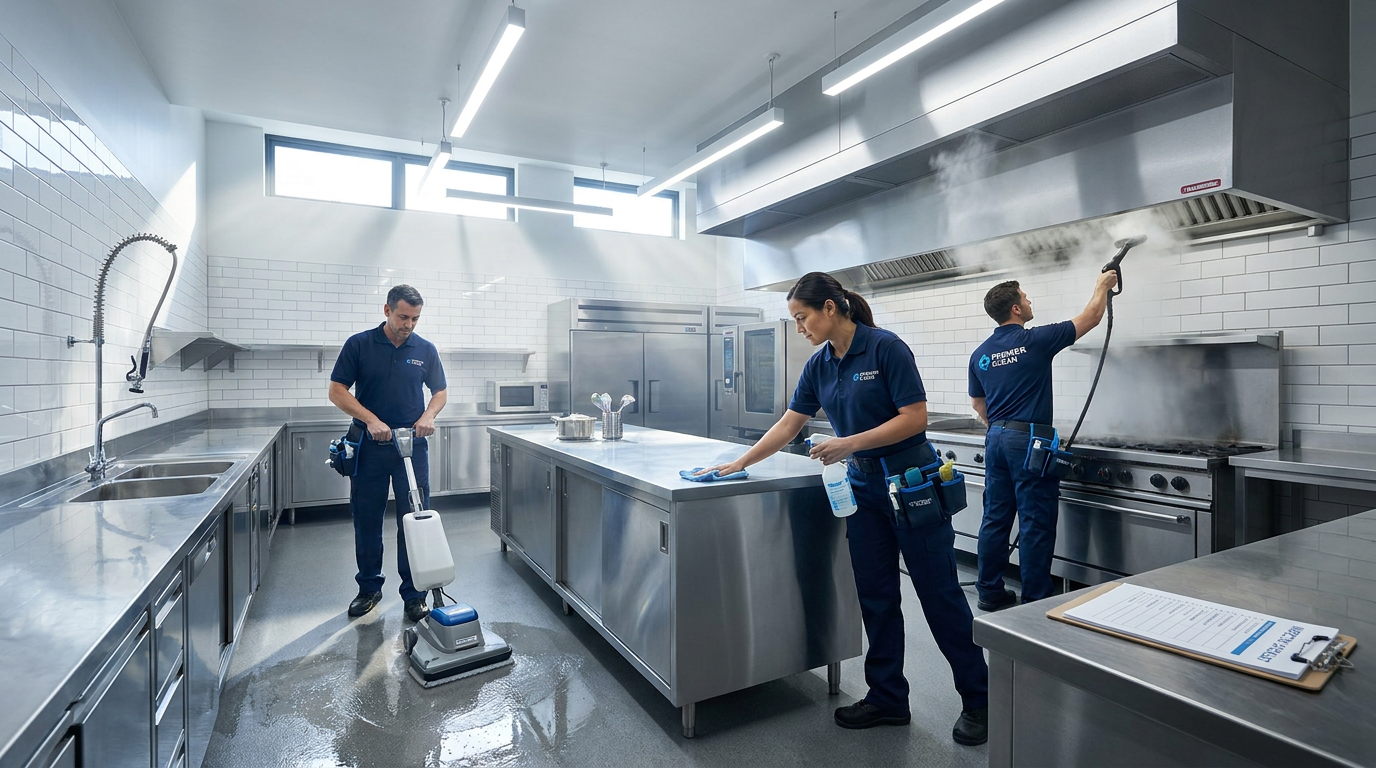
A 72-hour cleaning protocol divides health inspection preparation into three phases: deep cleaning on Day 1, detail work on Day 2, and final verification on Day 3. This timeline allows commercial facilities to address high-risk areas systematically while maintaining normal operations and documenting compliance for inspectors.
- Day 1 focuses on deep cleaning floors, HVAC systems, and high-touch surfaces (8-12 hours)
- Day 2 addresses detail work including grout lines, equipment sanitization, and storage areas (6-8 hours)
- Day 3 covers final verification, documentation assembly, and staff briefing (4-6 hours)
- Florida DBPR inspectors check 50+ compliance points including floor condition, ventilation, and sanitation logs
- Facilities with documented cleaning protocols score 23% higher on routine inspections according to FDA data
Why a 72-Hour Timeline Works for Health Inspection Preparation
Health inspectors from agencies like the Florida Department of Business and Professional Regulation (DBPR) and county health departments evaluate facilities against standardized criteria. According to the CDC's facility cleaning guidelines, effective sanitation requires adequate dwell time for disinfectants and proper drying periods between cleaning stages.
A compressed timeline of 24-48 hours often results in wet floors during inspection, incomplete disinfection cycles, and missed detail areas. The 72-hour protocol provides buffer time for floor finish curing, which requires 24-48 hours for commercial-grade products. It also allows staff to identify and correct issues before the inspector arrives.
Miami-Dade County health inspectors conduct approximately 45,000 facility inspections annually. Broward County processes over 30,000 inspections per year. Palm Beach County health officials report that 67% of critical violations involve sanitation deficiencies that proper pre-inspection protocols could prevent.
Day 1: Deep Cleaning Foundation (Hours 72-48)
The first 24 hours establish the cleaning foundation by addressing surfaces that require extended drying or curing time. This phase typically requires 8-12 hours of active work depending on facility size. Schedule this work during off-hours to minimize business disruption.
Floor Deep Cleaning and Restoration
Floor condition accounts for 15-20% of inspection scoring in most health department rubrics. VCT, LVT, and commercial vinyl floors in healthcare facilities, restaurants, and retail spaces require specific attention. Professional commercial floor deep cleaning removes embedded soil that regular mopping cannot address.
For facilities with significant floor wear, commercial floor stripping and waxing provides the best results. This process costs $0.85-$1.15 per square foot in Miami-Dade County and requires 24-48 hours for complete curing. Apply 3-5 coats of commercial floor finish for optimal durability and appearance.
Tile and grout in restrooms and food preparation areas demand particular attention. Inspectors frequently cite discolored grout as evidence of inadequate sanitation. Professional commercial tile and grout cleaning using hot water extraction removes bacteria from grout pores that surface cleaning misses.
HVAC System and Air Quality
Indoor air quality violations appear on 12% of Florida health inspection reports. The OSHA and EPA compliance standards require commercial facilities to maintain clean ventilation systems. Dust accumulation on vents and registers signals broader air quality issues to inspectors.
Schedule commercial air duct cleaning on Day 1 to allow particulates to settle before the final cleaning phase. This service costs $300-$500 for facilities under 5,000 square feet and $900-$1,500 for spaces exceeding 15,000 square feet. Truck-mounted equipment removes dust, debris, and microbial buildup from supply and return ducts.
Day 1 Checklist
| Task | Time Required | Priority Level |
|---|---|---|
| Strip and wax VCT/LVT floors | 4-6 hours | Critical |
| Deep clean tile and grout | 2-3 hours | Critical |
| HVAC duct and vent cleaning | 2-4 hours | High |
| Degrease kitchen exhaust hoods | 1-2 hours | Critical (food service) |
| Pressure wash exterior entry areas | 1-2 hours | Medium |
Day 2: Detail Work and Equipment Sanitization (Hours 48-24)
Day 2 shifts focus to detail cleaning and equipment sanitization. This phase addresses the specific items inspectors examine closely: food contact surfaces, handwashing stations, storage organization, and equipment cleanliness. Plan for 6-8 hours of concentrated work.
Restroom and Handwashing Station Protocol
Handwashing compliance represents one of the most frequently cited violations in health inspections. The WebstaurantStore health inspection guide notes that inspectors verify soap dispensers are full, paper towel holders are stocked, and signage is properly displayed.
Deep clean all restroom surfaces using EPA-registered disinfectants with a minimum 10-minute contact time. Replace any cracked or stained toilet seats, which inspectors view as sanitation concerns. Verify all drains flow freely without backup or odor, as drainage issues indicate potential cross-contamination risks.
Check that hot water at handwashing sinks reaches 100-110 degrees Fahrenheit within 30 seconds. Cold water should not exceed 70 degrees Fahrenheit. Document water temperature readings in your pre-inspection log.
Food Contact Surfaces and Equipment
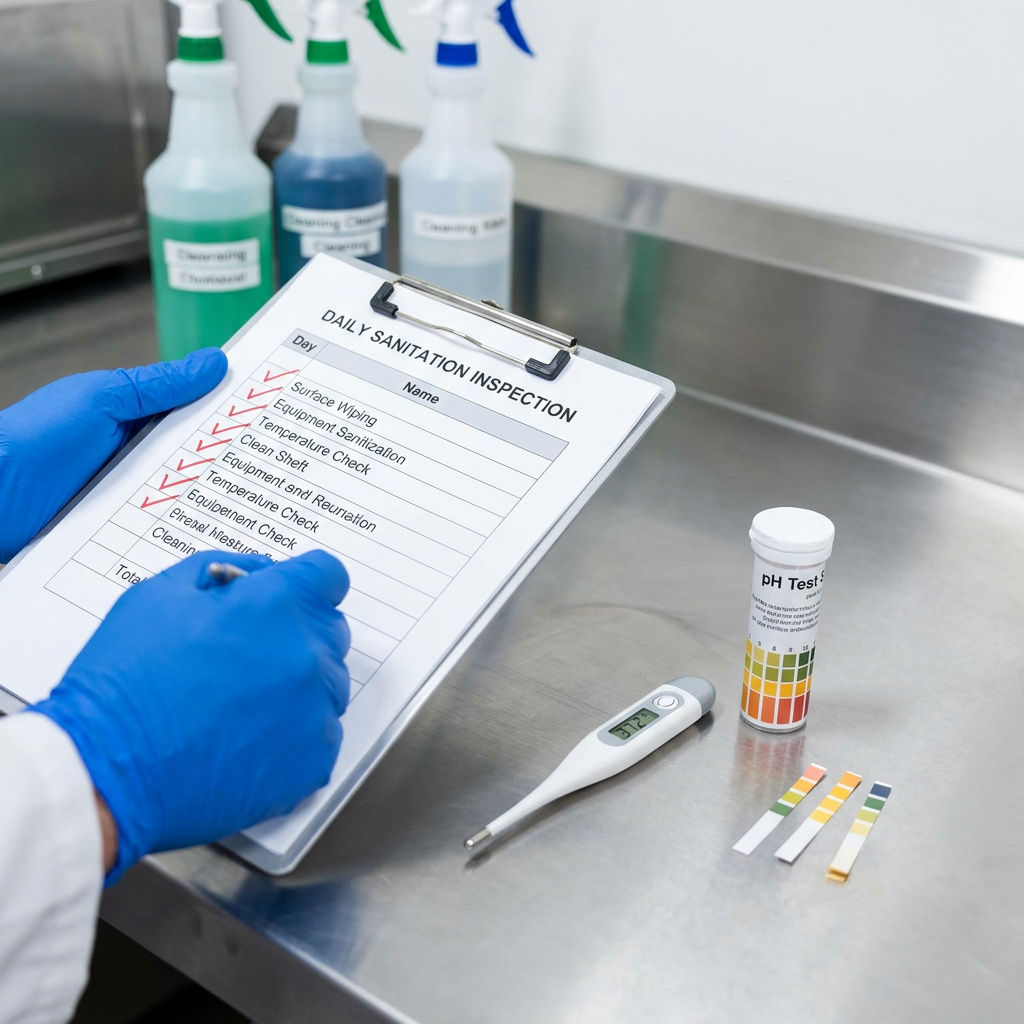
For food service facilities, sanitize all food contact surfaces using quaternary ammonium solutions at 200-400 ppm concentration or chlorine solutions at 50-100 ppm. Test strips should be available and current (not expired) to demonstrate proper sanitizer concentration to inspectors.
Clean inside and behind all refrigeration units. Inspectors commonly check condenser coils, door gaskets, and interior corners where mold can develop. Verify refrigerator temperatures maintain 40 degrees Fahrenheit or below, and freezers hold at 0 degrees Fahrenheit or below. Calibrate thermometers and document readings.
Degrease cooking equipment including fryers, grills, and ovens. Remove carbon buildup from burner grates and drip pans. Clean and sanitize ice machines, which frequently harbor biofilm and mold growth. The FDA Food Code requires ice machine cleaning every two weeks minimum.
Storage Area Organization
Storage violations account for 18% of health inspection demerits according to National Restaurant Association data. Food items must be stored at least 6 inches off the floor on approved shelving. Chemicals must be stored separately from food items in clearly labeled containers.
Apply the FIFO (First In, First Out) method and verify all product date labels are visible. Remove any expired items, damaged packaging, or unlabeled containers. Organize storage areas so inspectors can easily verify compliance without moving items.
Day 2 Checklist
| Area | Tasks | Inspection Focus |
|---|---|---|
| Restrooms | Disinfect surfaces, stock supplies, verify water temp | Handwashing compliance |
| Kitchen/Food Prep | Sanitize surfaces, degrease equipment, check temps | Food safety protocols |
| Refrigeration | Clean coils, verify temps, check gaskets | Temperature control |
| Storage | Organize shelving, remove expired items, label chemicals | FIFO compliance |
| Ice Machines | Descale, sanitize, clean dispensing area | Biofilm prevention |
Day 3: Final Verification and Documentation (Hours 24-0)
The final 24 hours focus on verification, touch-ups, and documentation assembly. This phase requires 4-6 hours of work and should conclude at least 4 hours before the scheduled inspection to allow staff preparation time.
Final Walkthrough Protocol
Conduct a systematic walkthrough using the same path inspectors typically follow: entrance, public areas, restrooms, food preparation zones, storage, and back-of-house areas. Use a flashlight to check corners, under equipment, and behind fixtures where debris accumulates.
Verify all floor finishes have fully cured and show no tackiness or footprints. Touch up any scuff marks with a spray buff using a high-speed burnisher. Check that all drain covers are in place and secure. Confirm all light fixtures are operational, as inspectors note non-functional lighting as a maintenance concern.
Test all equipment one final time. Run dishwashers through a cycle to verify sanitizing temperatures reach 180 degrees Fahrenheit for high-temp machines or proper chemical concentration for low-temp units. Check that all refrigeration units maintain proper temperatures after being opened during cleaning.
Documentation Assembly
Inspectors increasingly request documentation demonstrating ongoing compliance rather than just inspection-day conditions. Prepare a compliance binder containing the following records:
Temperature logs showing refrigeration monitoring for the past 30 days. Cleaning schedules with staff initials and dates. Pest control service records from licensed providers. Employee food handler certifications (ServSafe or state equivalent). Equipment maintenance records including hood cleaning and grease trap service.
For healthcare facilities, include cubicle curtain cleaning records with service dates labeled on each curtain. Document stretcher and wheelchair sanitization logs. Maintain HVAC filter change records showing compliance with facility maintenance schedules.
Staff Briefing
Brief all staff members who may interact with inspectors. Review proper handwashing technique (20 seconds minimum with soap). Ensure employees know where documentation is stored. Designate one manager as the primary inspector contact to prevent conflicting information.
Staff should understand they can answer factual questions honestly but should refer policy questions to management. Remind employees that inspectors may ask about cleaning procedures, chemical usage, and food handling practices.
Healthcare Facility-Specific Requirements
Healthcare facilities face additional scrutiny from the Florida Agency for Health Care Administration (AHCA) and The Joint Commission. Infection control protocols require documentation beyond standard commercial facilities.
Hospital-grade sanitization of patient transport equipment reduces infection transmission risk. Professional stretcher, wheelchair, and WOW station cleaning using medical-grade disinfectants meets CDC guidelines for healthcare environmental surfaces.
Cubicle curtains in patient care areas require cleaning every 14-30 days depending on facility policy and patient population. Same-day curtain service allows facilities to maintain patient privacy during the cleaning process while ensuring compliance with infection control standards.
Marble and terrazzo floors common in healthcare lobbies require specialized care. Professional marble and terrazzo polishing removes etches and scratches that harbor bacteria while restoring slip-resistant surfaces that meet ADA requirements.
Common Inspection Violations and Prevention Strategies
Understanding frequent violations helps facilities prioritize cleaning efforts. Florida health departments publish violation data that reveals patterns across facility types.
Critical Violations (Immediate Correction Required)
Improper food temperature control accounts for 31% of critical violations statewide. Prevention requires calibrated thermometers, documented temperature logs, and functional refrigeration equipment. Check that hot holding equipment maintains food at 135 degrees Fahrenheit or above.
Cross-contamination risks appear in 24% of critical citations. Prevent these violations by maintaining separate cutting boards for raw and ready-to-eat foods, proper chemical storage away from food items, and adequate handwashing facilities.
Poor personal hygiene violations, including improper handwashing and eating in food preparation areas, comprise 18% of critical findings. Staff training and visible signage reduce these incidents.
Non-Critical Violations (Correction Within Timeframe)
Floor and wall maintenance issues appear on 42% of inspection reports. Cracked tiles, peeling paint, and damaged floor finishes indicate deferred maintenance that suggests broader compliance concerns. Address these issues before inspections when possible.
Equipment cleanliness violations occur in 38% of inspections. Can openers, slicers, and mixer attachments frequently show residue buildup. Disassemble and clean all removable equipment parts during the 72-hour protocol.
Lighting deficiencies appear in 27% of reports. Replace burnt bulbs and clean light covers to ensure 50 foot-candles at food preparation surfaces and 20 foot-candles in storage and handwashing areas.
Professional Cleaning Services: When to Call Experts
Certain cleaning tasks exceed in-house capabilities or require specialized equipment. Professional commercial cleaning services provide expertise, equipment, and documentation that support inspection readiness.
Tasks Best Suited for Professional Services
Floor stripping and waxing requires industrial equipment, proper chemical handling, and technique that produces consistent results. Professional crews complete 5,000 square feet in 4-6 hours with proper curing time built into the schedule.
HVAC duct cleaning demands truck-mounted equipment that generates sufficient suction to remove debris from entire duct systems. Portable equipment often redistributes dust rather than removing it. Professional services include before and after documentation for compliance files.
Pressure washing exterior surfaces requires proper wastewater management to meet EPA stormwater regulations. Professional commercial pressure washing includes compliant wastewater reclaim systems.
Cost-Benefit Analysis
| Service | DIY Cost | Professional Cost | Risk Factor |
|---|---|---|---|
| Floor Strip/Wax (5,000 sq ft) | $200-400 materials | $4,250-5,750 | High (technique critical) |
| Tile/Grout Deep Clean | $50-100 materials | $0.50-1.50/sq ft | Medium |
| Duct Cleaning (10,000 sq ft) | Not feasible | $500-900 | High (equipment required) |
| Carpet Cleaning | $75-150 rental | $0.15-0.35/sq ft | Low |
Post-Inspection Maintenance Schedule
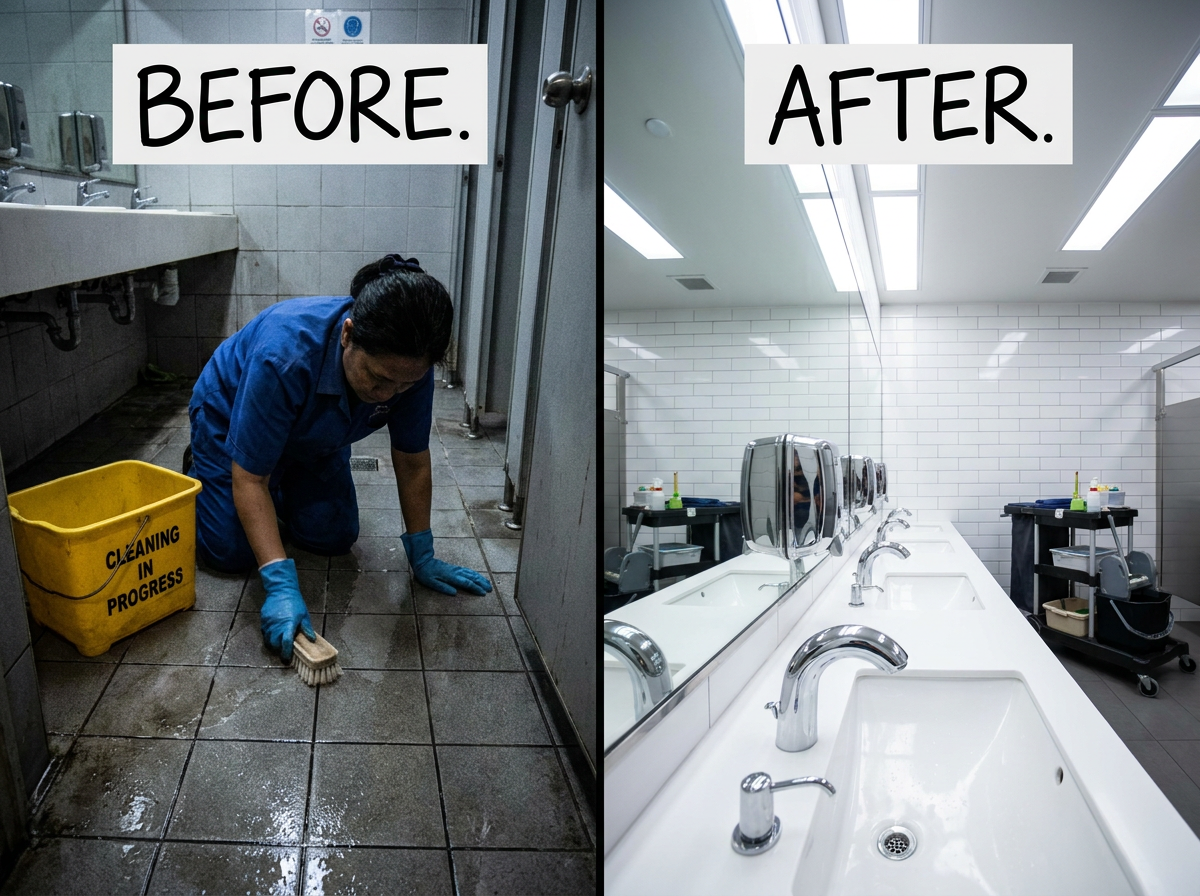
Passing an inspection represents a point-in-time assessment. Maintaining compliance requires ongoing attention between inspections. Establish a maintenance schedule that prevents the need for intensive pre-inspection cleaning.
Daily tasks include floor mopping, surface sanitization, restroom cleaning, and temperature logging. Weekly tasks encompass deep cleaning of high-touch surfaces, equipment sanitization, and storage area organization. Monthly tasks include commercial floor scrubbing and waxing to maintain finish between full strip cycles.
Quarterly tasks should include professional tile and grout cleaning, HVAC filter replacement, and comprehensive equipment deep cleaning. Annual tasks encompass full floor stripping and waxing, duct cleaning, and facility-wide maintenance assessments.
Frequently Asked Questions
How often do health inspectors visit commercial facilities in Florida?
Florida health departments conduct routine inspections 1-4 times annually depending on facility type and risk classification. High-risk facilities like restaurants receive 2-4 inspections per year. Healthcare facilities face additional inspections from AHCA and accreditation bodies. Complaint-driven inspections can occur at any time without advance notice.
What happens if a facility fails a health inspection?
Critical violations require immediate correction before the facility can continue operations. Non-critical violations typically allow 30-90 days for correction with a follow-up inspection. Repeated failures can result in fines ranging from $250 to $5,000 per violation, temporary closure, or license revocation in severe cases.
Can facilities request advance notice of inspections?
Routine inspections in Florida are typically unannounced to assess normal operating conditions. However, new facility openings and post-renovation inspections are scheduled in advance. Some jurisdictions provide 24-48 hour notice for specific inspection types, but facilities should maintain inspection-ready conditions at all times.
What cleaning chemicals are approved for health inspection compliance?
EPA-registered sanitizers and disinfectants with specific claims against foodborne pathogens meet health code requirements. Quaternary ammonium compounds at 200-400 ppm and chlorine solutions at 50-100 ppm are standard for food contact surfaces. Always follow manufacturer dilution instructions and maintain Safety Data Sheets (SDS) for all chemicals on site.
How should facilities document cleaning for inspectors?
Maintain daily cleaning logs with staff initials, dates, and specific tasks completed. Temperature logs should show readings at minimum twice daily for refrigeration units. Keep chemical concentration test strip results for sanitizer verification. Retain pest control service reports and equipment maintenance records for at least one year.
Prepare Your Facility for Inspection Success
MB Floor Solutions LLC provides professional floor care, tile and grout cleaning, HVAC maintenance, and comprehensive facility cleaning services across Miami-Dade, Broward, and Palm Beach Counties. Contact us for a free on-site assessment and written quote.
Schedule Your Free Assessment