Commercial floor stripping and waxing costs $0.30 to $1.50 per square foot. Get exact pricing by floor type, condition, and region with our 2026 guide.
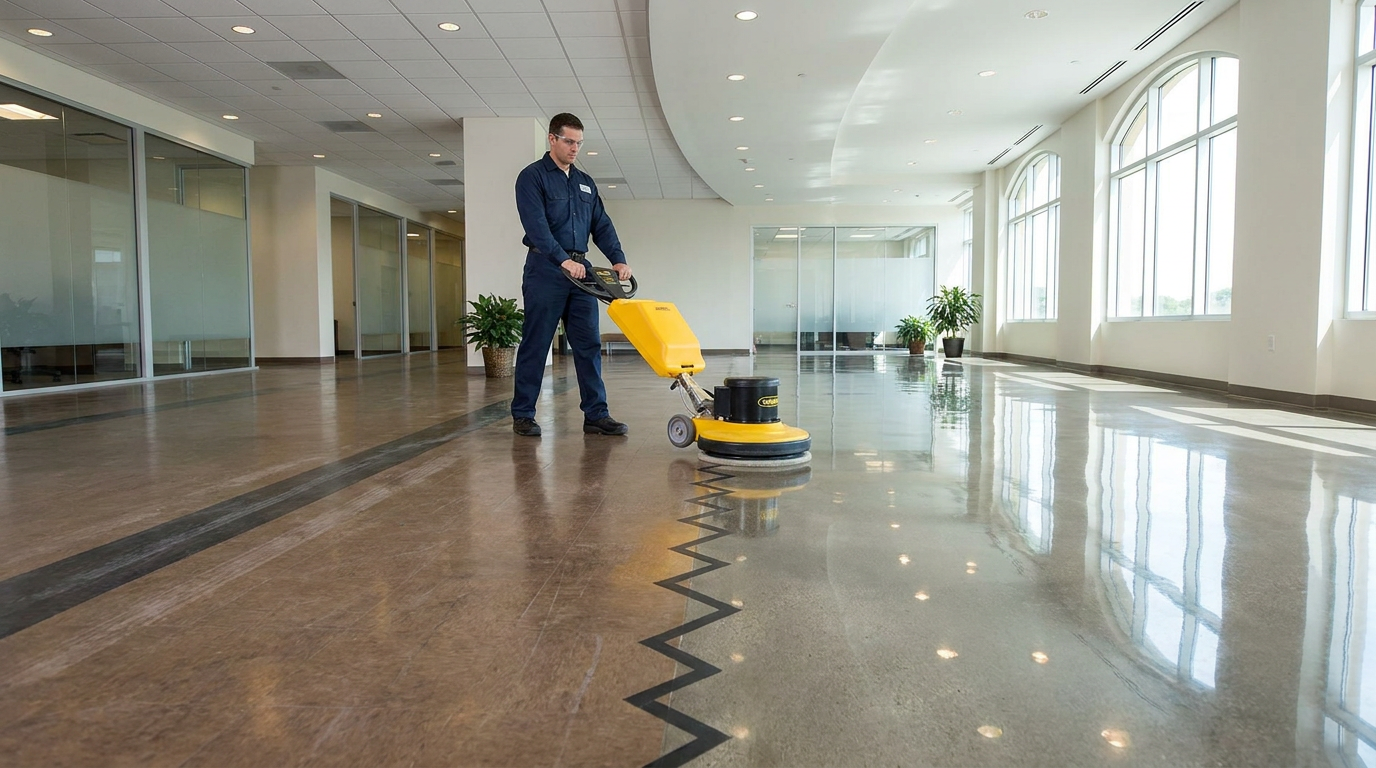
Commercial floor stripping and waxing costs between $0.30 and $1.50 per square foot for most facilities, with standard VCT floors averaging $0.25 to $0.75 per square foot. In South Florida markets like Miami-Dade, Broward, and Palm Beach Counties, expect to pay $0.80 to $1.20 per square foot due to higher labor costs and humidity-related floor prep requirements.
- National average: $0.30 to $0.80 per square foot for standard commercial strip and wax
- South Florida pricing: $0.80 to $1.20 per square foot in Miami-Dade, Broward, and Palm Beach
- Heavy buildup or restoration work: $1.00 to $3.00+ per square foot
- A 10,000 sq ft facility typically costs $3,000 to $12,000 depending on condition
- Recommended frequency: every 6 to 12 months for most commercial spaces
Cost Breakdown by Component
Understanding where your money goes helps you evaluate quotes accurately. According to HomeGuide's 2026 pricing data, strip and wax costs break down into three primary categories: labor, materials, and equipment use.
Labor represents the largest expense, accounting for 60% to 70% of total project cost. Materials including chemical strippers, neutralizers, and floor finish make up 15% to 25%. Equipment rental or depreciation covers the remaining 10% to 20%.
| Cost Component | Price Range per Sq Ft | Percentage of Total |
|---|---|---|
| Labor (stripping, application, buffing) | $0.25 to $1.50 | 60% to 70% |
| Materials (stripper, finish, neutralizer) | $0.10 to $0.40 | 15% to 25% |
| Equipment (buffers, scrubbers, applicators) | $0.05 to $0.20 | 10% to 20% |
| Total Project Cost | $0.30 to $1.50+ | 100% |
The Homewyse cost calculator shows the basic cost ranges from $1.72 to $2.15 per square foot when including all overhead and profit margins, though commercial contractors typically offer lower per-square-foot rates for larger projects.
Pricing by Floor Type
Floor material significantly impacts stripping and waxing costs. VCT (vinyl composition tile) remains the most economical option, while specialty floors like terrazzo or linoleum require more labor-intensive processes.
VCT flooring, commonly found in schools, hospitals, and retail spaces, strips efficiently with standard chemical strippers. The Armstrong Flooring VCT product line and similar manufacturers design these tiles specifically for repeated strip and wax cycles.
| Floor Type | Cost per Sq Ft | Notes |
|---|---|---|
| VCT (Vinyl Composition Tile) | $0.25 to $0.75 | Most common, easiest to maintain |
| LVT (Luxury Vinyl Tile) | $0.35 to $0.85 | Requires compatible finishes |
| Linoleum | $0.50 to $1.00 | pH-sensitive, needs careful stripping |
| Vinyl Sheet | $0.40 to $0.90 | Seam protection required |
| Terrazzo | $0.75 to $1.50 | May require diamond polishing instead |
| Concrete (sealed) | $0.30 to $0.70 | Porosity affects finish adhesion |
For facilities with VCT or LVT flooring, understanding the differences in maintenance requirements helps you budget accurately over the floor's lifetime.
Regional Pricing Variations
Geographic location creates significant pricing differences. Metro areas with higher labor costs, stricter regulations, and increased competition typically charge 20% to 40% more than rural markets.
South Florida presents unique challenges that affect pricing. The region's 70% to 90% average humidity levels require additional floor prep time and specialized low-moisture application techniques. Hurricane season from June through November can delay projects and increase scheduling premiums.
South Florida Market Rates (2026)
MB Floor Solutions services Miami-Dade, Broward, and Palm Beach Counties with the following rate structure based on current market conditions:
| County | Standard Rate | High-Rise Premium |
|---|---|---|
| Miami-Dade | $0.85 to $1.15 per sq ft | Add $0.15 to $0.25 per sq ft |
| Broward | $0.80 to $1.10 per sq ft | Add $0.15 to $0.25 per sq ft |
| Palm Beach | $0.90 to $1.20 per sq ft | Add $0.15 to $0.25 per sq ft |
High-rise buildings incur additional costs due to freight elevator scheduling, extended setup times, and the logistics of transporting equipment and materials to upper floors.
Factors That Increase Costs
Several variables push strip and wax pricing above baseline rates. Understanding these factors helps you anticipate accurate quotes and avoid surprise charges.
Floor Condition and Buildup
Heavy wax buildup from years of layered applications requires multiple stripping passes. Floors with 10 or more wax layers can take 2x to 3x longer to strip than floors with 3 to 5 layers. Damaged tiles with chips, cracks, or embedded stains need additional prep work.
According to Smart Janitorial's pricing calculator, heavily soiled floors can add $0.15 to $0.50 per square foot to the base rate.
Layout Complexity
Open floor plans strip and wax efficiently. Spaces with numerous obstacles increase labor time significantly:
- Partitioned offices with cubicles: add 15% to 25%
- Retail spaces with fixed fixtures: add 10% to 20%
- Healthcare facilities with equipment: add 20% to 35%
- Restaurants with booth seating: add 15% to 30%
Furniture moving, when required, typically adds $0.05 to $0.15 per square foot or a flat fee of $150 to $500 depending on the volume.
Access and Scheduling
After-hours work, weekend scheduling, and emergency requests affect pricing. Most commercial facilities require overnight or weekend service to avoid business disruption. Standard after-hours premiums range from 10% to 25% above daytime rates.
Emergency or rush scheduling within 24 to 48 hours can add 25% to 50% to the total project cost. Planning strip and wax projects 2 to 4 weeks in advance typically secures better rates.
How to Calculate Your Project Cost
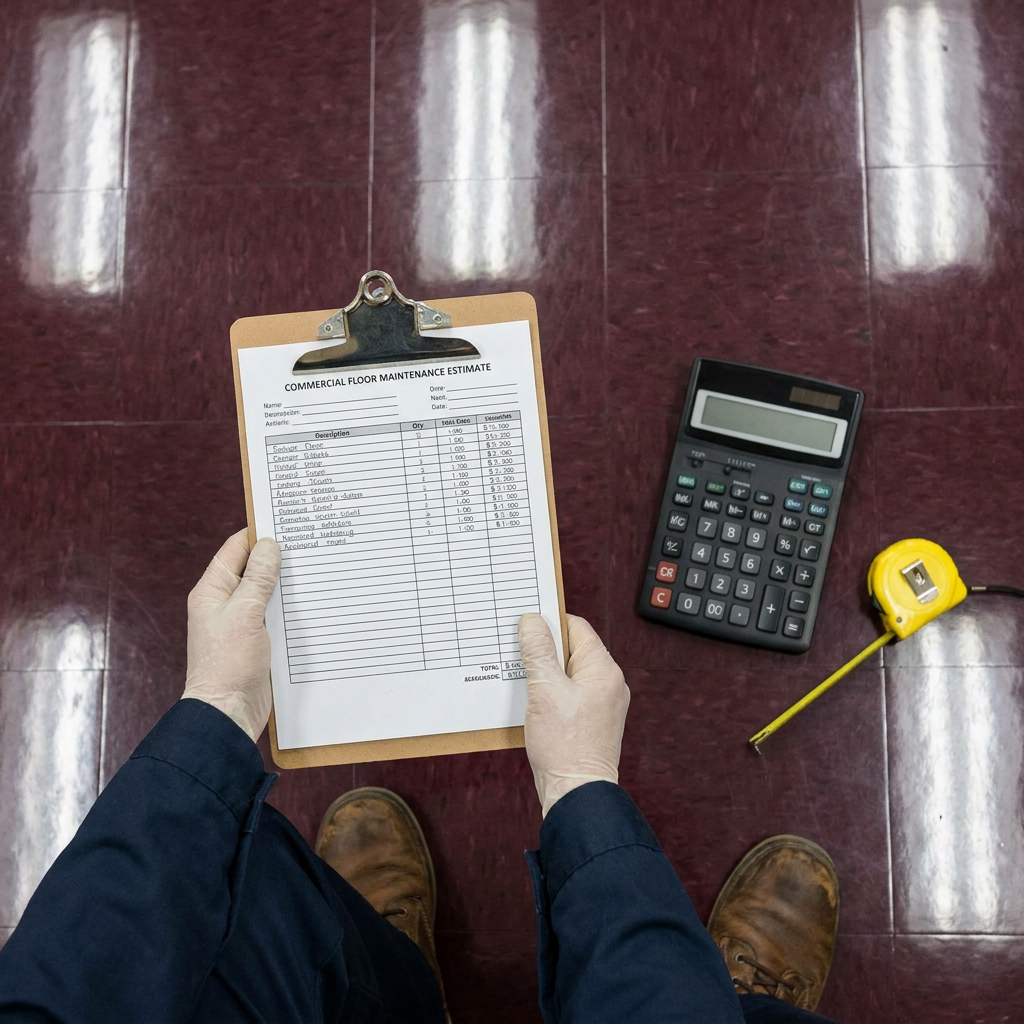
Calculating square footage accurately ensures you receive comparable quotes. Measure the length and width of each room in feet, then multiply to get square footage. For irregular spaces, divide the area into rectangles and add them together.
Sample Cost Calculations
These examples use mid-range pricing of $0.60 per square foot for standard conditions:
| Facility Size | Low Estimate ($0.35/sq ft) | Mid Estimate ($0.60/sq ft) | High Estimate ($1.00/sq ft) |
|---|---|---|---|
| 1,500 sq ft (small office) | $525 | $900 | $1,500 |
| 3,000 sq ft (retail store) | $1,050 | $1,800 | $3,000 |
| 10,000 sq ft (medical clinic) | $3,500 | $6,000 | $10,000 |
| 25,000 sq ft (school) | $8,750 | $15,000 | $25,000 |
| 50,000 sq ft (warehouse) | $17,500 | $30,000 | $50,000 |
Larger facilities often negotiate volume discounts. Projects over 20,000 square feet may receive 10% to 20% reductions from standard per-square-foot rates.
How Long Does Strip and Wax Take?
Project duration depends on floor size, condition, and crew size. A professional 2-person crew typically completes 1,000 to 1,500 square feet per hour under standard conditions.
For a 1,000 square foot area, expect 45 minutes to 1.5 hours for stripping, 30 minutes for neutralization and drying, and 1 to 2 hours for applying 3 to 5 coats of finish with dry time between coats. Total elapsed time ranges from 4 to 8 hours.
Complete curing requires 24 to 48 hours before heavy traffic or furniture placement. Light foot traffic is typically safe within 30 to 60 minutes after the final coat.
Strip and Wax vs. Scrub and Recoat
Not every floor needs a full strip. Scrub and recoat services cost $0.35 to $0.55 per square foot and work well for floors with intact finish that simply need refreshing.
| Service Type | Cost per Sq Ft | When to Use | Frequency |
|---|---|---|---|
| Strip and Wax | $0.30 to $1.50 | Heavy buildup, yellowing, damage | Every 6 to 12 months |
| Scrub and Recoat | $0.35 to $0.55 | Light wear, dull appearance | Every 1 to 3 months |
| Deep Clean Only | $0.15 to $0.35 | Soil removal, no finish issues | Monthly |
A strategic maintenance program alternating between these services can extend floor finish lifespan and reduce annual maintenance costs by 30% to 40%.
How Often Should Commercial Floors Be Stripped and Waxed?
Strip and wax frequency depends on traffic volume, floor type, and maintenance practices. The International Sanitary Supply Association (ISSA) recommends these intervals:
- Low traffic (private offices, storage): every 12 to 18 months
- Medium traffic (general offices, retail): every 6 to 12 months
- High traffic (schools, hospitals, grocery): every 3 to 6 months
- Extreme traffic (entrances, corridors): every 1 to 3 months
Healthcare facilities and food service establishments often require more frequent service due to regulatory requirements and hygiene standards. The Florida Department of Business and Professional Regulation (DBPR) inspects floor conditions as part of health inspections.
What Is Included in Professional Strip and Wax Service
A complete commercial floor stripping and waxing service includes multiple steps that ensure proper finish adhesion and longevity:
- Pre-inspection: Assessment of floor condition, type, and existing finish layers
- Furniture protection or removal: Moving or covering items in the work area
- Dust mopping: Removing loose debris before wet processes
- Chemical stripping: Applying stripper solution and allowing dwell time
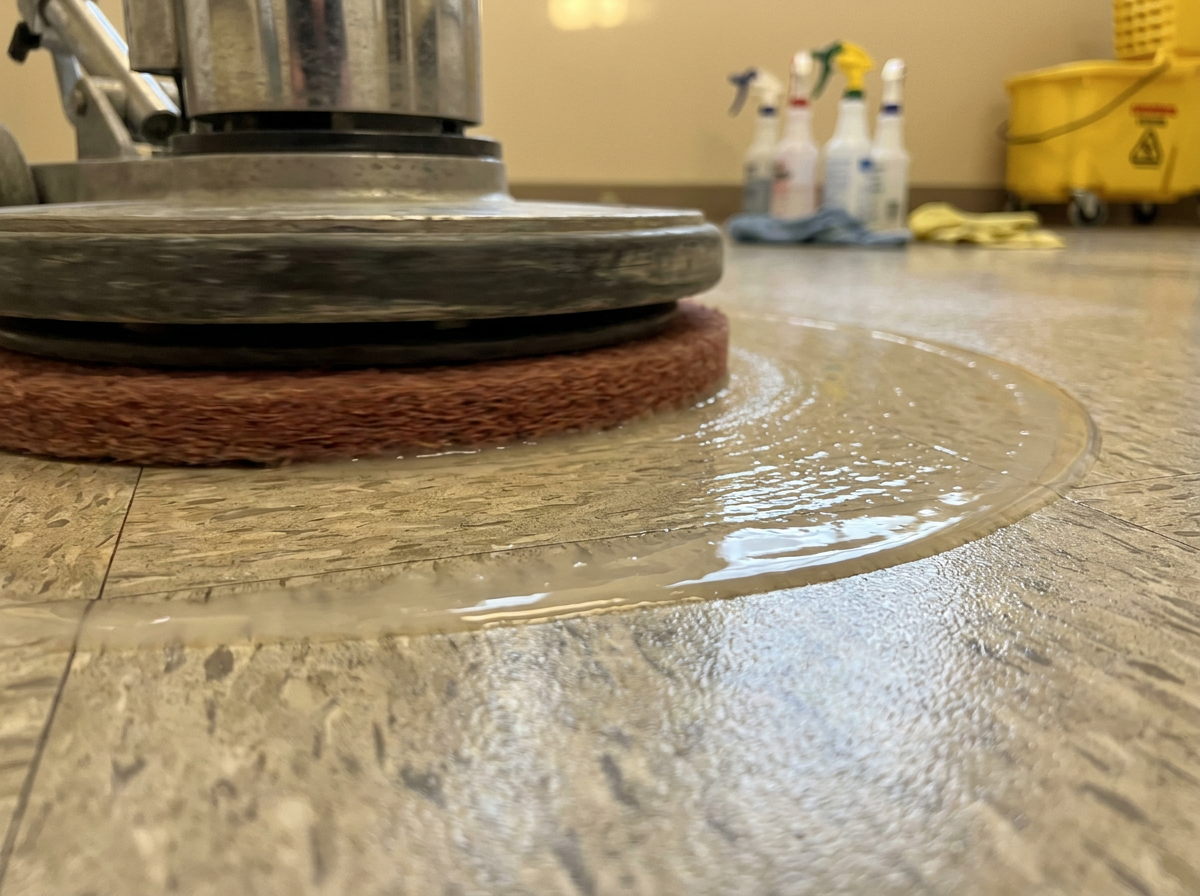
- Mechanical agitation: Using floor machines with stripping pads to remove finish
- Slurry extraction: Wet vacuuming dissolved finish and contaminants
- Neutralization: Applying pH neutralizer to prepare surface for new finish
- Rinse and dry: Removing residue and allowing complete drying
- Finish application: Applying 3 to 5 coats of commercial floor finish
- Optional burnishing: High-speed buffing for enhanced gloss
Professional contractors use commercial-grade products from manufacturers like Betco, Diversey, and Spartan Chemical. These finishes provide 12 to 18 months of protection compared to 6 to 9 months from consumer-grade products.
Questions to Ask Before Hiring
Protect your facility and budget by verifying contractor qualifications. Request the following before signing any agreement:
- Insurance documentation: General liability ($1M minimum) and workers compensation
- Certificate of Insurance (COI): Naming your facility as additionally insured
- Written scope of work: Detailed description of included services
- Product specifications: Brands and types of stripper and finish to be used
- Number of finish coats: Minimum 3 coats for commercial durability
- Cure time requirements: When furniture can be replaced and heavy traffic resumed
- Warranty or guarantee: Coverage period and what it includes
Review the commercial cleaning insurance requirements checklist to understand what coverage your contractor should carry.
Reducing Long-Term Floor Maintenance Costs
Strategic maintenance practices reduce annual floor care expenses by 25% to 40%. Implement these cost-saving measures:
Entrance matting: Install 12 to 15 feet of walk-off matting at all entrances. Studies show proper matting captures 80% of incoming soil, reducing floor wear and cleaning frequency.
Daily dust mopping: Removing abrasive particles daily prevents finish scratching. Microfiber dust mops outperform traditional cotton by 20% to 30% in soil capture.
Weekly damp mopping: Use neutral pH cleaners (pH 7 to 9) to avoid finish damage. Alkaline cleaners above pH 10 degrade floor finish prematurely.
Scheduled scrub and recoat: Quarterly or bi-annual scrub and recoat service extends time between full strips by 50% to 100%.
Frequently Asked Questions
How much does it cost to strip and wax a commercial floor?
Commercial floor stripping and waxing costs $0.30 to $1.50 per square foot nationally, with most standard VCT projects falling between $0.35 and $0.80 per square foot. A 10,000 square foot facility typically pays $3,500 to $10,000 depending on floor condition and location.
How long does it take to strip and wax 1,000 square feet?
A professional crew completes 1,000 square feet in 4 to 8 hours, including stripping, neutralization, drying, and applying 3 to 5 coats of finish. The floor is ready for light foot traffic within 30 to 60 minutes after the final coat, but requires 24 to 48 hours for complete curing before heavy traffic or furniture placement.
How do you calculate stripping and waxing floors?
Multiply the length by width of each room in feet to get square footage. Then multiply total square footage by the contractor's per-square-foot rate. For example, a 5,000 square foot office at $0.60 per square foot equals $3,000. Add 15% to 25% for complex layouts with obstacles or furniture moving.
How often should commercial floors be stripped and waxed?
Most commercial facilities need strip and wax service every 6 to 12 months. High-traffic areas like entrances, corridors, and healthcare facilities may require service every 3 to 6 months. Low-traffic private offices can extend to 12 to 18 months between full strips when maintained with regular scrub and recoat service.
Get an Accurate Quote for Your Facility
Every commercial floor presents unique conditions that affect pricing. Square footage provides a starting point, but accurate quotes require on-site assessment of floor type, current condition, layout complexity, and access requirements.
Professional floor care contractors offer free assessments and written quotes that detail exactly what services are included. Compare at least 3 quotes from licensed, insured contractors before making a decision.
For South Florida facilities in Miami-Dade, Broward, or Palm Beach Counties, contact MB Floor Solutions for a free on-site assessment. All technicians are W-2 employees with background checks, and COI is available on request.
Get Your Free Floor Assessment
MB Floor Solutions provides transparent pricing, professional-grade equipment, and flexible scheduling for commercial facilities across South Florida. Request your free on-site assessment and written quote today.
Schedule Your Free Assessment