Compare VCT flooring vs luxury vinyl tile for commercial spaces. Learn costs, maintenance requirements, durability differences, and which option fits your facility.
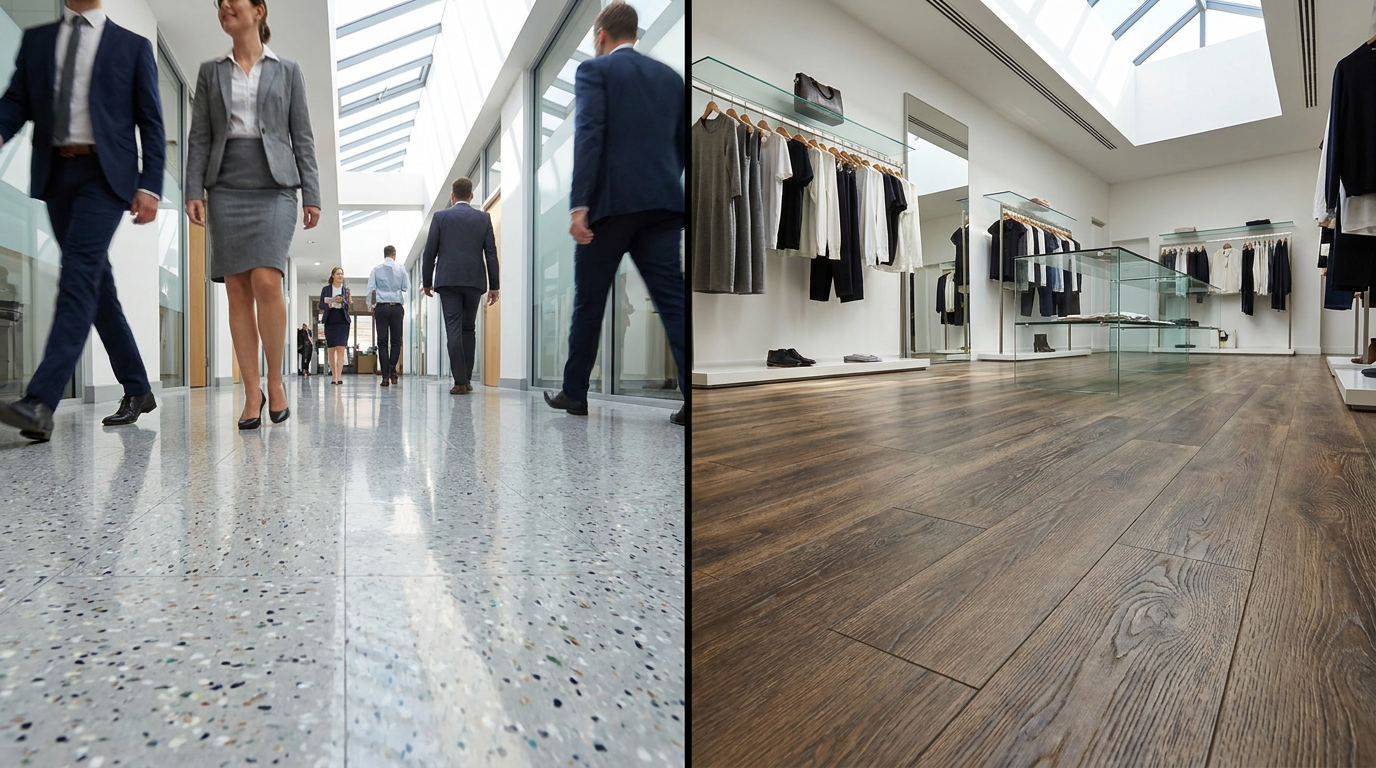
Luxury vinyl tile (LVT) is better for most commercial spaces due to lower maintenance costs and superior durability, while VCT remains the budget-friendly choice for high-traffic areas where initial cost matters most. VCT costs $1.50 to $4.00 per square foot installed but requires $0.85 to $1.20 per square foot annually for stripping and waxing. LVT costs $3.00 to $8.00 per square foot installed with minimal ongoing maintenance.
- VCT requires professional stripping and waxing every 6 to 12 months at $0.85 to $1.20 per square foot in South Florida
- LVT offers 15 to 25 year lifespans with only routine cleaning required, reducing total cost of ownership by 30 to 40 percent
- Healthcare and education facilities increasingly choose LVT for infection control and slip resistance compliance
- VCT remains cost-effective for warehouses and back-of-house areas where appearance is secondary
- Miami's humidity levels of 70 to 80 percent make proper floor maintenance critical for both flooring types
Understanding VCT and LVT Composition
Vinyl composition tile, commonly called VCT, consists of limestone powder, filler materials, and thermoplastic binders compressed into 12-inch square tiles. According to Shaw Contract's flooring comparison guide, VCT contains only about 20 to 30 percent vinyl content, which explains its porous surface and need for protective floor finish coatings.
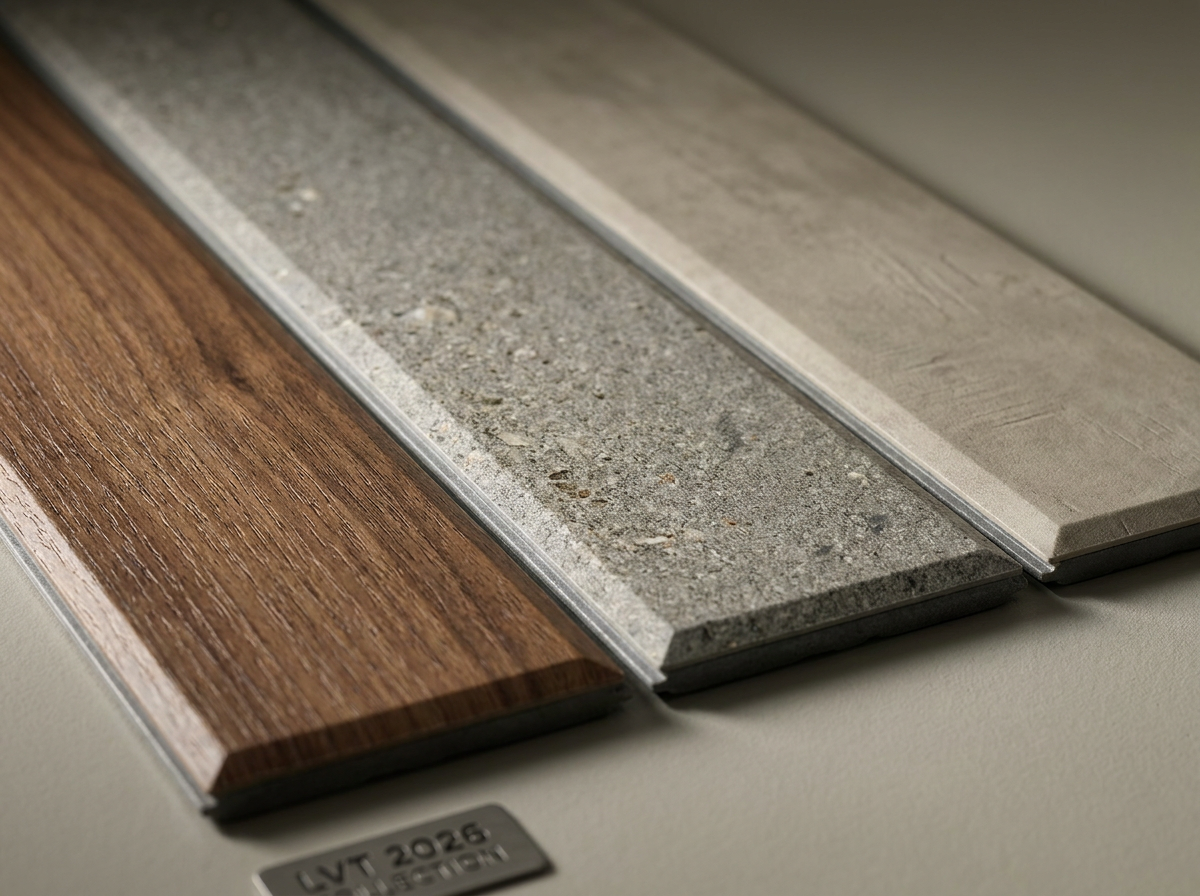
Luxury vinyl tile uses multiple layers including a rigid core, photographic design layer, and clear wear layer ranging from 6 to 28 mils thick. This construction creates a non-porous surface that resists moisture, stains, and scratches without requiring wax applications. Major manufacturers like Armstrong Flooring, Mannington Commercial, and Tarkett produce both VCT and LVT products for commercial applications.
The fundamental difference lies in surface protection. VCT relies on applied floor finish for protection and appearance. LVT has built-in protection through its wear layer, eliminating the strip-and-wax cycle that defines VCT maintenance.
Installation Cost Comparison
Initial material and installation costs favor VCT for budget-conscious facility managers. VCT materials cost $0.75 to $2.00 per square foot, with installation adding $0.75 to $2.00 per square foot. A 10,000 square foot retail space pays $15,000 to $40,000 for complete VCT installation.
LVT materials range from $2.00 to $5.00 per square foot, with installation costs of $1.00 to $3.00 per square foot. That same 10,000 square foot space requires $30,000 to $80,000 for LVT installation. According to Parterre Flooring's analysis, this 50 to 100 percent higher upfront cost often reverses when calculating total cost of ownership over 10 years.
| Cost Factor | VCT | LVT |
|---|---|---|
| Material Cost per Sq Ft | $0.75 to $2.00 | $2.00 to $5.00 |
| Installation per Sq Ft | $0.75 to $2.00 | $1.00 to $3.00 |
| Total Installed Cost (10,000 sq ft) | $15,000 to $40,000 | $30,000 to $80,000 |
| Annual Maintenance per Sq Ft | $0.85 to $1.20 | $0.10 to $0.25 |
| 10-Year Maintenance Cost | $85,000 to $120,000 | $10,000 to $25,000 |
| 10-Year Total Cost of Ownership | $100,000 to $160,000 | $40,000 to $105,000 |
Maintenance Requirements and Costs
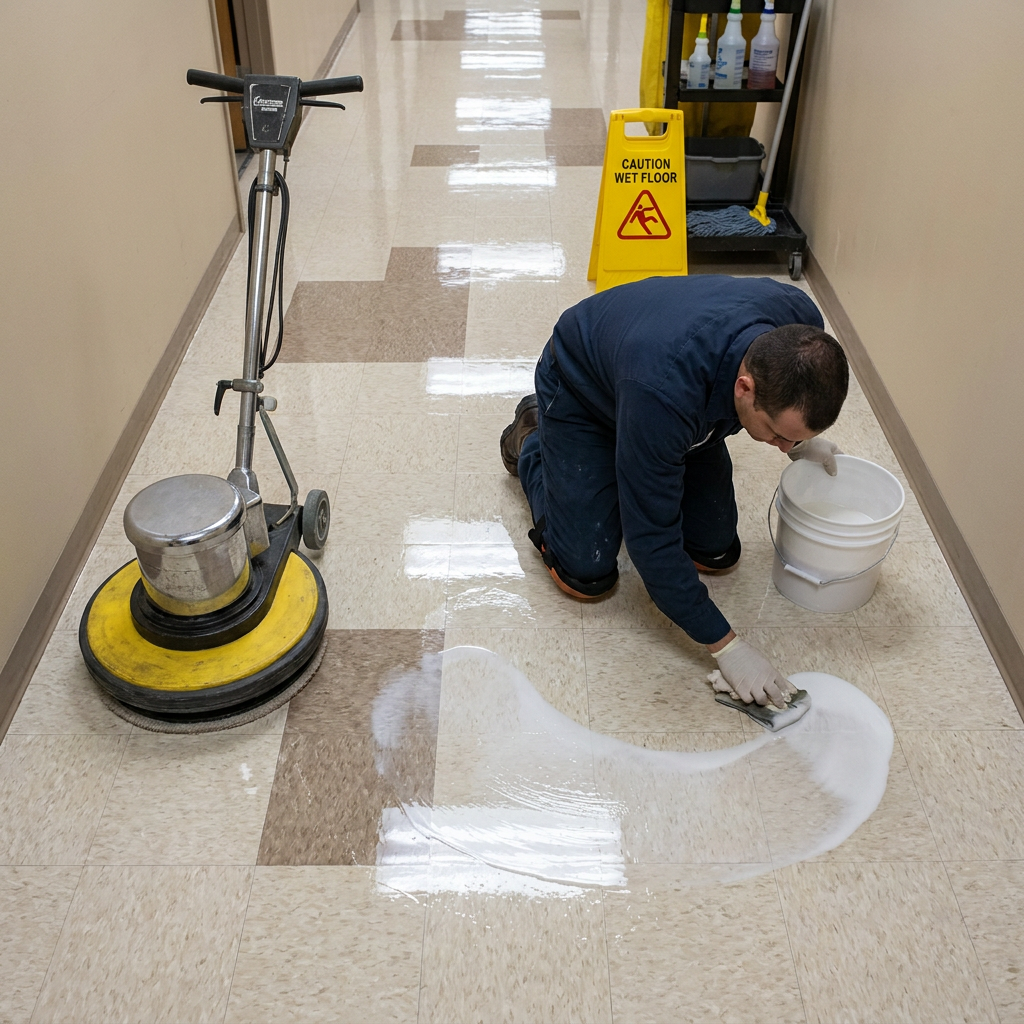
VCT maintenance represents the most significant ongoing expense for commercial facilities. The porous surface requires 3 to 5 coats of commercial floor finish upon installation, followed by periodic maintenance cycles. High-traffic areas need commercial floor stripping and waxing every 6 to 12 months, while moderate-traffic zones can extend to 12 to 18 months between full strip cycles.
Between full strip and wax services, VCT floors benefit from commercial floor scrubbing and waxing to refresh the finish without complete removal. This scrub-and-recoat process costs $0.35 to $0.55 per square foot and extends the time between expensive full strip cycles. Most facilities schedule 2 to 3 scrub-and-recoat services between each full strip.
LVT maintenance involves daily dust mopping, weekly damp mopping with neutral pH cleaner, and periodic deep cleaning with auto-scrubbers. No stripping, waxing, or burnishing required. Annual maintenance costs for LVT run $0.10 to $0.25 per square foot, representing 75 to 85 percent savings compared to VCT.
VCT Maintenance Schedule for South Florida
South Florida's climate creates unique challenges for VCT maintenance. Miami-Dade, Broward, and Palm Beach Counties experience humidity levels averaging 70 to 80 percent, which affects floor finish curing and durability. Summer months require longer drying times between finish coats, typically 45 to 60 minutes versus 30 to 45 minutes in drier climates.
Sand and grit tracked in from beaches and parking lots accelerate finish wear. Facilities within 5 miles of the coast often need quarterly high-speed burnishing to maintain gloss levels. The combination of humidity, sand, and heavy foot traffic means South Florida VCT floors typically require maintenance 20 to 30 percent more frequently than identical installations in northern states.
Durability and Lifespan Analysis
VCT lifespan ranges from 10 to 20 years depending on maintenance quality and traffic levels. Properly maintained VCT in a moderate-traffic office environment can reach 20 years. High-traffic retail or healthcare settings typically see 10 to 15 year lifespans even with diligent maintenance. The tile itself remains durable, but deep scratches and gouges that penetrate the finish require individual tile replacement.
LVT offers 15 to 25 year lifespans with proper care. The wear layer thickness directly correlates with longevity: 12-mil wear layers suit light commercial use for 10 to 15 years, while 20-mil and 28-mil products handle heavy commercial traffic for 20 to 25 years. According to National Floors Direct's comparison, premium LVT products from manufacturers like Karndean, Interface, and Mohawk include 15 to 20 year commercial warranties.
Scratch and dent resistance favors LVT significantly. The urethane wear layer resists rolling loads from carts and equipment up to 2,000 pounds per square inch. VCT finish scratches easily and requires frequent burnishing to minimize visible damage. Healthcare facilities report 40 to 50 percent fewer floor-related maintenance calls after switching from VCT to LVT.
Industry-Specific Recommendations
Healthcare Facilities
LVT dominates new healthcare construction and renovation projects. The Centers for Disease Control and Prevention guidelines for infection control favor non-porous flooring that can be thoroughly disinfected. VCT's porous surface and wax layers can harbor bacteria in micro-scratches, while LVT's sealed surface allows complete sanitization with EPA-registered disinfectants.
Hospitals, clinics, and medical offices benefit from LVT's seamless installation options using heat-welded seams. This eliminates gaps where pathogens accumulate. Facilities requiring frequent disinfection, such as operating rooms and patient care areas, should specify LVT with antimicrobial additives from manufacturers like Gerflor or Polyflor.
Educational Institutions
K-12 schools and universities face a difficult choice between VCT's lower upfront cost and LVT's reduced maintenance burden. Many school districts continue specifying VCT for classrooms and corridors due to capital budget constraints, accepting higher long-term maintenance costs that come from operating budgets.
Forward-thinking districts calculate total cost of ownership over 15 to 20 years before specifying flooring. A 50,000 square foot elementary school saves $350,000 to $475,000 in maintenance costs over 15 years by choosing LVT over VCT, according to facility management industry data. This savings funds 2 to 3 additional classroom technology upgrades or building improvements.
Retail Spaces
Retail environments prioritize appearance and brand consistency. LVT offers superior design options including realistic wood, stone, and custom patterns that enhance store aesthetics. Major retailers like Target, Whole Foods, and CVS have transitioned from VCT to LVT in new store builds and remodels.
The fashion and luxury retail segment almost exclusively specifies LVT or natural materials. VCT's institutional appearance conflicts with premium brand positioning. Quick-service restaurants and grocery stores increasingly choose LVT for customer-facing areas while retaining VCT in back-of-house storage and prep areas where cost matters more than appearance.
Warehouses and Industrial Spaces
VCT remains cost-effective for warehouse offices, break rooms, and locker areas where appearance is secondary to budget. These low-visibility spaces tolerate the institutional look of VCT and justify the ongoing maintenance expense through lower initial investment. Industrial facilities with limited public access often choose VCT for administrative areas.
However, warehouse showrooms and customer-facing distribution centers benefit from LVT's professional appearance. Companies like Amazon, FedEx, and UPS specify LVT in visitor areas and office spaces within distribution facilities while using polished concrete or epoxy in actual warehouse operations.
Environmental and Sustainability Factors
Both VCT and LVT face sustainability scrutiny from environmentally conscious facility managers. VCT contains limestone, a naturally abundant material, but also includes PVC and phthalate plasticizers that raise health concerns. The frequent stripping process generates chemical waste requiring proper disposal, and spent floor finish contributes to wastewater treatment challenges.
LVT manufacturers have responded to environmental concerns with phthalate-free formulations and recycled content options. Armstrong Flooring's BioBased Tile contains bio-based plasticizers derived from soybeans. Tarkett's iQ Natural contains 98 percent natural raw materials. These products achieve FloorScore certification for low VOC emissions and contribute to LEED building certification points.
The elimination of stripping chemicals represents LVT's most significant environmental advantage. A 10,000 square foot VCT floor generates approximately 50 to 75 gallons of chemical stripper waste annually. LVT maintenance requires only neutral pH cleaners with minimal environmental impact. Facilities pursuing green building certifications should factor chemical reduction into flooring decisions.
Slip Resistance and Safety Compliance
Slip resistance ratings affect liability exposure and OSHA compliance for commercial facilities. Both VCT and LVT can achieve acceptable slip resistance, but performance varies significantly based on maintenance and product selection.
Fresh VCT floor finish provides excellent slip resistance with coefficient of friction values of 0.5 to 0.6. However, finish wear and improper maintenance can reduce COF below the 0.5 threshold recommended by the American National Standards Institute. Over-buffing VCT creates a dangerously slick surface that increases slip-and-fall incidents. Facilities must balance appearance goals with safety requirements.
LVT products include textured surfaces engineered for consistent slip resistance throughout their lifespan. Commercial LVT typically achieves COF values of 0.5 to 0.8 without relying on applied finishes. This built-in safety feature eliminates the slip hazard variability associated with VCT maintenance cycles. Healthcare and food service facilities particularly benefit from LVT's reliable slip resistance.
Making the Right Choice for Your Facility
The VCT versus LVT decision depends on budget structure, maintenance capabilities, and facility priorities. Consider these factors when selecting commercial flooring:
Choose VCT when: Capital budgets are constrained but operating budgets can absorb ongoing maintenance costs. The facility has in-house floor care staff or reliable contractor relationships. Appearance requirements are moderate, and institutional aesthetics are acceptable. The space serves back-of-house functions with limited public visibility.
Choose LVT when: Total cost of ownership over 10 to 15 years matters more than initial investment. The facility lacks dedicated floor care resources or prefers minimal maintenance. Design flexibility and aesthetic appeal support brand positioning. Healthcare, food service, or other industries require non-porous surfaces for sanitation compliance.
Many facilities benefit from hybrid approaches. A medical office might specify LVT in patient areas and exam rooms while using VCT in storage closets and mechanical rooms. Retail stores often install LVT in sales floors and VCT in stockrooms. This strategy optimizes both budget and appearance where each matters most.
Professional Floor Maintenance Services
Regardless of flooring choice, professional maintenance extends lifespan and protects your investment. VCT floors require commercial floor deep cleaning between wax cycles to remove embedded soil and maintain appearance. LVT benefits from periodic professional cleaning to address buildup that routine maintenance misses.
South Florida facilities face unique challenges from humidity, sand, and salt air that accelerate floor wear. Working with experienced commercial cleaning services ensures proper techniques and chemistry for local conditions. Professional floor care teams understand the specific requirements of both VCT and LVT maintenance in Miami-Dade, Broward, and Palm Beach Counties.
Frequently Asked Questions
Is VCT flooring cheaper than LVT in the long run?
No, VCT costs more over 10 years despite lower initial prices. A 10,000 square foot facility pays $100,000 to $160,000 total for VCT including maintenance versus $40,000 to $105,000 for LVT. The annual stripping and waxing costs of $0.85 to $1.20 per square foot accumulate quickly, while LVT maintenance costs only $0.10 to $0.25 per square foot annually.
How often does VCT flooring need to be stripped and waxed?
High-traffic commercial VCT floors require stripping and waxing every 6 to 12 months. Moderate-traffic areas can extend to 12 to 18 months between full strip cycles. Between full services, schedule scrub-and-recoat maintenance every 3 to 4 months to maintain appearance and extend the time between expensive complete strip jobs.
Can LVT be installed over existing VCT?
Yes, LVT can be installed over VCT in many cases if the existing floor is in good condition. The VCT must be firmly adhered, level, and free of wax buildup. Professional installers typically strip all floor finish, repair damaged tiles, and apply a skim coat to create a smooth substrate. This approach saves $0.50 to $1.00 per square foot compared to complete VCT removal.
Which flooring is better for healthcare facilities?
LVT is better for healthcare facilities due to its non-porous surface that supports infection control protocols. The CDC recommends non-porous flooring for patient care areas. LVT allows thorough disinfection with EPA-registered products, while VCT's porous surface and wax layers can harbor bacteria. Heat-welded LVT seams eliminate gaps where pathogens accumulate.
Does LVT scratch easily in commercial settings?
Commercial-grade LVT with 20-mil or thicker wear layers resists scratching from normal commercial traffic including rolling carts, chairs, and foot traffic. The urethane wear layer handles loads up to 2,000 PSI. Residential-grade LVT with 6 to 12-mil wear layers scratches more easily and should not be specified for commercial applications.
Need Professional VCT or LVT Floor Maintenance?
MB Floor Solutions serves 150+ businesses across Miami-Dade, Broward, and Palm Beach Counties with expert floor stripping, waxing, and deep cleaning services. Get a free on-site assessment and written quote for your facility.
Get Your Free Assessment