Compare urethane, acrylic, epoxy, and wax floor finishes for high traffic commercial spaces. Learn costs, durability ratings, and maintenance requirements.
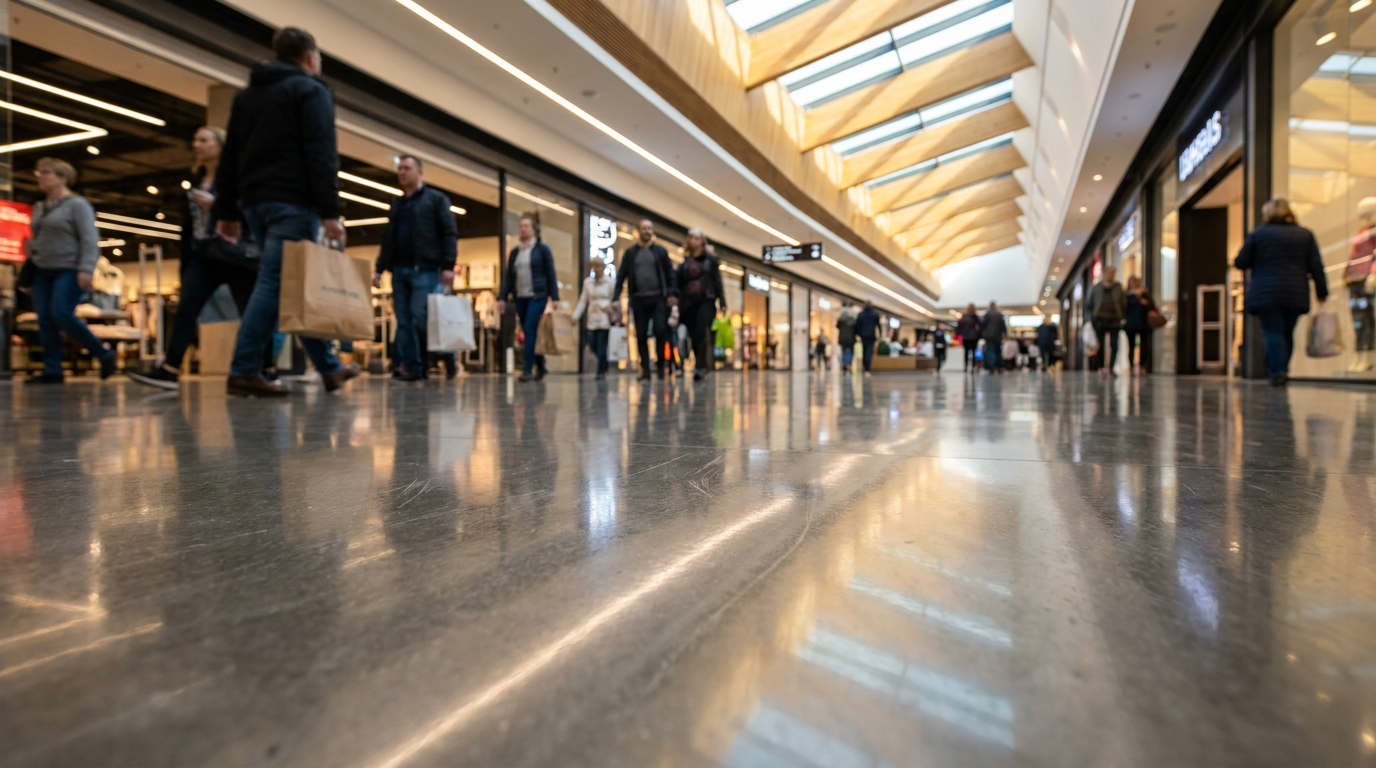
The best commercial floor finishes for high traffic areas are high-solids urethane-fortified acrylics, two-part epoxy coatings, and polyaspartic systems. These finishes withstand 10,000 or more daily foot impressions, resist scuffing from rolling carts, and maintain gloss levels above 70% for 6 to 12 months between maintenance cycles.
- Urethane-fortified acrylic finishes cost $0.85 to $1.25 per square foot applied and last 6 to 12 months in high traffic corridors
- Two-part epoxy coatings provide 3 to 5 years of protection at $3 to $8 per square foot but require 24 to 72 hour cure times
- High-solids finishes (25% or higher solids content) reduce recoat frequency by 40% compared to standard 18% solids products
- South Florida humidity above 60% requires low-moisture finishes with 30 to 60 minute dry times to prevent hazing
- Healthcare and food service facilities must use finishes meeting NSF International and OSHA slip resistance standards
Understanding Floor Finish Categories and Their Applications
Commercial floor finishes fall into four primary categories: acrylic polymer emulsions, urethane-modified acrylics, epoxy systems, and polyaspartic coatings. Each category serves specific traffic levels and facility types. According to McLean Company's commercial flooring guide, selecting the wrong finish type for your traffic volume leads to premature wear and increased maintenance costs.
Acrylic polymer emulsions represent the most common finish type for VCT and LVT flooring. These water-based products contain 18% to 25% solids and create a thermoplastic film that responds to buffing and burnishing. Standard acrylics work well in offices with 500 to 2,000 daily foot impressions but deteriorate rapidly in retail or healthcare settings exceeding 5,000 impressions daily.
Urethane-modified acrylics combine acrylic polymers with cross-linking urethane additives. This chemistry creates a harder, more scratch-resistant film that maintains gloss 30% to 50% longer than standard acrylics. Products from manufacturers like Diversey, Betco, and Spartan Chemical dominate this category, with solids content ranging from 22% to 28%.
Comparing Floor Finish Performance by Traffic Level
Traffic volume determines which finish chemistry provides the best cost-per-year value. A finish that costs $0.50 per square foot but requires reapplication every 3 months actually costs more annually than a $1.25 finish lasting 12 months. The table below compares finish types across key performance metrics for South Florida commercial facilities.
| Finish Type | Cost Per Sq Ft | Durability Rating | Recoat Frequency | Best For |
|---|---|---|---|---|
| Standard Acrylic (18% solids) | $0.35 to $0.55 | Low to Medium | Every 2 to 4 months | Low traffic offices |
| High-Solids Acrylic (25%+ solids) | $0.55 to $0.85 | Medium to High | Every 4 to 6 months | Retail, schools |
| Urethane-Fortified Acrylic | $0.85 to $1.25 | High | Every 6 to 12 months | Healthcare, high traffic corridors |
| Two-Part Epoxy | $3.00 to $8.00 | Very High | Every 3 to 5 years | Warehouses, manufacturing |
| Polyaspartic Coating | $4.00 to $10.00 | Very High | Every 5 to 10 years | Parking garages, food processing |
High traffic areas in commercial buildings, defined as spaces receiving more than 5,000 foot impressions daily, require finishes with durability ratings of "high" or above. These areas include main entrances, elevator lobbies, cafeterias, and primary circulation corridors. Facilities serving these high traffic areas benefit from professional commercial floor stripping and waxing services that apply multiple coats of urethane-fortified products.
Urethane-Fortified Acrylic Finishes for VCT and LVT
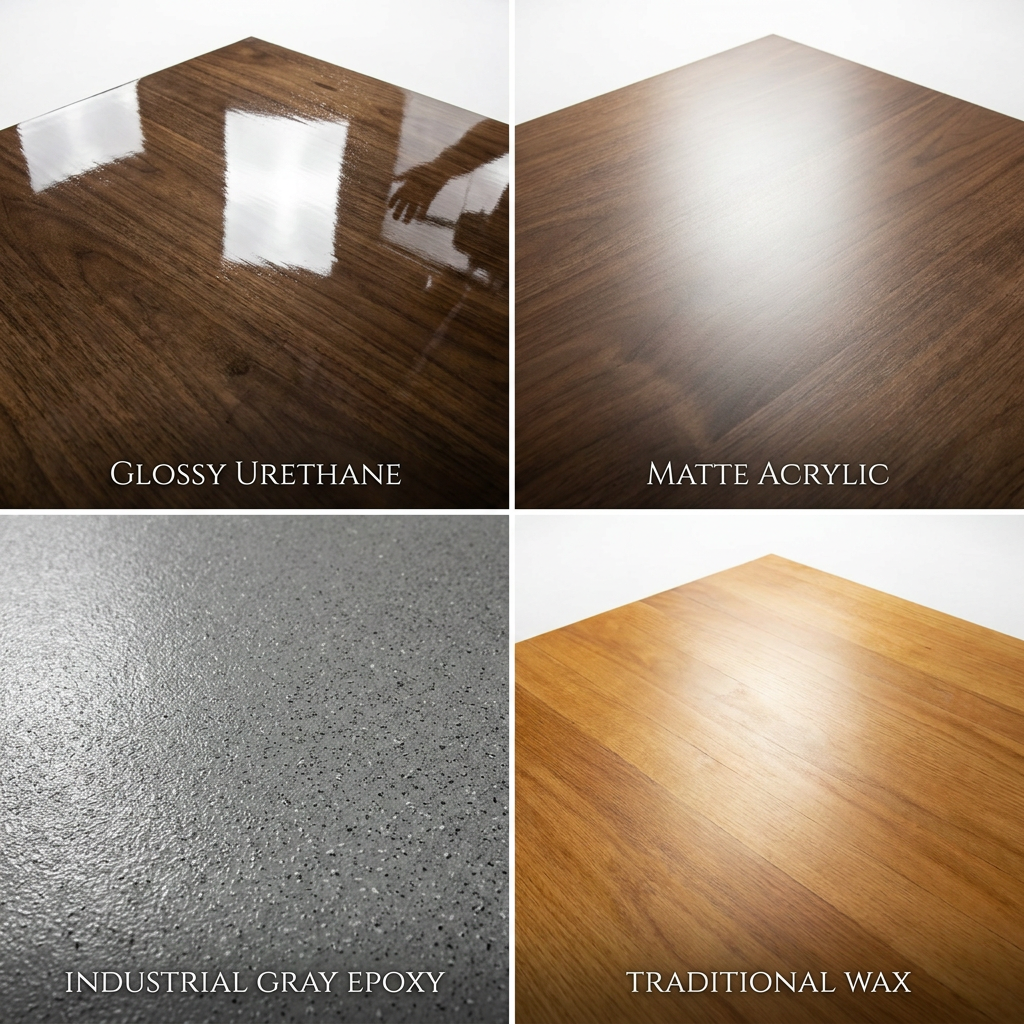
Urethane-fortified acrylics represent the gold standard for VCT floor maintenance in high traffic commercial spaces. These products, manufactured by companies including Johnson Diversey, Betco, Zep, and 3M, incorporate cross-linking urethane polymers that create a harder, more flexible film than standard acrylics. The urethane component resists black heel marks, cart wheel scuffing, and the abrasive action of tracked-in sand and grit.
Application requires 3 to 5 coats at 1,500 to 2,000 square feet per gallon coverage. Each coat needs 30 to 45 minutes of dry time before the next application, with full cure requiring 24 to 48 hours. During this cure period, facilities should restrict heavy rolling traffic and avoid placing furniture or equipment on the finished surface.
The cost for professional application of urethane-fortified finishes ranges from $0.85 to $1.15 per square foot in Miami-Dade County, $0.80 to $1.10 in Broward County, and $0.90 to $1.20 in Palm Beach County. High-rise buildings add $0.15 to $0.25 per square foot due to equipment logistics and elevator scheduling constraints.
Maintaining Urethane-Fortified Finishes Between Strip Cycles
Between full strip and wax cycles, commercial floor scrubbing and waxing (scrub and recoat) extends finish life at a fraction of the cost. This maintenance service removes the top 10% to 20% of worn finish and applies 1 to 2 fresh coats, restoring gloss and protection without the labor-intensive stripping process.
Most commercial facilities schedule scrub and recoat services every 3 to 6 months, with high traffic corridors and healthcare spaces requiring service every 1 to 3 months. This approach reduces annual floor care costs by 25% to 40% compared to relying solely on full strip and wax cycles. For detailed strategies on maximizing finish longevity, review this guide on how to extend commercial floor finish lifespan and reduce maintenance costs.
Epoxy Floor Coatings for Industrial and Heavy Traffic Applications
Two-part epoxy systems provide the highest durability for concrete, warehouse, and industrial floor surfaces. Unlike acrylic finishes that sit on top of the floor surface, epoxies chemically bond to properly prepared concrete and create a monolithic coating 10 to 125 mils thick. This thickness, compared to 1 to 3 mils for acrylic finishes, explains the dramatic difference in wear resistance.
According to Royal Floors' analysis of commercial flooring options, epoxy coatings withstand forklift traffic, pallet jack wheels, and dropped tools that would immediately damage acrylic finishes. Manufacturing facilities, distribution centers, and automotive service areas rely on epoxy systems for this reason.
The primary limitation of epoxy coatings involves cure time and application conditions. Two-part epoxies require 24 to 72 hours before light foot traffic and 5 to 7 days before heavy rolling loads. Application must occur when concrete temperature measures between 55 and 90 degrees Fahrenheit, with relative humidity below 85%. South Florida's climate requires careful scheduling, often during overnight hours with HVAC systems running to control humidity.
Epoxy Finish Options and Slip Resistance
Modern epoxy systems offer multiple finish options to meet aesthetic and safety requirements. Clear epoxies showcase decorative aggregate or existing concrete character. Solid color epoxies in standard shades like safety gray, tile red, and beige provide uniform appearance and easier maintenance. Metallic epoxies create dramatic visual effects for showrooms and retail environments.
Slip resistance represents a critical consideration for any floor finish. The Americans with Disabilities Act (ADA) recommends static coefficient of friction (SCOF) values of 0.6 or higher for level surfaces and 0.8 or higher for ramps. Epoxy manufacturers offer anti-slip additives including aluminum oxide, silica sand, and polymer beads that increase SCOF to 0.65 to 0.85 without significantly affecting cleanability.
Polyaspartic Coatings: Fast-Cure Alternative to Epoxy
Polyaspartic coatings, developed by Bayer MaterialScience in the 1990s, combine epoxy-level durability with dramatically faster cure times. A complete polyaspartic system can return to foot traffic in 4 to 6 hours and heavy traffic in 24 hours, compared to 5 to 7 days for traditional epoxies. This speed makes polyaspartics ideal for facilities that cannot afford extended downtime.
The chemistry behind polyaspartics involves aliphatic polyurea technology that cures through a moisture-insensitive reaction. This means application can proceed at temperatures from 30 to 100 degrees Fahrenheit and humidity levels up to 95%. For South Florida facilities dealing with year-round humidity challenges, polyaspartics eliminate many of the scheduling constraints associated with epoxy installation.
Cost for polyaspartic systems ranges from $4 to $10 per square foot installed, positioning them between standard epoxies and premium urethane cement systems. The higher material cost is often offset by reduced labor time and faster facility return-to-service. Parking garages, food processing plants, and pharmaceutical facilities represent primary applications for polyaspartic technology.
Selecting Floor Finish Based on Facility Type
Different commercial environments present unique challenges that influence finish selection. Healthcare facilities must meet infection control standards while maintaining easy cleanability. Retail spaces require high gloss appearance with resistance to shopping cart wheels. Industrial facilities prioritize chemical resistance and impact durability over aesthetic considerations.
Healthcare Facility Floor Finish Requirements
Hospitals, clinics, and medical offices require floor finishes compatible with aggressive cleaning chemicals and frequent disinfection protocols. Standard acrylic finishes often yellow or soften when exposed to quaternary ammonium compounds, hydrogen peroxide solutions, or bleach-based cleaners used in healthcare settings.
Urethane-fortified finishes from manufacturers like Diversey's Signature UHS and Betco's Untouchable with SRT provide chemical resistance ratings suitable for healthcare use. These products maintain gloss and integrity through daily mopping with EPA-registered disinfectants. The finish must also meet NSF International standards for cleanability in patient care areas.
South Florida healthcare facilities benefit from professional floor care programs that include regular commercial floor deep cleaning with auto-scrubbers to remove biofilm and embedded contaminants between finish applications.
Retail and High Traffic Lobby Floor Finishes
Retail environments and building lobbies demand finishes that maintain high gloss under constant foot traffic while resisting scuffs from shopping carts, hand trucks, and rolling luggage. These high traffic areas in commercial buildings require finishes rated for 10,000 or more daily impressions.
High-speed burnishable finishes respond well to daily or weekly burnishing at 1,500 to 2,500 RPM, restoring gloss without applying additional product. This maintenance approach works well for retail facilities with overnight cleaning crews equipped with propane or electric burnishers. The heat generated during burnishing re-flows the finish surface, healing minor scratches and restoring reflectivity.
For natural stone surfaces in upscale lobbies, commercial marble and terrazzo polishing using diamond abrasives provides superior results compared to topical finishes. Diamond-polished marble and terrazzo develop a natural luster from the stone itself rather than a sacrificial coating layer.
Industrial and Warehouse Floor Coatings
Warehouse and manufacturing floors face challenges that exceed the capabilities of acrylic finishes. Forklift traffic, pallet jack wheels, chemical spills, and impact from dropped materials require epoxy or polyaspartic systems with thickness measured in mils rather than microns.
Concrete floors in industrial settings require proper preparation before coating application. This includes diamond grinding to achieve a concrete surface profile (CSP) of 2 to 4, crack repair with flexible polyurea fillers, and moisture testing to verify vapor emission rates below 3 pounds per 1,000 square feet per 24 hours. Skipping preparation steps leads to coating failure through delamination, bubbling, or peeling.
South Florida Climate Considerations for Floor Finishes
South Florida's subtropical climate creates specific challenges for floor finish application and maintenance. Humidity levels averaging 70% to 80% year-round affect cure times, film formation, and long-term finish performance. Facilities in Miami-Dade, Broward, and Palm Beach Counties must account for these environmental factors when selecting and maintaining floor finishes.
High humidity slows water evaporation from acrylic finishes, extending dry times from the standard 30 to 45 minutes to 60 to 90 minutes. Applying subsequent coats before adequate drying leads to finish problems including hazing, whitening, and poor adhesion. Professional applicators use high-velocity air movers and maintain HVAC systems at 68 to 72 degrees Fahrenheit with dehumidification during application.
The summer cleaning challenges for South Florida buildings article provides additional guidance on managing humidity-related floor care issues during peak moisture months from June through October.
Hurricane Season Floor Care Considerations
Hurricane season from June 1 through November 30 requires facilities to plan floor maintenance around potential storm impacts. Scheduling major floor projects like full strip and wax during this period carries risk of incomplete cure if power outages occur. Water intrusion from storm damage can destroy freshly applied finishes that have not fully cured.
Facilities should complete annual strip and wax cycles before June or defer until December. Maintenance services like scrub and recoat present lower risk due to faster cure times. The hurricane prep guide for Miami commercial facilities outlines additional considerations for protecting floor investments during storm season.
Calculating Total Cost of Ownership for Floor Finishes
Evaluating floor finish options requires calculating total cost of ownership (TCO) rather than focusing solely on initial application cost. TCO includes material cost, labor for application, maintenance frequency, equipment requirements, and facility downtime. A finish with higher upfront cost often delivers lower TCO through extended service intervals.
Consider a 50,000 square foot retail facility comparing standard acrylic at $0.45 per square foot requiring service every 3 months versus urethane-fortified finish at $0.95 per square foot requiring service every 9 months. The standard acrylic costs $22,500 per application times 4 applications annually, totaling $90,000. The urethane-fortified finish costs $47,500 per application times 1.33 applications annually, totaling $63,175. The premium finish saves $26,825 annually despite costing more than double per application.
For detailed pricing information specific to South Florida markets, the South Florida commercial cleaning cost comparison provides current rate ranges for various floor care services.
Frequently Asked Questions About Commercial Floor Finishes
What is the most durable floor finish for high traffic commercial areas?
Two-part epoxy coatings and polyaspartic systems provide the highest durability, lasting 3 to 10 years in high traffic areas. For VCT and LVT flooring, urethane-fortified acrylic finishes offer the best combination of durability and maintainability, lasting 6 to 12 months between full strip cycles with proper scrub and recoat maintenance every 3 to 6 months.
How often should commercial floors be stripped and waxed?
Most commercial facilities require full strip and wax every 6 to 12 months, depending on traffic volume and finish quality. High traffic corridors, healthcare facilities, and retail spaces may need service every 4 to 6 months. Implementing a scrub and recoat program between full strip cycles extends intervals and reduces annual costs by 25% to 40%.
What floor finish works best for healthcare facilities?
Healthcare facilities require urethane-fortified finishes with chemical resistance ratings compatible with EPA-registered disinfectants. Products must withstand daily exposure to quaternary ammonium compounds, hydrogen peroxide solutions, and bleach-based cleaners without yellowing or softening. NSF International certification indicates suitability for patient care areas.
Can epoxy floor coatings be applied over existing floor finish?
No. Epoxy coatings require direct contact with properly prepared concrete to achieve chemical bonding. Existing floor finishes, sealers, or coatings must be completely removed through diamond grinding or shot blasting before epoxy application. Applying epoxy over existing coatings leads to delamination failure within months.
What causes floor finish to turn yellow or haze?
Yellowing results from UV exposure, incompatible cleaning chemicals, or finish oxidation over time. Hazing typically indicates application problems including insufficient dry time between coats, high humidity during application, or contamination from cleaning residues. Using low-odor, pH-neutral cleaners and maintaining proper HVAC conditions during application prevents most hazing issues.
Getting Professional Floor Finish Assessment
Selecting the optimal floor finish for your facility requires evaluating traffic patterns, existing floor conditions, maintenance capabilities, and budget constraints. Professional floor care providers conduct on-site assessments to measure current finish thickness, identify wear patterns, and recommend appropriate products and service intervals.
MB Floor Solutions provides free on-site assessments and written quotes for commercial facilities throughout Miami-Dade, Broward, and Palm Beach Counties. Their technicians evaluate floor conditions, discuss facility requirements, and develop customized maintenance programs that maximize finish longevity while minimizing total cost of ownership. To schedule an assessment, contact MB Floor Solutions and describe your facility's floor care needs.
Ready to Protect Your High Traffic Floors?
MB Floor Solutions provides professional floor stripping, waxing, and maintenance services across South Florida. Request your free on-site assessment and written quote today.
Get Your Free Assessment