Understanding Hurricane Season in Miami: The Business Reality
When the National Hurricane Center issues a tropical storm watch for South Florida, Miami facility managers face a critical 48-72 hour window to protect buildings, prevent water intrusion, secure equipment, and prepare facilities to withstand sustained winds up to 150+ mph and torrential rainfall that can dump 10-20 inches in hours. The difference between businesses that reopen within days versus those facing weeks or months of recovery almost always comes down to pre-storm preparation quality.
Hurricane season officially runs June 1 through November 30, but Miami's peak vulnerability occurs August through October when Atlantic water temperatures reach maximum levels. South Florida averages one direct hurricane impact every 2-3 years and tropical storm impacts annually—meaning commercial facility preparation isn't a question of "if" but "when" and "how severe."
MB Floor Solutions provides comprehensive commercial facility preparation and post-storm restoration services throughout Miami-Dade, Broward, and Palm Beach Counties. This guide covers complete hurricane preparation protocols, facility-specific cleaning requirements, emergency response procedures, and post-storm restoration processes that minimize business interruption and protect your commercial property investment.
Pre-Hurricane Facility Preparation Timeline
72 Hours Before Projected Impact: Initial Preparation Phase
When forecasts show potential South Florida impact within 72 hours, begin comprehensive facility preparation immediately. This timeline provides adequate margin for thorough preparation even if storm acceleration occurs.
Exterior Cleaning and Debris Removal:
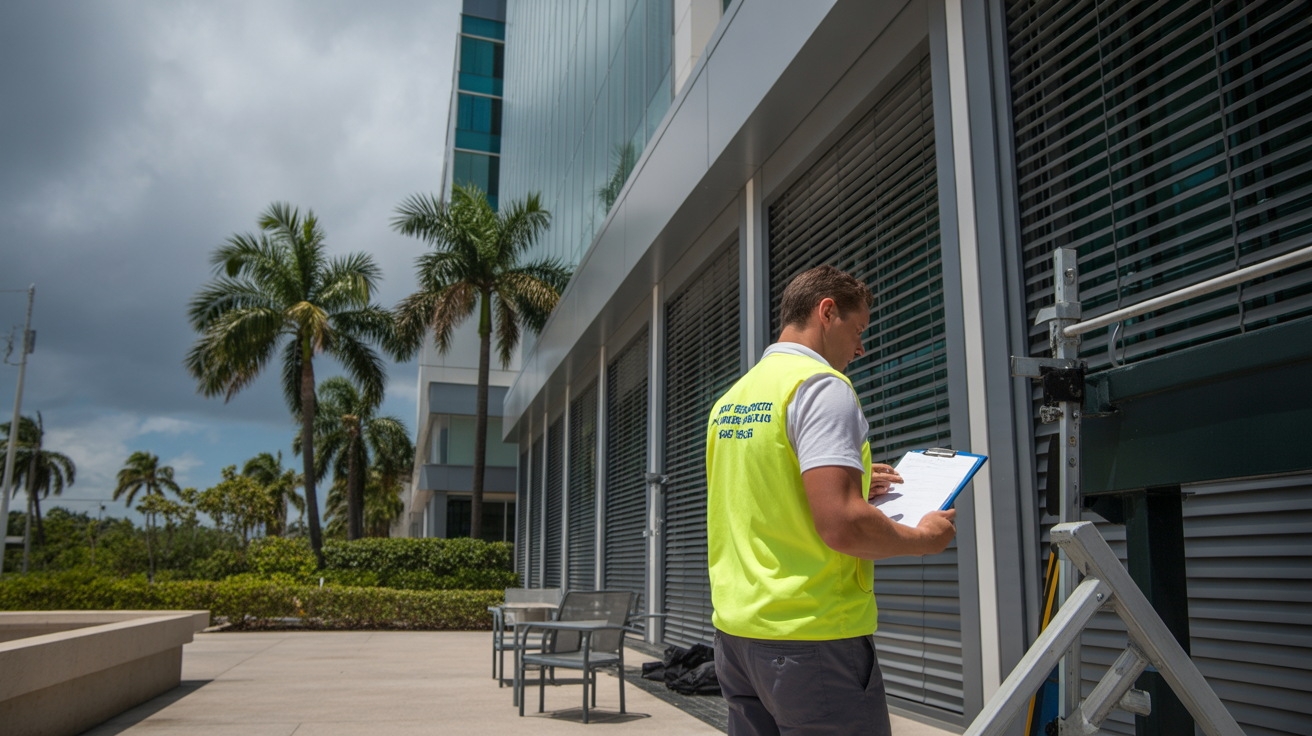
Loose debris becomes dangerous projectiles in hurricane-force winds. Comprehensive exterior cleaning prevents damage to your building and neighboring properties while clearing drain systems that must handle extreme rainfall volumes.
- Parking lot and grounds sweep: Remove all loose items, trash, branches, and debris that could become wind-borne projectiles (even small items become dangerous at 100+ mph)
- Roof inspection and cleaning: Clear all drains, scuppers, and gutters to prevent water pooling and structural loading; remove loose materials that could lift in high winds
- Storm drain clearing: Ensure all exterior drains flow freely to handle 3-5 inches per hour rainfall rates common in hurricanes
- Landscaping securing: Remove or secure loose planters, decorative elements, outdoor furniture, and signage
- Dumpster and equipment securing: Move dumpsters away from building or secure with chains; anchor or move portable equipment indoors
- Window and door inspection: Check all seals, weatherstripping, and closure mechanisms; identify and address any gaps or damage
Interior Floor Protection:
Protecting commercial flooring from water damage prevents tens of thousands in replacement costs. Proper preparation focuses on drainage and moisture barriers.
- Floor drain verification: Test all interior floor drains for proper function; clear any blockages that could cause flooding
- Elevator pit pumps: Verify sump pump operation in elevator pits (common flooding point in high-rises)
- Ground floor furniture elevation: Move furniture, equipment, and materials at least 6-12 inches above floor level in flood-risk areas
- Carpet protection: Document carpet locations with photos; prepare for potential extraction and drying if flooding occurs
48 Hours Before Impact: Intensive Preparation Phase
As storm approach becomes more certain, shift to intensive facility hardening and protection of critical systems and inventory.
Window and Opening Protection:
Miami-Dade and Broward Counties require impact-resistant windows or approved storm shutters for commercial buildings in hurricane zones. Verify all protection systems deploy properly.
- Storm shutter deployment: Install or close all hurricane shutters according to manufacturer specifications; test locking mechanisms
- Impact window verification: Ensure impact-resistant windows are undamaged; even small cracks compromise storm protection
- Door reinforcement: Verify all exterior doors close and seal properly; reinforce as needed with additional bracing
- Loading dock securing: Close and lock all overhead doors; install additional bracing if high winds are forecast
- Roof access securing: Lock all roof access doors and hatches; verify proper sealing to prevent water intrusion
HVAC and Mechanical Systems:
Protecting mechanical systems prevents expensive equipment damage and accelerates post-storm recovery. HVAC system preparation represents critical pre-storm protection.
- System shutdown procedures: Follow proper shutdown protocols for all HVAC equipment; document shutdown status
- Filter removal or protection: Remove filters from rooftop units to prevent saturation and mold growth if water intrusion occurs
- Condenser and compressor covering: Protect exterior HVAC components with waterproof covers designed for hurricane conditions
- Electrical system preparation: Identify critical circuits that must remain energized versus those that should be disconnected
Restroom and Plumbing Preparation:
Preventing sewage backup and water damage in restrooms protects facility sanitation and prevents expensive contamination cleanup.
- Drain backflow prevention: Install backflow preventers in floor drains to prevent sewage backup during storm surge or flooding
- Fixture securing: Ensure all plumbing fixtures are properly secured and not leaking (leaks worsen dramatically under pressure changes)
- Water supply consideration: Document location of main water shutoffs; determine if partial or complete shutdown is appropriate
- Restroom supply removal: Remove paper products, dispenser contents, and supplies that could be damaged by water intrusion or humidity
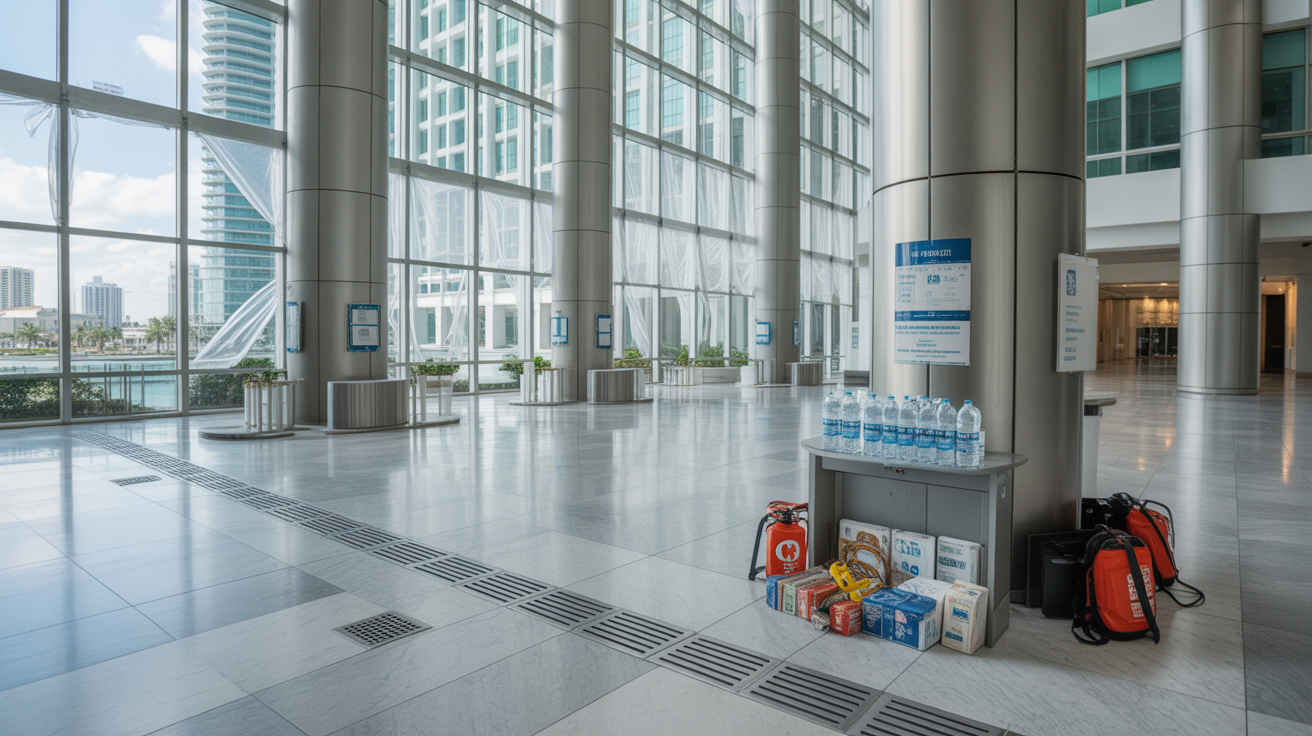
24 Hours Before Impact: Final Preparation and Securing
Final 24 hours focus on comprehensive facility securing, documentation, and ensuring all preparation tasks are complete before dangerous conditions arrive.
Interior Space Preparation:
- Equipment and furniture securing: Move valuable equipment away from windows; secure or anchor heavy items that could shift in high winds
- Document and inventory protection: Move critical documents, records, and inventory to interior rooms away from exterior walls
- Electronics and technology protection: Disconnect and elevate computers, servers, and electronic equipment; protect with waterproof covers
- Break room and kitchen securing: Empty and unplug refrigerators if extended power outage is expected; secure loose items
Final Inspection and Documentation:
Comprehensive documentation supports insurance claims and provides baseline for post-storm damage assessment.
- Photographic documentation: Photograph all areas of facility showing preparation measures and pre-storm condition
- Video walkthrough: Record comprehensive video of facility condition for insurance documentation
- Inventory verification: Document high-value equipment, inventory, and assets with photos and serial numbers
- System status recording: Document all HVAC, electrical, and mechanical system shutdown or protection measures
- Contact information verification: Ensure emergency contact lists are current for facility management, cleaning vendors, restoration companies, and insurance
Industry-Specific Hurricane Preparation Requirements
Office Buildings and Corporate Facilities
Office environments require protecting technology infrastructure, documents, and furnishings while ensuring rapid post-storm recovery for business continuity.
Technology and Data Protection:
- Server room securing: Ensure backup generators function properly; verify UPS systems; protect servers from potential water intrusion
- Network equipment protection: Document network configuration; protect switches, routers, and telecommunications equipment
- Workstation securing: Disconnect desktop computers; cover or move to interior locations; elevate laptops and portable equipment
- Data backup verification: Confirm all critical data has current off-site or cloud backups independent of facility systems
Document and Record Protection:
- Critical document securing: Move essential records to waterproof storage or interior vault spaces
- File room preparation: Elevate ground-level file storage; protect file cabinets with waterproof covers if flooding risk exists
- Reception and common area securing: Remove loose items, protect furniture, secure decorative elements
Retail Facilities and Shopping Centers
Retail spaces face unique challenges protecting inventory, point-of-sale systems, and storefront glass while preparing for potential extended closures.
- Storefront window protection: Deploy storm shutters or install plywood protection meeting Miami-Dade County building codes
- Inventory protection: Move merchandise away from windows and exterior walls; elevate ground-level inventory at least 12 inches
- POS system securing: Disconnect and protect cash registers, card readers, and electronic systems; secure cash in safes
- Display and fixture securing: Anchor or remove freestanding displays, mannequins, and fixtures that could fall or shift
- Refrigeration systems: Follow proper shutdown procedures for commercial refrigeration; document contents for insurance purposes
- Exterior signage securing: Verify all exterior signs are properly anchored; remove temporary or portable signage
Healthcare and Medical Facilities
Healthcare facilities require specialized preparation protocols maintaining operational capability for emergency services while protecting patients, equipment, and critical systems.
Patient Care Area Preparation:
- Window protection in patient rooms: Close shutters or install protection while maintaining emergency egress capability
- Medical equipment securing: Anchor portable equipment; protect sensitive diagnostic and treatment devices
- Supply room protection: Verify adequate emergency supplies; protect pharmaceuticals and medical supplies from potential water damage
- Generator and backup power testing: Verify all emergency power systems function properly; test automatic transfer switches
Infection Control and Sanitation:
- Sterile supply protection: Ensure sterile supplies are protected from humidity, water intrusion, and contamination
- Waste management preparation: Arrange for medical waste handling if regular pickup schedules are disrupted
- Water system protection: Prepare for potential water supply interruption; verify backup water sources
Restaurants and Food Service Facilities
Food service operations face perishable inventory, specialized equipment, and strict health code compliance requirements in hurricane preparation and recovery.
- Refrigeration and freezer management: Document all perishable inventory; determine if equipment stays energized or requires shutdown
- Kitchen equipment securing: Anchor mobile equipment; disconnect and protect small appliances and electronics
- Food inventory management: Reduce perishable inventory before storm; properly dispose of items that won't survive extended power outage
- Grease trap and drainage: Ensure all grease traps and floor drains are clear to prevent backup during heavy rainfall
- Gas system shutdown: Follow proper procedures for natural gas or propane shutoff if recommended for storm conditions
- Outdoor dining area securing: Move all outdoor furniture, umbrellas, and equipment indoors; secure awnings and shade structures
Post-Hurricane Facility Assessment and Recovery
Initial Safety Assessment (Before Entry)
Never enter facilities after hurricane impact until safety assessment confirms structural integrity and absence of immediate hazards. Wait for official all-clear from emergency management before approaching commercial properties.
Exterior Safety Evaluation:
- Structural damage assessment: Look for obvious structural damage, roof collapse, wall damage, or foundation issues from outside before entry
- Power line hazards: Check for downed power lines on or near building; maintain 30+ foot distance from any downed lines
- Gas leak detection: Smell for natural gas before and during entry; evacuate immediately if gas odor is detected
- Standing water evaluation: Assess flooding extent and depth; never enter buildings with significant standing water until electrical systems are verified safe
Interior Damage Documentation and Assessment
Once safety assessment allows entry, comprehensive damage documentation supports insurance claims and guides restoration priorities.
- Comprehensive photography: Photograph all damage from multiple angles; include wide shots showing context and close-ups of specific damage
- Video documentation: Record video walkthrough narrating observed damage and concerns
- Written damage inventory: Create detailed list of all damaged equipment, inventory, and building components with estimated values
- Water intrusion documentation: Document all areas with water damage, standing water, or moisture penetration; note water line heights
- Timestamp all documentation: Ensure photos and videos have accurate timestamps for insurance claim verification
Emergency Water Removal and Drying
Water damage accelerates exponentially with time—mold growth begins within 24-48 hours in Miami's warm, humid climate. Immediate professional water extraction and drying prevents catastrophic damage escalation.
- 0-24 hours: Water absorption into porous materials (drywall, wood, carpet); beginning of finish damage to floors and furniture
- 24-48 hours: Mold spore germination begins; odors develop; metal corrosion starts; electronic damage worsens
- 48-72 hours: Visible mold growth appears; structural wood swelling and warping; drywall deterioration accelerates
- 1 week: Severe mold colonization; structural damage requiring replacement rather than drying; contamination spreads throughout HVAC systems
- Cost impact: Each 24-hour delay in professional water extraction increases restoration costs by approximately 30-50%
Professional Water Extraction Services:
MB Floor Solutions provides emergency water extraction and facility drying services using commercial-grade equipment that removes water and moisture far more effectively than consumer wet-dry vacuums.
- Truck-mounted extraction: High-powered vacuum systems remove standing water from carpets and floors
- Portable extraction equipment: Submersible pumps and extractors for areas truck-mounted systems can't reach
- Air movers and dehumidifiers: Commercial drying equipment removes moisture from walls, subfloors, and building materials
- Moisture monitoring: Professional moisture meters document drying progress and ensure complete moisture removal before reconstruction
Mold Prevention and Remediation
Miami's climate creates ideal mold growth conditions post-hurricane—temperatures of 75-85°F combined with elevated humidity and water-damaged materials support rapid colonization.
- Immediate water extraction: Remove standing water within 24 hours to prevent mold germination
- Rapid drying: Achieve complete drying within 48-72 hours using commercial dehumidifiers and air movers
- HVAC system protection: Do not operate HVAC systems until professional cleaning if water intrusion occurred (prevents mold spore distribution)
- Antimicrobial treatment: Apply EPA-registered antimicrobial treatments to water-affected areas after drying
- Material removal: Remove and dispose of porous materials (drywall, insulation, carpet padding) that sustained significant water damage—these cannot be adequately dried
- Air quality monitoring: Consider professional air quality testing if musty odors or visible mold appear
Floor Restoration After Hurricane Water Damage
VCT and Hard Surface Floor Recovery
VCT floors can typically be salvaged after water exposure if professional extraction and drying occur promptly. Tile adhesive failure represents the primary concern in extended flooding.
VCT Floor Assessment:
- Tile adhesion testing: Check for loose, lifting, or buckled tiles indicating adhesive failure from water penetration
- Subfloor moisture testing: Use moisture meters to verify subfloor has dried adequately before proceeding with restoration
- Finish condition evaluation: Determine if existing floor finish can be salvaged or requires complete stripping
VCT Floor Restoration Process:
- Complete water extraction: Remove all surface water and moisture from floor and subfloor using commercial extraction equipment
- Subfloor drying: Allow adequate drying time (typically 3-7 days depending on water exposure severity) before restoration work
- Tile replacement: Remove and replace any tiles that lifted, buckled, or show adhesive failure
- Complete floor stripping: Remove all existing finish that may have water damage or contamination
- Antimicrobial treatment: Apply antimicrobial treatments to prevent mold growth in porous tile material
- Fresh finish application: Apply 4-6 coats of commercial floor finish for maximum protection and appearance restoration
Carpet and Textile Flooring Recovery
Carpet recovery after hurricane flooding depends critically on water source, exposure duration, and professional response speed. Commercial carpet can often be salvaged with immediate professional extraction; carpet padding almost always requires replacement.
Carpet Salvage Decision Factors:
- Water source: Clean water (rain) allows salvage; contaminated water (sewage, storm surge with debris) requires complete removal
- Exposure duration: Carpet submerged less than 24 hours often salvageable; 48+ hours typically requires replacement
- Extraction timing: Professional extraction within 12-24 hours maximizes salvage probability
- Carpet condition: New or well-maintained carpet worth salvaging; old or worn carpet more cost-effective to replace
Professional Carpet Extraction and Restoration:
MB Floor Solutions provides emergency carpet extraction and drying services that salvage commercial carpet when rapid response occurs.
- Water extraction: Truck-mounted extraction equipment removes maximum water from carpet and backing
- Padding removal: Remove and dispose of all carpet padding (cannot be adequately dried)
- Subfloor drying: Dry concrete or wood subfloor completely before pad replacement
- Antimicrobial treatment: Apply EPA-registered antimicrobials to carpet backing and subfloor
- Air mover drying: Position commercial air movers to dry carpet from both top and bottom surfaces
- Dehumidification: Remove moisture from air to accelerate drying and prevent mold growth
- Padding replacement: Install new padding once subfloor achieves proper dryness levels
- Carpet reinstallation: Re-stretch and reinstall carpet after complete drying
Tile, Marble, and Stone Floor Recovery
Tile and natural stone floors generally withstand water exposure well, but grout damage and efflorescence (mineral deposits) require professional restoration.
Tile Floor Post-Hurricane Issues:
- Grout deterioration: Extended water exposure can cause grout breakdown, discoloration, or crumbling
- Efflorescence: White mineral deposits appear on tile and grout from water evaporation
- Tile adhesive failure: Prolonged flooding can compromise thin-set adhesive, causing loose tiles
- Staining: Dirty floodwater can stain porous tile and unsealed grout
Professional Tile Restoration Process:
- Deep cleaning: High-pressure cleaning removes dirt, debris, and contaminants from tile and grout
- Grout repair or replacement: Damaged grout sections removed and replaced with fresh grout
- Efflorescence removal: Specialized acidic cleaners remove mineral deposits without damaging tile
- Grout sealing: Apply penetrating sealer to protect grout from future water damage
- Stone polishing (marble/terrazzo): Restore finish to natural stone surfaces affected by water damage
HVAC System Cleaning and Restoration
Post-Hurricane HVAC Concerns
Hurricane conditions introduce contaminants into HVAC systems through water intrusion, power outages allowing humidity infiltration, and physical damage to exterior components. Operating contaminated HVAC systems distributes mold spores, bacteria, and debris throughout occupied spaces.
HVAC Damage Assessment:
- Water intrusion evaluation: Check air handlers, ductwork, and interior components for water damage or standing water
- Exterior component inspection: Assess condensers, compressors, and rooftop units for physical storm damage
- Filter condition: Check filters for water saturation, debris accumulation, or mold growth
- Drain pan inspection: Verify drain pans and condensate lines are clear and functioning
Professional HVAC Restoration Services
MB Floor Solutions provides comprehensive HVAC cleaning and restoration ensuring indoor air quality and system performance after hurricane exposure.
- Complete system inspection: Comprehensive assessment of all HVAC components for water damage, contamination, and operational condition
- Ductwork cleaning: Professional duct cleaning removes debris, water damage, and potential mold contamination
- Coil cleaning and sanitizing: Deep cleaning and antimicrobial treatment of evaporator and condenser coils
- Drain pan and line clearing: Remove blockages and clean drain systems to prevent future water damage
- Filter replacement: Install new filters appropriate for post-hurricane air quality concerns
- Air quality testing: Consider professional air quality testing if mold or contamination concerns exist
- System testing and balancing: Verify proper operation and airflow after cleaning and restoration
Insurance Claims and Documentation
Maximizing Insurance Coverage for Hurricane Damage
Thorough documentation and proper claims procedures determine whether insurance provides adequate coverage or leaves you with significant out-of-pocket expenses.
Critical Insurance Documentation:
- Pre-storm condition documentation: Photos and videos taken before hurricane showing facility in undamaged condition
- Post-storm damage documentation: Comprehensive photography and video of all damage immediately after storm before any cleanup or repairs
- Detailed damage inventory: Complete list of all damaged items with descriptions, approximate values, and purchase dates if available
- Professional assessment reports: Written reports from restoration companies detailing damage extent and recommended repairs
- Receipts for emergency expenses: All receipts for emergency repairs, water extraction, temporary protection, and cleanup
- Repair estimates: Written estimates from qualified contractors for all necessary repairs
- Timeline documentation: Detailed log of when damage occurred, when discovered, and all actions taken
Working with Insurance Adjusters
Insurance adjusters assess damage to determine coverage and payout amounts. Proper preparation and documentation support fair claim settlements.
Insurance Adjuster Meeting Preparation:
- Organize all documentation: Compile photos, videos, inventory lists, and receipts in organized format before adjuster visit
- Preserve damage evidence: Don't make unnecessary repairs or dispose of damaged items before adjuster inspection
- Professional representation: Consider hiring public adjuster or having restoration contractor present during inspection
- Point out all damage: Actively show adjuster all damage—don't assume they'll find everything
- Discuss business interruption: Document operational shutdown period and lost revenue if business interruption coverage exists
- Request written assessment: Ask for detailed written damage assessment and coverage determination
Emergency Response Services from MB Floor Solutions
24/7 Hurricane Response and Recovery
MB Floor Solutions provides emergency response services before, during, and after hurricane events throughout Miami-Dade, Broward, and Palm Beach Counties.
- Pre-hurricane facility preparation: Professional exterior cleaning, drain clearing, interior preparation, and facility securing
- Emergency water extraction: 24/7 response for water removal and emergency drying to prevent damage escalation
- Mold prevention and remediation: Antimicrobial treatments and professional mold removal if colonization occurs
- Floor restoration: Complete restoration of VCT, carpet, tile, and natural stone floors after water damage
- HVAC system restoration: Cleaning, sanitizing, and restoration of air conditioning and ventilation systems
- Complete facility restoration: Comprehensive cleanup and restoration services returning facilities to operational condition
- Insurance documentation support: Detailed documentation, photos, and professional reports supporting insurance claims
Why Choose MB Floor Solutions for Hurricane Response
Miami businesses trust MB Floor Solutions for hurricane preparation and recovery because we understand South Florida's unique challenges and provide comprehensive professional services.
- Local expertise: Deep understanding of Miami-Dade, Broward, and Palm Beach County building codes, insurance requirements, and climate challenges
- Rapid response capability: 24/7 emergency response with multiple service teams positioned throughout South Florida
- Commercial-grade equipment: Truck-mounted extraction, commercial dehumidifiers, air movers, and professional restoration equipment
- Comprehensive capabilities: Single vendor for preparation, emergency response, and complete restoration reduces coordination complexity
- Insurance expertise: Experienced working with insurance adjusters and providing documentation supporting claims
- Proven track record: Successful facility protection and recovery through multiple hurricane events serving South Florida businesses
- Pre-hurricane facility preparation: $2,000-$8,000 for comprehensive 10,000-20,000 sq ft facility depending on scope (2-3 day timeline)
- Emergency water extraction: $1,500-$5,000 for initial response depending on affected area (24-48 hour response)
- Complete facility drying: $3,000-$12,000 for commercial dehumidification and air mover deployment (3-7 day process)
- Floor restoration: $1.50-$3.50/sq ft for VCT; $0.40-$1.20/sq ft for carpet extraction and restoration
- HVAC restoration: $800-$3,500 depending on system size and contamination level
- Total facility restoration (moderate damage): $15,000-$50,000 for typical 10,000 sq ft commercial space
Creating a Comprehensive Hurricane Preparedness Plan
Developing Facility-Specific Protocols
Effective hurricane preparation requires documented protocols tailored to your specific facility type, location, and operational requirements rather than generic checklists.
Essential Plan Components:
- Facility assessment: Document specific vulnerabilities, high-risk areas, and critical systems requiring protection
- Timeline-based checklist: Detailed task lists for 72, 48, 24, and 12 hours before projected impact
- Responsibility assignments: Clear assignment of who performs each preparation task
- Contact lists: Emergency contacts for facility management, vendors, restoration companies, insurance, and employees
- Vendor pre-arrangements: Establish relationships with restoration companies, cleaning services, and contractors before hurricane season
- Insurance policy review: Understand coverage limits, deductibles, and claim procedures before storms occur
- Post-storm protocol: Clear procedures for damage assessment, documentation, emergency response, and restoration prioritization
- Annual plan review: Update plans annually addressing facility changes, new equipment, and lessons from previous seasons
Staff Training and Communication
Successful hurricane preparation requires coordinated action from facility staff, management, and vendors. Regular training ensures everyone understands roles and procedures.
Staff Preparation Training:
- Annual preparation drills: Practice hurricane preparation procedures before season begins (May is ideal timing)
- Task assignment clarity: Ensure all staff understand specific responsibilities and preparation tasks
- Emergency contact verification: Maintain current contact information for all key personnel
- Communication protocols: Establish clear procedures for storm updates, preparation status, and post-storm communication
Protect Your Facility This Hurricane Season
Professional Hurricane Preparation & Emergency Response Services
Pre-storm facility preparation, 24/7 emergency water extraction, complete restoration services. Serving Miami-Dade, Broward, and Palm Beach Counties.
Schedule Preparation ConsultationEmergency Response: (954) 380-3050
Is your Miami facility prepared for the next hurricane? What preparation measures has your business implemented, and what concerns remain unaddressed as hurricane season approaches?