⏱ 11 min read
📄 #2,115 words
Learn how to prevent mold growth and improve air quality in commercial HVAC systems during humid summer months. Expert maintenance tips for facility managers.

Commercial HVAC systems require monthly filter changes, weekly condensate drain inspections, and quarterly coil cleanings during humid summer months to prevent mold growth. In South Florida, where relative humidity regularly exceeds 80%, facilities without proper maintenance see mold contamination rates 3 to 5 times higher than buildings with preventive protocols in place.
Key Points:
- Replace HVAC filters every 30 days during summer months when humidity exceeds 60%
- Inspect and clear condensate drain lines weekly to prevent standing water and mold
- Schedule professional air duct cleaning every 12 to 24 months, or immediately if visible mold appears
- Maintain indoor humidity between 30% and 50% to inhibit mold spore germination
- Professional duct cleaning costs $300 to $3,000 depending on facility size and contamination level
Why Summer Humidity Creates Mold Problems in Commercial HVAC Systems
Mold requires three conditions to grow: moisture, organic material, and temperatures between 60 and 80 degrees Fahrenheit. Commercial HVAC systems in humid climates provide all three conditions simultaneously. According to the Environmental Protection Agency (EPA), mold can begin growing on damp surfaces within 24 to 48 hours of moisture exposure.
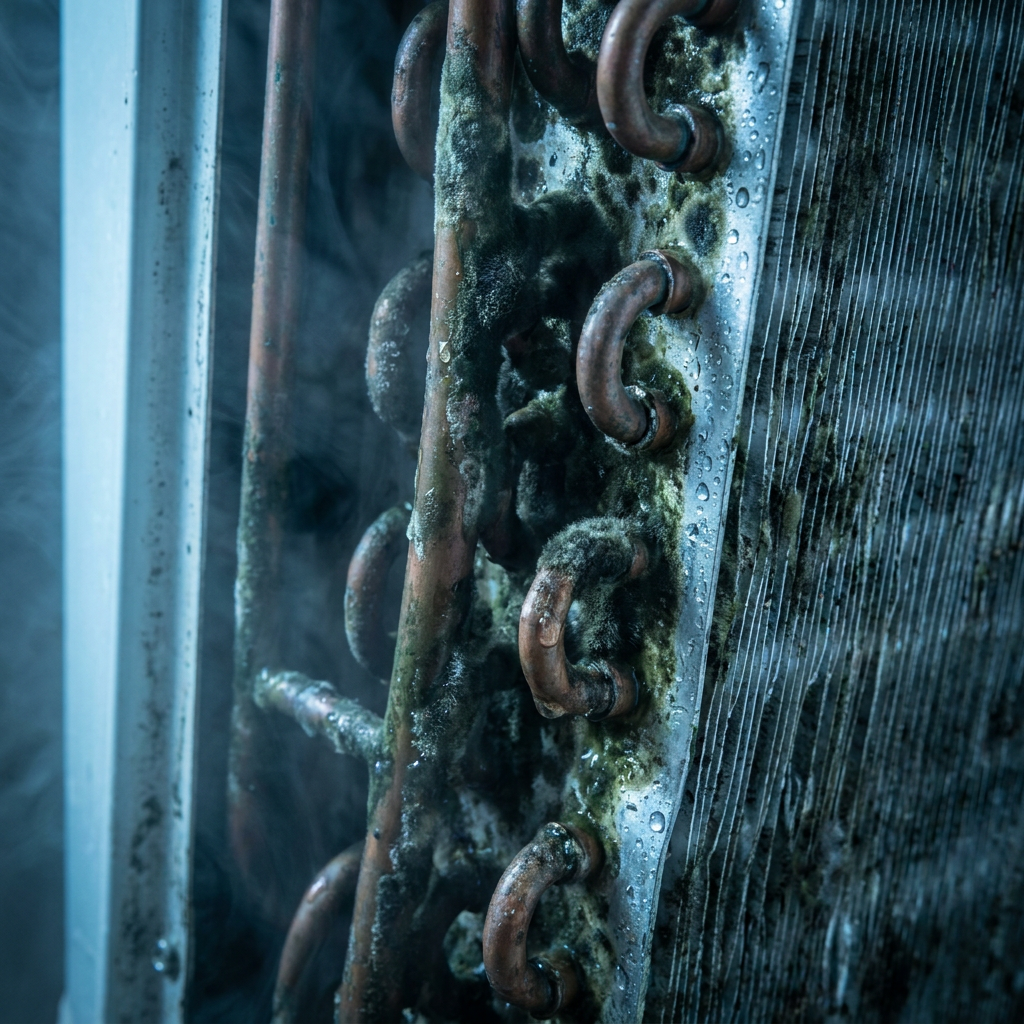
South Florida facilities face particular challenges during summer months. Miami, Fort Lauderdale, and West Palm Beach experience average relative humidity levels of 74% to 77% from June through September. When warm, humid air contacts cold evaporator coils, condensation forms rapidly, creating ideal conditions for Aspergillus, Cladosporium, and Stachybotrys (black mold) growth.
The American Society of Heating, Refrigerating and Air-Conditioning Engineers (ASHRAE) reports that 50% of commercial buildings have water damage or moisture problems that contribute to poor indoor air quality. Buildings in subtropical climates like South Florida face even higher risk factors due to persistent humidity exposure.
Critical HVAC Components That Harbor Mold Growth
Understanding which HVAC components are most vulnerable to mold helps facility managers prioritize maintenance efforts. Each component requires specific inspection intervals and cleaning methods to prevent contamination.
Evaporator Coils and Drain Pans
Evaporator coils collect condensation constantly during summer operation. A typical 10-ton commercial unit produces 8 to 12 gallons of condensate daily in humid conditions. When drain pans overflow or develop biofilm, mold colonies establish within 48 to 72 hours. The National Air Duct Cleaners Association (NADCA) recommends coil cleaning every 3 to 6 months in high-humidity environments.
Condensate Drain Lines
Clogged condensate drains rank as the primary cause of HVAC-related mold growth in commercial buildings. Algae, slime, and debris accumulate inside drain lines, causing water backup into drain pans. Weekly visual inspections and monthly line flushing with a 50/50 vinegar and water solution prevent most blockages.
Air Ducts and Plenums
Dust, pollen, and organic debris accumulate inside ductwork, providing food sources for mold when moisture enters the system. The EPA notes that insulated ductwork is particularly susceptible because fiberglass insulation retains moisture and cannot be effectively cleaned once contaminated. Professional commercial air duct cleaning removes accumulated debris and microbial growth from supply and return ducts, registers, and air handling components.
| HVAC Component | Inspection Frequency | Cleaning Method | Mold Risk Level |
|---|---|---|---|
| Evaporator Coils | Monthly | Professional foam cleaning | High |
| Condensate Drain Pans | Weekly | Vacuum, sanitize, treat with biocide | Very High |
| Drain Lines | Weekly visual, monthly flush | Vinegar flush or enzymatic cleaner | Very High |
| Supply Ducts | Annually | Truck-mounted vacuum extraction | Moderate |
| Air Filters | Monthly replacement | Replace with MERV 11 or higher | Moderate |
| Air Handling Unit | Quarterly | Professional inspection and cleaning | High |
Summer HVAC Maintenance Schedule for South Florida Facilities
Facility managers in Miami-Dade, Broward, and Palm Beach Counties need aggressive maintenance schedules during the May through October humid season. The following timeline addresses the specific challenges of subtropical commercial environments.
Weekly Maintenance Tasks
Check condensate drain pans for standing water, algae growth, or visible mold. Verify drain lines are flowing freely by observing water discharge during system operation. Inspect air filters for moisture damage or premature loading. Document findings in a maintenance log for compliance tracking.
Monthly Maintenance Tasks
Replace air filters regardless of visual condition during summer months. Standard MERV 8 filters should upgrade to MERV 11 or MERV 13 during high-humidity periods to capture mold spores. Flush condensate drain lines with approved cleaning solution. Check refrigerant levels to ensure proper dehumidification capacity.
Quarterly Maintenance Tasks
Schedule professional coil cleaning and inspection of all air handling components. Test humidity controls and verify settings maintain 30% to 50% relative humidity. Inspect ductwork access panels for moisture intrusion. Review energy consumption data for anomalies indicating system inefficiency.
Professional Air Duct Cleaning: When and Why It Matters
Professional air duct cleaning removes accumulated dust, debris, and microbial growth that routine maintenance cannot address. The National Air Duct Cleaners Association (NADCA) recommends commercial duct cleaning every 3 to 5 years under normal conditions, but South Florida facilities often require service every 12 to 24 months due to humidity-related contamination.
Truck-mounted vacuum extraction equipment generates negative pressure throughout the duct system, dislodging and removing debris without releasing contaminants into occupied spaces. Professional technicians also clean registers, grilles, diffusers, heat exchangers, coils, and fan housings as part of comprehensive service.
Understanding commercial air duct cleaning costs helps facility managers budget appropriately. Facilities under 5,000 square feet typically pay $300 to $500, while buildings between 5,000 and 15,000 square feet cost $500 to $900. Larger facilities exceeding 15,000 square feet range from $900 to $1,500, with specialized facilities like hospitals or manufacturing plants reaching $1,500 to $3,000 or more.
Signs Your Commercial HVAC System Has Mold Contamination
Early detection of mold contamination prevents costly remediation and protects occupant health. The Centers for Disease Control and Prevention (CDC) links mold exposure to respiratory symptoms, allergic reactions, and exacerbation of asthma in sensitive individuals.
Musty or earthy odors when the HVAC system operates indicate active mold growth somewhere in the system. These odors often intensify after the system cycles on following periods of inactivity.
Visible mold growth around vents, registers, or inside accessible ductwork requires immediate professional assessment. Black, green, or white fuzzy growth on any HVAC component signals established contamination.
Increased allergy symptoms among building occupants during summer months suggest airborne mold spores. Track complaint patterns to identify whether symptoms correlate with HVAC operation.
Excessive condensation on windows, walls, or ceiling tiles near supply vents indicates humidity control problems. Relative humidity above 60% creates conditions favorable for rapid mold proliferation.
Dark staining around supply registers results from mold spores and dust particles depositing on surfaces as conditioned air enters occupied spaces.
Indoor Air Quality Standards for Commercial Buildings
ASHRAE Standard 62.1 establishes minimum ventilation rates and indoor air quality requirements for commercial buildings. Compliance requires maintaining carbon dioxide levels below 1,000 parts per million (ppm), relative humidity between 30% and 60%, and particulate matter within acceptable limits.
The Occupational Safety and Health Administration (OSHA) does not set specific mold exposure limits but requires employers to provide workplaces free from recognized hazards. Mold contamination that causes documented health effects among employees creates potential OSHA violations.
Healthcare facilities face additional requirements under Joint Commission standards and state health department regulations. Hospitals, clinics, and ambulatory surgery centers must maintain air quality documentation and demonstrate compliance during inspections. Facilities preparing for health inspections benefit from following a structured 72-hour cleaning protocol that addresses HVAC components along with surfaces and floors.
Humidity Control Strategies Beyond HVAC Maintenance
Effective humidity control requires a comprehensive approach combining HVAC optimization with building envelope management and operational practices. The Building Owners and Managers Association (BOMA) reports that integrated humidity control reduces mold-related maintenance costs by 40% to 60% compared to reactive approaches.
Dehumidification Equipment
Standalone commercial dehumidifiers supplement HVAC capacity during extreme humidity events. Units rated for 70 to 150 pints per day serve spaces up to 3,000 square feet. Larger facilities may require ducted dehumidification systems integrated with existing HVAC infrastructure.
Building Envelope Sealing
Air infiltration introduces humid outdoor air directly into conditioned spaces. Seal gaps around windows, doors, and penetrations with appropriate weatherstripping and caulk. Loading dock doors and entry vestibules require particular attention in commercial facilities.
Exhaust Ventilation
Restrooms, kitchens, and janitorial closets generate moisture that must exhaust directly outdoors. Verify exhaust fans operate correctly and discharge outside the building envelope rather than into ceiling plenums or attic spaces.
Floor and Surface Maintenance During Humid Summer Months
Mold prevention extends beyond HVAC systems to include floor and surface maintenance practices. High humidity affects floor finishes, carpet fibers, and tile grout, creating additional contamination vectors.
South Florida facilities face unique summer cleaning challenges that require adjusted maintenance protocols. Increased foot traffic during rainy season tracks moisture and organic debris into buildings, accelerating soil accumulation and creating conditions favorable for mold growth on flooring surfaces.
Carpet in humid environments requires more frequent cleaning to prevent mold growth in fibers and backing materials. Low-moisture cleaning methods minimize water introduction while effectively removing soil and allergens. Facilities with persistent carpet odors during summer months should evaluate whether underlying moisture problems exist.
Tile and grout in restrooms and kitchens absorb moisture through porous grout lines. Professional commercial tile and grout cleaning removes embedded bacteria and biofilm from grout pores, followed by penetrating sealer application to reduce future moisture absorption.
Cost Comparison: Preventive Maintenance vs. Mold Remediation
Investing in preventive HVAC maintenance costs significantly less than addressing established mold contamination. The Institute of Inspection, Cleaning and Restoration Certification (IICRC) reports that commercial mold remediation projects average $10,000 to $30,000 for moderate contamination, with severe cases exceeding $100,000.
| Service Type | Typical Cost Range | Frequency | Annual Cost (10,000 sq ft) |
|---|---|---|---|
| Monthly filter replacement | $50 to $200 per change | 12x per year | $600 to $2,400 |
| Quarterly coil cleaning | $150 to $400 per service | 4x per year | $600 to $1,600 |
| Annual duct cleaning | $500 to $900 | 1x per year | $500 to $900 |
| Total Preventive Cost | $1,700 to $4,900 | ||
| Mold remediation (moderate) | $10,000 to $30,000 | As needed | $10,000 to $30,000+ |
Beyond direct remediation costs, mold contamination creates business disruption, potential liability exposure, and reputational damage. Facilities may require temporary closure during remediation, resulting in lost revenue and tenant complaints.
Selecting a Commercial HVAC and Air Quality Service Provider
Choosing qualified service providers ensures maintenance and cleaning work meets professional standards. NADCA certification indicates technicians have completed training in air duct cleaning procedures and equipment operation. Request proof of certification before engaging any duct cleaning contractor.
Verify contractors carry appropriate insurance coverage, including general liability and workers compensation. Commercial facilities should require certificates of insurance (COI) naming the property owner as additional insured. Review the commercial cleaning insurance requirements checklist to understand what coverage your vendors should maintain.
Request references from similar commercial facilities in your area. Contact references to verify work quality, scheduling reliability, and responsiveness to concerns. Local contractors familiar with South Florida humidity challenges often provide more effective service than national chains without regional expertise.
Frequently Asked Questions
How often should commercial HVAC filters be changed in humid climates?
Replace filters monthly during summer months when humidity exceeds 60%. Standard recommendations of 90-day replacement intervals apply only to moderate climates with lower humidity levels. South Florida facilities should budget for 12 filter changes annually rather than the typical 4 changes.
Can I clean HVAC ductwork myself or do I need a professional?
Professional cleaning is required for thorough duct cleaning. Commercial duct systems require truck-mounted vacuum equipment generating 10,000 to 15,000 CFM of airflow to effectively remove debris. Facility staff can perform surface cleaning of accessible registers and grilles, but interior ductwork requires specialized equipment and training.
What humidity level prevents mold growth in commercial buildings?
Maintain indoor relative humidity between 30% and 50% to inhibit mold spore germination. Humidity above 60% creates conditions favorable for mold growth within 24 to 48 hours on susceptible surfaces. Install humidity monitors in multiple locations to verify HVAC systems maintain target levels.
How do I know if my commercial building has sick building syndrome?
Sick building syndrome manifests as occupant symptoms including headaches, fatigue, eye irritation, and respiratory complaints that improve when leaving the building. Track symptom complaints by location and timing to identify patterns. Professional indoor air quality testing can identify specific contaminants contributing to symptoms.
Does air duct cleaning improve energy efficiency?
Clean ductwork reduces airflow resistance, allowing HVAC systems to operate more efficiently. The U.S. Department of Energy estimates that 25% to 40% of heating and cooling energy is wasted due to contaminants in ductwork. Facilities typically see 5% to 15% energy savings following professional duct cleaning.
Improve Your Facility’s Air Quality This Summer
MB Floor Solutions provides professional commercial air duct cleaning across Miami-Dade, Broward, and Palm Beach Counties. Our truck-mounted equipment and trained technicians remove dust, debris, and microbial buildup to protect your building’s indoor air quality. Contact us for a free estimate.