Maintaining a clean commercial space is essential for small businesses looking to protect employee health, impress clients, and create a productive work environment. Yet without a systematic approach, cleaning tasks often fall through the cracks, leading to inconsistent results and potential hygiene issues.
A well-structured commercial cleaning checklist eliminates guesswork, ensures accountability, and helps your team maintain consistent standards. Whether you manage the cleaning in-house or work with professional commercial cleaning services, this comprehensive guide will help you develop a cleaning routine tailored to your small business needs for 2026 and beyond.
Why Every Small Business Needs a Cleaning Checklist in 2026
Small businesses face unique challenges when it comes to facility maintenance. Limited staff, tight budgets, and competing priorities can make it difficult to maintain consistent cleanliness standards. A detailed checklist addresses these challenges by providing clear expectations, reducing oversight requirements, and ensuring nothing gets overlooked during busy periods.
Beyond basic hygiene, a clean workspace directly impacts your bottom line. Studies consistently show that employees working in clean environments report higher productivity and fewer sick days. For customer-facing businesses, first impressions matter; a spotless reception area or retail floor signals professionalism and attention to detail.
Daily Cleaning Tasks for Small Businesses
Daily cleaning focuses on high-touch surfaces and areas that accumulate visible dirt quickly. These tasks should be completed every business day to maintain baseline cleanliness.
Reception and Common Areas
- Empty all trash receptacles and replace liners
- Wipe down reception desks, counters, and shared surfaces
- Clean and disinfect door handles, light switches, and elevator buttons
- Vacuum or sweep entryways and waiting areas
- Spot clean glass doors and windows at eye level
- Straighten magazines, brochures, and promotional materials
Workstations and Office Spaces
- Dust computer monitors, keyboards, and desk phones
- Wipe down shared equipment including printers and copiers
- Empty personal trash bins
- Remove leftover food containers and beverage cups
- Sanitize conference room tables and chairs after meetings
Kitchen and Break Room
- Clean and sanitize countertops, sinks, and faucets
- Wipe down appliance exteriors including microwaves and refrigerator handles
- Empty trash and recycling bins
- Wash dishes or run the dishwasher
- Sweep and spot mop floors to address spills
- Restock paper towels, napkins, and cleaning supplies
Restrooms
- Clean and disinfect toilets, urinals, and sinks
- Wipe mirrors and remove water spots
- Refill soap dispensers, paper towels, and toilet paper
- Empty trash bins
- Sweep and mop floors with disinfectant solution
- Check and clean partition surfaces
Weekly Cleaning Tasks
Weekly tasks address areas that do not require daily attention but accumulate dust and grime over time. Schedule these tasks for slower business days when possible.
Floor Care
- Vacuum all carpeted areas thoroughly, including under desks
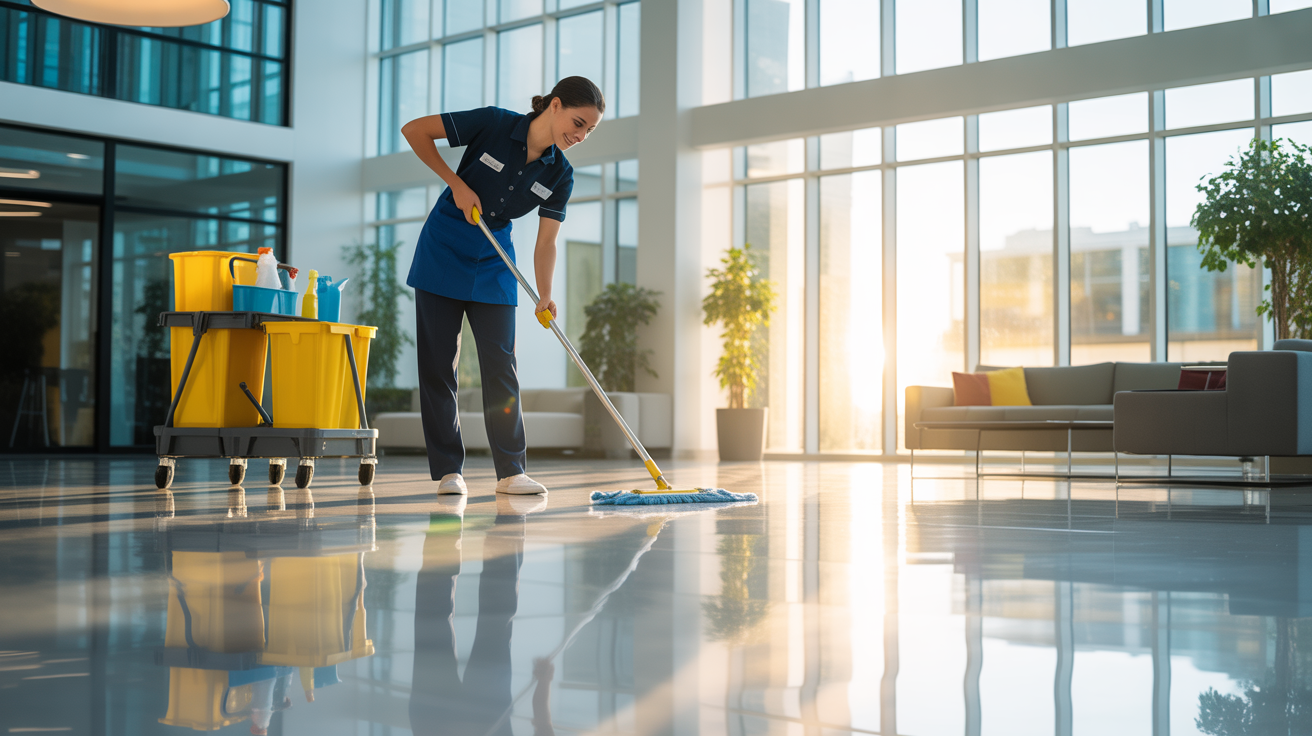
- Mop all hard surface floors with appropriate cleaning solution
- Clean floor mats and entry rugs
- Address any carpet stains or spots with appropriate treatment
For businesses with significant foot traffic, investing in professional floor maintenance can extend the life of your flooring while maintaining a polished appearance.
Detailed Surface Cleaning
- Dust all horizontal surfaces including shelves, windowsills, and baseboards
- Clean interior glass and mirrors throughout the facility
- Wipe down cabinet fronts and storage areas
- Dust picture frames, artwork, and decorative items
- Clean and organize supply closets
Kitchen Deep Clean
- Clean microwave interior and turntable
- Wipe down refrigerator interior and discard expired items
- Clean coffee makers and water dispensers
- Degrease stovetop and oven if applicable
- Sanitize cutting boards and food preparation surfaces
Monthly Cleaning Tasks
Monthly cleaning addresses areas that require periodic attention but not weekly maintenance. These tasks often require more time and specialized equipment.
- Dust ceiling fans, light fixtures, and air vents
- Clean interior windows thoroughly
- Wash walls in high-traffic areas, kitchens, and restrooms
- Deep clean upholstered furniture and fabric chairs
- Sanitize trash cans and recycling bins
- Clean behind and under heavy furniture and equipment
- Inspect and replace HVAC filters as needed
Quarterly and Seasonal Deep Cleaning
Quarterly tasks maintain long-term facility health and address areas that accumulate buildup over extended periods.
Floor Care
- Professional carpet shampooing or extraction cleaning
- Strip and re-wax hard surface floors
- Grout cleaning in tiled areas
- Polish natural stone surfaces
HVAC and Air Quality
- Schedule commercial air duct cleaning annually or as recommended
- Clean air return vents and registers
- Replace all HVAC filters
- Clean exhaust fans in restrooms and kitchens
Exterior and Specialty Areas
- Clean exterior windows and building entrance
- Power wash sidewalks and parking areas
- Deep clean storage rooms and utility areas
- Service and clean specialized equipment
Frequently Asked Questions
What tasks should be included in a small business commercial cleaning checklist?
A comprehensive checklist should include daily tasks like trash removal, surface sanitization, and restroom cleaning; weekly tasks including thorough floor care and detailed dusting; monthly deep cleaning of fixtures and appliances; and quarterly specialized services like carpet shampooing and floor refinishing. The specific tasks depend on your business type, facility size, and industry requirements.
How often should different areas of a small office be cleaned?
High-touch surfaces and restrooms require daily attention. General office areas and floors typically need weekly cleaning. Light fixtures, vents, and walls can be addressed monthly. Carpets, hard floors, and air ducts benefit from quarterly or annual professional service. Adjust frequency based on foot traffic and visible soiling.
What cleaning supplies are essential for commercial cleaning?
Essential supplies include all-purpose cleaners, glass cleaner, disinfectants, floor cleaning solutions, microfiber cloths, mops and buckets, vacuum cleaners, trash bags, paper products, and personal protective equipment. Consider eco-friendly options for businesses prioritizing sustainability or serving sensitive populations.
How can I customize a cleaning checklist to suit my business type?
Start with a standard checklist and modify based on your specific needs. Consider your industry requirements, flooring types, number of employees, customer traffic patterns, and any specialized equipment. Food service businesses need enhanced kitchen protocols, while healthcare facilities require medical-grade sanitization procedures.
What are the benefits of using digital cleaning checklists over paper?
Digital checklists offer real-time tracking, photo documentation, timestamp verification, and easier communication between team members. They simplify record-keeping for compliance purposes and allow managers to monitor completion remotely. Many digital platforms also integrate with scheduling and inventory management systems.
Tips for Implementing Your Cleaning Checklist
Creating a checklist is only the first step. Successful implementation requires clear communication, proper training, and ongoing monitoring.
Assign clear responsibilities. Designate specific individuals or teams for each task. When everyone assumes someone else will handle a task, it often goes undone.
Provide adequate supplies. Ensure cleaning staff have access to appropriate products and equipment. Running out of supplies mid-task leads to incomplete cleaning and frustration.
Schedule regular inspections. Periodic quality checks help identify areas needing attention and reinforce accountability. Consider using a simple scoring system to track performance over time.
Gather feedback. Staff members performing cleaning tasks often notice inefficiencies or areas needing additional attention. Create channels for them to suggest improvements.
Review and update regularly. Business needs change over time. Review your checklist quarterly and adjust tasks, frequencies, and responsibilities as needed.
When to Consider Professional Cleaning Services
While many small businesses handle routine cleaning internally, certain situations warrant professional assistance. Consider partnering with a commercial cleaning company when your facility requires specialized equipment or expertise, when cleaning demands exceed staff capacity, or when you need to meet specific industry standards.
Professional services prove particularly valuable for periodic deep cleaning tasks like carpet extraction, floor refinishing, and air duct maintenance. These services require specialized equipment and training that most small businesses cannot justify purchasing for occasional use.
A clean commercial space reflects your commitment to professionalism and employee wellbeing. By implementing a structured cleaning checklist tailored to your small business needs, you create a healthier, more productive environment while protecting your facility investment for years to come.
Ready to Get Started?
Visit MB Clean Solutions to learn more about our services and how we can help you achieve your goals.