Discover how to tackle post-construction cleaning challenges effectively. Learn expert strategies for dust removal, surface care, and HVAC cleaning.
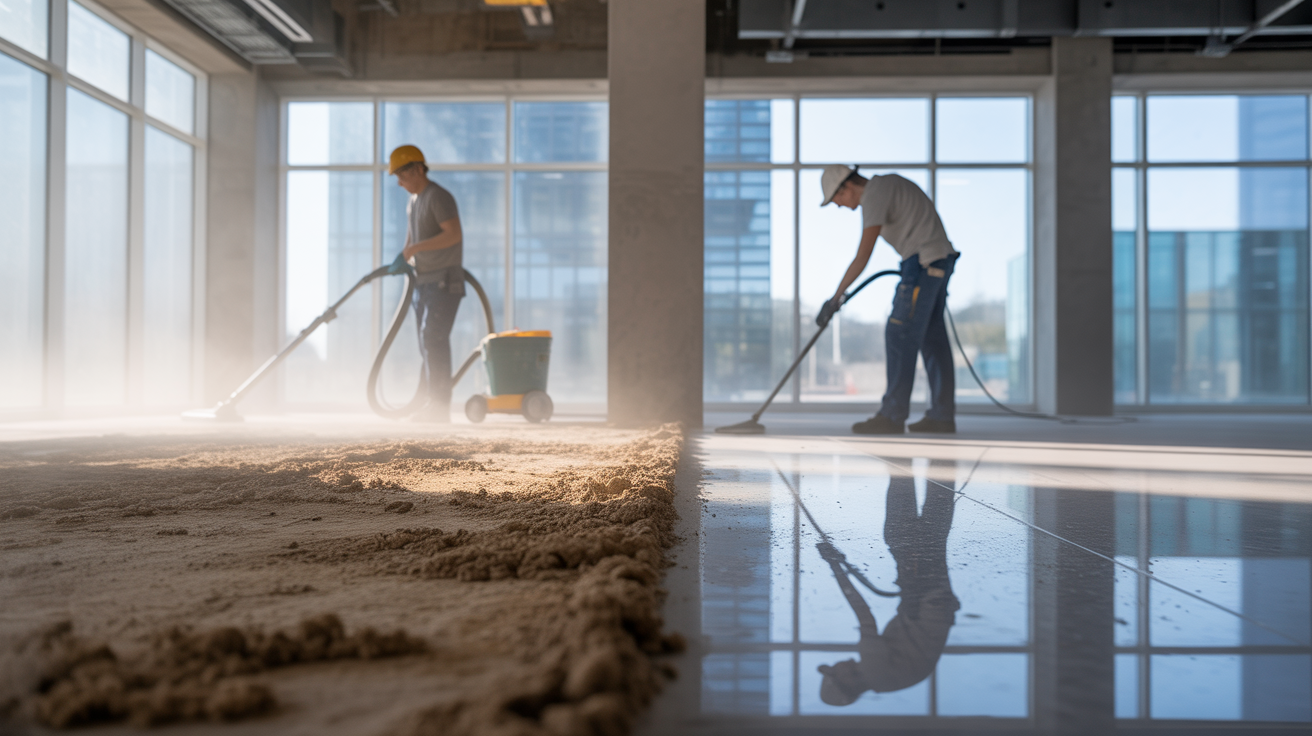
Construction projects transform spaces, but they also leave behind a complex cleaning situation that standard janitorial services simply cannot address. Post-construction cleaning presents unique challenges that require specialized knowledge, professional-grade equipment, and a systematic approach to restore a newly built or renovated space to occupancy-ready condition.
Whether you manage a healthcare facility in Miami-Dade County, oversee retail spaces in Broward, or maintain office buildings in Palm Beach, understanding these challenges is essential for protecting your investment and ensuring occupant safety. This guide explores the most common post-construction cleaning obstacles and provides actionable solutions for each.
Understanding Why Post-Construction Cleaning Differs from Standard Cleaning
Post-construction cleaning is fundamentally different from routine commercial cleaning in scope, complexity, and required expertise. While regular cleaning maintains an already clean environment, post-construction cleaning transforms a construction zone into a pristine, functional space.
The primary distinctions include:
- Scale of contamination: Construction dust can account for up to 90% of indoor particulates immediately following a project, compared to minimal dust accumulation in maintained spaces.
- Type of debris: Construction sites generate everything from heavy debris and hazardous materials to fine particulates that penetrate every surface and system.
- Surface sensitivity: New installations, finishes, and fixtures require careful handling to avoid damage during the cleaning process.
- Health implications: Construction dust often contains silica, drywall compounds, and other materials that pose respiratory risks if not properly removed.
Industry data suggests that post-construction cleaning typically accounts for 10 to 15 percent of total construction project costs. However, cutting corners on this phase can result in far greater expenses through equipment damage, health complaints, and the need for remedial cleaning.
The Five Major Post-Construction Cleaning Challenges
Challenge 1: Persistent Construction Dust and Fine Particulates
Construction dust is perhaps the most pervasive and frustrating challenge in post-construction cleaning. Unlike household dust, construction particulates are finer, more abrasive, and capable of infiltrating every conceivable space within a building.
This fine dust settles on horizontal surfaces, embeds itself in textiles, coats vertical surfaces, and infiltrates mechanical systems. Even after initial cleaning, dust continues to appear as it settles from higher surfaces and emerges from hidden spaces.
Why standard cleaning fails: Conventional cleaning methods often redistribute dust rather than removing it. Standard vacuums may lack the filtration to capture fine particles, and dry dusting simply moves contaminants from one surface to another.
Professional solutions:
- HEPA-filtered vacuums capture particles as small as 0.3 microns, preventing redistribution into the air.
- Damp wiping with microfiber cloths traps dust rather than spreading it.
- Air scrubbers with HEPA filtration continuously clean airborne particles during the cleaning process.
- Laser-level dust monitors help identify areas requiring additional attention.
Challenge 2: Surface Damage and Stubborn Residue Removal
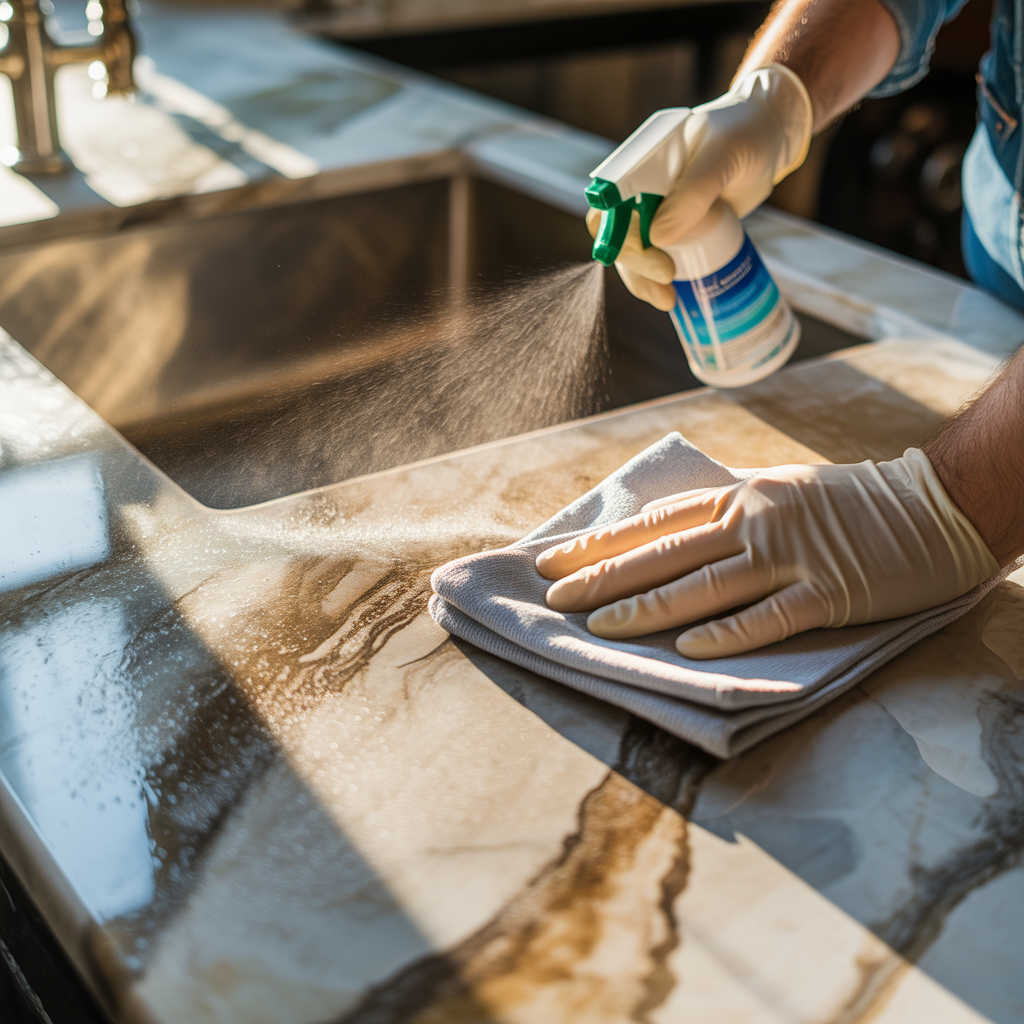
Construction leaves behind more than just dust. Paint overspray, grout haze, adhesive residues, caulk smears, and protective film remnants all require removal without damaging the underlying surfaces.
Each type of residue demands a specific approach. Using the wrong solvent or technique can permanently damage new finishes, scratch glass, or discolor surfaces. This is particularly concerning in commercial environments where flooring, fixtures, and finishes represent significant investments.
Common residue challenges include:
- Paint overspray: Requires careful solvent selection based on paint type and surface material.
- Grout haze: Acidic cleaners may be necessary but must be used cautiously on sensitive surfaces.
- Adhesive residues: Often require specialized adhesive removers and patient manual removal.
- Protective film: Can leave adhesive residue if not removed properly or if left too long after installation.
- Silicone and caulk: Requires mechanical removal followed by solvent treatment.
For commercial properties with specialized flooring, professional commercial cleaning services ensure that residue removal protects rather than damages your investment.
Challenge 3: HVAC System Contamination and Air Quality
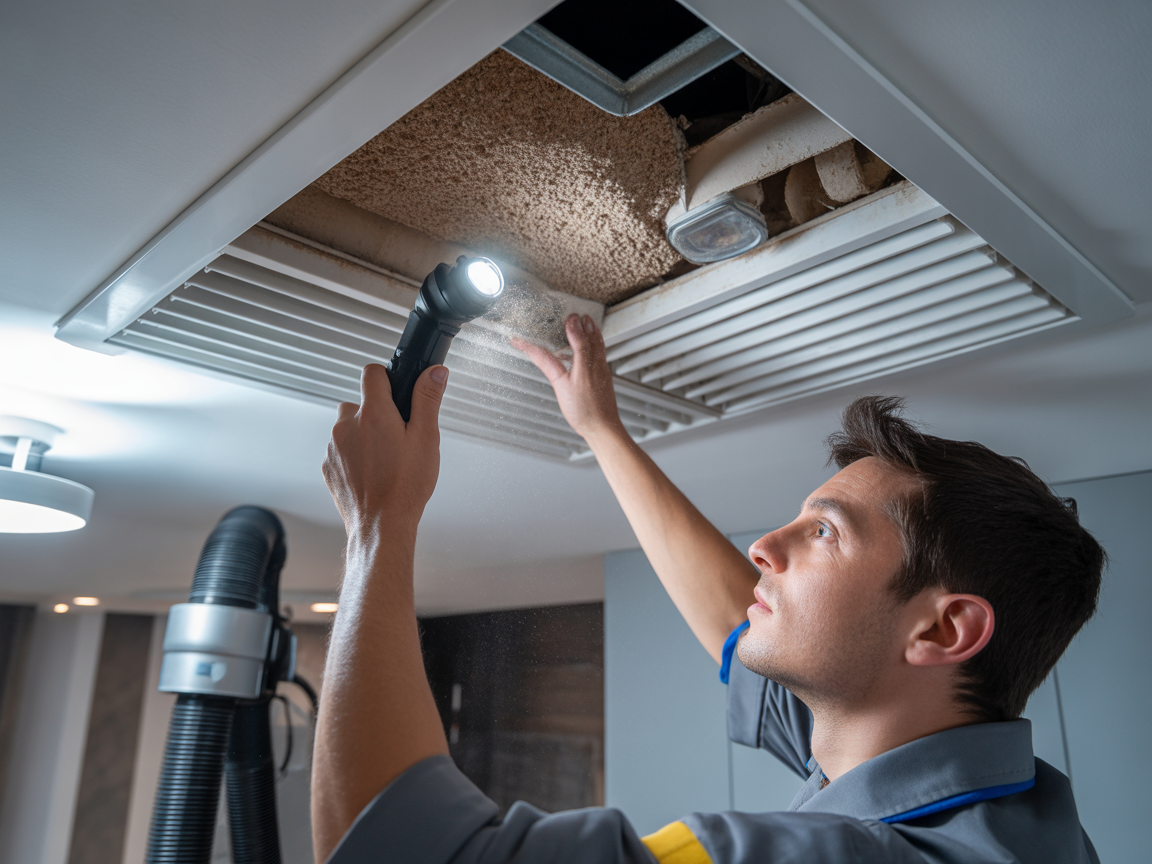
Construction dust does not respect boundaries. It infiltrates HVAC systems, coating ductwork, clogging filters, and settling on coils. If not addressed, contaminated HVAC systems will continuously circulate dust throughout the building, negating surface cleaning efforts and potentially reducing system efficiency by 20 to 30 percent.
This challenge is particularly critical in healthcare facilities, where air quality directly impacts patient safety and regulatory compliance. Even in standard commercial environments, poor indoor air quality leads to occupant complaints, reduced productivity, and potential liability concerns.
HVAC cleaning considerations:
- Replace all filters before and after construction, and again after initial cleaning phases.
- Clean supply and return vents thoroughly, including removal and washing when possible.
- Consider professional duct cleaning for extensive renovation projects.
- Clean accessible coils and drip pans to prevent dust buildup from becoming a moisture problem.
- Run the system with high-efficiency filters during final cleaning to capture airborne particles.
Challenge 4: Access Constraints and Equipment Requirements
Commercial construction projects often involve spaces that present significant access challenges. High ceilings in retail atriums, industrial warehouse spaces, and multi-story lobbies all require specialized equipment and safety protocols that standard cleaning crews may not possess.
Additionally, the scale of commercial post-construction cleaning demands industrial-grade equipment. Residential cleaning tools simply cannot handle the volume of debris, the square footage involved, or the intensity of contamination present after construction.
Essential equipment for commercial post-construction cleaning:
- Industrial HEPA vacuums with multiple attachment options
- Auto-scrubbers and ride-on floor scrubbers for large floor areas
- Pressure washers for exterior surfaces and loading areas
- Scaffolding and lift equipment for high-access areas
- Industrial wet-dry vacuums for water extraction
- Steam cleaners for sanitization and residue removal
Challenge 5: Coordination, Scheduling, and Phased Cleaning
Post-construction cleaning rarely happens in isolation. Cleaning crews must coordinate with ongoing punch list work, inspections, equipment installations, and move-in schedules. Poor coordination leads to rework, delays, and frustration for all parties.
Furthermore, effective post-construction cleaning follows a phased approach. Attempting to complete final cleaning while debris is still being generated guarantees unsatisfactory results and wasted effort.
The Three-Phase Approach to Post-Construction Cleaning
Professional post-construction cleaning follows a structured, phased approach that addresses contamination systematically while accommodating ongoing construction activities.
Phase 1: Rough Cleaning
Rough cleaning begins while construction is still ongoing, typically after major structural work is complete but before finish work begins. This phase focuses on removing large debris, sweeping construction materials, and creating a safer, cleaner environment for finish tradespeople.
Rough cleaning tasks include:
- Removing large debris, scrap materials, and packaging
- Sweeping and vacuuming floors to remove heavy dust accumulation
- Cleaning windows of protective film and major contamination
- Wiping down surfaces to remove heavy dust
- Cleaning restrooms for worker use
Phase 2: Light Cleaning
Light cleaning, sometimes called construction cleaning, occurs after most finish work is complete. This phase addresses the dust and debris generated by finishing activities and prepares the space for final cleaning.
Light cleaning tasks include:
- Detailed dusting of all surfaces, working from top to bottom
- Vacuuming all floors, including carpet extraction if applicable
- Cleaning interior glass and mirrors
- Wiping down fixtures, hardware, and millwork
- Cleaning light fixtures and diffusers
- Initial restroom cleaning and fixture polishing
Phase 3: Final Cleaning
Final cleaning transforms the construction site into an occupancy-ready space. This phase requires the highest attention to detail and should only begin after all construction activities are complete.
Final cleaning tasks include:
- Touch-up dusting and vacuuming throughout
- Final floor care, including polishing, sealing, or deep cleaning as appropriate
- Detailed window cleaning, interior and exterior
- Sanitization of all surfaces, particularly in healthcare environments
- Final restroom cleaning and supply stocking
- High-touch surface sanitization
- HVAC vent cleaning and filter replacement
For commercial properties requiring specialized floor care after construction, professional floor maintenance services ensure that new flooring is properly cleaned and protected from day one.
Frequently Asked Questions About Post-Construction Cleaning
What are the main steps involved in post-construction cleaning?
Post-construction cleaning follows three main phases: rough cleaning during late-stage construction to remove major debris; light cleaning after finish work to address accumulated dust and prepare surfaces; and final cleaning to achieve occupancy-ready conditions. Each phase builds upon the previous one, with final cleaning focusing on detail work, sanitization, and floor care.
How do professionals remove stubborn paint and adhesive residues after construction?
Professionals approach residue removal by first identifying the residue type and underlying surface material. They then select appropriate solvents and techniques that dissolve or soften the residue without damaging the surface. This often involves testing in an inconspicuous area, applying the appropriate solvent, allowing dwell time, and carefully removing the residue with plastic scrapers or microfiber cloths. Heat application, steam cleaning, and specialized adhesive removers may be necessary for particularly stubborn residues.
Why is post-construction cleaning more challenging than regular cleaning?
Post-construction cleaning is more challenging because it addresses contamination levels far exceeding normal conditions. Construction generates fine, pervasive dust that infiltrates every surface and system. It leaves behind residues requiring specialized removal techniques. New surfaces and finishes demand careful handling to avoid damage. The scale of cleaning required exceeds standard equipment capabilities. Additionally, coordination with ongoing construction activities adds complexity to scheduling and execution.
What specialized equipment is necessary for effective post-construction cleaning?
Effective post-construction cleaning requires HEPA-filtered vacuums capable of capturing fine particles, industrial auto-scrubbers for large floor areas, pressure washers for exterior surfaces, scaffolding or lifts for high-access areas, and specialized hand tools for detail work. Air scrubbers help maintain air quality during cleaning, while steam cleaners provide chemical-free sanitization and residue removal capabilities.
How can dust in HVAC systems be properly cleaned after construction?
Proper HVAC cleaning after construction begins with replacing all filters before starting any cleaning work. Vents and registers should be removed and cleaned or replaced. Accessible ductwork should be vacuumed with HEPA equipment. Coils and drip pans require cleaning to prevent dust from becoming a moisture and mold issue. After surface cleaning is complete, filters should be replaced again, and the system should run with high-efficiency filtration to capture remaining airborne particles.
Best Practices for Managing Post-Construction Cleaning Projects
Develop Comprehensive Checklists
Detailed checklists ensure consistency and completeness across all areas. Checklists should be room-specific and phase-specific, accounting for the unique requirements of different space types such as restrooms, offices, lobbies, and mechanical rooms.
Work Top to Bottom, Inside to Outside
Gravity works against cleaning efforts. Dust and debris fall from higher surfaces to lower ones. Effective post-construction cleaning always begins with ceilings, light fixtures, and high surfaces before progressing to walls, fixtures, and finally floors. Similarly, interior spaces should be cleaned before exterior entrances to prevent tracking contamination back into cleaned areas.
Prioritize High-Touch and Technical Areas
Certain areas require extra attention during post-construction cleaning. High-touch surfaces like door handles, light switches, and elevator buttons need thorough cleaning and sanitization. Technical areas including electrical panels, data closets, and mechanical rooms often accumulate significant dust and require careful cleaning around sensitive equipment.
Use Appropriate Chemistry
Post-construction cleaning often requires stronger cleaning agents than routine maintenance. However, using the wrong products can damage new finishes or create indoor air quality problems. Low-VOC and low-odor chemistry is particularly important in occupied buildings or spaces with sensitive populations. Green and biodegradable cleaning agents support sustainability goals while providing effective cleaning performance.
Maintain Communication with All Stakeholders
Successful post-construction cleaning requires ongoing communication with general contractors, subcontractors, building management, and future occupants. Clear communication prevents scheduling conflicts, ensures access to all areas, and sets appropriate expectations for completion timelines.
Protecting Your Investment with Professional Post-Construction Cleaning
Post-construction cleaning represents a critical transition point for any construction project. Done properly, it protects the investment in new construction or renovation, ensures occupant health and safety, and creates a positive first impression for the completed space.
For commercial property managers and facility directors throughout South Florida, partnering with experienced cleaning professionals ensures that post-construction challenges are addressed systematically and thoroughly. Professional cleaning companies bring the specialized equipment, trained personnel, and systematic approaches necessary to transform construction zones into pristine commercial environments.
The challenges of post-construction cleaning are significant, but they are not insurmountable. With proper planning, appropriate equipment, and a phased approach, any commercial space can emerge from construction ready for occupancy and operation.
Whether your facility requires comprehensive post-construction cleaning or ongoing commercial floor care and maintenance, working with experienced professionals ensures that your space meets the highest standards of cleanliness and safety. For facilities in Miami-Dade, Broward, and Palm Beach counties, local expertise combined with professional-grade capabilities delivers results that protect your investment and satisfy your occupants.
Ready to Get Started?
Visit MB Floor Solutions to learn more about our services and how we can help you achieve your goals.
Visit Our Website