Compare acrylic, polyurethane, and epoxy commercial floor finishes. Learn costs, durability ratings, cure times, and which finish suits your facility type.
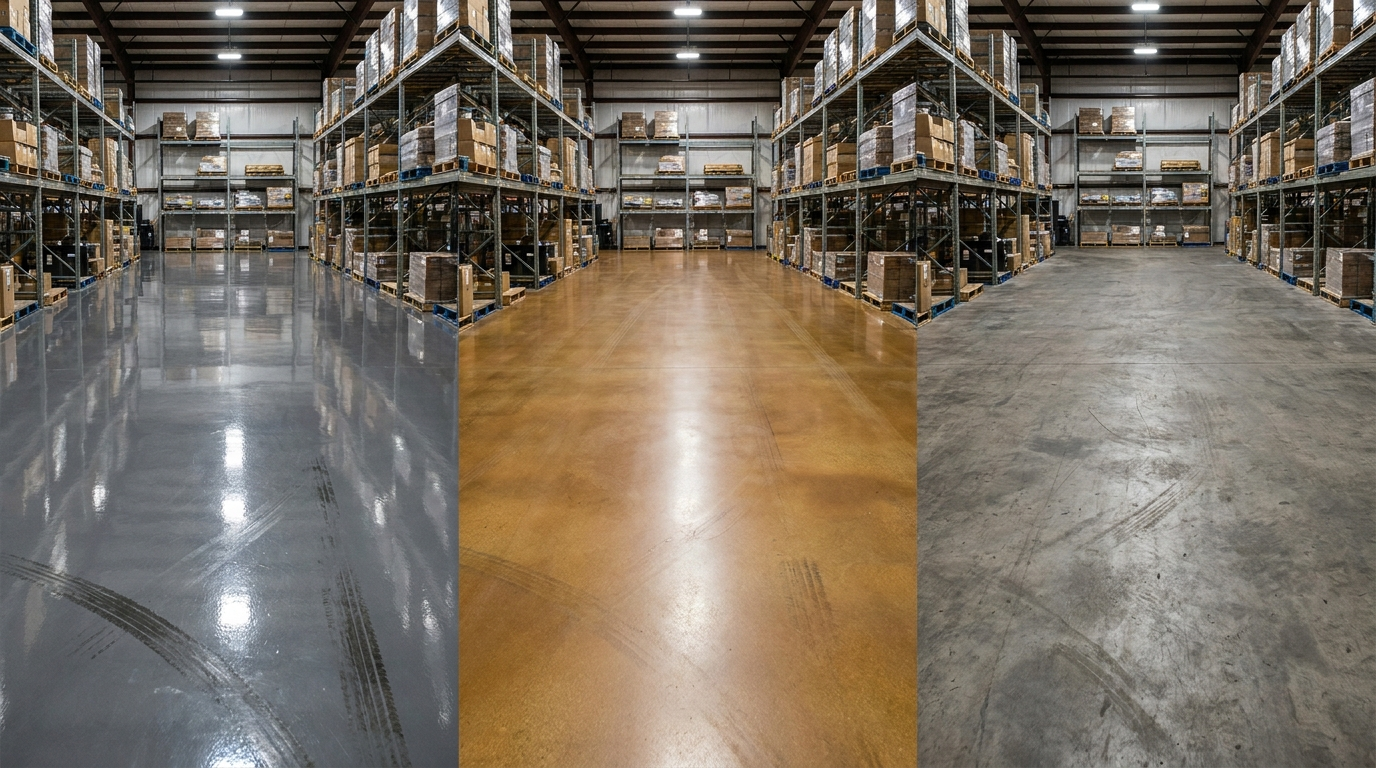
Epoxy provides the strongest chemical bond and hardest surface for high-traffic commercial floors, while polyurethane offers superior UV resistance and flexibility for areas with temperature fluctuations. Acrylic finishes cost 40 to 60 percent less than epoxy but require reapplication every 6 to 12 months in heavy-use environments.
- Epoxy floors cost $3 to $12 per square foot installed and last 10 to 20 years in commercial settings
- Polyurethane topcoats extend epoxy floor life by 4x and resist yellowing from sunlight exposure
- Acrylic floor finishes cure in 30 to 60 minutes versus 24 to 72 hours for epoxy systems
- Healthcare and food service facilities require FDA-compliant polyurethane or epoxy coatings
- South Florida humidity above 60% requires moisture-tolerant epoxy formulations for proper adhesion
Understanding Commercial Floor Finish Chemistry
Commercial floor finishes fall into three primary categories based on their chemical composition: acrylic polymers, polyurethane resins, and epoxy compounds. Each chemistry creates distinct performance characteristics that determine suitability for specific environments, traffic levels, and maintenance requirements.
Acrylic finishes consist of water-based polymethyl methacrylate (PMMA) or standard acrylic polymers that form a protective film through evaporation. These products penetrate porous surfaces like VCT and concrete, creating a sacrificial layer that absorbs wear. The Resilient Floor Covering Institute (RFCI) classifies acrylics as maintenance coatings rather than permanent finishes.
Polyurethane coatings use isocyanate chemistry to create cross-linked molecular bonds during curing. According to Protective Industrial Polymers, polyurethanes exhibit excellent impact and abrasion resistance, providing up to four times longer life than uncoated epoxy floors. This makes them ideal as topcoats over epoxy base layers.
Epoxy systems combine epoxide resins with polyamine hardeners in a two-part chemical reaction. This creates covalent bonds that produce surfaces with 5,000 to 10,000 PSI compressive strength. The American Concrete Institute (ACI) recognizes epoxy as the standard for industrial floor protection.
Complete Comparison: Acrylic vs Polyurethane vs Epoxy
Facility managers must evaluate multiple performance factors when selecting floor finishes. The following comparison addresses durability, cost, application requirements, and maintenance considerations for each finish type.
| Factor | Acrylic | Polyurethane | Epoxy |
|---|---|---|---|
| Cost per sq ft | $0.50 to $1.50 | $4 to $8 | $3 to $12 |
| Lifespan | 6 to 18 months | 5 to 10 years | 10 to 20 years |
| Cure Time | 30 to 60 minutes | 24 to 48 hours | 24 to 72 hours |
| Hardness (Shore D) | 40 to 55 | 70 to 85 | 80 to 90 |
| UV Resistance | Excellent | Excellent | Poor to moderate |
| Chemical Resistance | Low | Moderate to high | Excellent |
| Best Applications | Offices, retail, schools | Lobbies, healthcare, food service | Warehouses, manufacturing, garages |
Acrylic Floor Finishes: Fast Cure, Lower Cost
Acrylic floor finishes dominate the commercial maintenance market because they allow facilities to remain operational during application. A 10,000 square foot office can receive 3 to 5 coats of acrylic finish and return to full operation within 4 to 6 hours. This minimal downtime makes acrylics the standard choice for schools, offices, and retail environments.
Standard acrylic finishes contain 18 to 25 percent solids, while high-performance formulations reach 25 to 35 percent solids content. Higher solids content creates thicker films per coat, reducing labor costs. Johnson Diversey, Betco, and Spartan Chemical manufacture the most widely specified commercial acrylic finishes in the United States.
Acrylic Finish Performance Limitations
Acrylic finishes require regular maintenance to maintain appearance and protection. High-traffic corridors need burnishing or spray buffing every 1 to 2 weeks. Complete stripping and recoating occurs every 6 to 18 months depending on traffic volume. A 50,000 square foot facility typically spends $0.85 to $1.15 per square foot annually on commercial floor stripping and waxing services.
Chemical resistance ranks as the primary weakness of acrylic finishes. Solvents, oils, and strong cleaning agents dissolve the polymer film. Healthcare facilities, commercial kitchens, and automotive service areas require polyurethane or epoxy alternatives. Acrylic finishes also soften at temperatures above 150 degrees Fahrenheit, limiting use near heat sources.
Best Applications for Acrylic Finishes
VCT (vinyl composition tile) floors in schools, offices, and retail stores represent the ideal application for acrylic finishes. The International Sanitary Supply Association (ISSA) recommends acrylic maintenance programs for facilities with predictable foot traffic and limited chemical exposure. Budget-conscious property managers achieve acceptable appearance at 40 to 60 percent lower cost than permanent coatings.
Polyurethane Floor Coatings: Flexibility and UV Stability
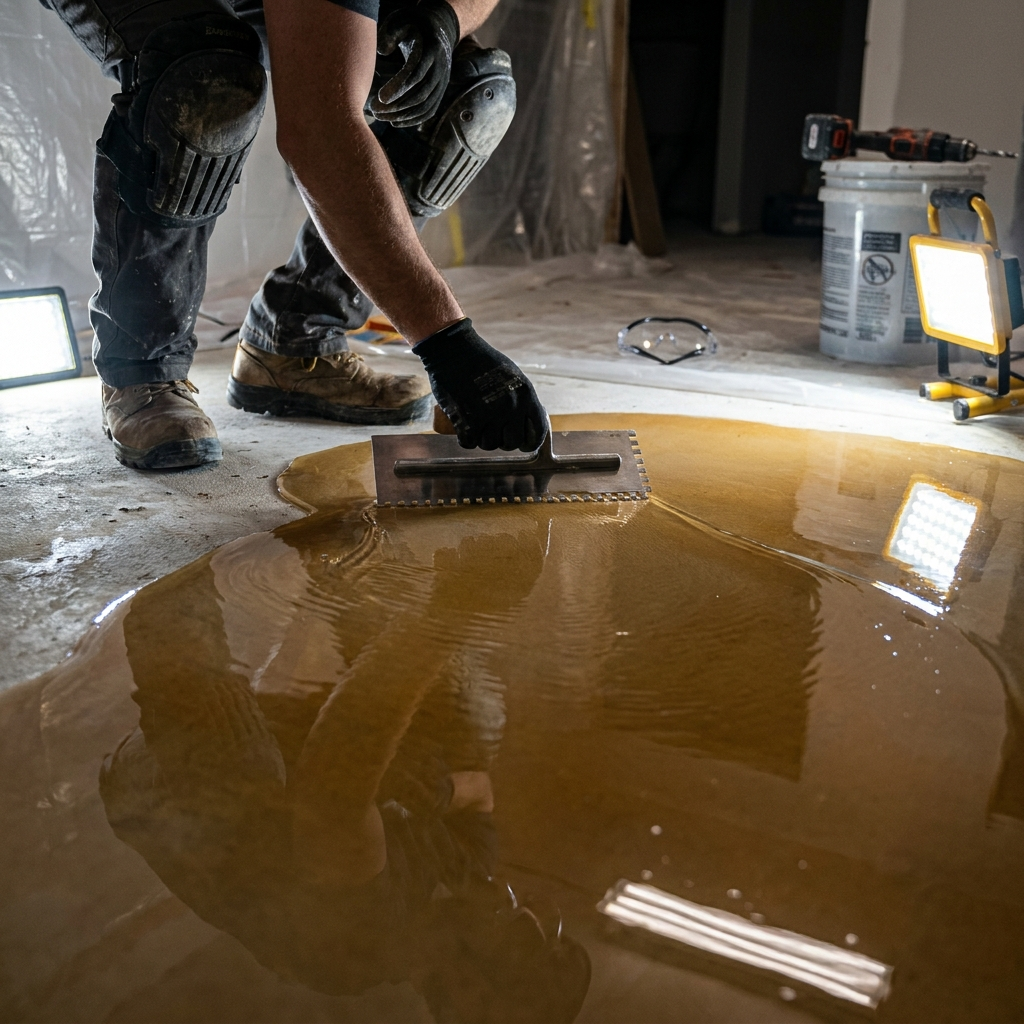
Polyurethane coatings provide the flexibility that epoxy lacks, making them essential for environments with thermal cycling or structural movement. According to Custom Coatings Inc., polyurethane provides excellent corrosion resistance while maintaining flexibility that prevents cracking under stress.
Aliphatic polyurethanes resist yellowing from UV exposure, maintaining color stability in sunlit lobbies and atriums. Aromatic polyurethanes cost 30 to 40 percent less but amber within 6 to 12 months of sunlight exposure. Sherwin-Williams, PPG Industries, and BASF produce commercial-grade polyurethane floor coatings meeting ASTM D4060 abrasion standards.
Polyurethane Application Requirements
Surface preparation determines polyurethane coating success. Concrete floors require mechanical profiling to ICRI CSP 2 to 3 (International Concrete Repair Institute Concrete Surface Profile). This creates 2 to 4 mil surface roughness for mechanical adhesion. Moisture testing using ASTM F2170 relative humidity probes must show readings below 75 percent RH before application.
Application temperature ranges from 50 to 90 degrees Fahrenheit with relative humidity below 85 percent. South Florida facilities face challenges during summer months when humidity regularly exceeds these thresholds. Professional applicators use dehumidification equipment to create proper conditions, adding $0.25 to $0.50 per square foot to project costs.
Polyurethane as Epoxy Topcoat
The most durable commercial floor systems combine epoxy base coats with polyurethane topcoats. This hybrid approach leverages epoxy's chemical resistance and hardness with polyurethane's UV stability and impact resistance. Westcoat's industrial flooring guide identifies this combination as the standard for food processing, pharmaceutical manufacturing, and aircraft hangars.
Polyurethane topcoats add $1.50 to $3.00 per square foot to epoxy floor installations. This investment extends system life from 10 years to 15 to 20 years while preventing the yellowing that affects standalone epoxy in sunlit areas. The additional cost typically achieves payback within 5 to 7 years through reduced maintenance and delayed replacement.
Epoxy Floor Systems: Maximum Durability
Epoxy floor coatings create the hardest, most chemically resistant surfaces available for commercial applications. The two-part chemical reaction produces cross-linked polymer networks with compressive strength exceeding 10,000 PSI in high-performance formulations. This makes epoxy the standard for warehouses, manufacturing facilities, and commercial garages.
100 percent solids epoxy contains no solvents or water, building 8 to 12 mils of thickness per coat. Solvent-based epoxies range from 40 to 60 percent solids, requiring multiple coats to achieve equivalent thickness. Water-based epoxies offer lower VOC emissions but sacrifice 20 to 30 percent of the chemical resistance of solvent-based formulations.
Epoxy Floor Installation Costs
Commercial epoxy floor installation costs $3 to $12 per square foot depending on system complexity and surface preparation requirements. Basic single-coat systems for light-duty applications start at $3 to $5 per square foot. High-build systems with broadcast aggregate and polyurethane topcoats range from $8 to $12 per square foot.
| Project Size | Basic Epoxy | Mid-Range System | High-Performance |
|---|---|---|---|
| 1,000 sq ft | $3,500 to $5,000 | $5,000 to $7,500 | $8,000 to $12,000 |
| 5,000 sq ft | $15,000 to $22,500 | $22,500 to $35,000 | $35,000 to $55,000 |
| 10,000 sq ft | $27,500 to $40,000 | $40,000 to $65,000 | $65,000 to $100,000 |
Surface preparation accounts for 30 to 50 percent of total project cost. Diamond grinding, shot blasting, or acid etching removes existing coatings and creates proper surface profile. Concrete repairs, crack filling, and moisture mitigation add to preparation costs. Facilities with heavily damaged or contaminated concrete may face preparation costs exceeding coating material costs.
Epoxy Limitations and Considerations
Standard epoxy formulations yellow and chalk when exposed to UV light. Exterior applications and facilities with significant natural lighting require UV-stable polyurethane topcoats or aliphatic epoxy formulations. Aliphatic epoxies cost 50 to 75 percent more than standard aromatic formulations but maintain color stability for 10 or more years.
Epoxy floors become slippery when wet unless textured with broadcast aggregate or anti-slip additives. OSHA requires slip-resistant flooring in areas with water, oil, or other liquids. Aluminum oxide, silica sand, or polymer beads broadcast into wet epoxy create coefficient of friction values meeting ANSI A137.1 standards for slip resistance.
What Floor Coating Is Stronger Than Epoxy?
Polyurea and polyaspartic coatings exceed epoxy in impact resistance and flexibility while matching chemical resistance. These advanced coatings cure in 1 to 4 hours versus 24 to 72 hours for epoxy, reducing facility downtime by 80 to 90 percent. However, polyurea systems cost $8 to $15 per square foot, making them 30 to 50 percent more expensive than comparable epoxy installations.
Methyl methacrylate (MMA) coatings provide another high-performance alternative. MMA systems cure at temperatures as low as minus 20 degrees Fahrenheit and achieve full strength within 1 to 2 hours. Food processing facilities and cold storage warehouses specify MMA coatings when downtime costs exceed coating price premiums. USDA and FDA approve specific MMA formulations for direct food contact areas.
Is Epoxy or Polyurethane Harder?
Epoxy measures 80 to 90 on the Shore D hardness scale, while polyurethane ranges from 70 to 85 Shore D. This makes epoxy 5 to 15 percent harder than polyurethane in direct comparison. However, hardness does not equal durability in all applications.
Polyurethane's lower hardness provides greater impact resistance and flexibility. Dropped tools, rolling loads, and thermal expansion cause fewer cracks in polyurethane than in rigid epoxy. Facilities with forklift traffic, heavy equipment, or temperature fluctuations often achieve longer service life from polyurethane despite lower hardness ratings.
Is Epoxy or Acrylic Better for Garage Floors?
Epoxy outperforms acrylic for garage floors in durability, chemical resistance, and longevity. Hot tire pickup, oil drips, and road salt destroy acrylic finishes within months. Epoxy resists these challenges for 10 to 20 years with proper installation and maintenance.
Commercial parking garages require epoxy or polyurethane systems meeting ASTM C1028 slip resistance standards. Acrylic sealers provide insufficient protection against automotive fluids and abrasion from vehicle traffic. The Building Owners and Managers Association (BOMA) recommends epoxy-polyurethane hybrid systems for parking structures with expected 15 to 20 year service intervals.
Selecting Floor Finishes by Facility Type
Different commercial environments demand specific floor finish characteristics. The following recommendations address common facility types in South Florida's Miami-Dade, Broward, and Palm Beach Counties.
Healthcare Facilities
Hospitals, clinics, and medical offices require seamless, non-porous floor surfaces that withstand frequent disinfection. Polyurethane and epoxy systems with antimicrobial additives meet Joint Commission and CDC infection control standards. Healthcare cleaning standards require floor finishes that tolerate quaternary ammonium, hydrogen peroxide, and bleach-based disinfectants.
Patient care areas benefit from polyurethane's flexibility and impact resistance. Dropped equipment and rolling beds create stress that cracks rigid epoxy. Operating rooms and laboratories with chemical exposure require epoxy base coats with polyurethane topcoats for maximum protection and cleanability.
Retail and Office Spaces
Standard office buildings and retail stores achieve acceptable performance from acrylic maintenance programs at 40 to 60 percent lower cost than permanent coatings. VCT and LVT floors with regular commercial floor scrubbing and waxing maintain professional appearance for decades.
High-end retail environments and corporate lobbies justify polyurethane or epoxy investments for enhanced durability and reduced maintenance frequency. Decorative epoxy systems with metallic pigments or quartz aggregate create distinctive appearances that acrylic finishes cannot replicate.
Warehouses and Industrial Facilities
Distribution centers, manufacturing plants, and industrial facilities require epoxy or polyurethane systems designed for forklift traffic and heavy loads. Standard specifications call for 10 to 20 mil total system thickness with compressive strength exceeding 5,000 PSI. Safety striping, aisle markings, and hazard identification integrate into epoxy floor systems during installation.
Chemical processing areas need specialized epoxy formulations resistant to specific substances. Novolac epoxies withstand concentrated acids and solvents that destroy standard bisphenol-A epoxy. Facility managers must specify coating chemistry based on actual chemical exposure rather than generic product descriptions.
Food Service and Commercial Kitchens
Commercial kitchens require floor finishes meeting FDA 21 CFR 175.300 standards for food contact surfaces. Polyurethane cement systems provide the thermal shock resistance needed for areas with hot water, steam cleaning, and temperature cycling. Standard epoxy cracks when exposed to temperature differentials exceeding 30 degrees Fahrenheit.
Coved base systems eliminate the floor-wall joint where bacteria accumulate. Integral cove bases formed from the same material as floor coatings create seamless, sanitary transitions. Health department inspections in Miami-Dade, Broward, and Palm Beach Counties increasingly require coved base systems in new commercial kitchen construction.
South Florida Climate Considerations
South Florida's subtropical climate creates specific challenges for floor coating installation and performance. Humidity levels averaging 70 to 80 percent during summer months affect coating adhesion and cure times. Professional installers adjust application schedules and use dehumidification equipment to achieve proper results.
Moisture Vapor Transmission
Concrete slabs in South Florida frequently exhibit moisture vapor transmission rates exceeding 3 pounds per 1,000 square feet per 24 hours. Standard epoxy coatings fail when applied over concrete with elevated moisture. ASTM F1869 calcium chloride testing or ASTM F2170 relative humidity testing identifies moisture conditions before coating application.
Moisture-tolerant epoxy primers and moisture mitigation systems address elevated concrete moisture. These specialized products cost $1.50 to $3.00 per square foot but prevent coating delamination that wastes entire project investments. Facilities with persistent moisture issues may require complete moisture mitigation systems costing $4 to $8 per square foot.
Hurricane and Storm Considerations
Facilities in hurricane zones face potential water intrusion during storm events. Epoxy and polyurethane coatings with proper installation survive flooding better than acrylic finishes. However, standing water for extended periods can cause delamination even in properly installed systems. Post-storm inspection and prompt water removal protect floor coating investments.
Maintenance Requirements by Finish Type
Long-term floor finish performance depends on appropriate maintenance programs. Each coating type requires specific cleaning methods and maintenance intervals to achieve expected service life.
Acrylic Finish Maintenance
Acrylic floors require daily dust mopping and damp mopping with neutral pH cleaners. Weekly or bi-weekly burnishing with 1,500 to 2,500 RPM equipment restores gloss to traffic lanes. Spray buffing with restorer products extends intervals between complete stripping and recoating. Professional commercial floor deep cleaning removes embedded soil that daily maintenance misses.
Complete stripping removes all finish layers using alkaline stripping solutions and floor machines with aggressive pads. This process requires 4 to 8 hours of downtime for a 10,000 square foot area. Recoating applies 3 to 5 coats of fresh finish, with 30 to 45 minutes dry time between coats.
Polyurethane and Epoxy Maintenance
Polyurethane and epoxy floors require less frequent but different maintenance than acrylic finishes. Daily dust mopping removes abrasive particles that scratch coating surfaces. Weekly auto-scrubbing with neutral cleaners maintains appearance without damaging the coating. Avoid acidic or highly alkaline cleaners that degrade polyurethane chemistry.
Recoating polyurethane or epoxy floors requires mechanical abrasion to create adhesion for new material. Diamond grinding or sanding removes 1 to 2 mils of existing coating and creates surface profile for recoat adhesion. This process costs $1 to $2 per square foot plus new coating material and application.
Making the Right Selection for Your Facility
Floor finish selection requires balancing initial cost, expected service life, maintenance requirements, and facility-specific performance needs. The following decision framework helps facility managers identify appropriate coating systems.
Choose acrylic finishes when initial budget is limited, facility can accommodate regular maintenance schedules, chemical exposure is minimal, and appearance standards are moderate. Schools, standard offices, and retail stores typically fit this profile.
Choose polyurethane when UV exposure is significant, flexibility and impact resistance matter, facility has temperature fluctuations, and moderate chemical resistance is required. Lobbies, healthcare facilities, and food service areas benefit from polyurethane characteristics.
Choose epoxy when maximum durability is required, chemical resistance is critical, heavy loads and forklift traffic occur, and long service intervals are desired. Warehouses, manufacturing facilities, and commercial garages require epoxy performance.
Choose hybrid systems combining epoxy base coats with polyurethane topcoats when both chemical resistance and UV stability are required, maximum service life justifies higher initial cost, and facility demands premium performance. Pharmaceutical facilities, aircraft hangars, and high-end commercial spaces specify hybrid systems.
Professional Installation vs. DIY Application
Commercial floor coating projects require professional installation to achieve specified performance. Surface preparation equipment, application expertise, and environmental controls determine coating success. DIY installations fail at rates exceeding 50 percent due to inadequate preparation and improper application techniques.
Professional installers provide warranties covering material and labor for 1 to 5 years depending on system type. These warranties require proper maintenance and protect against delamination, peeling, and premature wear. DIY products offer limited material warranties that exclude installation defects.
South Florida facilities benefit from working with commercial cleaning services that understand local climate challenges and building code requirements. Experienced contractors specify appropriate products for specific conditions and provide ongoing maintenance programs that extend coating service life.
Need Help Selecting the Right Floor Finish?
MB Floor Solutions LLC provides free on-site assessments for commercial facilities throughout Miami-Dade, Broward, and Palm Beach Counties. Our team evaluates your specific conditions and recommends appropriate floor protection systems.
Schedule Your Free Assessment