Healthcare Cleaning Standards: The Ultimate Compliance Guide for Miami Medical Facilities
When a Miami hospital administrator reviews their facility's cleaning protocols, they're not just evaluating cleanliness—they're assessing patient safety, regulatory compliance, infection control effectiveness, and potential liability exposure. Healthcare cleaning isn't commercial cleaning adapted for medical settings; it's a specialized discipline governed by CDC guidelines, EPA regulations, OSHA requirements, and accreditation standards that demand technical expertise most commercial cleaning companies don't possess.
MB Floor Solutions provides specialized healthcare facility cleaning across Miami-Dade, Broward, and Palm Beach Counties with full compliance to CDC, EPA, and OSHA standards. This guide explains what healthcare cleaning standards actually require, how compliance is verified, and why understanding these protocols matters for facility managers, administrators, and service providers.
Why Healthcare Cleaning Standards Differ from Commercial Cleaning
The Critical Difference: Infection Control vs. Appearance
Commercial office cleaning focuses on appearance and maintenance—floors look clean, surfaces are dust-free, trash is removed. Healthcare cleaning prioritizes infection prevention and pathogen elimination, even when surfaces appear visually clean. A hospital restroom that looks spotless but wasn't properly disinfected with EPA-registered products poses serious infection risk despite its appearance.
- 1 in 31 hospital patients has at least one healthcare-associated infection on any given day
- 722,000 HAIs annually in U.S. acute care hospitals
- 99,000 deaths attributed to HAIs each year
- $28-$45 billion in excess healthcare costs from preventable infections
- Environmental surfaces contribute to 20-40% of HAI transmission through contaminated high-touch surfaces
These statistics drive the fundamental difference between commercial and healthcare cleaning: commercial cleaning prevents dirt accumulation and maintains professional appearance, while healthcare cleaning prevents disease transmission and saves lives through rigorous infection control protocols.
CDC Guidelines for Environmental Infection Control
Understanding CDC's Healthcare Cleaning Framework
The Centers for Disease Control and Prevention (CDC) publishes comprehensive guidelines for environmental infection control in healthcare facilities through their "Guidelines for Environmental Infection Control in Health-Care Facilities" document. These guidelines establish the scientific foundation for all healthcare cleaning protocols.
Key CDC Cleaning and Disinfection Principles:
- Clean First, Then Disinfect: Cleaning removes organic matter and bioburden that interferes with disinfectant effectiveness—disinfection without proper cleaning fails
- Follow Label Instructions: EPA-registered disinfectants must be used exactly as labeled for contact time, dilution, and application method
- High-Touch Surface Focus: Bedrails, doorknobs, light switches, call buttons, toilet handles, and faucets require more frequent disinfection than general surfaces
- Risk-Based Approach: Different areas require different protocols—operating rooms need more rigorous cleaning than administrative offices within the same facility
Terminal Cleaning vs. Daily Cleaning in Healthcare
CDC guidelines distinguish between routine daily cleaning and terminal cleaning (comprehensive disinfection after patient discharge), with dramatically different protocols and requirements for each.
Daily/Routine Cleaning Protocol:
- High-touch surfaces cleaned and disinfected multiple times per shift
- Floors cleaned daily with EPA-registered hospital disinfectant
- Restrooms cleaned and disinfected at scheduled intervals
- Waste removed continuously following proper segregation protocols
- Documentation of cleaning tasks completed and initialed
Terminal Cleaning Protocol (Post-Discharge):
- Complete room disinfection using EPA List A or List B products
- All surfaces within patient zone cleaned and disinfected regardless of apparent contact
- Medical equipment thoroughly cleaned and disinfected
- Textiles (curtains, privacy screens) laundered or disinfected
- Floor thoroughly cleaned and disinfected corner to corner
- UV-C disinfection technology may supplement (not replace) manual cleaning
- Visual inspection and ATP (adenosine triphosphate) testing to verify cleanliness
EPA-Registered Disinfectants: What's Required and Why
Understanding EPA Registration and Hospital-Grade Disinfectants
Not all disinfectants are appropriate for healthcare settings. The Environmental Protection Agency (EPA) maintains specific lists of registered products proven effective against healthcare-associated pathogens, and using non-approved products in medical facilities violates compliance requirements regardless of how well they clean.
EPA List Categories for Healthcare:
- List A (Sterilizers): Products registered as sterilants/high-level disinfectants for reprocessing critical and semi-critical medical devices
- List B (Mycobactericidal): Hospital disinfectants effective against Mycobacterium tuberculosis—minimum standard for healthcare environmental surfaces
- List K (COVID-19): Products effective against SARS-CoV-2 (coronavirus)—widely adopted during pandemic for healthcare and general use
- List D (HIV/HBV): Disinfectants effective against HIV and Hepatitis B virus—critical for areas with bloodborne pathogen exposure risk
Contact Time: The Critical Variable Most People Ignore
EPA-registered disinfectants only achieve their claimed efficacy when surfaces remain visibly wet for the full contact time specified on the product label—typically 1 to 10 minutes depending on the product and pathogen. Wiping a surface immediately after spraying disinfectant, a common practice in commercial cleaning, fails to achieve disinfection even with the correct product.
Example: A popular EPA List B hospital disinfectant requires 3 minutes of wet contact time to kill Mycobacterium tuberculosis. Spraying a surface and wiping within 30 seconds—common in rushed cleaning—provides zero tuberculosis kill despite using an approved product. This is why healthcare cleaning requires trained personnel who understand and follow contact time requirements.
OSHA Compliance: Bloodborne Pathogens and Worker Safety
OSHA's Bloodborne Pathogens Standard in Healthcare Cleaning
The Occupational Safety and Health Administration (OSHA) requires healthcare cleaning staff to follow strict protocols when working in medical environments where exposure to blood and other potentially infectious materials (OPIM) can occur. The Bloodborne Pathogens Standard (29 CFR 1910.1030) establishes requirements for protecting cleaning workers.
OSHA Requirements for Healthcare Environmental Services:
- Exposure Control Plan: Written plan identifying tasks with bloodborne pathogen exposure risk and protective measures
- Personal Protective Equipment (PPE): Gloves (mandatory), gowns, face shields, and masks provided at no cost to workers based on task risk
- Engineering Controls: Sharps containers, hands-free waste systems, and equipment designed to minimize exposure risk
- Annual Training: All cleaning staff must receive bloodborne pathogen training within 90 days of hire and annually thereafter
- Hepatitis B Vaccination: Offered free to all employees with occupational exposure risk within 10 days of assignment
- Exposure Incident Protocol: Immediate medical evaluation and follow-up for any bloodborne pathogen exposure incident
Proper Spill Response in Healthcare Settings
Blood or bodily fluid spills in healthcare environments require specific response protocols beyond simply mopping up the spill—improper handling creates infection risk for cleaning staff and facility occupants.
CDC/OSHA Blood Spill Protocol:
- Don PPE: Put on gloves, gown if needed, face protection for splash risk
- Remove Visible Material: Use absorbent material to remove bulk spill without spreading contamination
- Apply Disinfectant: Use EPA-registered disinfectant appropriate for bloodborne pathogens (List D or equivalent)
- Maintain Contact Time: Allow required wet contact time per product label (often 10 minutes for blood spills)
- Dispose Properly: Place all waste in biohazard bag or container following facility protocols
- Clean Equipment: Disinfect all tools and equipment used in cleanup
- Remove PPE: Carefully remove and dispose of PPE to avoid self-contamination
- Hand Hygiene: Wash hands thoroughly with soap and water after PPE removal
This protocol differs dramatically from commercial cleaning spill response and requires specialized training that general commercial cleaning staff don't receive.
Joint Commission Standards and Accreditation Requirements
How Joint Commission Evaluates Environmental Services
The Joint Commission, the primary accrediting body for U.S. hospitals, evaluates environmental services performance during accreditation surveys. Their Environment of Care (EC) standards include specific requirements for cleaning and disinfection that go beyond CDC and EPA guidance.
Joint Commission EC Standards Related to Cleaning:
- Written Policies and Procedures: Documented cleaning protocols specific to each area and surface type
- Staff Competency: Evidence that cleaning staff are trained, competency-tested, and understand infection control principles
- Product Selection Documentation: Rationale for disinfectant selection with EPA registration verification
- Cleaning Verification: Quality assurance program demonstrating cleaning effectiveness through inspection or testing
- High-Risk Area Protocols: Enhanced procedures for operating rooms, isolation rooms, and immunocompromised patient areas
What Surveyors Look For During Inspections
Joint Commission surveyors don't just review documentation—they observe cleaning in progress, interview environmental services staff, and inspect actual conditions. Common deficiency findings include:
- Staff unable to explain disinfectant contact times or proper dilution ratios
- Cleaning products without EPA registration numbers visible
- Disinfectants expired or improperly stored
- Lack of documented cleaning schedules for specific areas
- Inconsistent PPE use during cleaning tasks
- High-touch surfaces showing visible soil during inspection
- Mop heads and cleaning tools stored in contaminated conditions
High-Touch Surface Protocols in Healthcare
Why High-Touch Surfaces Drive HAI Transmission
Research demonstrates that pathogens can survive on environmental surfaces for days to months, and high-touch surfaces serve as reservoirs for cross-contamination. A contaminated bedrail touched by a healthcare worker can transfer pathogens to multiple patients through subsequent contact, creating infection chains that routine cleaning breaks.
Critical High-Touch Surfaces Requiring Enhanced Protocols:
- Bedrails: Top and side rails touched by patients and staff constantly
- Overbed Tables: Used for food trays and personal items, frequently contaminated
- Call Buttons: Handled by patients with unwashed hands, often overlooked in cleaning
- IV Poles: Moved between rooms, touched frequently, rarely cleaned
- Door Handles/Push Plates: Contact point for all room entries and exits
- Light Switches: Touched with contaminated gloves, infrequently disinfected
- Toilet Handles and Faucets: Bathroom fixtures with high pathogen loads
- Medical Equipment Surfaces: Monitors, pumps, and diagnostic equipment touched during patient care
Recommended High-Touch Surface Cleaning Frequency
CDC and infection prevention experts recommend minimum cleaning frequencies based on surface type and patient risk, but actual frequency should increase based on facility-specific infection surveillance data.
- Patient Rooms (Occupied): High-touch surfaces disinfected at least twice daily, more frequently for isolation or immunocompromised patients
- Operating Rooms: Terminal clean between each case with enhanced focus on surgical lights, tables, anesthesia equipment
- Intensive Care Units: High-touch surfaces disinfected every 2-4 hours due to high-risk patient population
- Emergency Departments: Continuous cleaning with high-touch disinfection after each patient in exam rooms
- Common Areas: Lobbies, waiting rooms, and hallways cleaned at minimum daily with high-touch focus
Specialized Healthcare Cleaning Areas
Operating Room Cleaning Protocols
Operating rooms (ORs) require the most stringent environmental cleaning protocols in healthcare facilities due to direct patient tissue exposure during surgical procedures. OR cleaning occurs at multiple intervals with escalating thoroughness levels.
OR Cleaning Levels:
- Case Turnover Cleaning: Between surgeries—disinfect all touched surfaces, remove waste, wet mop floors with EPA List B disinfectant, restock supplies (30-45 minutes)
- End of Day Terminal Clean: After final case—comprehensive cleaning including lights, tracks, supply carts, equipment, floor edges, and all horizontal surfaces (60-90 minutes)
- Weekly Deep Clean: Walls (spot clean to 8 feet height), ceiling-mounted equipment, air vents, storage areas, supply cabinets
- Monthly Comprehensive: Ceiling and overhead structures, light fixtures, cabinet interiors, all walls floor-to-ceiling
OR cleaning requires specialized training because improper technique—like using a dirty mop or failing to follow proper disinfectant contact time—directly increases surgical site infection (SSI) risk for patients undergoing procedures.
Isolation Room Protocols for Infectious Disease
Patients with confirmed or suspected infectious diseases require isolation precautions, and the room cleaning protocols change based on the type of isolation—contact, droplet, or airborne precautions.
Enhanced Isolation Room Cleaning:
- PPE donned outside room before entry, removed inside room before exit to prevent contamination spread
- Dedicated cleaning equipment (mops, cloths, tools) used only for isolation rooms, never cross-contaminated with other areas
- EPA-registered disinfectants effective against the specific pathogen (C. difficile requires sporicidal products that standard disinfectants don't provide)
- Terminal cleaning post-discharge includes potential environmental contamination like privacy curtains, ceiling vents, window sills
- Extended contact times—often 10 minutes instead of standard 3 minutes—for organisms like Clostridioides difficile
- No-touch disinfection technologies (UV-C, hydrogen peroxide vapor) may supplement but not replace manual cleaning
Clostridioides difficile (C. diff) Special Considerations
Why C. diff Requires Different Cleaning Protocols
Clostridioides difficile produces spores resistant to standard hospital disinfectants, meaning the EPA List B products effective against most pathogens fail against C. diff. This common healthcare-associated pathogen causes severe diarrhea, increases hospital costs by $5,000-$15,000 per patient, and can be fatal in vulnerable populations.
C. diff Room Cleaning Protocol:
- Product Selection: Use EPA-registered sporicidal disinfectant (sodium hypochlorite/bleach-based) at labeled concentration
- Enhanced Cleaning: All surfaces in patient room cleaned with sporicidal product, not just high-touch surfaces
- Extended Contact Time: Maintain wet surface contact for minimum specified time (often 5-10 minutes)
- Bathroom Focus: Toilets, sinks, floors require thorough sporicidal disinfection given C. diff transmission route
- Equipment Disinfection: All shared equipment disinfected with sporicidal product before leaving room
- Terminal Clean Verification: Post-discharge cleaning verified through inspection or testing before room released for new patient
Healthcare Cleaning Quality Assurance and Verification
How to Measure Healthcare Cleaning Effectiveness
Unlike commercial cleaning where "looks clean" suffices, healthcare cleaning requires objective verification that disinfection actually occurred. Multiple verification methods exist with varying levels of sophistication and cost.
Cleaning Verification Methods:
- Visual Inspection: Trained staff inspect cleaned areas against checklists—minimum standard but subjective and misses invisible contamination
- ATP (Adenosine Triphosphate) Testing: Handheld device measures organic matter on surfaces providing immediate pass/fail results—cost-effective objective measure
- Fluorescent Markers: Invisible markers applied to surfaces before cleaning, UV light inspection reveals uncleaned areas—identifies missed surfaces but doesn't measure disinfection
- Environmental Cultures: Lab testing of surface samples for bacterial contamination—gold standard but expensive with delayed results
- Audit Programs: Regular scheduled and random audits of cleaning quality with documented scoring—creates accountability and trend data
ATP Testing: The Practical Gold Standard
ATP testing has become the most widely adopted objective cleaning verification method in healthcare because it provides immediate results, requires minimal training, and costs approximately $1-3 per test—affordable for routine quality assurance.
How ATP Testing Works: A swab collects sample from surface, inserted into handheld device that measures ATP (present in all living cells and organic matter). Results appear within 15 seconds showing RLU (Relative Light Units). Clean healthcare surfaces should measure below 250-500 RLU depending on area type; higher numbers indicate inadequate cleaning requiring immediate recleaning.
Floor Care in Healthcare: Beyond Standard Commercial Cleaning
Why Healthcare Floors Require Specialized Protocols
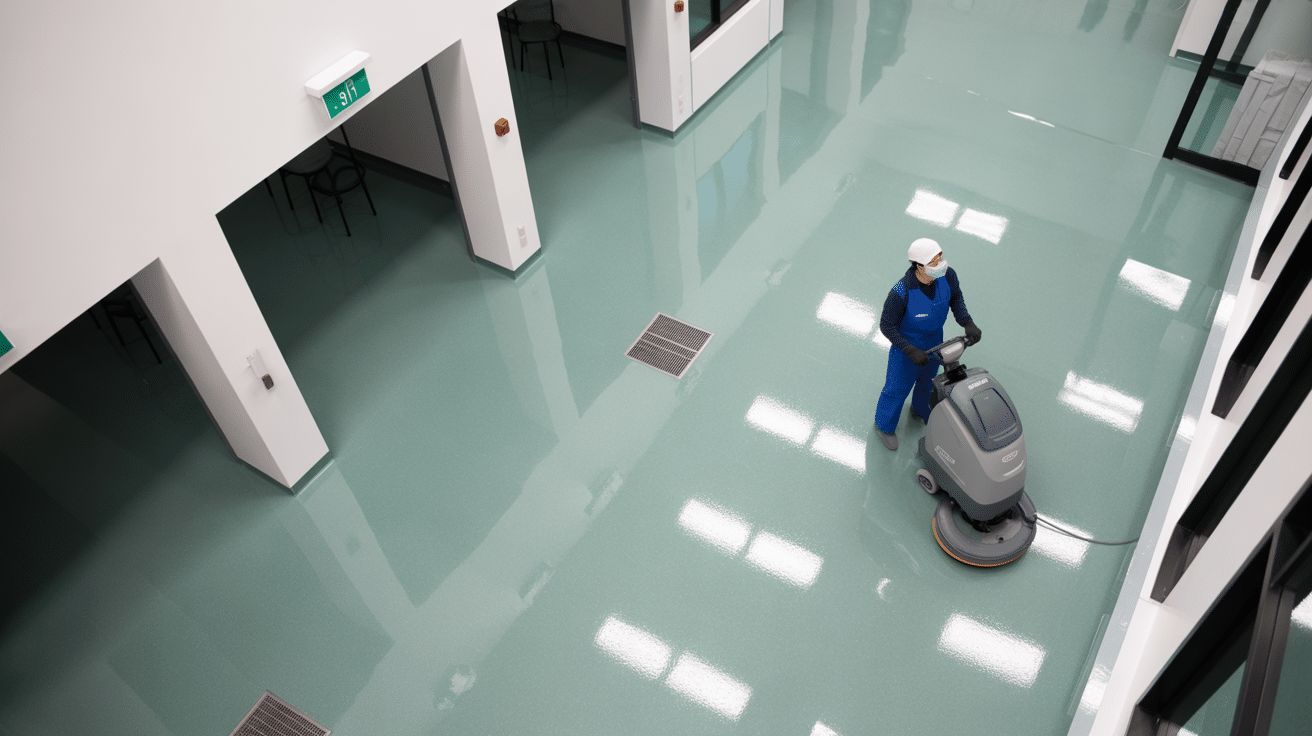
Hospital floors aren't just walking surfaces—they're potential pathogen reservoirs that contribute to HAI transmission through contaminated shoes, equipment wheels, and dropped items. Healthcare floor cleaning protocols differ fundamentally from commercial approaches.
Healthcare Floor Cleaning Requirements:
- Daily Wet Mopping: All patient care areas mopped daily with EPA-registered hospital disinfectant, not just floor cleaner
- Contamination Prevention: Dedicated mops for isolation rooms, separate equipment for clean vs. contaminated areas
- Frequent Mop Head Changes: Mop heads changed every 3-4 rooms or per established protocol to prevent cross-contamination
- No-Touch Mopping Systems: Microfiber flat mop systems preferred over string mops that harbor bacteria
- Spill Response: Immediate cleanup protocol for blood, body fluid, or other potentially infectious material
- Floor Finish Compatibility: Floor finishes must be compatible with frequent disinfectant use without degrading
VCT Floor Stripping and Waxing in Healthcare
Healthcare facilities with VCT floors still require periodic stripping and waxing services, but the process requires additional infection control measures beyond standard commercial floor care.
Healthcare Floor Care Considerations: Stripping and waxing must be scheduled to minimize patient impact, performed in sealed-off areas when possible, and followed by thorough cleaning to remove chemical residue. Staff performing this work need patient area access training and may require health clearances depending on facility policy.
Training Requirements for Healthcare Cleaning Staff
What Healthcare EVS Training Must Cover
Environmental Services (EVS) staff in healthcare facilities require comprehensive training far beyond standard commercial cleaning instruction. Effective healthcare cleaning depends on understanding not just how to clean, but why specific protocols matter for infection prevention.
Mandatory Healthcare Cleaning Training Topics:
- Infection Control Principles: Chain of infection, modes of transmission, role of environmental surfaces in HAI prevention
- Cleaning vs. Disinfection: Critical difference between removing soil and killing pathogens
- Product Knowledge: EPA registration, proper dilution, contact time requirements, safety data sheets
- High-Touch Surface Identification: Which surfaces require enhanced focus and why
- Isolation Precautions: Contact, droplet, and airborne precaution differences and required cleaning modifications
- PPE Use: When required, how to don and doff properly, preventing self-contamination
- Bloodborne Pathogens (OSHA): Annual mandatory training per OSHA standard
- Spill Response: Blood, body fluid, and chemical spill protocols
- Waste Segregation: Regular trash vs. biohazard vs. sharps disposal requirements
- Quality Assurance: How cleaning is verified and measured
Competency Assessment and Ongoing Education
Initial training isn't sufficient—healthcare EVS staff require regular competency assessment to verify they understand and correctly apply cleaning protocols. Competency evaluation methods include:
- Direct observation of cleaning tasks with competency checklist
- Written or verbal knowledge testing on protocols and procedures
- Product mixing demonstrations verifying proper dilution preparation
- PPE donning and doffing observation ensuring technique prevents contamination
- Annual refresher training on all core topics
- Additional training when new products, equipment, or protocols introduced
Common Healthcare Cleaning Compliance Failures
Top Deficiencies Found in Healthcare Facilities
Accreditation surveyors, infection preventionists, and compliance auditors consistently identify recurring cleaning deficiencies across healthcare facilities. Understanding common failures helps facilities proactively address compliance gaps before they're cited.
Frequent Compliance Violations:
- Inadequate Contact Time: Staff wipe surfaces immediately after applying disinfectant instead of maintaining required wet contact time
- Improper Product Dilution: Disinfectants diluted incorrectly (too weak to be effective or too concentrated creating safety hazards)
- Using Non-EPA-Registered Products: Household cleaners or commercial products used instead of hospital-grade disinfectants
- Cross-Contamination: Same cleaning tools used across patient rooms without disinfection between uses
- Missed High-Touch Surfaces: Cleaning focuses on floors and obvious areas while critical high-touch surfaces overlooked
- Inconsistent Terminal Cleaning: Post-discharge cleaning varies by staff member without standardized comprehensive protocol
- Poor Mop Maintenance: Contaminated mops stored in dirty water or improperly laundered between uses
- Staff Knowledge Gaps: EVS workers unable to explain contact time, identify EPA-registered products, or describe isolation precautions
How to Prevent Compliance Failures
Successful healthcare cleaning programs share common characteristics that prevent the deficiencies listed above. These programs treat environmental services as a critical component of infection prevention, not as "just cleaning."
- Written procedures for every cleaning task and location, reviewed annually and updated as needed
- Comprehensive initial training with documented competency assessment before independent work
- Regular supervision and direct observation of cleaning in progress
- Quality assurance program with objective cleaning verification (ATP testing or equivalent)
- Infection prevention partnership—EVS included in infection control committee and outbreak response
- Adequate staffing levels allowing sufficient time for proper cleaning and disinfection
- Leadership commitment demonstrated through resources, recognition, and accountability
Choosing a Healthcare Cleaning Service Provider in South Florida
What to Verify Before Contracting Healthcare Cleaning
Many commercial cleaning companies claim they can clean healthcare facilities, but few understand the regulatory requirements and infection control protocols that healthcare cleaning demands. Contracting with an unqualified provider creates compliance risk and potential patient safety issues.
Critical Questions to Ask Potential Healthcare Cleaning Vendors:
- Healthcare Experience: How many healthcare clients? What types (hospitals, surgery centers, clinics)? Can they provide healthcare references?
- Staff Training: What initial training do EVS staff receive? How is competency assessed? How often is retraining provided?
- Product Selection: What EPA-registered disinfectants do they use? Can they explain EPA List designations and contact time requirements?
- Quality Assurance: How do they verify cleaning effectiveness? Do they use ATP testing or other objective measures?
- Compliance Documentation: Can they provide cleaning logs, training records, product documentation required for accreditation surveys?
- Infection Prevention Knowledge: Do supervisors understand isolation precautions, HAI transmission, high-touch surface protocols?
- Specialized Protocols: How do they handle C. diff rooms, operating rooms, isolation patients, blood spills?
- Insurance Coverage: Do they carry healthcare professional liability insurance with adequate limits?
Red Flags When Evaluating Healthcare Cleaning Companies
Certain responses during vendor evaluation immediately signal that a commercial cleaning company lacks the sophistication required for healthcare environments:
- "We use the same great cleaning products we use in all our commercial buildings" (no understanding of EPA-registered hospital disinfectants)
- Unable to explain contact time or why it matters
- No mention of staff training beyond basic job orientation
- Can't describe difference between cleaning and disinfection
- Pricing identical to or minimally above commercial office cleaning rates
- No healthcare references or only small clinic experience claiming it transfers to hospital work
- Resistance to providing cleaning logs, training documentation, or product information
- Promises "hospital-grade cleaning" but can't define what that means in regulatory terms
MB Floor Solutions Healthcare Cleaning Expertise
Specialized Healthcare Facility Cleaning Across South Florida
MB Floor Solutions provides hospital and healthcare facility cleaning services throughout Miami-Dade, Broward, and Palm Beach Counties with full compliance to CDC, EPA, OSHA, and Joint Commission standards. Our healthcare cleaning program differs from our commercial services through specialized training, EPA-registered hospital-grade products, and rigorous quality assurance protocols.
- Terminal Cleaning: Post-discharge comprehensive disinfection with ATP verification
- Operating Room Cleaning: Case turnover and end-of-day terminal cleaning to surgical standards
- Isolation Room Protocols: Enhanced cleaning for contact, droplet, and airborne precaution patients
- High-Touch Surface Programs: Scheduled disinfection of critical surfaces throughout shifts
- Floor Care Services: Daily disinfection mopping and periodic deep cleaning with healthcare-compatible products
- Outbreak Response Support: Enhanced cleaning protocols during infection outbreaks or clusters
- Quality Verification: ATP testing and documentation for accreditation requirements
- Staff Training: Comprehensive infection control and compliance training for all healthcare EVS personnel
Why Healthcare Facilities Trust MB Floor Solutions
Healthcare facility administrators, infection preventionists, and quality directors choose MB Floor Solutions because we understand that healthcare cleaning isn't about making facilities look clean—it's about preventing infections, protecting patients, and maintaining accreditation compliance through rigorous protocols that other commercial cleaning companies don't provide.
- EPA-Registered Product Expertise: We use hospital-grade disinfectants appropriate for specific pathogens and document product selection rationale
- Infection Prevention Partnership: Our supervisors communicate with infection control teams and adapt protocols based on facility-specific needs
- Compliance Documentation: Complete cleaning logs, training records, and quality verification supporting Joint Commission and regulatory surveys
- Specialized Training Program: Healthcare-specific EVS training exceeding OSHA minimums with annual competency assessment
- Quality Assurance: ATP testing program verifying cleaning effectiveness with documented results
- Healthcare Insurance: Comprehensive professional liability coverage specific to healthcare environmental services
The Future of Healthcare Environmental Services
Emerging Technologies in Healthcare Cleaning
Healthcare cleaning continues evolving with new technologies that supplement—but don't replace—fundamental manual cleaning and disinfection protocols. Understanding these technologies helps facility managers evaluate whether implementation makes sense for their specific needs.
No-Touch Disinfection Technologies:
- UV-C Disinfection: Ultraviolet light devices kill pathogens on surfaces but only in direct line-of-sight—shadows and covered surfaces remain contaminated
- Hydrogen Peroxide Vapor: Whole-room decontamination with vaporized H2O2—effective but requires complete room sealing and extended application time
- Electrostatic Sprayers: Electrically charged disinfectant particles adhere to surfaces more completely—enhances coverage but doesn't replace manual cleaning
- Antimicrobial Coatings: Surface treatments claiming extended antimicrobial protection—limited evidence for long-term HAI reduction
Critical Understanding: All supplemental technologies require thorough manual cleaning first. You cannot UV-disinfect a dirty surface or electrostatically spray disinfectant over visible soil and achieve effective disinfection. Technology enhances but never replaces proper cleaning and manual disinfection.
Data-Driven Cleaning Programs
Forward-thinking healthcare facilities increasingly use data analytics to optimize cleaning programs—ATP testing trends identify high-risk areas, infection surveillance data guides enhanced cleaning protocols, and real-time monitoring systems verify cleaning task completion.
These data-driven approaches move healthcare cleaning from "we clean on this schedule" to "we clean based on objective need and verify effectiveness through measurement"—the next evolution in healthcare environmental services.
Healthcare Facility Cleaning Services in Miami
CDC-compliant, EPA-registered, OSHA-trained healthcare environmental services for South Florida medical facilities.
Serving hospitals, surgery centers, clinics, and medical facilities across Miami-Dade, Broward, and Palm Beach Counties.
Call (954) 380-3050Need healthcare cleaning services that meet accreditation standards and infection control requirements? MB Floor Solutions provides specialized medical facility cleaning with full regulatory compliance—contact us for consultation and facility assessment.