Learn the safest methods to remove black heel marks from VCT, vinyl, and polished concrete floors without damaging the finish. Step-by-step commercial guide.
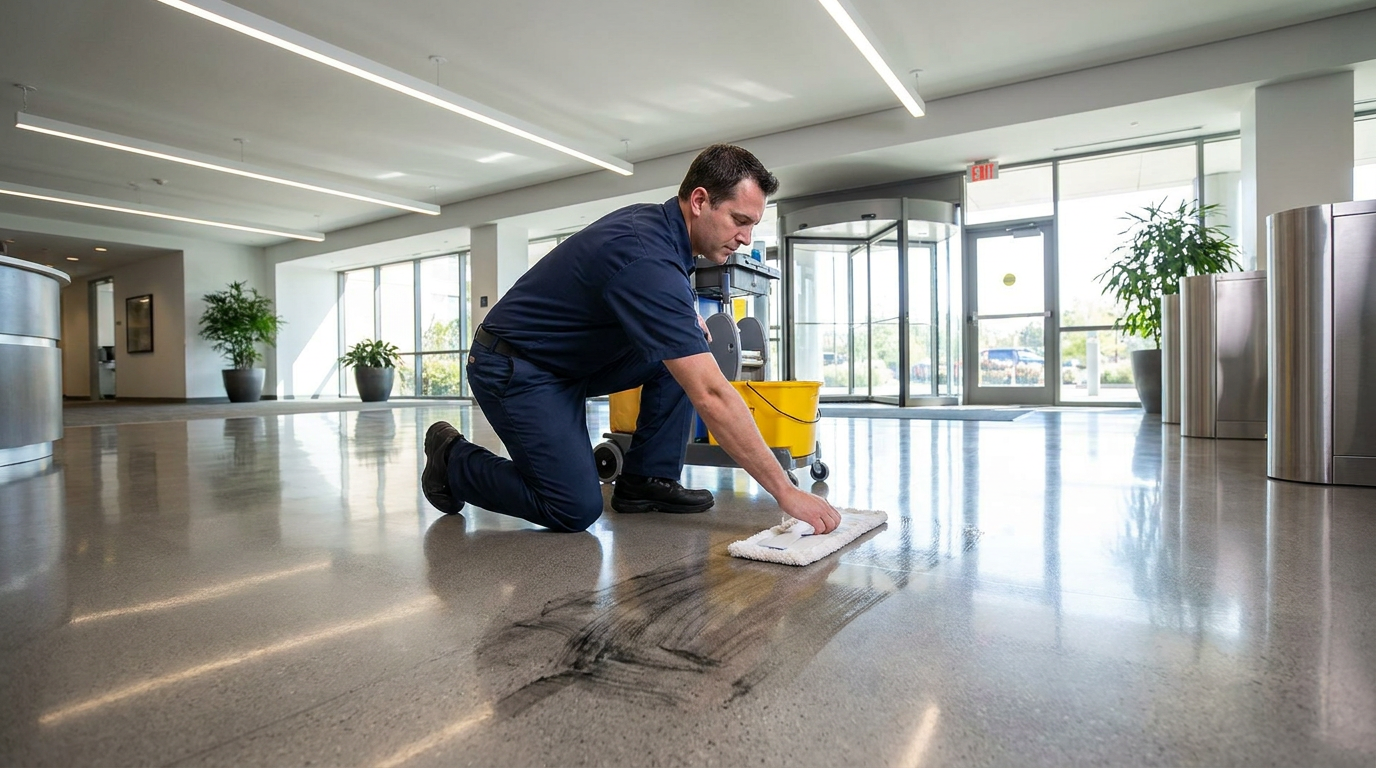
Black heel marks on commercial floors are rubber transfer deposits that sit on top of the floor finish, not permanent damage. Remove them safely by starting with dry friction methods like a tennis ball or pencil eraser, then progressing to a pH-neutral cleaner with a white buffing pad. Most marks disappear within 30 seconds using the correct technique for your floor type.
- Start with dry methods first: tennis balls, pencil erasers, or fingertip rubbing remove 70-80% of fresh heel marks
- Use only pH-neutral cleaners (pH 6-8) to protect floor finish; alkaline cleaners above pH 10 strip wax
- White buffing pads are safest for all commercial floor types; avoid green or black pads which scratch
- Fresh marks take 15-30 seconds to remove; aged marks may require specialty rubber heel-mark remover
- Treating marks within 24 hours prevents rubber from bonding to the finish layer
Why Black Heel Marks Appear on Commercial Floors
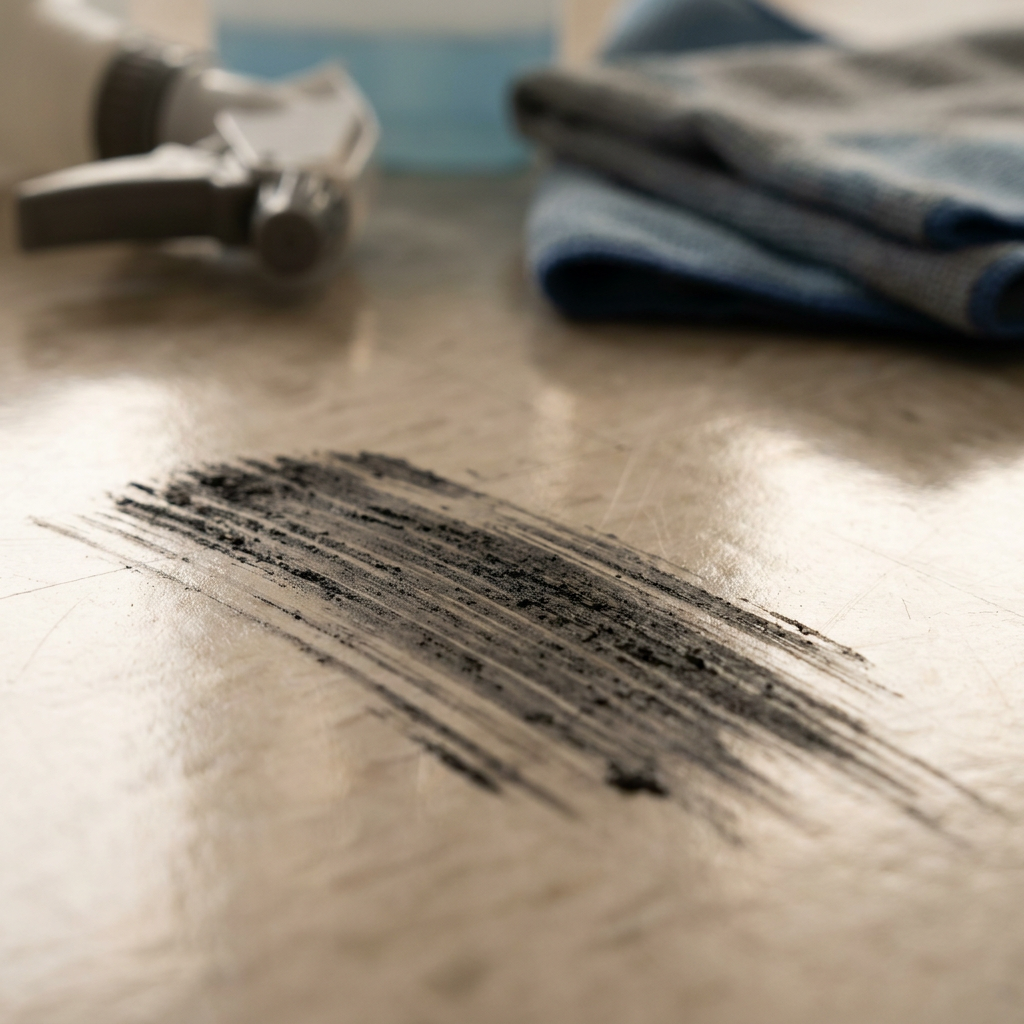
Black heel marks form when rubber soles transfer material onto floor surfaces through friction and heat. High-traffic areas like lobbies, corridors, and retail checkout lanes see the highest concentration of marks. According to Imperial Dade's commercial floor care guide, scuff marks are among the most common maintenance complaints facility managers receive.
The rubber compound in shoe soles softens slightly during walking, especially on smooth surfaces. When the heel pivots or drags, microscopic rubber particles adhere to the floor finish. Dark-soled shoes, particularly those with carbon black pigment, leave the most visible marks on light-colored VCT, vinyl, and polished concrete.
Temperature affects mark severity. Floors in South Florida facilities experience more rubber transfer during summer months when ambient temperatures exceed 85 degrees Fahrenheit. The Resilient Floor Covering Institute notes that rubber becomes more pliable above 80 degrees, increasing transfer potential by approximately 25%.
The Four-Step Commercial Heel Mark Removal Process
Professional floor technicians follow a specific escalation sequence to remove heel marks without damaging the protective finish. This method applies to VCT, LVT, vinyl sheet, linoleum, and sealed concrete floors found in offices, healthcare facilities, schools, and retail spaces throughout Miami-Dade, Broward, and Palm Beach Counties.
Step 1: Remove Surface Grit and Debris
Dust mop or vacuum the affected area before attempting mark removal. Grit particles trapped between your cleaning tool and the floor act as abrasives, creating micro-scratches in the finish. A 3M dust mop with electrostatic fibers captures particles down to 5 microns.
Skip this step and you risk grinding sand and dirt into the floor during the rubbing process. The International Sanitary Supply Association reports that 85% of soil in commercial buildings enters through foot traffic, making pre-cleaning essential.
Step 2: Try Dry Friction Methods First
Fresh heel marks often release with simple dry friction. Cut a tennis ball in half and rub the fuzzy exterior over the mark using circular motions with moderate pressure. The felt material lifts rubber without scratching. According to industry reports on the tennis ball method, this technique removes approximately 75% of fresh scuff marks.
Alternative dry methods include white art erasers, pencil erasers, and clean fingertip rubbing for small marks. These work because fresh rubber transfer has not yet bonded chemically with the floor finish. Marks less than 24 hours old respond best to dry friction.
Step 3: Apply pH-Neutral Cleaner with White Pad
When dry methods fail, dampen a microfiber cloth or white buffing pad with pH-neutral floor cleaner diluted according to manufacturer specifications. The pH should fall between 6 and 8. Products like Betco pH7Q, Diversey Stride, and Spartan Green Solutions meet this requirement.
Rub the mark gently using back-and-forth motions rather than aggressive circular scrubbing. Apply moderate, consistent pressure for 15-30 seconds. Wipe the area with a clean damp cloth to remove residue, then dry immediately with a microfiber towel to prevent streaking.
Step 4: Use Specialty Rubber Heel-Mark Remover
Stubborn marks that resist neutral cleaning require a dedicated rubber heel-mark remover. Products from manufacturers like Betco, 3M, and Zep contain solvents specifically formulated to dissolve rubber without attacking floor finish. Apply the product to your cloth, never directly to the floor.
Work in small sections, wiping residue immediately after the mark releases. Some products require a neutralizing rinse. Check the Safety Data Sheet for proper ventilation requirements, as certain formulations contain volatile organic compounds.
Removal Methods by Commercial Floor Type
Different floor materials require adjusted techniques. The following table compares recommended approaches based on floor composition and finish type commonly found in South Florida commercial facilities.
| Floor Type | Recommended Method | Avoid | Removal Time |
|---|---|---|---|
| VCT (Vinyl Composition Tile) | Tennis ball, then white pad with neutral cleaner | Alkaline cleaners, green/black pads | 15-45 seconds |
| LVT (Luxury Vinyl Tile) | Microfiber with neutral cleaner only | Abrasive pads, melamine sponges | 20-60 seconds |
| Polished Concrete | White pad with neutral cleaner, then rubber remover if needed | Acidic cleaners, steel wool | 30-90 seconds |
| Sealed Terrazzo | Soft cloth with neutral cleaner | Abrasive pads, vinegar solutions | 30-60 seconds |
| Epoxy-Coated Concrete | Tennis ball, then neutral cleaner | Solvent-based cleaners, aggressive scrubbing | 20-45 seconds |
| Waxed Hardwood | Pencil eraser only, minimal moisture | Water, any liquid cleaner | 15-30 seconds |
What to Avoid When Removing Heel Marks
Incorrect removal attempts cause more damage than the original marks. Understanding what damages floor finishes prevents costly repairs and premature refinishing.
Abrasive Pads and Steel Wool
Green scrubbing pads, black stripping pads, and steel wool create permanent scratches in floor finishes. According to Zogics' guide on acrylic floor care, using abrasive materials on finished floors causes micro-scratching that dulls appearance and requires professional buffing to correct. White and red pads rated below 800 grit are the only safe options for spot cleaning.
Alkaline Cleaners Above pH 10
Strong alkaline cleaners strip wax and floor finish on contact. Products containing sodium hydroxide, ammonia, or high-concentration degreasers dissolve the protective layers that give floors their shine and durability. A single application of undiluted degreaser can remove months of accumulated floor finish.
The Building Service Contractors Association International recommends testing any new cleaning product in an inconspicuous area before use. Wait 5 minutes after application to check for hazing, discoloration, or tackiness.
Excessive Water and Moisture
Flooding the floor with water during spot cleaning creates multiple problems. Water seeps into seams between tiles, potentially loosening adhesive. Excess moisture leaves mineral deposits as it evaporates, creating white streaks. On waxed floors, standing water softens the finish and attracts dirt.
Use a damp cloth rather than a wet one. The cloth should feel barely moist when pressed against your hand. Dry the area immediately after cleaning to prevent slip hazards and residue buildup.
Melamine Foam Sponges on Finished Floors
Products like Mr. Clean Magic Eraser work through micro-abrasion, essentially acting as extremely fine sandpaper. While effective on unfinished surfaces, they remove floor finish along with the scuff mark. Repeated use creates dull spots that require professional restoration.
Prevention Strategies for Commercial Facilities
Reducing heel mark formation saves labor costs and extends time between floor refinishing. Facility managers in high-traffic buildings report 40-60% fewer heel marks after implementing prevention protocols.
Entrance Matting Systems
Quality entrance mats capture grit and absorb moisture before visitors reach interior floors. The ISSA Cleaning Industry Management Standard recommends 15-20 feet of matting at primary entrances. This distance allows 6-8 footsteps to remove debris from shoe soles.
Replace or deep-clean entrance mats every 1-2 weeks in high-traffic facilities. Saturated mats redistribute dirt rather than capturing it. For more information on protecting floor finish, review our guide on extending commercial floor finish lifespan.
Regular Dust Mopping Schedule
Daily dust mopping removes grit that accelerates heel mark formation. Sand particles create friction points where rubber transfers more easily. Facilities that dust mop twice daily report 35% fewer visible scuff marks compared to once-daily schedules.
Use microfiber dust mops with electrostatic properties rather than traditional cotton mops. Microfiber captures particles rather than pushing them around. Wash mop heads after every 8-10 uses to maintain effectiveness.
Proper Floor Finish Maintenance
Well-maintained floor finish resists heel marks better than worn or thin finish layers. Schedule commercial floor scrubbing and waxing every 3-6 months for high-traffic areas. This scrub-and-recoat process adds fresh finish without full stripping.
Facilities requiring complete floor restoration benefit from professional commercial floor stripping and waxing annually or semi-annually. Fresh finish provides a smoother, harder surface that releases rubber marks more easily during routine cleaning.
Equipment and Products for Commercial Heel Mark Removal
Stocking the correct supplies enables maintenance staff to address heel marks immediately, before rubber bonds with the finish. The following products meet commercial facility requirements.
Recommended Cleaning Tools
White buffing pads (175-300 RPM rated) work with low-speed buffers for larger areas. For spot treatment, hand-held white pads or microfiber cloths provide sufficient friction. Keep a supply of cut tennis balls in maintenance closets for quick scuff removal during rounds.
3M manufactures the most widely specified commercial floor pads. Their white super polish pad (4100 series) removes scuffs without scratching. Red buffing pads (5100 series) provide slightly more abrasion for stubborn marks on VCT floors with heavy finish buildup.
pH-Neutral Floor Cleaners
Select cleaners specifically formulated for finished floors. Product labels should indicate pH-neutral or specify use on waxed surfaces. Dilute according to manufacturer instructions; stronger solutions do not clean better and may leave residue.
Popular commercial options include Betco pH7Q Neutral Disinfectant Cleaner, Diversey Stride Citrus Neutral Cleaner, and Spartan Green Solutions Floor Cleaner. All maintain pH between 6.5 and 7.5 when properly diluted.
Specialty Rubber Heel-Mark Removers
For marks that resist standard cleaning, specialty products dissolve rubber compounds without attacking floor finish. Betco Citrusolv, 3M Troubleshooter, and Zep Rubber Mark Remover are formulated for this specific application.
Apply sparingly to a cloth rather than the floor. Work in small sections and wipe residue immediately. Some products require ventilation; check Safety Data Sheets before use in enclosed spaces.
When to Call Professional Floor Cleaning Services
Some situations exceed routine maintenance capabilities. Professional floor technicians have equipment and expertise for challenging heel mark scenarios.
Signs You Need Professional Intervention
Heel marks covering more than 100 square feet require machine treatment rather than hand spot-cleaning. Auto-scrubbers with appropriate pads remove marks efficiently across large areas. Professional commercial floor deep cleaning addresses widespread scuffing while restoring overall floor appearance.
Marks that have been present for weeks or months may have penetrated the finish layer. These require professional assessment to determine whether spot treatment or full refinishing provides the better solution.
Floor Finish Damage Assessment
If heel mark removal attempts have created dull spots, hazing, or visible scratches, the finish itself needs restoration. Professional technicians can buff minor damage or apply targeted recoating to affected areas without refinishing the entire floor.
Facilities throughout Miami-Dade, Broward, and Palm Beach Counties can request a free on-site assessment to evaluate floor condition and receive specific maintenance recommendations.
Frequently Asked Questions
How do you remove black heel marks from VCT floors without dulling the finish?
Start with a tennis ball or pencil eraser on fresh marks. If the mark persists, use a white buffing pad dampened with pH-neutral cleaner. Avoid green or black pads, which scratch the finish. Never use alkaline cleaners above pH 10, as they strip wax. Dry the area immediately after cleaning to prevent streaking.
What is the safest cleaner for black scuff marks on polished concrete?
pH-neutral floor cleaners between pH 6 and 8 are safest for polished concrete. Products like Betco pH7Q or Diversey Stride protect the densifier and sealer while lifting rubber transfer. Avoid acidic cleaners, which etch concrete, and alkaline degreasers, which can cloud the polished surface.
Will a Magic Eraser damage commercial floor finish?
Yes. Melamine foam sponges like Magic Eraser work through micro-abrasion, essentially sanding the surface. On finished floors, they remove the protective finish layer along with the scuff mark. Repeated use creates dull patches requiring professional buffing or recoating to restore.
Can you remove shoe scuffs with a pencil eraser or tennis ball?
These methods work effectively on fresh marks less than 24 hours old. The rubber eraser or tennis ball felt lifts transferred rubber through gentle friction without scratching the floor finish. Approximately 70-80% of fresh heel marks respond to dry friction methods alone.
How do you remove heel marks from waxed floors without stripping wax?
Use only dry methods on waxed floors. Tennis balls and pencil erasers work without affecting the wax layer. Avoid any liquid cleaners, which soften wax and create dull spots. If dry methods fail, the area may need professional spot waxing after mark removal.
Are alkaline cleaners safe for commercial floor scuff removal?
Alkaline cleaners above pH 10 are not safe for finished floors. They dissolve wax and floor finish on contact, potentially removing more finish than the original mark damaged. Always verify cleaner pH before use; neutral products (pH 6-8) protect the finish while cleaning effectively.
Creating a Heel Mark Response Protocol
Establishing standard procedures ensures consistent results across maintenance staff. Document the following elements in your facility's cleaning manual.
Define response time expectations. Marks addressed within 24 hours require less effort and carry lower risk of finish damage. Train staff to treat visible heel marks during routine rounds rather than waiting for scheduled deep cleaning.
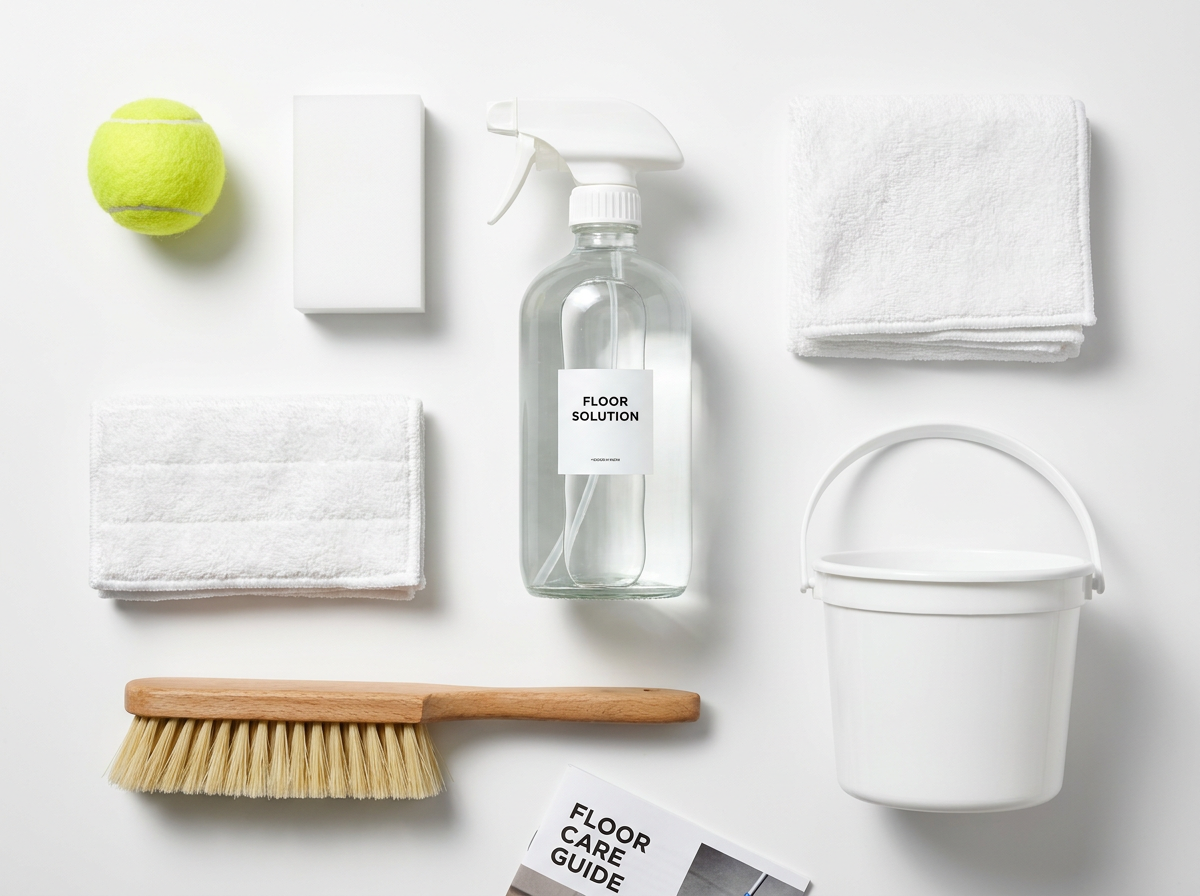
Stock appropriate supplies in each maintenance closet. Include cut tennis balls, white buffing pads, microfiber cloths, pH-neutral cleaner, and specialty rubber remover. Ensure Safety Data Sheets are accessible for all chemical products.
Create a decision tree for escalation. Staff should attempt dry methods first, then neutral cleaner, then specialty remover. Marks that resist all three methods require supervisor assessment before additional attempts that might damage the finish.
Track heel mark frequency by location. Areas with persistent problems may benefit from additional entrance matting, more frequent dust mopping, or evaluation of foot traffic patterns. Data helps justify preventive investments to facility management.
For comprehensive floor maintenance programs tailored to your facility's specific needs, MB Floor Solutions provides commercial cleaning services throughout South Florida with after-hours scheduling to minimize business disruption.
Need Professional Floor Care in South Florida?
MB Floor Solutions provides commercial floor deep cleaning, stripping and waxing, and custom maintenance programs for facilities across Miami-Dade, Broward, and Palm Beach Counties. Request your free on-site assessment today.
Get Your Free Quote