Learn proven methods to remove black scuff marks from VCT, LVT, and commercial floors using floor machines, proper pads, and prevention strategies.
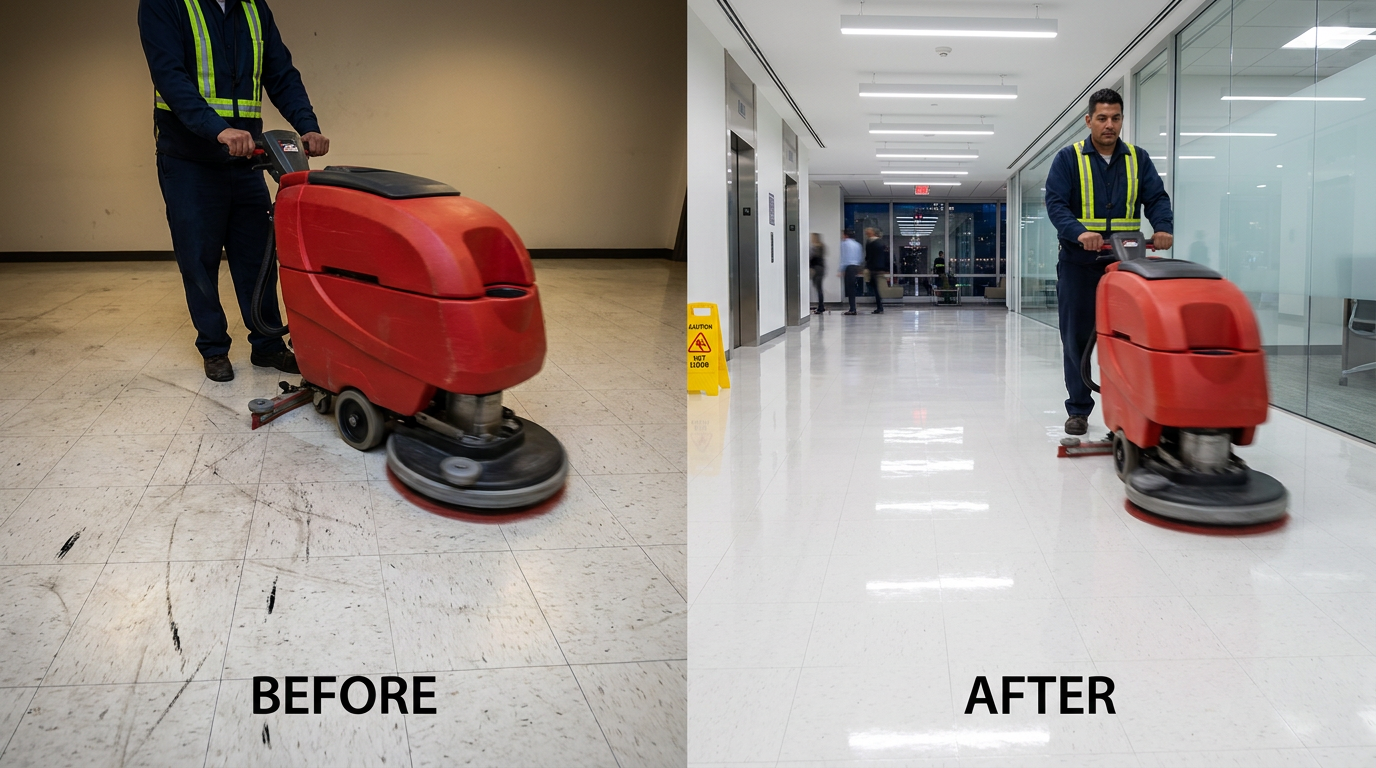
Black scuff marks on commercial floors are rubber transfer deposits from shoe soles, cart wheels, and equipment casters that bond to floor finish surfaces. Remove them using a 175 to 300 RPM floor machine with a red or light brown pad and pH-neutral cleaner, making two to three passes over affected areas. For stubborn marks, apply mineral spirits to a white cloth and spot-treat, then neutralize immediately with damp mopping.
- Use a 175 to 300 RPM floor machine with red pads for light scuffs or brown pads for heavier marks
- pH-neutral cleaners (around pH 7) protect floor finish while lifting rubber deposits
- Entrance matting systems capture 70 to 90 percent of incoming soil that causes scuffing
- Four to five coats of commercial floor finish create a protective barrier that keeps scuffs in the removable top layer
- Schedule scrub and recoat service every 3 to 6 months in high-traffic areas to maintain scuff resistance
What Causes Black Scuff Marks on Commercial Floors
Black scuff marks form when rubber from shoe soles, forklift tires, pallet jack wheels, and chair casters transfers onto floor surfaces under friction and pressure. According to Imperial Dade's commercial floor care guide, these marks typically embed in the floor finish film rather than the underlying substrate on properly maintained resilient floors like VCT and LVT.
On unsealed concrete, porous terrazzo, or worn finish surfaces, rubber particles penetrate deeper into the material. This makes removal significantly more difficult and increases the likelihood of permanent staining if not addressed within 24 to 48 hours. High-traffic zones like grocery checkout lanes, hospital corridors, and warehouse loading docks accumulate the most scuff marks due to concentrated foot and equipment traffic.
Temperature affects scuff formation as well. South Florida facilities experience more severe scuffing during summer months when rubber softens in 85 to 95 degree heat and transfers more readily. Healthcare facilities, retail stores, and schools in Miami-Dade, Broward, and Palm Beach Counties often see scuff mark complaints increase 30 to 40 percent between June and September.
Step-by-Step Scuff Mark Removal Using a Floor Machine
Professional scuff removal requires the right equipment, chemistry, and technique. This method works for VCT, LVT, vinyl sheet, linoleum, and sealed concrete floors commonly found in offices, clinics, retail spaces, and warehouses.
Preparation Before Machine Scrubbing
Start by dust mopping or vacuuming the entire floor area to remove loose grit and debris. Skipping this step allows the scrubbing pad to grind particles into the finish, creating swirl marks and additional damage. Identify your specific floor type and verify that your cleaning chemicals and pads are compatible with the manufacturer's maintenance specifications.
For facilities unsure of their floor type, VCT tiles typically measure 12 by 12 inches with visible seams, while LVT often features realistic wood or stone patterns in plank or tile formats. Linoleum has a distinctive matte appearance and slight marbling pattern. Knowing your floor type prevents using incompatible chemicals that could damage the surface.
Machine Scrubbing Process
Set up a 175 to 300 RPM low-speed floor machine (also called a swing machine or rotary scrubber) with the appropriate pad. Red pads handle light scuffing and routine maintenance without aggressive finish removal. Brown pads provide more abrasion for heavier soil and stubborn scuff marks while staying below stripping-level aggressiveness.
Dilute pH-neutral floor cleaner (pH approximately 7) according to label instructions. Apply solution to a 100 to 150 square foot section, allowing one to three minutes of dwell time for heavy traffic lanes. Make two to three overlapping passes with the machine, keeping the pad flat and maintaining a thin solution film to prevent hydroplaning.
Immediately remove loosened residue using a clean damp mop or auto-scrubber with clear water. This prevents re-depositing rubber particles and soil back onto the floor. Use high-velocity air movers to accelerate drying, especially in healthcare facilities where slip hazards must be minimized.
Targeted Methods for Stubborn Black Scuff Marks
When standard machine scrubbing fails to remove all marks, these specialized techniques address deeply embedded rubber deposits without damaging floor finish.
Tennis Ball and Melamine Pad Methods
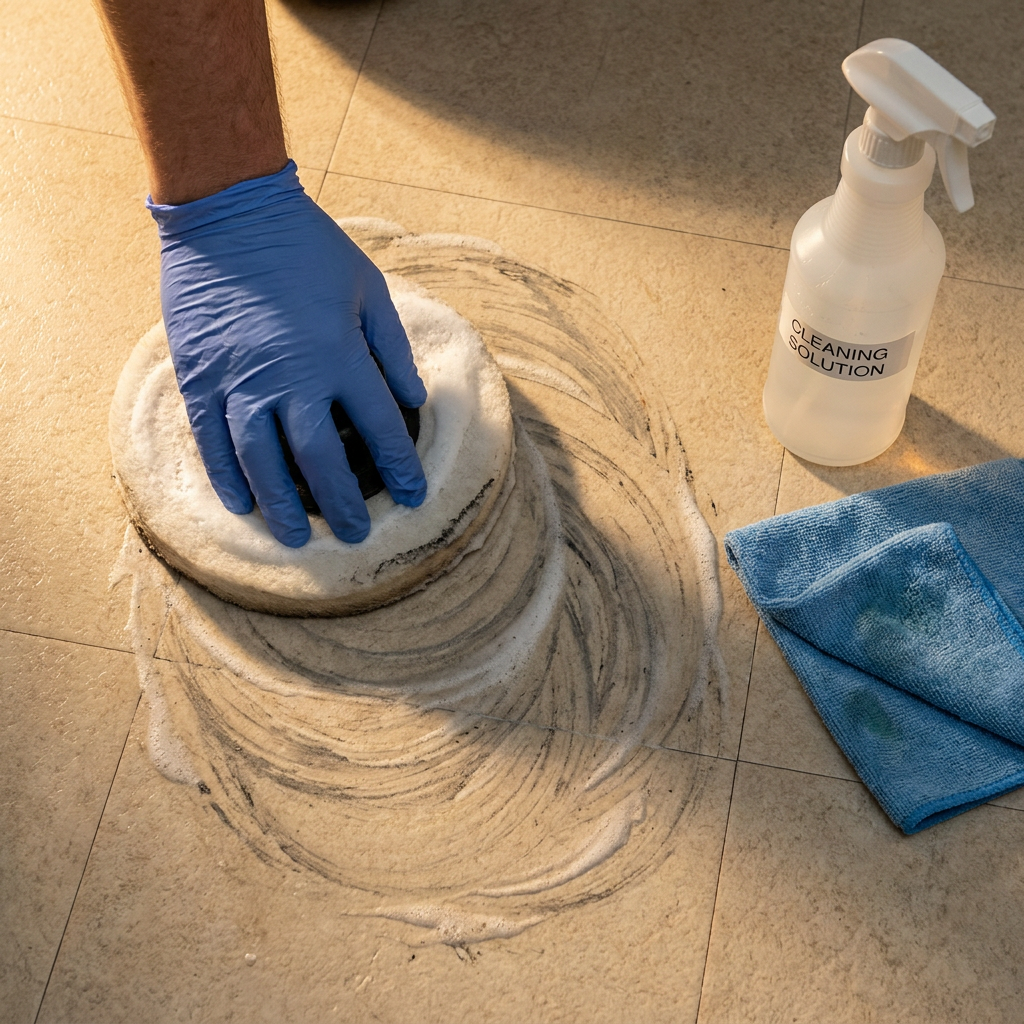
The tennis ball technique remains popular in schools, gyms, and retail facilities for quick spot treatment. Cut a small X in a tennis ball, push it onto a broom handle, and manually rub the scuff mark. The slightly abrasive felt and rubber surface lifts marks mechanically without harsh chemicals or stopping machine operations.
Melamine eraser pads attached to hand tools or small machines work effectively on laminate and sealed surfaces when used damp. These micro-abrasive pads remove embedded rubber through gentle friction. However, avoid overuse on soft finishes or natural stone, as melamine can dull surfaces with repeated application.
Solvent Spot Treatment
For isolated stubborn marks that resist mechanical removal, apply a small amount of mineral spirits to a white cloth and gently rub only the scuff. Immediately neutralize by wiping with a damp cloth and pH-neutral cleaner to prevent finish softening or gloss changes. Never use strong solvents like acetone or MEK on commercial floors, as these damage finishes and substrates.
Limit solvent use to visible problem areas rather than broad application. Excessive solvent exposure weakens floor finish adhesion and creates uneven sheen patterns that become more noticeable under lighting.
Floor Type Comparison: Scuff Removal Methods
Different commercial flooring materials require specific approaches for safe and effective scuff removal. Using incorrect methods can cause permanent damage.
| Floor Type | Recommended Pad | Cleaner pH | Special Considerations |
|---|---|---|---|
| VCT (Vinyl Composition Tile) | Red or brown | Neutral (6.5 to 7.5) | Accepts acrylic finish; burnishing improves scuff resistance |
| LVT (Luxury Vinyl Tile) | Red or white | Neutral (6.5 to 7.5) | Factory finish may not require additional coating |
| Linoleum | Red | Neutral (7.0 to 8.0) | Avoid high-alkaline cleaners that damage linseed oil binder |
| Ceramic Tile | White or red | Neutral to mild alkaline | Avoid aggressive pads that scratch glazed surfaces |
| Polished Concrete | Red or white | Neutral (7.0) | Densifier-treated surfaces resist penetration |
| Marble and Terrazzo | White or specialized stone pad | Neutral only (7.0) | Acidic and alkaline cleaners cause etching; use stone-specific products |
For facilities with marble and terrazzo floors, professional diamond honing and polishing addresses scuff marks that have penetrated the stone surface. These natural materials require specialized care that differs significantly from resilient flooring maintenance.
Building a Scuff-Resistant Floor System
Permanent scuff control means making marks easy to remove and less frequent, not eliminating them entirely. The most effective long-term strategy combines protective finish, entrance matting, and traffic management.
Multiple Coats of Commercial Floor Finish
Apply four to five coats of commercial floor finish on VCT, LVT, and sealed concrete surfaces. Multiple coats build a thicker protective film that keeps scuff marks in the removable top layer rather than allowing them to reach the substrate. High-solids, metal-crosslinked acrylic finishes formulated for high traffic offer superior black heel mark resistance.
Facilities that maintain proper finish thickness report 40 to 60 percent fewer complaints about visible scuff marks compared to floors with thin or worn finish. The investment in commercial floor stripping and waxing pays dividends through reduced daily maintenance labor and improved appearance.
Entrance Matting Systems
Industry research shows that effective entrance matting captures 70 to 90 percent of incoming soil and grit. This dramatically reduces abrasive wear and scuffs from contaminated shoe soles. Install a multi-zone matting system with scraper mats outside to remove coarse debris and brush and absorbent mats inside to capture moisture and fine particles.
Ensure mats are long enough to allow several walking steps, typically 10 to 15 feet of total coverage. Maintain mats through regular vacuuming and periodic laundering to preserve their soil-trapping effectiveness. Neglected mats become soil sources rather than soil barriers.
Traffic and Equipment Management
Switch to non-marking tires on carts, pallet jacks, and floor equipment where possible. Standard black rubber wheels are the primary source of scuff marks in warehouses, retail stockrooms, and healthcare facilities. Gray or white non-marking wheels cost 10 to 20 percent more but eliminate the rubber transfer problem entirely.
Place chair mats under rolling office chairs on soft resilient floors. Install protective glides on furniture legs to prevent grinding motion that creates scuffing and gouging. In high-traffic corridors, consider designating equipment lanes with more durable flooring or protective coatings.
Commercial Floor Maintenance Schedule for Scuff Prevention
A structured maintenance program keeps scuff marks manageable and prevents accumulation that requires intensive restoration.
Daily Maintenance Tasks
Dust mop or vacuum all hard floor areas to remove loose grit before it gets ground into the finish. Spot treat visible black scuffs in high-visibility areas using the tennis ball method or melamine pad with pH-neutral cleaner. Focus on reception areas, elevator lobbies, and checkout lanes where appearance matters most.
Weekly Maintenance Tasks
Auto-scrub or machine scrub main traffic lanes with pH-neutral cleaner using red pads. Inspect concentrated scuffing zones near building entrances, vending areas, and loading docks. Address problem areas before marks become embedded in worn finish. For facilities with commercial tile and grout, check transition areas where scuffs often accumulate.
Monthly to Quarterly Maintenance Tasks
Perform commercial floor scrubbing and waxing (scrub and recoat) on traffic lanes showing persistent dullness and scuff shadowing. This service machine scrubs the top worn finish layers and applies one to two fresh coats, restoring protection at 30 to 40 percent of full strip cost. High-traffic healthcare facilities and retail stores typically schedule this service every one to three months.
Annual Maintenance Tasks
Evaluate whether floors need full strip and refinish based on finish condition, not calendar schedule. Heavy scuff embedding, yellowing, and loss of gloss uniformity indicate the need for complete restoration. Review matting effectiveness, traffic patterns, and equipment wheels to identify and address scuff sources. Consider upgrading entrance matting or switching to non-marking equipment wheels where problems persist.
When to Recoat Instead of Keep Scrubbing
If scuffs remain visible after proper machine scrubbing with neutral cleaner, the floor finish is likely too thin or too worn to protect the substrate effectively. Continuing aggressive scrubbing removes more finish and worsens the problem. The cost-effective solution is a top-scrub and recoat service rather than repeated unsuccessful cleaning attempts.
Signs that indicate recoating is needed include visible wear paths in traffic lanes, inconsistent gloss levels across the floor, scuff marks that reappear within days of removal, and finish that feels rough or tacky. Most commercial facilities benefit from recoating every three to six months in high-traffic zones and annually in moderate-traffic areas.
For detailed guidance on maintaining floor finish between full strip cycles, review strategies to extend commercial floor finish lifespan and reduce overall maintenance costs.
Frequently Asked Questions About Black Scuff Marks
What Causes Black Scuff Marks on Commercial Floors and Are They Permanent?
Black scuff marks result from rubber transfer under friction, primarily from shoe soles and equipment wheels. On properly finished floors, scuffs remain in the removable finish layer and are not permanent. However, on unsealed concrete, porous stone, or severely worn finish, rubber can penetrate the substrate and become permanent if not treated within 24 to 48 hours.
How Do You Remove Black Heel Marks from VCT and LVT Without Damaging the Finish?
Use a 175 to 300 RPM floor machine with a red pad and pH-neutral cleaner. Make two to three passes over affected areas, then damp mop with clear water to remove residue. Avoid aggressive stripping pads or alkaline chemicals that remove finish along with the scuff marks. For stubborn spots, the tennis ball method provides safe mechanical removal.
Which Floor Machine Pads Work Best for Scuff Removal?
Red pads (light scrubbing) work for routine scuffs and maintenance cleaning. Brown pads (medium scrubbing) handle heavier soil and stubborn marks without reaching stripping-level aggressiveness. White pads (polishing) work for delicate surfaces like marble and terrazzo. Never use black or green stripping pads for scuff removal, as these remove floor finish entirely.
What Is the Safest Way to Remove Black Scuffs from Natural Stone Floors?
Natural stone requires pH-neutral cleaners specifically formulated for stone care. Avoid acidic products (including vinegar) and alkaline products that etch or dull the surface. Use white pads or specialized stone pads with gentle pressure. For marble and terrazzo polishing, professional diamond honing addresses scuffs that have penetrated the stone surface.
How Do You Prevent Black Scuff Marks from Coming Back?
Install entrance matting systems that capture 70 to 90 percent of incoming soil. Maintain four to five coats of commercial floor finish to keep scuffs in the removable top layer. Switch to non-marking wheels on carts and equipment. Schedule regular commercial floor deep cleaning and periodic recoating to maintain protective finish thickness.
Is a Tennis Ball or Melamine Eraser Safe for Removing Scuffs in Offices and Schools?
Both methods are safe for most commercial resilient floors when used correctly. The tennis ball technique provides gentle mechanical removal without chemicals. Melamine erasers work well on laminate and sealed surfaces but can dull soft finishes or natural stone with repeated use. Test in an inconspicuous area before widespread application.
How Many Coats of Floor Finish Provide Effective Scuff Resistance?
Four to five coats of commercial floor finish provide optimal protection for high-traffic commercial environments. This thickness keeps scuff marks in the removable top layers while protecting the substrate. Facilities with fewer than three coats experience significantly more permanent scuffing and faster finish degradation.
Professional Scuff Removal for South Florida Facilities
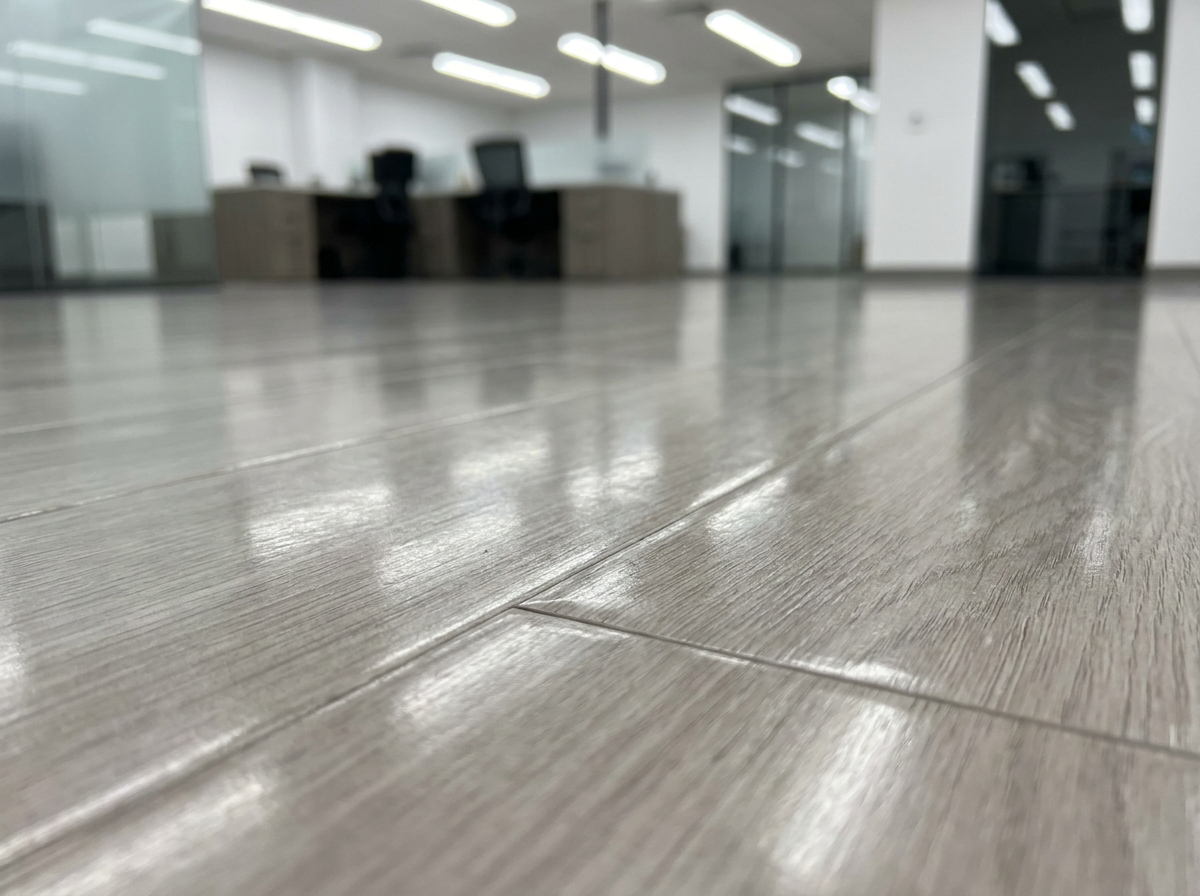
Commercial facilities across Miami-Dade, Broward, and Palm Beach Counties face unique scuff mark challenges due to high humidity, year-round heat, and heavy foot traffic. Professional commercial cleaning services provide the equipment, chemistry, and expertise to address scuff marks efficiently while protecting floor finish integrity.
MB Floor Solutions LLC serves offices, healthcare facilities, retail spaces, schools, and warehouses throughout South Florida with comprehensive floor care programs. Services include deep cleaning with auto-scrubbers, scrub and recoat maintenance, and full strip and wax restoration. All technicians are W-2 employees with background checks, and the company maintains full insurance with COI available on request.
For facilities struggling with persistent scuff marks or worn floor finish, contact MB Floor Solutions for a free on-site assessment and written quote. After-hours and overnight scheduling minimizes business disruption while delivering professional results.
Get a Free Floor Assessment
MB Floor Solutions provides professional scuff removal, deep cleaning, and floor maintenance programs for commercial facilities across South Florida. Request your free on-site assessment today.
Schedule Your Free Assessment