Build a rubber gym floor cleaning plan around the installed material, approved products, equipment access and a clear contractor handoff.
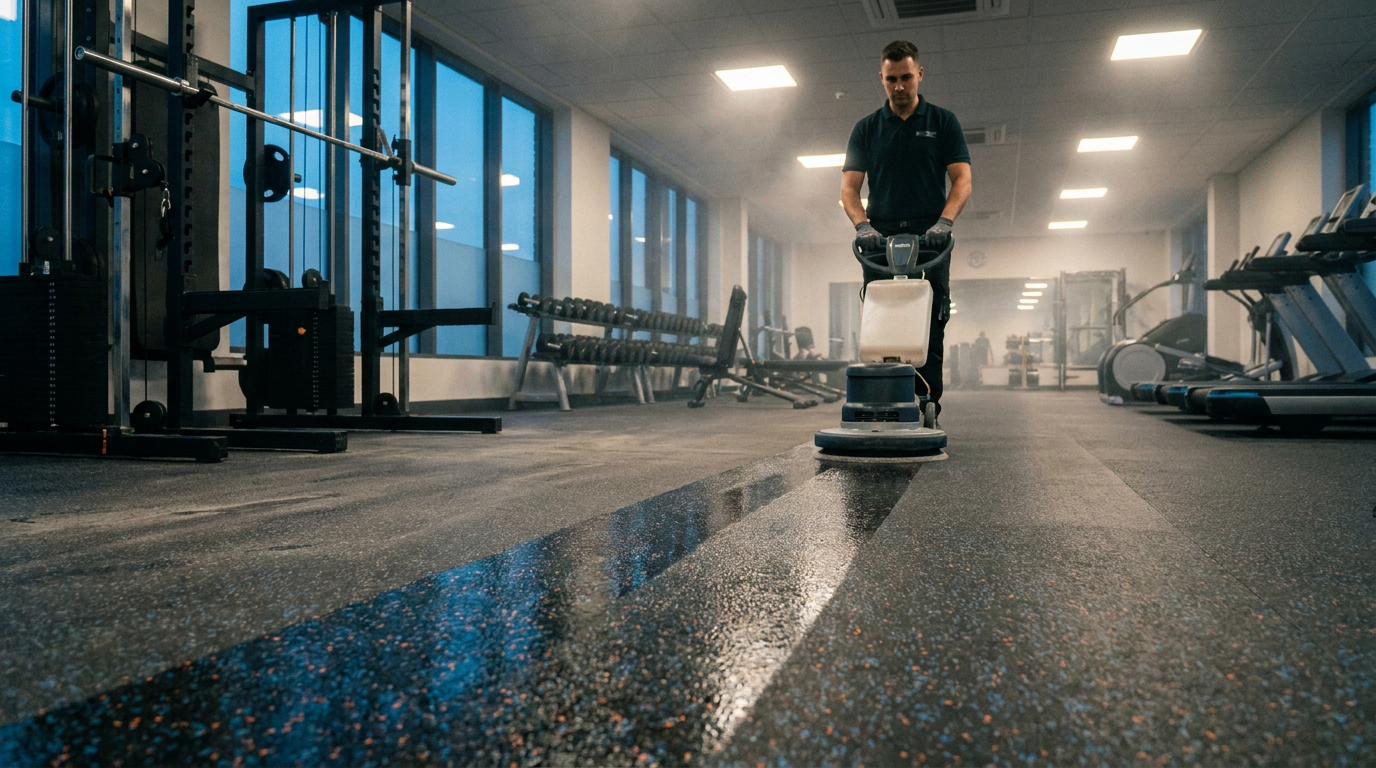
Rubber gym floor cleaning should follow the care instructions for the installed flooring product. This guide helps a commercial gym manager organize what a cleaning contractor needs: what surface is present, who is responsible for each area, which products and equipment are proposed, and what is excluded from the job. [8] [6]
Key Points
- Identify the floor product and obtain its current maintenance instructions before choosing a cleaner. [5] [6]
- Manufacturer documents give product-specific cleaning steps, so do not copy dilutions or drying times from another floor. [8] [6]
- Keep floor cleaning, disinfection and repair questions as separate items in the written scope.
- Use the zone map and checklist below as optional planning aids.
Confirm what is actually on the floor
Find the product name, manufacturer, installation details and current maintenance instructions. Record any coating or earlier treatment you know about. If the product is unknown, label it as unknown in the work request rather than guessing from color or texture.
One Ecore maintenance guideline document has separate sections for composition rubber, turf, carpet and vinyl flooring (Ecore maintenance guidelines). In a gym with mixed surfaces, list each surface and its instructions separately. It is also sensible to list movable mats and equipment upholstery as their own items so responsibility for each is agreed.
Create a zone map the contractor can use
A marked floor plan can help organize the work scope. The table below is an optional planning aid, not a required format.
| Zone | Information to record | Responsibility to agree |
|---|---|---|
| Free-weight area | Floor product, visible soil, racks and platforms | Who clears loose items and which fixed equipment remains |
| Cardio area | Accessible aisles and equipment spacing | Which areas can be reached without moving machines |
| Training or stretching area | Floor identity, movable mats and class times | Who removes and replaces movable equipment |
| Entrance and transitions | Mat systems and adjacent flooring | Where one cleaning method ends and another begins |
| Storage and utility access | Water access and equipment routes | Who provides access and confirms the work area is ready |
Choose the product from the floor instructions
Manufacturer recommendations should guide product selection. Ecore describes its E-Cleaner as a highly concentrated, low-foam floor cleaner designed for use with all Ecore surfacing products. Its product page also lists separate initial-cleaning and routine-cleaning coverage rates, which shows why the task matters. It is not a recommendation to apply one dilution to every rubber floor. [6]
In that same Ecore guideline document, the composition rubber routine starts by removing abrasive debris, then uses a cloth or microfiber mop with diluted E-Cleaner (Ecore maintenance guidelines). Treat any figures in a manufacturer document as specific to the product it covers. [6]
A different document shows how much products vary. A Greatmats-hosted manual for one Ecore rubber tile product says that product is not designed for commercial applications because of its loose lay design (Greatmats-hosted tile manual). Do not assume instructions for one rubber product apply to another. [8]
Ask the cleaning team to name the proposed product and to point to the installed floor's guidance for it. If a different product is proposed, ask the flooring manufacturer for written guidance on that product. Keep the current label and safety information with the work file. [8] [6] [5]
Translate the approved method into a workable routine
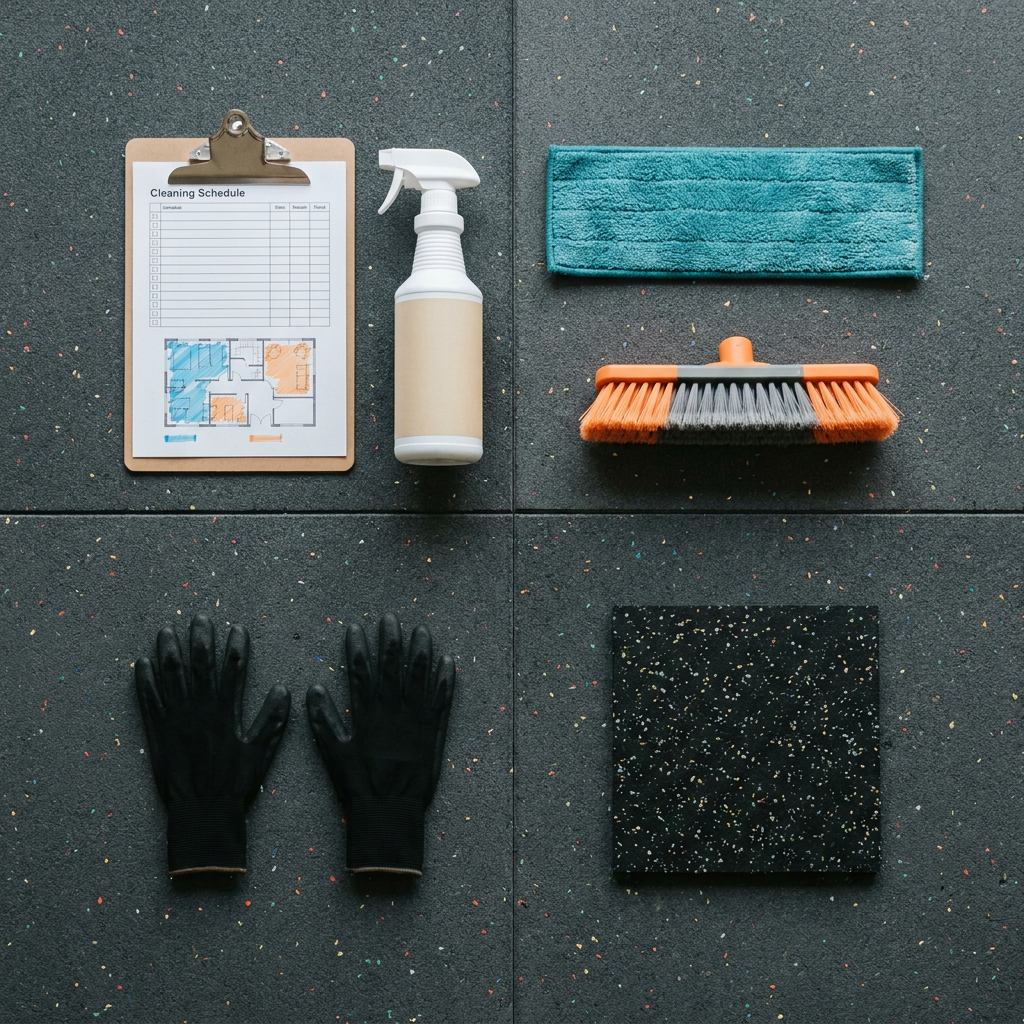
The written routine should state how loose soil is removed, how the approved solution is prepared and applied, and how soil and moisture are recovered, all taken from the manufacturer's instructions. The Greatmats-hosted tile manual says to avoid flooding the floor because excess water will flow through the tabs (tile manual). Confirm what your own floor's manual says about water and recovery tools. [8]
Record any cleaning frequencies your manufacturer specifies, and note where none are given so the question can be raised with the manufacturer. For planning, you might list a lightly used stretching room and a busy free-weight area as separate categories in the schedule. Keep a record of recurring complaints by location for review.
For drying and return to use, follow the installed product's applicable instructions. Scheduling the work window and who signs off is an internal coordination choice, so agree it in writing with the contractor. [6] [8]
Keep ordinary cleaning and disinfection distinct
A routine floor-cleaning plan should not be presented as proof of disinfection. Ecore's maintenance guidelines treat floor surface disinfecting as a separate process and say the disinfectant should remain wet for the time stated in the product guidelines (Ecore maintenance guidelines). If a disinfecting step is wanted, ask the manufacturers involved for written clarification on compatibility.
List equipment touchpoints, movable mats and other surfaces separately from the floor scope, and do not assume a floor-cleaning visit covers every hygiene task in the gym.
Note conditions that may need separate evaluation
As an optional step, document any loose edges, seams, lifting areas, odor or discoloration you already know about, with locations. Ask the assessor whether any of them calls for separate evaluation and what guidance supports any product change they propose. The written scope should state what the cleaning project is expected to address.
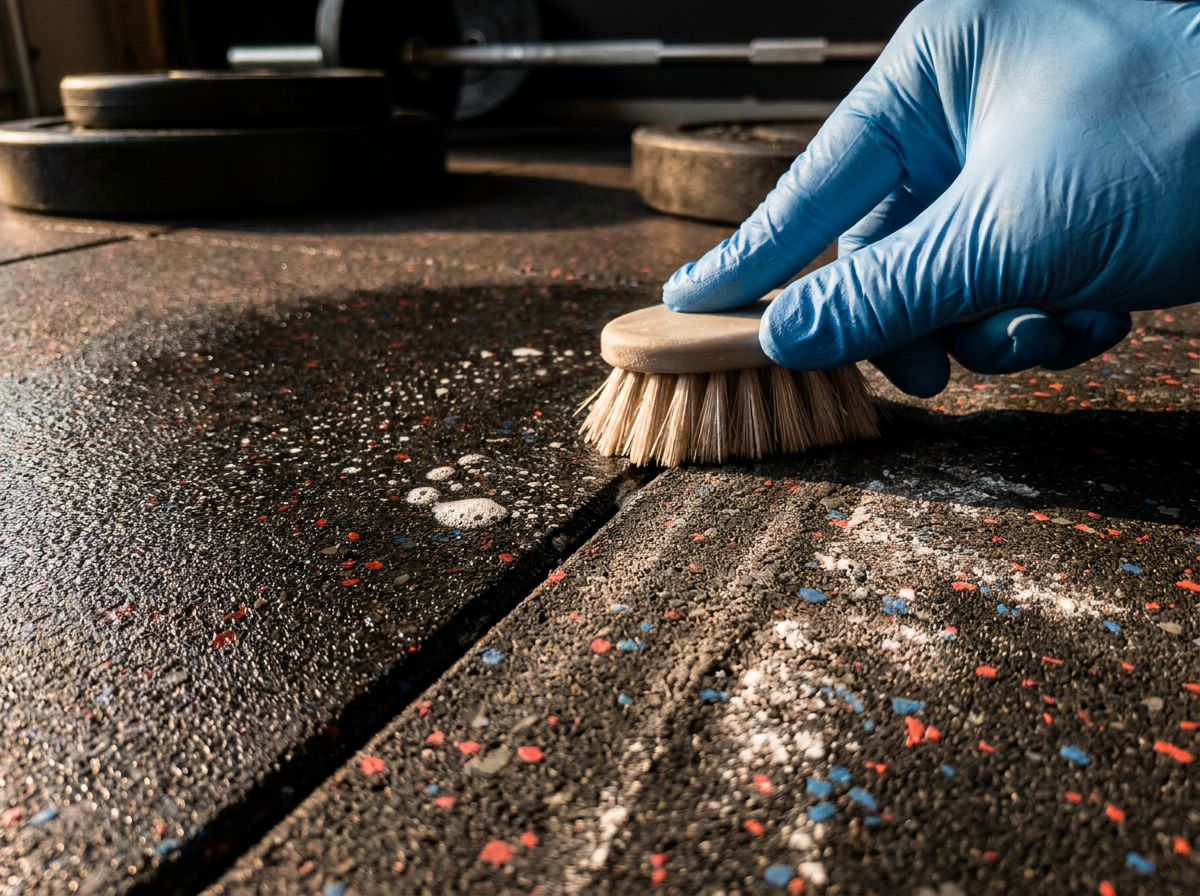
Contractor handoff checklist (optional)
- Floor plan with product names, materials and accessible areas.
- Current manufacturer maintenance instructions, plus any known earlier treatments.
- Proposed cleaner, preparation method and equipment, with the manufacturer guidance for each. [6] [8]
- Responsibility for moving weights, mats and other loose items.
- Excluded equipment, repairs and areas that cannot be accessed.
- Work window and who coordinates access and sign-off.
- Questions awaiting manufacturer answers and a record of unresolved conditions.
Can the gym's other floor-cleaning routine be used on rubber?
Only if the rubber floor's manufacturer guidance supports it. Do not transfer a procedure from nearby vinyl or finished VCT without checking. [8] [6]
Can I request a quote before finding the flooring records?
Yes, but identify the unknown material in your enquiry. Photos and site information can support an initial discussion, and the method still needs confirming.
For a project assessment in South Florida, contact MB Floor Solutions with the floor record and zone map, and confirm whether your particular rubber floor and requested work fit its service scope before scheduling.