Plan luxury vinyl tile cleaning for commercial spaces with product-specific care instructions, zone records and a clear scope for periodic deep cleaning.
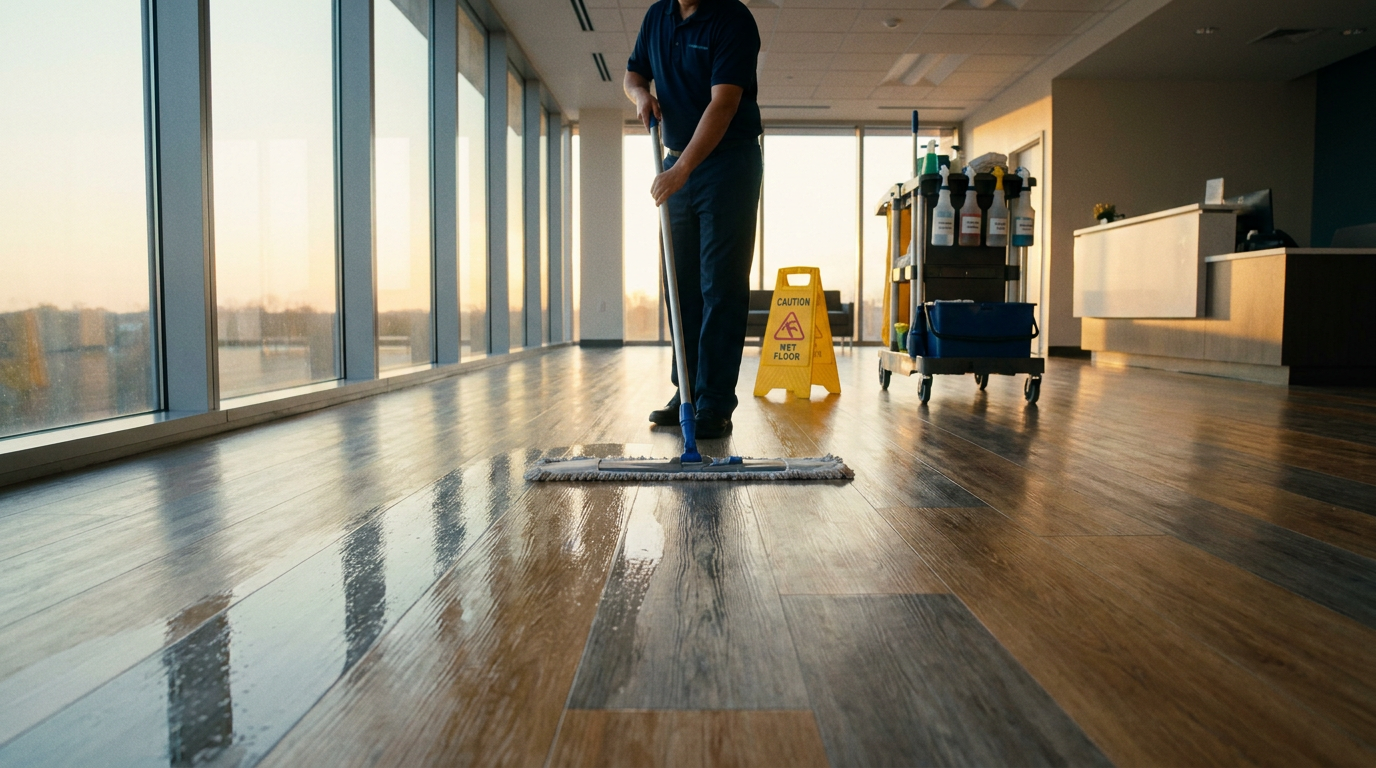
Luxury vinyl tile cleaning should start with the care instructions for the product installed in your building. Do not assume an LVT floor should be stripped, waxed or polished like other floors in the facility. Its factory surface, any later finish and its current condition shape the right approach. [5] [8] [1]
Consider keeping a short written care specification for staff and contractors. It can name each LVT area, the routine taken from the manufacturer's instructions, who is responsible, and who to contact when something looks wrong.
Key Points
- Identify the exact product and any applied finish before choosing a method. [8] [1]
- No-polish maintenance is a feature of specific products, so confirm it for yours. [8] [5]
- Keep the manufacturer's documented instructions, zones and return-to-use conditions in one record.
- Ask any proposal to state its scope, exclusions and expected result.
Build a floor record first
Collect the manufacturer, product name, installation date if known and the current care instructions. Keep a copy where the cleaning supervisor can find it. Record any finish applied after installation, even if the current team did not apply it.
Mannington Commercial's manager of commercial maintenance writes in a maintenance article: "First, know your floor. Does it have a floor finish? Is it factory coated?" That is a manufacturer's advice about its own products, but the question is a useful one at any contractor handoff. When the crew changes, ask whether the new crew has received the product-specific care instructions.
No-polish maintenance is product-specific
Some commercial LVT is designed for no-polish upkeep. Mannington Commercial's LVT technology page lists "Easy no-polish maintenance" among the features of its Quantum Guard technologies. That is a reason to check your installed system. It is not a rule for every vinyl floor, and it does not justify removing an existing coating without assessment. [4] [8] [1]
If someone proposes adding wax or another finish, ask for the product-specific basis and whether the flooring manufacturer permits it. Mixed floors need extra attention. Mannington's specifier guide says: "You don’t want to have one material that needs wax and another one that doesn’t right next to it." [5] [1]
Turn the record into a zone plan
This planning table lists observations worth recording for each area. Take methods and any frequencies it specifies from the manufacturer's documented guidance, and record site conditions and the agreed service scope separately. [2] [8] [1]
| Zone | What to record | Planning question |
|---|---|---|
| Entrance and reception | Tracked grit, wet weather, mat locations, busiest periods | Which instructions apply to this area? |
| Open offices or sales floor | Accessible area, furniture limits, routes that must stay open | How will the area be divided into sections? |
| Break rooms | Recurring spills and who reports them | Who responds to spills? |
| Edges and fixed equipment | Areas a machine cannot reach, movable items | Is detail work in the written scope? |
| Mixed-floor transitions | Where LVT meets stone, carpet, VCT or other material | Where does one method end and another begin? [8] |
Document the process from the manufacturer's instructions
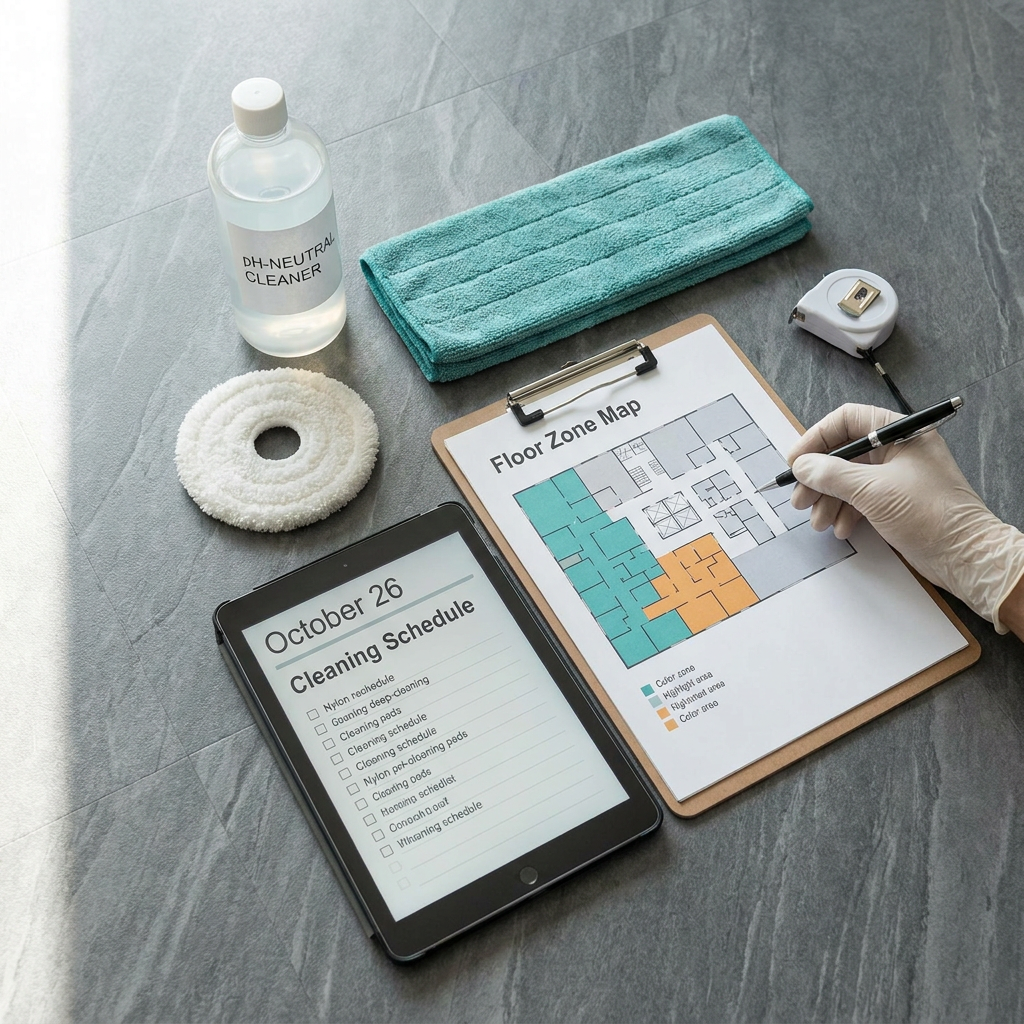
Add the cleaner, tools and return-to-use conditions as fields in your record, and fill them from the flooring manufacturer's current instructions and the cleaner's label. Mannington's 2015 installation guidelines for its luxury vinyl flooring say: "Effective maintenance includes promptly removing all spills and then thoroughly cleaning with a diluted neutral cleaner or cleaner/maintainer solution." Treat that as one manufacturer's dated guidance for its own products.
Tools matter as well. Mannington's article says: "Even when flat mops are used according to the manufacturer’s instructions, they hold so many chemicals and water that the floor becomes over saturated." It adds that when the water evaporates, the chemistries left behind can create a residue that attracts more soil. Ask a contractor to explain the proposed tool and cleaner before starting, and to point to the instructions behind them.
Protect the floor between visits
Armstrong's commercial FAQ says that certain types of rubber mats, rubber-backed rugs, and rubber wheels on carts can cause discoloration on its vinyl floors, and it advises non-staining rubber types. Check mats and cart wheels against your own flooring instructions.
For safety, the Mannington guidelines say to put out signs or safety cones to warn that cleaning is in progress, and to ensure the floor is clean and dry before resuming use. Consider writing that into your return-to-use conditions.
Newly installed floors
Timing after installation varies by manufacturer. Mannington's guidelines say: "Wait 24 hours for normal foot traffic and wait 48 hours for point and rolling loads after installation." They also say: "During first five days minimize heavy wet cleaning to allow adhesive to fully set." Armstrong's FAQ says: "Newly installed commercial flooring should not be exposed to routine rolling load traffic (carts, lifters, etc.) for at least 72 hours after installation to allow setting and drying of adhesives." Use the installer's and manufacturer's figures for your product.
Record changes in appearance
If appearance declines, record where and when it began before adding a treatment. Is it at entrances, under furniture, along edges or everywhere? Did it follow a product change or service visit? Record marks, residue, worn areas and joint changes separately rather than under one label. For loose tiles, open joints or unexplained surface changes, consider asking the flooring manufacturer or installer for an assessment contact.
Prepare for a periodic deep-cleaning visit
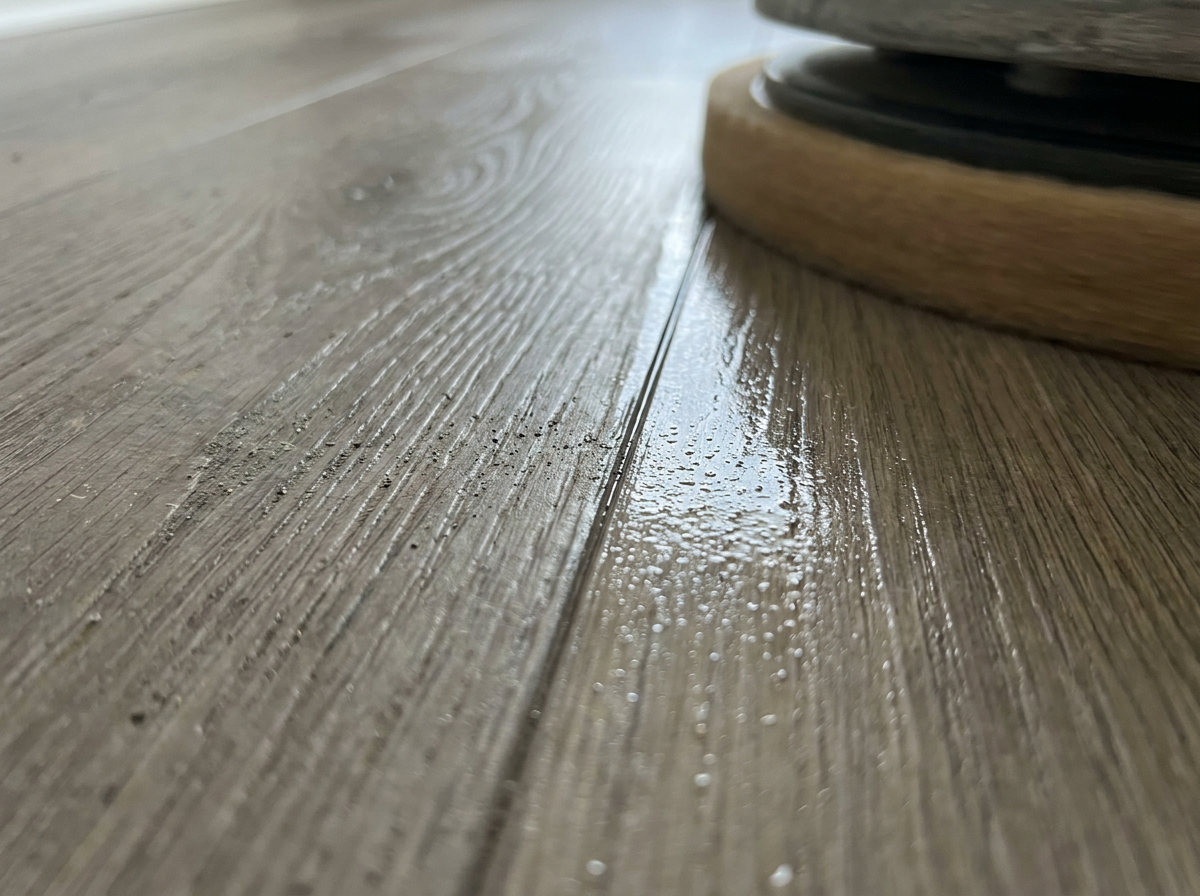
When routine care no longer gives an acceptable result, request a condition-based assessment. Send the floor record, accessible square footage, photos and the current routine, and say which furniture stays and what work window is available. Ask the proposal to separate cleaning from coating removal or application, and to state exclusions, test-area arrangements and who accepts completed areas. MB Floor Solutions, the publisher of this article, offers commercial floor deep cleaning; review its scope against the checklist below as you would any vendor's.
Questions to resolve before approval
- Which exact flooring and previous treatment have been identified? [1]
- Which manufacturer instructions govern the work? [4] [1]
- Which cleaner and equipment are proposed, and what instructions support them? [2] [1]
- What results and exclusions does the proposal document?
- Who moves and replaces furniture?
- What conditions must be met before each area returns to use? [2]
Does LVT need the same care as VCT?
Do not assume so. Use the LVT product's own instructions and document any applied finish. [4] [1]
Can cleaning restore every worn area?
Ask the assessor to record the proposed scope and the expected result for each area.
Conclusion
Keeping the floor record, routine and written scope together gives you one place to review luxury vinyl tile cleaning and brief any new contractor. For a commercial enquiry in South Florida, contact MB Floor Solutions with your floor record and access requirements.