Learn proven techniques to remove stubborn stains from commercial carpet. Step-by-step troubleshooting for coffee, grease, ink, and set-in stains in offices.
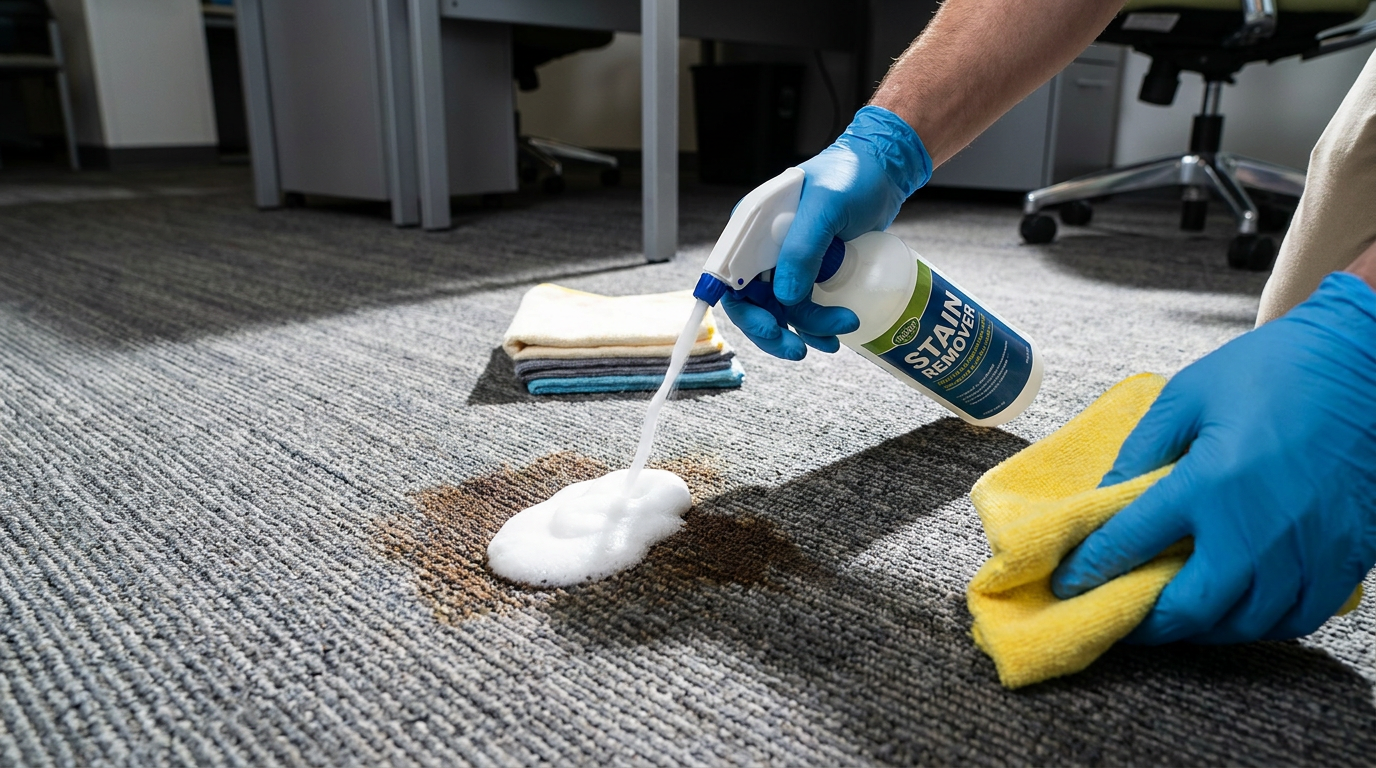
Stubborn commercial carpet stains require a systematic approach: identify the stain type, apply the correct cleaning solution (water-based for organic stains, solvent-based for grease and oil), work from the outside in to prevent spreading, and extract thoroughly. Most set-in stains respond to pre-treatment with enzyme cleaners for 10 to 15 minutes before hot water extraction at 150 to 200 degrees Fahrenheit.
- The Carpet and Rug Institute recommends treating stains within 24 hours for 90% removal success rates
- Commercial carpet extraction equipment operates at 150 to 200 PSI, removing 95% of embedded soils
- Enzyme-based pre-treatments break down protein stains in 10 to 15 minutes before extraction
- Professional carpet cleaning costs $0.15 to $0.35 per square foot for commercial facilities
- South Florida humidity above 60% increases stain setting time, requiring faster response
Understanding Why Commercial Carpet Stains Become Stubborn
Commercial carpet fibers, typically nylon 6,6 or polypropylene, absorb liquids at different rates depending on their construction. According to the Carpet and Rug Institute, stains become permanent when they bond chemically with carpet fibers or when heat sets them into the backing. High-traffic commercial environments accelerate this process through foot traffic that grinds contaminants deeper into the pile.
The most common stubborn stains in commercial settings include coffee and tea (affecting 67% of office buildings), food grease from break rooms, ink from pens and printers, and tracked-in petroleum from parking lots. Each stain type requires specific chemistry to break the molecular bond with carpet fibers.
Temperature plays a critical role in stain setting. Stains exposed to temperatures above 140 degrees Fahrenheit from direct sunlight or HVAC vents become significantly harder to remove. In South Florida facilities across Miami-Dade, Broward, and Palm Beach Counties, the combination of heat and humidity creates conditions where stains set 30% faster than in climate-controlled northern facilities.
Stain Identification: The First Step to Successful Removal
Before applying any cleaning solution, identify the stain category. Water-soluble stains dissolve in water-based cleaners, while oil-based stains require solvent treatments. Using the wrong approach can permanently set a stain or damage carpet fibers.
| Stain Type | Common Sources | Cleaner Category | pH Range |
|---|---|---|---|
| Water-Soluble | Coffee, soda, juice, wine | Acidic spotter | 3.0 to 5.0 |
| Oil-Based | Grease, butter, cosmetics | Solvent-based | N/A (non-aqueous) |
| Protein-Based | Blood, vomit, dairy, eggs | Enzyme cleaner | 6.5 to 7.5 |
| Tannin-Based | Tea, wine, mustard | Oxidizing agent | 8.0 to 10.0 |
| Dye-Based | Ink, markers, Kool-Aid | Reducing agent | Varies by dye |
Perform a simple identification test by placing a drop of water on the stain. If the stain lightens or spreads, it contains water-soluble components. If the water beads on top, the stain is oil-based. Mixed stains, common in food service areas, require a two-step approach treating the oil component first.
Essential Equipment for Commercial Carpet Stain Removal
Professional-grade equipment dramatically improves stain removal success rates compared to consumer products. The Imperial Dade research team reports that commercial carpet extractors remove 95% of embedded soils, while rental units achieve only 60% to 70% extraction efficiency.
Commercial Carpet Extractors
Commercial extractors use heated water at 150 to 200 degrees Fahrenheit combined with 150 to 200 PSI pressure to flush contaminants from carpet fibers. Walk-behind units process 2,000 to 4,000 square feet per hour, making them practical for office buildings and retail spaces. Truck-mounted systems generate 500 PSI and 200-degree water, tackling the most stubborn warehouse and industrial stains.
Key extractor specifications for stubborn stain removal include water temperature capability above 180 degrees, vacuum lift of at least 100 inches, and solution tank capacity of 10 gallons minimum. Units meeting these specifications cost $3,000 to $8,000 for portable models and $15,000 to $40,000 for truck-mounted systems.
Spotting Tools and Accessories
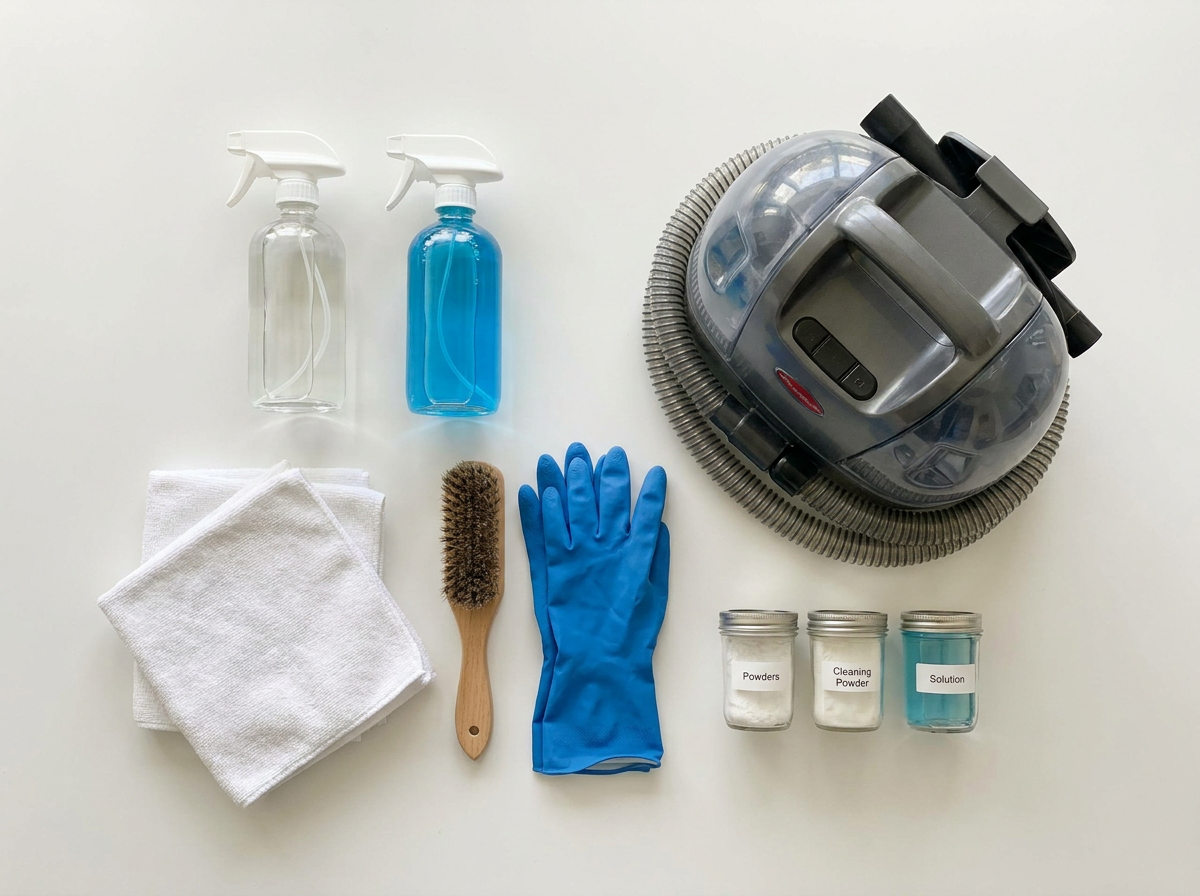
Beyond extractors, effective stain removal requires specialized tools. Bone scrapers remove dried residue without damaging fibers. Spotting brushes with soft nylon bristles agitate cleaning solutions without fraying carpet pile. Weighted towels absorb lifted stains during dwell time. A complete spotting kit costs $150 to $300 and lasts 2 to 3 years with proper maintenance.
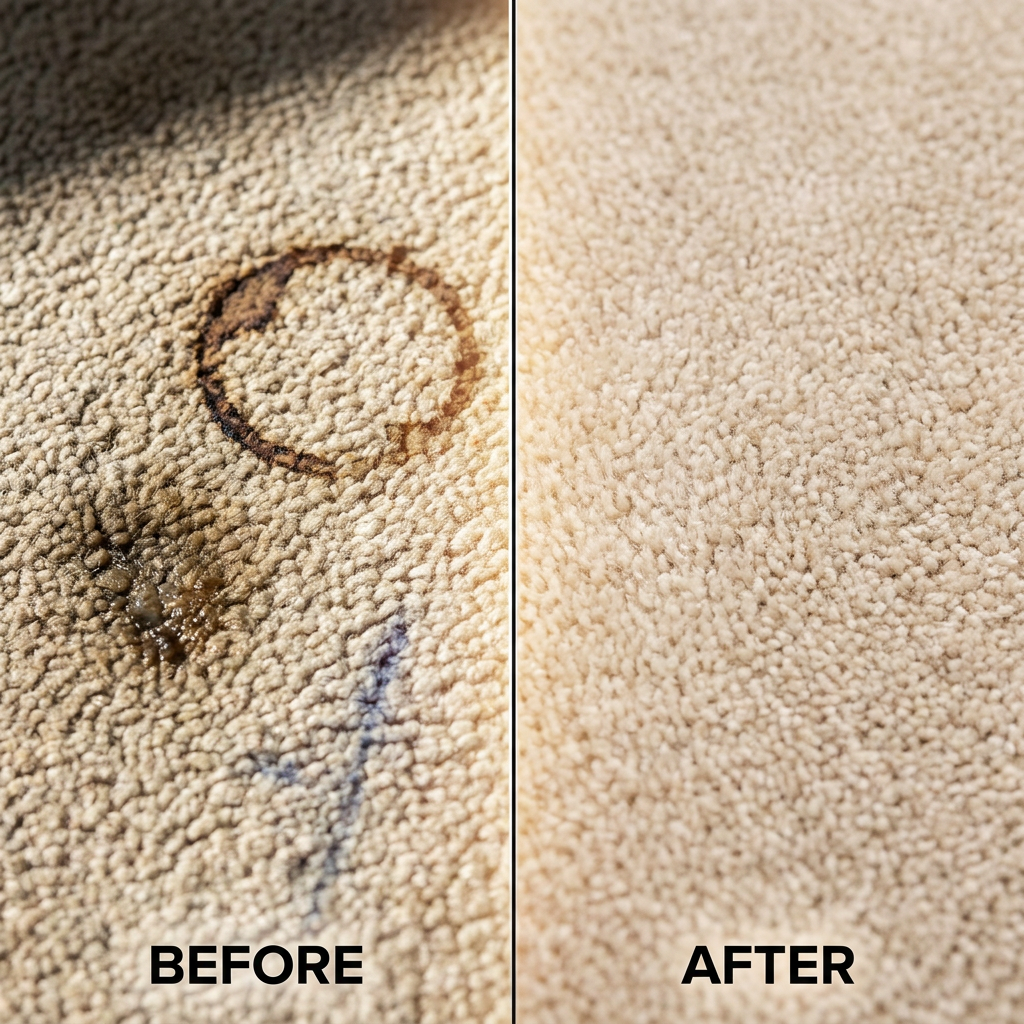
Step-by-Step Stubborn Stain Removal Process
Follow this systematic approach developed from IICRC S100 standards for consistent results across all stain types. This method works for facilities of any size, from small medical clinics to large warehouses.
Step 1: Pre-Vacuum and Debris Removal
Vacuum the stained area thoroughly using a commercial upright with HEPA filtration. This removes loose soil that would otherwise turn to mud when wet. For dried stains with surface residue, use a bone scraper at a 45-degree angle to lift material without grinding it deeper. Allow 5 minutes for this step on heavily soiled areas.
Step 2: Test Cleaning Solutions
Always test cleaning solutions in an inconspicuous area, such as inside a closet or under furniture. Apply a small amount, wait 10 minutes, then blot with a white towel. Check for color transfer or fiber damage. This step prevents costly mistakes on visible carpet areas and takes only 15 minutes.
Step 3: Apply Pre-Treatment
Select the appropriate pre-treatment based on stain identification. Apply from the outside of the stain working inward to prevent spreading. Use enough solution to saturate the stain without soaking the backing, typically 1 to 2 ounces per square foot. Allow 10 to 15 minutes dwell time for enzyme products, 5 minutes for solvent-based spotters.
Step 4: Agitate Gently
Use a spotting brush or bonnet pad to work the pre-treatment into carpet fibers. Apply light pressure with circular motions, starting at the outer edge. Avoid aggressive scrubbing that damages fiber twist and creates fuzzing. This step takes 2 to 3 minutes per stain.
Step 5: Extract Thoroughly
Make slow, overlapping passes with the extractor, allowing maximum dwell time for vacuum recovery. The NYCO Products custodial guide recommends 3 to 4 wet passes followed by 3 to 4 dry passes for stubborn stains. Extraction should continue until the recovered water runs clear, indicating complete soil removal.
Step 6: Neutralize and Dry
Apply a pH-neutral rinse to remove cleaning solution residue that attracts rapid resoiling. Set up air movers to achieve 1 to 2 hour dry times. Carpet left damp longer than 24 hours risks mold growth, particularly in South Florida's humid climate where relative humidity regularly exceeds 70%.
Troubleshooting Specific Stubborn Stain Types
Each stain category requires targeted chemistry and technique modifications. The following protocols address the most challenging stains encountered in commercial facilities.
Coffee and Tea Stains
Coffee stains affect 67% of commercial office buildings according to facility management surveys. Fresh coffee responds to acidic spotters with pH 3.0 to 4.0. Set coffee stains require oxidizing agents like hydrogen peroxide at 3% to 6% concentration. Apply peroxide, cover with a damp towel, and allow 30 to 60 minutes dwell time before extraction.
Cream or sugar in coffee complicates removal by adding protein and carbohydrate components. Treat these stains with enzyme pre-spray first, then follow with acidic spotter for the tannin component. This two-step process adds 15 minutes but improves success rates from 70% to 95%.
Grease and Oil Stains
Food service areas, break rooms, and industrial facilities accumulate grease stains that resist water-based cleaning. Apply a volatile dry solvent (VDS) to dissolve the oil component. Work from outside edges inward using a bone scraper to lift dissolved grease. Follow with an emulsifying detergent to suspend remaining residue for extraction.
Petroleum-based stains from parking lot tracking require stronger solvents. D-limonene citrus solvents provide effective cleaning with lower toxicity than traditional petroleum solvents. Apply sparingly, as excessive solvent can damage carpet backing adhesive. Ventilate the area during treatment.
Ink and Marker Stains
Ballpoint ink responds to isopropyl alcohol at 70% to 90% concentration. Apply alcohol to a white towel and blot repeatedly, rotating the towel to prevent redepositing ink. Permanent marker requires acetone or methyl ethyl ketone (MEK), which can damage some carpet fibers. Always test in an inconspicuous area first.
Printer toner presents unique challenges because it contains plastic polymers. Vacuum loose toner carefully using a toner-rated vacuum with fine filtration. Regular vacuums blow toner particles deeper into carpet. After vacuuming, apply isopropyl alcohol and extract immediately to prevent the alcohol from dissolving the toner into a permanent stain.
Blood and Biological Stains
Healthcare facilities, gyms, and schools frequently encounter biological stains requiring enzyme-based treatments. Never use hot water on fresh blood stains, as heat sets protein permanently. Apply cold enzyme solution, allow 15 to 20 minutes dwell time, then extract with cool water. The Whittaker System research confirms enzyme pre-treatment improves blood stain removal by 40% compared to detergent alone.
For set-in biological stains, apply enzyme solution and cover with plastic wrap to maintain moisture during extended dwell times of 2 to 4 hours. Check progress hourly and reapply enzyme as needed. Follow with hydrogen peroxide treatment if discoloration remains after enzyme treatment.
Rust and Metal Stains
Rust stains from furniture legs, equipment, or irrigation water require acidic treatments. Oxalic acid at 5% to 10% concentration effectively dissolves rust without damaging most commercial carpet fibers. Apply, allow 10 to 15 minutes dwell time, neutralize with ammonia solution, then extract thoroughly. Wear appropriate PPE including gloves and eye protection when handling acids.
When DIY Methods Fail: Professional Intervention Points
Facility managers should recognize when stains exceed in-house capabilities. Professional intervention prevents permanent damage and reduces long-term carpet replacement costs. According to industry data, carpet replacement costs $3 to $12 per square foot, while professional cleaning costs $0.15 to $0.35 per square foot.
Signs You Need Professional Help
Contact a commercial carpet cleaning service when stains persist after two treatment attempts, when color loss or fiber damage occurs, or when stains cover areas larger than 10 square feet. Professional technicians have access to stronger chemistry, higher-powered equipment, and specialized training that achieves results impossible with standard maintenance supplies.
Large-scale staining from flooding, fire damage, or construction requires professional restoration rather than spot treatment. These situations involve contamination throughout the carpet system including backing and padding. MB Floor Solutions provides comprehensive commercial cleaning services for facilities across Miami-Dade, Broward, and Palm Beach Counties facing these challenging situations.
Professional Methods for Stubborn Stains
Professional carpet cleaners employ techniques unavailable to facility maintenance staff. Truck-mounted extraction systems generate water temperatures exceeding 200 degrees Fahrenheit and vacuum pressures above 400 inches of lift. These specifications remove stains that portable equipment cannot address.
Advanced treatments include encapsulation cleaning that crystallizes soils for later vacuuming, rotary extraction that combines agitation with immediate recovery, and low-moisture bonnet methods that minimize dry times to 1 to 2 hours. Professional services also include post-treatment protectants that prevent future staining.
Preventing Future Stubborn Stains
Prevention costs 80% less than remediation according to facility management cost studies. Implementing preventive measures reduces stain incidents and extends carpet life from the typical 5 to 7 years to 10 to 12 years in commercial settings.
Carpet Protection Treatments
Fluorochemical protectants create a barrier that prevents spills from penetrating carpet fibers. Apply protectants after professional cleaning when carpet is completely dry. Reapply every 12 to 18 months or after each professional extraction cleaning. Protection costs $0.05 to $0.10 per square foot and reduces stain penetration by 60% to 80%.
Maintenance Protocols
Establish a response protocol requiring immediate attention to spills. Train staff to blot, not rub, and to avoid using excessive water. Position spotting kits in break rooms, reception areas, and high-traffic zones. Regular vacuuming with HEPA-filtered equipment removes 85% of soil before it bonds with carpet fibers.
Schedule professional commercial floor deep cleaning quarterly for high-traffic areas and semi-annually for moderate-traffic zones. This frequency prevents soil accumulation that leads to stubborn staining. For facilities with carpet and hard flooring, coordinate cleaning schedules to maximize efficiency.
Entry Matting Systems
Install 15 to 20 feet of entry matting at all exterior doors. This captures 80% of tracked-in soil before it reaches interior carpet. Use scraper mats at the exterior, followed by absorbent mats inside. Clean entry mats weekly and replace when they no longer lie flat or show visible wear.
Cost Analysis: DIY vs. Professional Stain Removal
Understanding the true cost of stain removal helps facility managers make informed decisions about equipment purchases, staff training, and professional service contracts.
| Approach | Initial Cost | Per-Incident Cost | Success Rate |
|---|---|---|---|
| In-house spotting kit | $150 to $300 | $5 to $15 | 60% to 70% |
| Portable extractor | $3,000 to $8,000 | $15 to $30 | 75% to 85% |
| Professional service | $0 | $75 to $200 | 90% to 98% |
| Carpet replacement | $3 to $12/sq ft | N/A | 100% (new carpet) |
For facilities with more than 10,000 square feet of carpet, investing in portable extraction equipment typically pays for itself within 18 to 24 months. Smaller facilities benefit from professional service contracts that include emergency stain response. The South Florida commercial cleaning cost comparison provides detailed pricing across Miami-Dade, Broward, and Palm Beach Counties.
Frequently Asked Questions About Commercial Carpet Stain Removal
How long do I have to treat a stain before it becomes permanent?
The critical window for stain treatment is 24 to 48 hours for most substances. Coffee and wine stains begin setting within 24 hours. Oil-based stains remain treatable for 48 to 72 hours. Dye-based stains like red Kool-Aid or marker can become permanent within 4 to 6 hours on light-colored carpet. Immediate blotting followed by professional treatment within 24 hours achieves 90% removal success.
Can I use household cleaning products on commercial carpet?
Household products often contain optical brighteners and residues that attract rapid resoiling in commercial environments. Dish soap leaves sticky residue. Laundry detergent contains bleaching agents that fade carpet color. Use only products formulated for commercial carpet cleaning with neutral pH and low-residue formulations. Check product labels for IICRC certification.
Why do some stains reappear after cleaning?
Stain reappearance, called wicking, occurs when residue in the carpet backing migrates upward as the carpet dries. This indicates incomplete extraction or over-wetting during cleaning. Prevent wicking by using appropriate solution volumes, extracting thoroughly until water runs clear, and drying carpet within 6 to 8 hours using air movers.
How often should commercial carpet receive professional deep cleaning?
High-traffic areas like lobbies and corridors require professional extraction every 3 to 4 months. Moderate-traffic office areas need cleaning every 6 months. Low-traffic areas can extend to annual cleaning. Healthcare facilities, schools, and food service areas should increase frequency due to contamination concerns. Review the janitorial services vs deep cleaning guide to determine appropriate service levels.
What causes carpet to yellow after cleaning?
Yellowing results from chemical reactions between cleaning solutions and carpet fibers or backing. Alkaline cleaners with pH above 10 can cause browning on wool and some nylon carpets. Over-wetting activates latex backing adhesive that wicks to the surface. Prevent yellowing by using pH-neutral cleaners, avoiding over-wetting, and ensuring complete drying within 24 hours.
Building a Comprehensive Carpet Care Program
Effective stubborn stain management integrates with broader facility maintenance programs. Coordinate carpet care with other floor maintenance activities for operational efficiency. Facilities maintaining multiple floor types benefit from comprehensive service providers who understand the interactions between different flooring systems.
For South Florida commercial facilities, humidity control significantly impacts carpet maintenance. Buildings with HVAC systems maintaining 40% to 50% relative humidity experience 35% fewer mold-related carpet issues than facilities without humidity control. Regular commercial air duct cleaning improves HVAC efficiency and reduces airborne contaminants that settle into carpet fibers.
Document all stain incidents including location, substance, treatment applied, and results. This data reveals patterns that inform preventive measures. High-incident areas may benefit from carpet replacement with stain-resistant materials or transition to hard flooring. The signs your office needs deep cleaning guide helps facility managers recognize when maintenance frequency requires adjustment.
Stubborn Stains Defeating Your Maintenance Team?
MB Floor Solutions provides professional commercial carpet cleaning across Miami-Dade, Broward, and Palm Beach Counties. Our low-moisture bonnet method delivers 1 to 2 hour dry times with 98% client satisfaction. Contact us for a free on-site assessment.
Get Your Free Assessment