Complete facility preparation checklist for professional floor stripping. Clear furniture, protect fixtures, and coordinate timing for VCT, LVT, and vinyl floors.
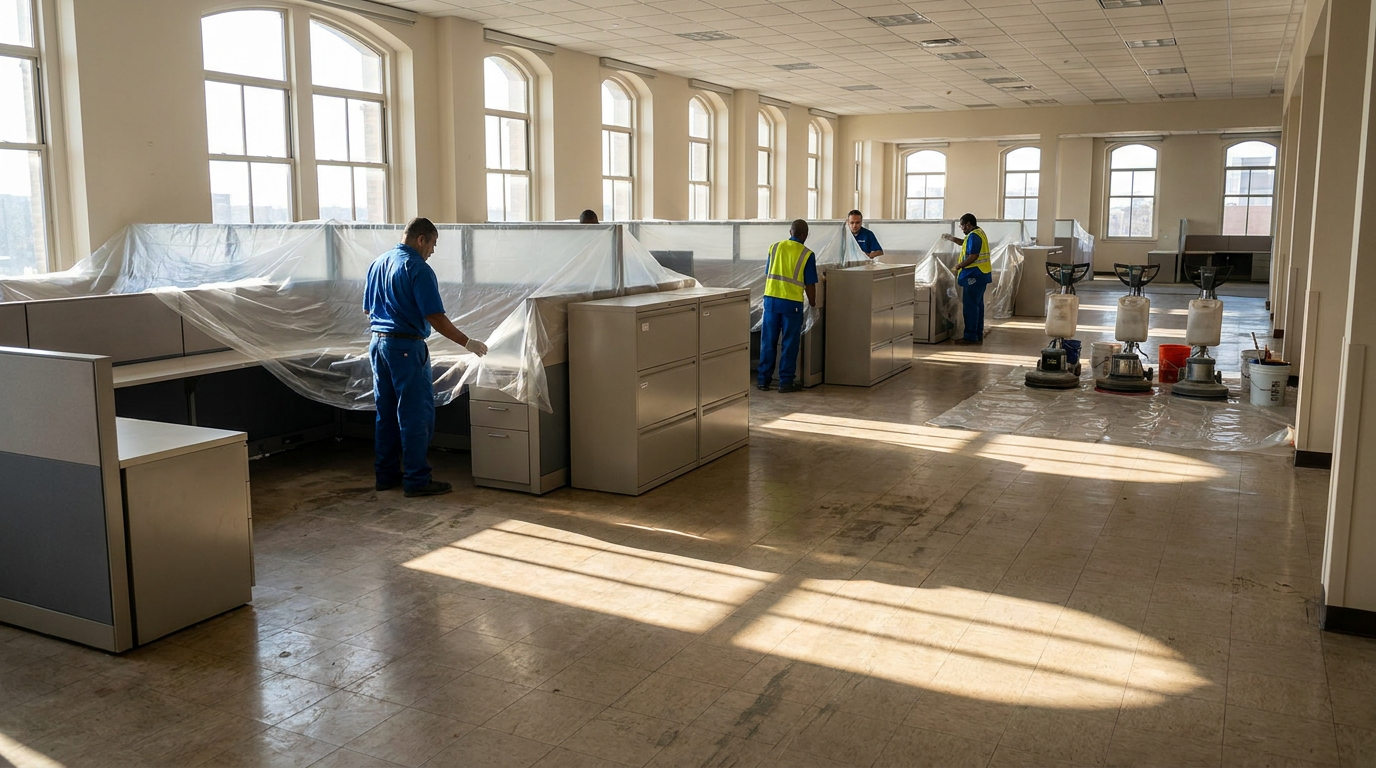
Preparing a commercial building for professional floor stripping requires clearing all movable furniture, protecting fixed fixtures with plastic sheeting, ensuring adequate ventilation, and coordinating service timing around business operations. Proper preparation reduces project time by 25 to 40 percent and prevents costly delays or damage to equipment and inventory.
- Remove all movable furniture, equipment, and floor mats 24 hours before service
- Floor stripping takes 4 to 8 hours for spaces under 5,000 square feet
- Temperature must remain between 55 and 80 degrees Fahrenheit during application
- Allow 6 to 8 hours of drying time before foot traffic resumes
- After-hours scheduling minimizes business disruption for retail and office spaces
Why Preparation Determines Floor Stripping Success
According to SC Johnson Professional floor care guidelines, inadequate preparation accounts for 60 percent of floor stripping project delays. Floor technicians cannot work efficiently around obstacles, and chemical strippers require direct contact with the floor surface to dissolve old wax layers.
Commercial floor stripping involves applying chemical strippers to dissolve 3 to 12 layers of accumulated floor finish, mechanically agitating the surface with floor stripping machines, extracting the slurry, and applying 3 to 5 fresh coats of commercial floor finish. Each step requires unobstructed access to the entire floor area.
Buildings that complete proper preparation typically see project costs remain within the quoted range of $0.85 to $1.20 per square foot. Unprepared facilities often face additional labor charges of $50 to $150 per hour for furniture moving and obstacle removal.
Complete Facility Preparation Checklist
The following checklist covers every preparation step for VCT, LVT, linoleum, and commercial vinyl sheet flooring. Healthcare facilities, retail spaces, offices, and warehouses each have specific considerations addressed below.
Furniture and Equipment Removal
All movable items must leave the work area at least 24 hours before the scheduled service. This includes desks, chairs, filing cabinets, trash cans, floor mats, and portable equipment. Items weighing over 50 pounds may require coordination with your floor care provider.
Create a staging area in a separate room or section of the building. Label items by original location to simplify replacement after the project. For large office spaces, consider a phased approach where one section is cleared and serviced while others remain operational.
Fixed Fixture Protection
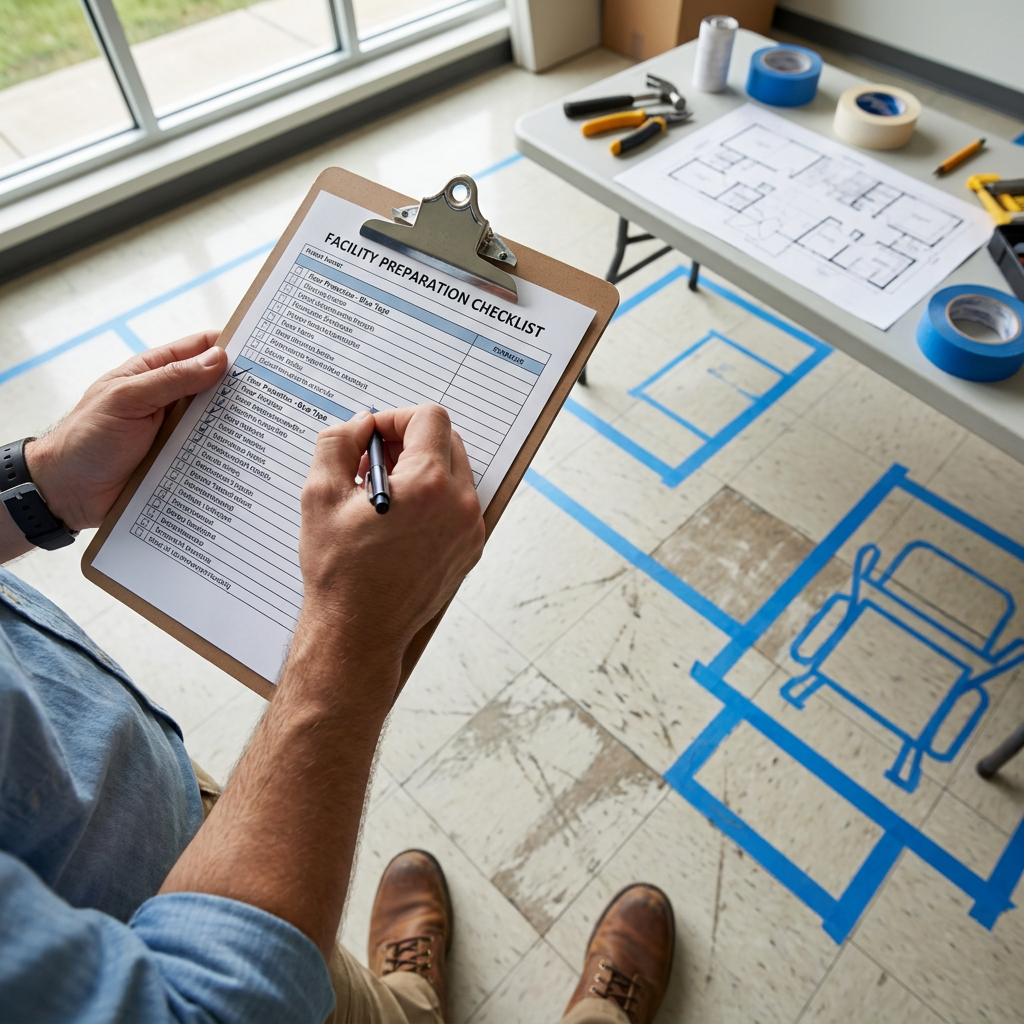
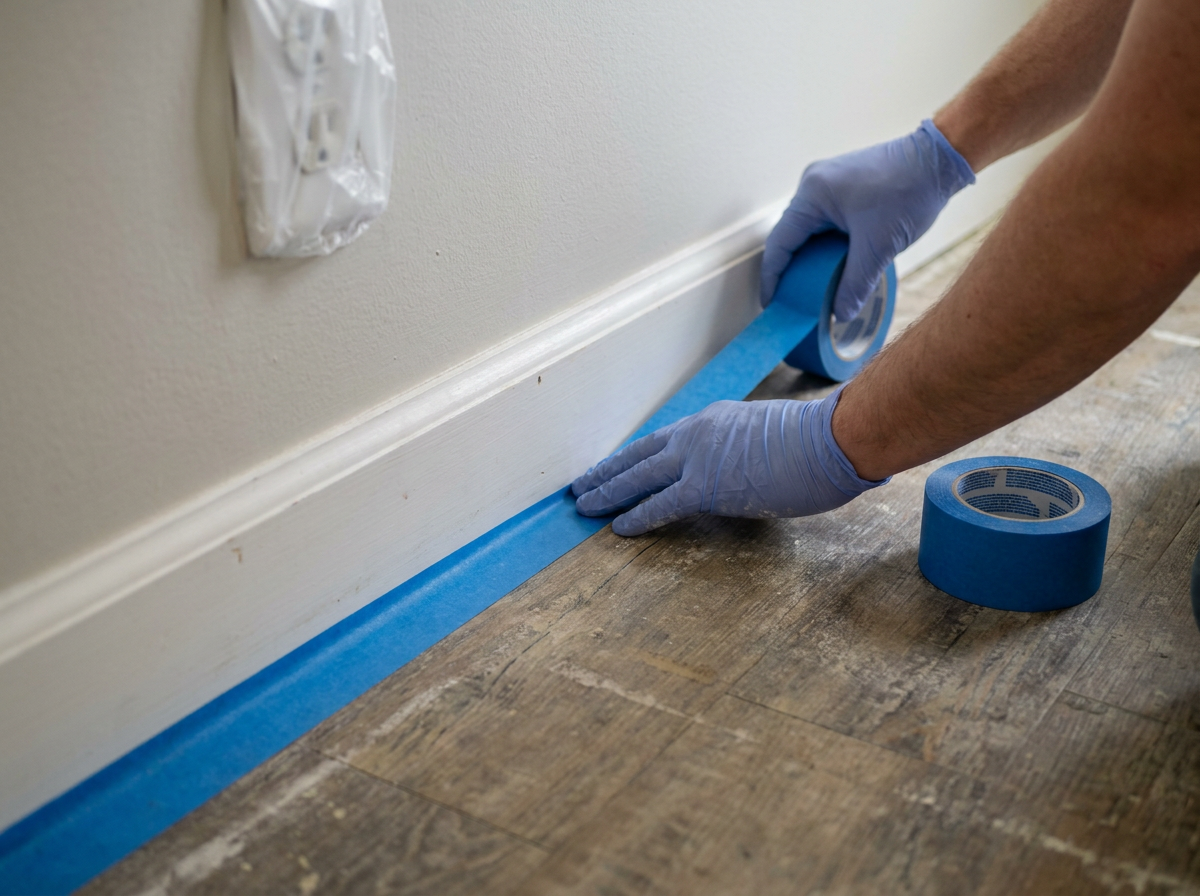
Permanently installed items require protective covering. Use 4 to 6 mil plastic sheeting secured with painter's tape to protect:
- Wall bases and baseboards up to 12 inches from the floor
- Door frames and thresholds
- Built-in cabinetry and reception desks
- Electrical outlets within 18 inches of floor level
- HVAC vents and returns at floor level
Chemical floor strippers can damage wood finishes, painted surfaces, and certain metals. The International Sanitary Supply Association recommends testing stripper compatibility on inconspicuous areas before full application.
Electrical and Utility Access
Floor stripping machines require 110 to 120 volt outlets capable of handling 15 to 20 amp loads. Confirm outlet locations throughout the service area and ensure extension cord paths remain clear. Auto-scrubbers and burnishers need charging stations accessible during overnight projects.
Water access within 100 feet of the work area speeds rinse and extraction processes. If floor drains exist, verify they function properly to handle wastewater. Buildings without adequate drainage require wet-dry vacuum extraction, adding 15 to 30 minutes per 1,000 square feet.
Timing and Scheduling Considerations
Professional commercial floor stripping and waxing projects require careful scheduling to minimize business disruption. According to industry data from Nilfisk commercial floor care resources, most commercial stripping projects complete within 4 to 8 hours for spaces under 5,000 square feet.
| Square Footage | Stripping Time | Waxing Time | Total Project |
|---|---|---|---|
| Under 2,000 sq ft | 2 to 3 hours | 2 to 3 hours | 4 to 6 hours |
| 2,000 to 5,000 sq ft | 3 to 4 hours | 3 to 4 hours | 6 to 8 hours |
| 5,000 to 10,000 sq ft | 4 to 6 hours | 4 to 6 hours | 8 to 12 hours |
| Over 10,000 sq ft | 6 to 10 hours | 6 to 10 hours | 12 to 20 hours |
After-Hours and Weekend Scheduling
Most commercial buildings benefit from overnight or weekend floor stripping. Retail locations, medical clinics, and office buildings avoid customer and employee exposure to chemical odors and wet floors. South Florida facilities often schedule services between 7 PM and 6 AM to work around business hours.
Healthcare facilities face additional scheduling constraints. The CDC Environmental Infection Control Guidelines require coordination with infection control staff before chemical floor treatments in patient care areas. Hospital floor stripping typically occurs in phases, with one wing completed while others remain operational.
Drying Time Requirements
Fresh floor finish requires 30 to 45 minutes of drying time between coats. With 3 to 5 coats standard for commercial applications, the waxing phase alone takes 2 to 4 hours. Final cure time before heavy foot traffic ranges from 6 to 8 hours under optimal conditions.
South Florida's humidity levels between 60 and 80 percent can extend drying times by 20 to 30 percent. Facilities should plan for extended project windows during summer months. Running HVAC systems at 68 to 72 degrees Fahrenheit with humidity below 50 percent accelerates curing.
Industry-Specific Preparation Requirements
Healthcare Facilities
Medical offices, clinics, and hospitals require additional preparation steps beyond standard commercial buildings. Remove all medical equipment from the service area, including rolling carts, IV poles, and mobile workstations. Coordinate with clinical staff to relocate sensitive equipment to secure storage.
Low-odor floor stripping chemicals are mandatory in healthcare settings. Standard floor wax strippers contain ammonia and butyl compounds that can trigger respiratory issues in sensitive patients. Request documentation of Safety Data Sheets from your floor care provider before service.
Retail Spaces
Retail floor stripping requires merchandise protection and display fixture management. Remove all floor displays, signage stands, and movable fixtures. Cover stationary display cases with plastic sheeting and relocate inventory at least 6 feet from work areas.
Point-of-sale equipment, security sensors, and entrance mats need relocation. Coordinate with security providers if alarm systems require temporary deactivation during overnight work. Post signage at entrances indicating service in progress and expected completion time.
Office Buildings
Office preparation focuses on workstation clearing and IT equipment protection. Disconnect and relocate desktop computers, monitors, and printers from floor-level positions. Server rooms and network closets require door seals to prevent chemical vapor infiltration.
Cubicle furniture presents unique challenges. Modular workstation systems often cannot be fully removed. Floor technicians work around these obstacles, but access limitations may require a scrub and recoat service rather than full stripping in heavily furnished areas.
Warehouses and Industrial Spaces
Warehouse floor stripping requires forklift and pallet rack coordination. Clear a minimum 10-foot perimeter around all service areas. Relocate palletized inventory to designated staging zones and mark boundaries with caution tape.
Concrete and epoxy floors common in warehouses may require different preparation than VCT. Confirm floor type with your service provider, as chemical strippers formulated for vinyl can damage epoxy coatings. Industrial facilities often benefit from commercial floor deep cleaning as an alternative to full stripping.
Common Floor Stripping Mistakes to Avoid
According to The Budd Group's commercial floor maintenance research, facility managers commonly make preparation errors that compromise project quality. Understanding these mistakes helps ensure optimal results.
Inadequate Furniture Removal
Leaving items in the work area forces floor technicians to work around obstacles, creating uneven finish application and visible lines where equipment blocked access. Complete removal produces uniform results across the entire floor surface.
Ignoring Temperature Requirements
Floor finish manufacturers specify application temperatures between 55 and 80 degrees Fahrenheit. Applying finish in conditions outside this range causes improper curing, leading to yellowing, peeling, or premature wear. HVAC systems must maintain consistent temperatures throughout the project.
Rushing Reentry
Walking on uncured floor finish creates permanent marks and compromises the protective layer. Enforce the 6 to 8 hour reentry restriction strictly. Place caution tape and signage at all access points to prevent accidental traffic.
Skipping the Pre-Service Walkthrough
Professional floor care providers conduct pre-service assessments to identify potential issues. Schedule a free on-site assessment to document floor condition, identify problem areas, and confirm preparation requirements specific to your facility.
Step-by-Step Floor Stripping Procedures
Understanding the professional floor stripping process helps facility managers prepare appropriately and set realistic expectations. The following sequence applies to VCT, LVT, and commercial vinyl flooring.
- Dust mopping and debris removal: All loose dirt, dust, and debris must be removed before chemical application. This takes 15 to 30 minutes for most commercial spaces.
- Chemical stripper application: Floor wax stripper diluted according to manufacturer specifications is applied via mop or automatic dispenser. Dwell time ranges from 5 to 15 minutes depending on the number of finish layers.
- Mechanical agitation: Floor stripping machines with aggressive pads or brushes break down the dissolved finish. Edges and corners require hand tools or specialized edge machines.
- Slurry extraction: Wet-dry vacuums or auto-scrubbers remove the chemical and dissolved finish mixture. Multiple passes ensure complete removal.
- Rinse and neutralization: Clean water rinse removes chemical residue. pH neutralizers prepare the surface for new finish application.
- Finish application: Commercial floor finish is applied in thin, even coats. Each coat requires 30 to 45 minutes of drying before the next application.
- Final cure: The completed floor requires 6 to 8 hours before foot traffic and 24 to 48 hours before heavy equipment or furniture replacement.
Choosing Between Full Strip and Scrub-Recoat
Not every commercial floor requires full stripping. Scrub and recoat services remove the top layer of soil and worn finish, then apply 1 to 2 fresh coats. This maintenance approach costs 40 to 60 percent less than full stripping and completes in half the time.
| Factor | Full Strip and Wax | Scrub and Recoat |
|---|---|---|
| Cost per sq ft | $0.85 to $1.20 | $0.35 to $0.55 |
| Project duration | 6 to 12 hours | 3 to 6 hours |
| Recommended frequency | Every 12 to 18 months | Every 3 to 6 months |
| Best for | Heavy buildup, discoloration | Routine maintenance |
| Preparation required | Full furniture removal | Partial clearing acceptable |
Facilities with heavy foot traffic, such as retail stores and healthcare lobbies, benefit from quarterly scrub and recoat services with annual full stripping. Lower-traffic office spaces may extend full strip intervals to 18 to 24 months with semi-annual maintenance.
Frequently Asked Questions
How do you strip a commercial floor?
Commercial floor stripping involves applying chemical floor wax stripper, allowing 5 to 15 minutes of dwell time, agitating with a floor stripping machine equipped with aggressive pads, extracting the dissolved finish with wet-dry vacuums, rinsing to neutralize chemicals, and applying 3 to 5 coats of fresh commercial floor finish. The process requires specialized equipment including 175 to 300 RPM floor machines, commercial floor stripping machines, and professional-grade chemicals.
What are the step-by-step procedures for stripping and waxing floors?
The complete process follows seven steps: dust mop and remove debris, apply diluted stripper solution, allow proper dwell time, agitate with floor machine, extract slurry, rinse and neutralize, then apply multiple finish coats with drying time between each. Professional floor technicians complete this sequence in 4 to 12 hours depending on floor size and condition.
How many hours does it take to strip and wax a floor?
A 2,000 square foot commercial floor typically requires 4 to 6 hours for complete stripping and waxing. Larger spaces of 5,000 to 10,000 square feet take 8 to 12 hours. Factors affecting duration include the number of existing finish layers, floor condition, obstacle density, and drying conditions. Add 6 to 8 hours of cure time before normal traffic resumes.
What are common floor stripping mistakes?
The most frequent errors include inadequate furniture removal creating uneven finish lines, insufficient dwell time leaving old wax residue, working outside the 55 to 80 degree temperature range, applying finish coats too thickly, and allowing foot traffic before proper cure time. Each mistake compromises finish durability and appearance, often requiring premature re-stripping.
Preparing Your South Florida Facility
Commercial buildings across Miami-Dade, Broward, and Palm Beach Counties face unique floor care challenges. High humidity levels, sand tracked from beaches, and year-round air conditioning create demanding conditions for floor finishes. Proper preparation combined with professional service ensures lasting results.
Facilities serving 150 or more businesses understand that preparation quality directly impacts service outcomes. Whether your building houses a medical clinic, retail store, office space, or warehouse, thorough preparation sets the foundation for professional floor stripping success.
Ready to Schedule Your Floor Stripping Project?
MB Floor Solutions LLC provides free on-site assessments for commercial buildings throughout South Florida. Our team will evaluate your floors, confirm preparation requirements, and deliver a detailed quote within 24 hours.
Get Your Free Assessment