Why Healthcare Cleaning Differs Fundamentally from Commercial Cleaning
Walk into any Miami medical office, hospital, urgent care center, or outpatient surgery facility and you might not immediately see what makes healthcare cleaning different. The floors look clean, surfaces appear wiped down, and restrooms seem sanitary—similar to any well-maintained office building.
But that surface similarity masks profound differences. Healthcare environments harbor dangerous pathogens that cause Healthcare-Associated Infections (HAIs)—MRSA, C. difficile, norovirus, influenza, and countless others. Immunocompromised patients, open wounds, invasive procedures, and bodily fluid exposure create infection risks that simply don't exist in standard commercial settings. The CDC estimates that 1 in 31 hospital patients contracts at least one HAI during their stay, resulting in tens of thousands of deaths and billions in healthcare costs annually.
This guide covers everything Miami healthcare facility managers need to know: regulatory compliance requirements from AHCA and CMS, specialized cleaning protocols for different healthcare zones, equipment and supply specifications, staff training and certification needs, cost considerations, and how to select cleaning partners who understand that healthcare cleaning isn't janitorial service—it's infection prevention.
Regulatory Framework for Healthcare Cleaning in Florida
Federal and State Requirements
Healthcare facilities in Miami must comply with overlapping regulatory frameworks that establish minimum cleaning and infection control standards:
Centers for Medicare & Medicaid Services (CMS):
CMS Conditions of Participation establish infection control requirements for hospitals, nursing homes, and outpatient facilities receiving Medicare/Medicaid reimbursement. Key requirements include:
- Infection control programs: Documented policies and procedures including environmental cleaning protocols
- Surveillance systems: Tracking and investigating HAIs with environmental factors considered
- Quality assessment: Regular evaluation of cleaning effectiveness through testing and audits
- Staff training: Documented education for all personnel performing cleaning tasks
Agency for Health Care Administration (AHCA):
Florida's healthcare regulatory body enforces state-specific requirements beyond federal minimums:
- Facility licensure standards: Environmental cleanliness requirements for various facility types
- Inspection protocols: Regular surveys assessing cleaning adequacy
- Deficiency citations: Cleaning failures can result in citations, fines, or license suspension
- Complaint investigations: Patient or staff complaints trigger inspections focusing on cleanliness and infection control
Centers for Disease Control (CDC):
CDC guidelines, while not regulatory requirements, establish best practices that regulatory agencies reference:
- Standard Precautions: Baseline infection control practices for all patient interactions
- Environmental cleaning guidelines: Detailed protocols for healthcare surface disinfection
- Isolation precautions: Enhanced cleaning requirements for specific pathogens
- Multi-drug resistant organisms: Special protocols for MRSA, VRE, CRE, and other resistant bacteria
OSHA Bloodborne Pathogens Standard:
Environmental services staff potentially exposed to blood or bodily fluids must receive:
- Annual training: Pathogen recognition, exposure prevention, and emergency procedures
- Personal protective equipment: Gloves, gowns, face shields as appropriate for tasks
- Hepatitis B vaccination: Offered to all potentially exposed workers
- Exposure control plan: Documented procedures for managing exposures
- 1.7 million HAIs annually: In U.S. hospitals alone (CDC data)
- 99,000 deaths: HAIs rank among top 10 causes of death in America
- $28-45 billion annual cost: Direct medical costs from HAIs
- 20-40% preventable: Proper environmental cleaning is key prevention component
- 5-10x infection risk: Patients in rooms previously occupied by infected patients face elevated HAI risk without proper terminal cleaning
Healthcare Cleaning Zones and Protocols
Risk-Based Cleaning Classifications
Professional healthcare cleaning uses zone-based protocols that match cleaning intensity to infection risk levels:
Zone 1: High-Risk Patient Care Areas
Areas: Operating rooms, intensive care units, isolation rooms, emergency departments, labor and delivery
Cleaning Requirements:
- Frequency: Multiple times daily, between patients, after procedures
- Products: EPA-registered hospital disinfectants with pathogen-specific kill claims
- Contact time: Surfaces must remain visibly wet for product-specified dwell time (typically 3-10 minutes)
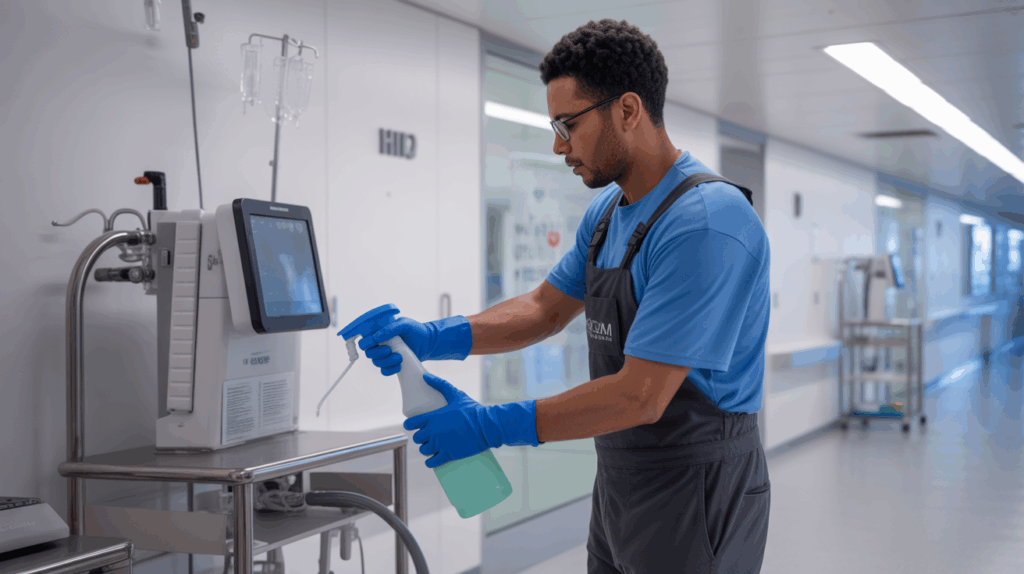
- High-touch focus: Bedrails, call buttons, IV poles, monitors, light switches, door handles cleaned after each patient interaction
- Terminal cleaning: Complete room disinfection between patients including walls, ceilings, light fixtures, and all equipment
Zone 2: Medium-Risk Patient Care Areas
Areas: Medical/surgical patient rooms, examination rooms, treatment areas, dialysis centers
Cleaning Requirements:
- Frequency: Daily cleaning with multiple high-touch disinfection passes
- Products: Hospital-grade disinfectants with broad-spectrum efficacy
- Focus areas: Patient-zone surfaces, overbed tables, restrooms, floors
- Discharge cleaning: Enhanced cleaning protocols when patients leave
Zone 3: Low-Risk Clinical Areas
Areas: Nursing stations, medication rooms, clean supply areas, staff work areas
Cleaning Requirements:
- Frequency: Daily routine cleaning
- Products: Disinfectant cleaners for surfaces, standard cleaners for floors
- Focus: Dust control, surface cleaning, waste removal, floor maintenance
Zone 4: Public and Administrative Areas
Areas: Waiting rooms, lobbies, offices, corridors, cafeterias
Cleaning Requirements:
- Frequency: Daily or shift-based depending on traffic
- Products: Standard commercial cleaners with periodic disinfection of high-touch surfaces
- Focus: Appearance, dust control, restroom sanitation
Specialized Healthcare Cleaning Services
Terminal Cleaning Protocols
Terminal cleaning—the thorough disinfection performed between patients or after isolation—represents the most critical healthcare cleaning service. Proper terminal cleaning prevents pathogen transmission to subsequent room occupants.
Complete Terminal Cleaning Process:
- Personal protective equipment: Don appropriate PPE based on isolation status (gown, gloves, mask, eye protection)
- Waste removal: Properly dispose of all trash and linen using appropriate containers and handling procedures
- High-touch surface disinfection: Apply hospital disinfectant to bedrails, call buttons, light switches, door handles, overbed table, IV poles, medical equipment using proper contact time
- Restroom disinfection: Clean and disinfect toilet, sink, grab bars, toilet paper dispenser, towel dispenser, floor
- Furniture and fixtures: Disinfect all furniture surfaces, window sills, air vents, television remote
- Vertical surfaces: Clean walls, particularly around patient bed and restroom (splatter zones)
- Floor disinfection: Mop entire floor with disinfectant solution, paying special attention to high-traffic paths
- Final inspection: Verify all surfaces cleaned, no visible soil remaining, appropriate contact time observed
- Documentation: Record cleaning completion, products used, any issues encountered
Medical Equipment Disinfection
Patient contact equipment requires specialized cleaning that most general cleaning companies don't understand or provide. Miami healthcare facilities need partners who offer comprehensive equipment disinfection:
Stretcher and Gurney Cleaning:
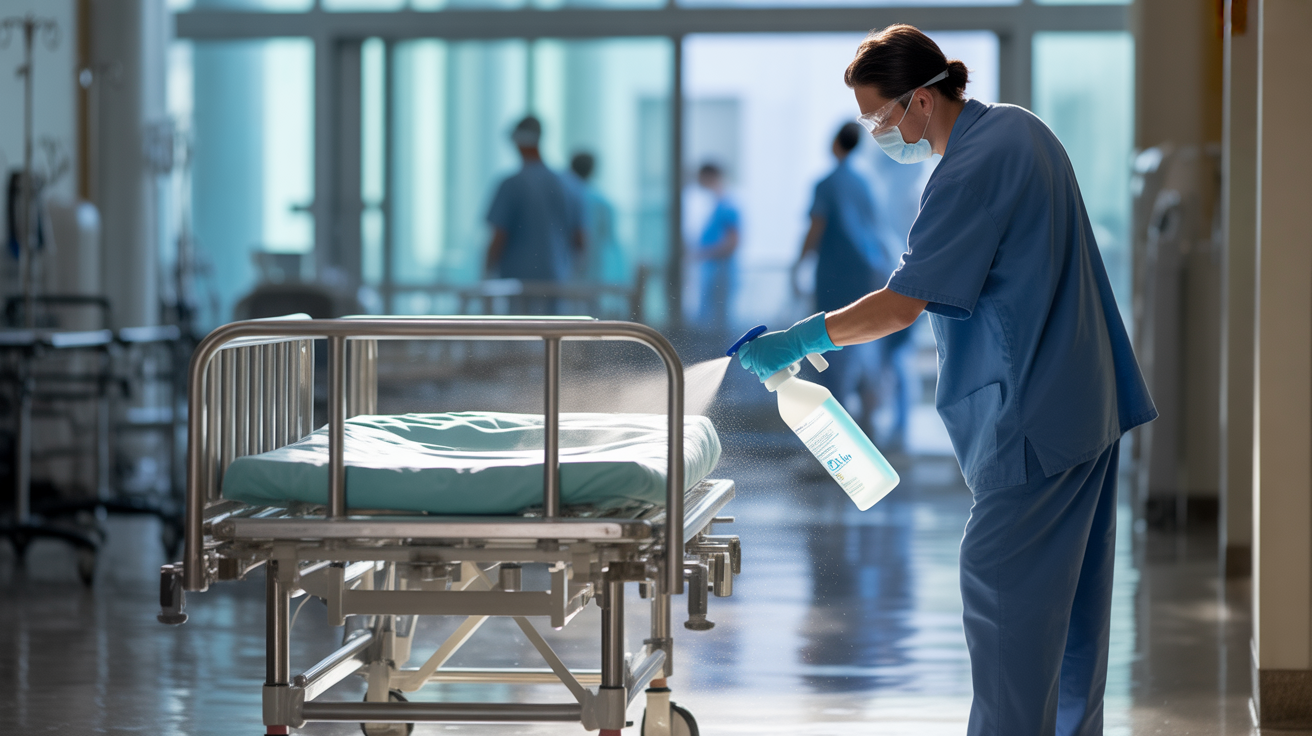
Emergency departments, hospitals, and urgent care centers use stretchers and gurneys that contact multiple patients daily. Professional stretcher and wheelchair cleaning services include:
- Complete disinfection: All surfaces including mattress, side rails, wheels, frame
- EPA-registered disinfectants: Hospital-grade products with appropriate kill claims
- Proper contact time: Products remain wet for manufacturer-specified duration
- Regular scheduling: Daily or between-patient cleaning depending on usage
Wheelchair Sanitization:
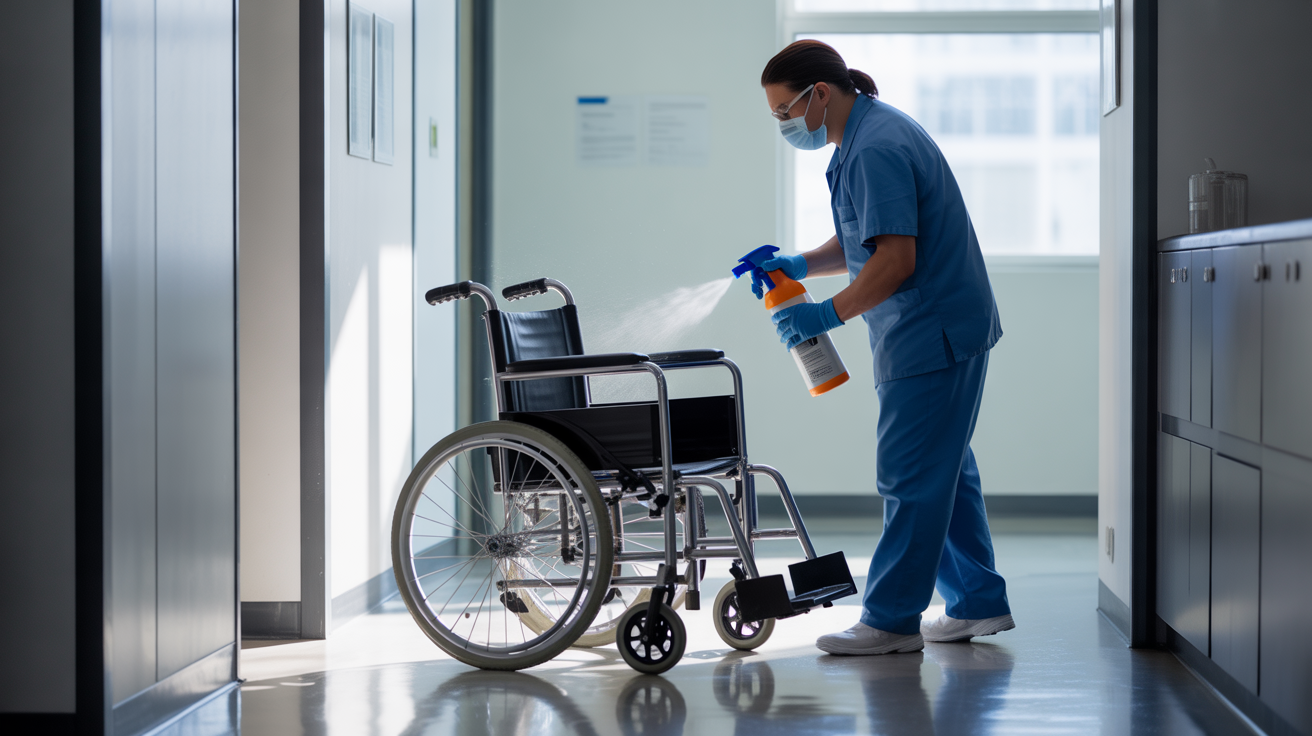
Wheelchairs transport patients throughout facilities, cross-contaminating multiple departments. Professional wheelchair cleaning addresses:
- Seating surfaces: Where patients directly contact equipment
- Armrests and footrests: High-touch areas requiring frequent disinfection
- Wheels and casters: Floor contaminant pickup requiring cleaning
- Frame and structure: Complete equipment disinfection
Cubicle Curtain Maintenance
Patient privacy curtains represent one of healthcare's most overlooked infection risks. Studies show hospital curtains become contaminated with MRSA, VRE, and other pathogens within days of installation, yet many facilities leave them hanging for months or years.
Professional cubicle curtain maintenance services provide:
Complete Curtain Management:
- Regular removal schedule: Quarterly replacement recommended (more frequent for isolation rooms)
- Temporary curtain installation: Privacy maintained during cleaning cycle
- Professional laundering: Industrial washing with EPA-registered laundry additives
- Track cleaning: Disinfection of curtain tracks and hardware
- Clean curtain reinstallation: Freshly laundered or new curtains installed
- Documentation: Service records for regulatory compliance
Regulatory Pressure:
Florida AHCA increasingly cites facilities for curtain contamination during inspections. Establishing documented curtain maintenance programs demonstrates infection control commitment and provides defense against regulatory action.
Color-Coded Cleaning Systems
Preventing Cross-Contamination
Professional healthcare cleaning uses color-coded microfiber systems that prevent pathogen transfer between areas. This seemingly simple protocol dramatically reduces cross-contamination but requires trained, supervised staff to implement correctly.
Standard Color-Coding Protocol:
- Red: Restrooms and toilets (highest contamination risk)
- Yellow: Isolation rooms and high-risk areas
- Blue: General patient care areas
- Green: Food service and dietary areas
- White: Clean supply and sterile areas
System Requirements:
- Dedicated supplies: Color-coded microfiber cloths, mop heads, buckets, and cleaning carts
- Rigorous training: Staff must understand and consistently follow protocols
- Supervision: Regular audits verify compliance
- Laundering protocols: Separate washing for different color categories
Why Microfiber Matters
Healthcare cleaning has largely abandoned cotton string mops and cloth rags in favor of microfiber systems:
- Superior pathogen removal: Microfiber captures and retains 99% of bacteria vs. 30% for cotton
- Reduced chemical use: Microfiber's mechanical action requires less disinfectant
- No cross-contamination: Single-use application prevents spreading pathogens
- Durability: Microfiber withstands 500+ commercial launderings
- Cost-effectiveness: Despite higher initial cost, microfiber reduces long-term expenses
Disinfectants and Chemical Selection
EPA-Registered Hospital Disinfectants
Not all disinfectants are appropriate for healthcare use. Florida healthcare facilities must use EPA-registered hospital-grade disinfectants with specific pathogen kill claims.
Key Disinfectant Categories:
Quaternary Ammonium Compounds (Quats):
- Efficacy: Broad-spectrum bacteria and enveloped virus kill
- Advantages: Low toxicity, non-corrosive, no odor, economical
- Limitations: Not effective against C. difficile spores or norovirus
- Use: General patient care area disinfection
Improved Hydrogen Peroxide:
- Efficacy: Broad-spectrum including C. diff spores with longer contact time
- Advantages: Environmentally preferred, breaks down to water and oxygen, no VOCs
- Limitations: Higher cost than quats
- Use: Isolation rooms, terminal cleaning, outbreak response
Bleach (Sodium Hypochlorite):
- Efficacy: Kills all pathogens including C. diff spores and norovirus
- Advantages: Inexpensive, fast kill times, effective against everything
- Limitations: Corrosive, odor, surface damage with repeated use, unstable (requires fresh dilution)
- Use: C. diff contamination, norovirus outbreaks, blood spills
Proper Disinfection Technique
Even the best disinfectants fail without proper application:
- Pre-cleaning required: Visible soil must be removed before disinfection (organic matter inactivates disinfectants)
- Contact time critical: Surfaces must remain visibly wet for product-specified time (typically 3-10 minutes)
- Proper dilution: Using incorrect concentrations reduces efficacy or wastes product
- Fresh solutions: Diluted products lose potency, requiring daily preparation
- Compatible surfaces: Some disinfectants damage certain materials (bleach on stainless steel, quats on porous surfaces)
Staff Training and Qualifications
Essential Training Components
Healthcare cleaning staff require specialized training beyond general janitorial education:
Initial Training Requirements:
- Infection control basics: Pathogen transmission, standard precautions, isolation protocols
- Cleaning vs. disinfection: Understanding the difference and when each applies
- Product knowledge: Proper use, dilution, contact times, safety precautions for all chemicals
- Equipment operation: Safe use of auto-scrubbers, extractors, and specialized tools
- PPE usage: Proper donning, doffing, and disposal of protective equipment
- Bloodborne pathogens: OSHA-required annual training for potentially exposed workers
- Color-coded systems: Understanding and consistently applying cross-contamination prevention protocols
Ongoing Education:
- Annual refresher training: Review core concepts and update on new protocols
- Competency assessment: Regular evaluation of cleaning technique and protocol compliance
- Pathogen-specific training: When outbreaks occur, special protocols for specific organisms
- New product training: Education when disinfectants or equipment change
Industry Certifications
Professional credentials demonstrate commitment to healthcare cleaning excellence:
- ISSA Healthcare Cleaning Specialist: Industry-recognized certification covering healthcare-specific protocols
- CBSE (Certified Blood and Body Fluid Cleanup Specialist): Specialized training in biohazard remediation
- IICRC ASD (Applied Structural Drying): Critical for managing water damage in healthcare facilities
Choosing a Healthcare Cleaning Partner in Miami
Essential Qualifications to Verify
Healthcare facilities cannot afford cleaning partners who cut corners. Verify these critical qualifications:
Healthcare-Specific Experience:
- Active healthcare clients: Request references from current medical facility customers
- Years in healthcare: Minimum 3-5 years healthcare cleaning experience
- Facility type match: Experience with your specific facility type (hospital, medical office, urgent care, etc.)
- Regulatory knowledge: Understanding of AHCA, CMS, OSHA, and CDC requirements
Training and Certification:
- Documented training programs: Written curricula for initial and ongoing education
- Competency assessment: Regular evaluation of staff skills
- Industry certifications: ISSA Healthcare Cleaning Specialist or equivalent
- Bloodborne pathogen training: Annual OSHA-compliant education for all staff
Products and Equipment:
- EPA-registered disinfectants: Only hospital-grade products with appropriate kill claims
- Color-coded systems: Complete microfiber program with proper protocols
- Modern equipment: Auto-scrubbers with HEPA filtration, microfiber mops, appropriate extractors
- Safety data sheets: Complete documentation for all chemical products
Quality Control Systems:
- Supervision structure: On-site supervisors conducting regular inspections
- ATP monitoring: Objective cleanliness measurement using adenosine triphosphate testing
- Cleaning checklists: Documented task completion for accountability
- Corrective action protocols: Processes for addressing deficiencies promptly
Insurance and Compliance:
- Professional liability insurance: Minimum $2-5 million for healthcare facilities
- Workers' compensation: Full coverage for all employees
- Background checks: Criminal screening for all staff entering facilities
- Drug testing: Pre-employment and random testing programs
MB Solutions: Healthcare Cleaning Experts
Specialized Medical Facility Cleaning
At MB Solutions, we understand that healthcare cleaning isn't janitorial service—it's infection prevention. Our healthcare cleaning division provides specialized services designed specifically for Miami medical facilities:
- Zone-based protocols: Risk-appropriate cleaning intensity for different facility areas
- Terminal cleaning expertise: Complete disinfection protocols between patients
- Medical equipment disinfection: Stretchers, wheelchairs, gurneys, and patient contact equipment
- Cubicle curtain maintenance: Regular removal, laundering, and reinstallation
- Color-coded cleaning systems: Microfiber protocols preventing cross-contamination
- EPA-registered disinfectants: Hospital-grade products with appropriate pathogen kill claims
Regulatory Compliance Support
We help Miami healthcare facilities meet regulatory requirements:
- Documentation systems: Complete records for AHCA and CMS inspections
- Staff training records: Documented education meeting regulatory standards
- Product documentation: Safety data sheets and EPA registration information
- Inspection readiness: Protocols ensuring compliance during surprise surveys
Comprehensive Facility Services
Beyond daily cleaning, we provide complete facility maintenance for Miami healthcare properties:
- Floor care programs: Stripping, waxing, and maintenance for healthcare flooring
- Tile and grout restoration: Deep cleaning and sealing preventing mold growth
- Air duct cleaning: Indoor air quality improvement for sensitive patients
- Exterior maintenance: Building and parking area cleaning
Protect Your Patients with Professional Healthcare Cleaning
Free Facility Assessment & Compliance Review
Specialized infection control cleaning for Miami healthcare facilities. AHCA compliance support, terminal cleaning expertise, medical equipment disinfection.
Schedule Your Healthcare Facility AssessmentIs your current cleaning partner truly qualified for healthcare environments? Contact MB Solutions for a complimentary facility assessment and discover the difference specialized healthcare cleaning makes for patient safety and regulatory compliance.