Compare green cleaning products and traditional cleaners for commercial facilities. Learn costs, effectiveness, certifications, and which works best for your building.
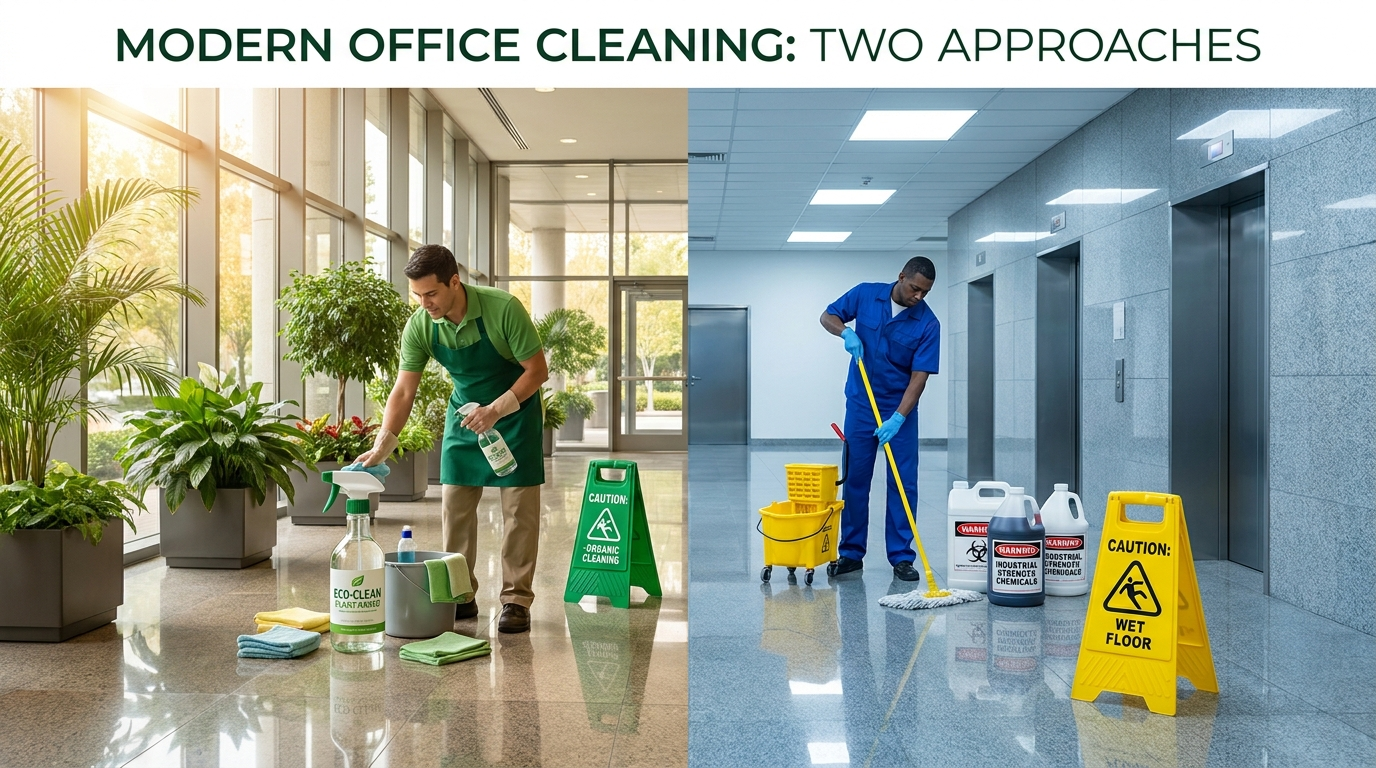
Green cleaning products use plant-based surfactants, biodegradable ingredients, and low-VOC formulas to clean commercial spaces, while traditional cleaners rely on synthetic chemicals like ammonia, chlorine bleach, and quaternary ammonium compounds. For most daily cleaning tasks in offices, retail spaces, and healthcare facilities, certified green products perform comparably to conventional cleaners, though traditional disinfectants remain necessary for high-risk infection control scenarios.
- Green cleaning products cost 10-30% more upfront but reduce sick days by 20-25% according to ISSA research
- EPA Safer Choice and Green Seal certifications verify third-party tested cleaning effectiveness
- Traditional cleaners with EPA-registered disinfectants kill 99.9% of pathogens in 1-3 minutes; most green cleaners require 5-10 minutes
- VOC levels in conventional cleaners range from 50-300 g/L versus 0-50 g/L in certified green products
- Hybrid approaches using green products for daily cleaning and traditional disinfectants for high-touch surfaces optimize both safety and efficacy
What Defines Green Commercial Cleaning Products
Green commercial cleaning products meet specific environmental and health criteria verified by independent certifying organizations. The U.S. Environmental Protection Agency's Safer Choice program evaluates products across 12 human health and environmental criteria before granting certification. Products must demonstrate that every ingredient meets safety thresholds for aquatic toxicity, skin sensitization, and carcinogenicity.
Green Seal, an independent nonprofit founded in 1989, certifies commercial cleaning products under their GS-37 standard for general-purpose cleaners and GS-53 for floor care products. These certifications require manufacturers to disclose all ingredients, prove biodegradability within 28 days, and limit VOC content to under 50 grams per liter.
The International Sanitary Supply Association (ISSA) reports that facilities using certified green cleaning programs experience 20% fewer occupant complaints about indoor air quality. Buildings pursuing LEED certification from the U.S. Green Building Council earn points for implementing green cleaning policies that specify certified product usage.
Traditional Cleaners: Chemical Composition and Applications
Traditional commercial cleaners contain synthetic surfactants, solvents, and antimicrobial agents designed for maximum cleaning power. Common active ingredients include sodium hypochlorite (bleach) at 3-8% concentration, ammonia at 5-10%, and quaternary ammonium compounds (quats) at 0.1-0.5%. These chemicals deliver rapid soil removal and pathogen elimination but release volatile organic compounds during use.
According to research published in the National Institutes of Health database, custodial workers using traditional cleaning products report higher rates of respiratory symptoms, including 30-40% more instances of wheezing and shortness of breath compared to workers using environmentally preferable alternatives.
Traditional disinfectants registered with the EPA must demonstrate efficacy against specific pathogens on the product label. Hospital-grade disinfectants kill Staphylococcus aureus, Salmonella enterica, and Pseudomonas aeruginosa within 1-3 minutes of contact time. This rapid kill time makes traditional disinfectants essential for healthcare settings, food service areas, and outbreak response.
Effectiveness Comparison: Cleaning Power by Surface Type
Independent testing by NSF International and UL Solutions shows that certified green all-purpose cleaners remove 95-98% of common soils from hard surfaces, matching traditional cleaners in most scenarios. The difference becomes significant with heavily soiled surfaces, grease buildup, and mineral deposits, where traditional alkaline or acidic cleaners outperform green alternatives by 15-25%.
| Surface Type | Green Product Effectiveness | Traditional Product Effectiveness | Best Choice |
|---|---|---|---|
| VCT/LVT Floors | Excellent (95%) | Excellent (97%) | Either |
| Tile and Grout | Good (85%) | Excellent (98%) | Traditional for deep cleaning |
| Glass and Mirrors | Excellent (97%) | Excellent (98%) | Either |
| Kitchen Grease | Moderate (75%) | Excellent (95%) | Traditional |
| Carpet Stains | Good (80%) | Very Good (90%) | Traditional for set stains |
| Restroom Fixtures | Good (85%) | Excellent (98%) | Traditional for mineral deposits |
| Marble/Terrazzo | Excellent (pH-neutral required) | Risk of etching | Green (pH-neutral) |
For natural stone surfaces like marble and terrazzo, green pH-neutral cleaners actually outperform traditional options because acidic or alkaline chemicals can etch and damage these materials. Facilities with marble and terrazzo floors should exclusively use pH-neutral formulations to protect their investment.
Cost Analysis: Initial Investment vs Long-Term Savings
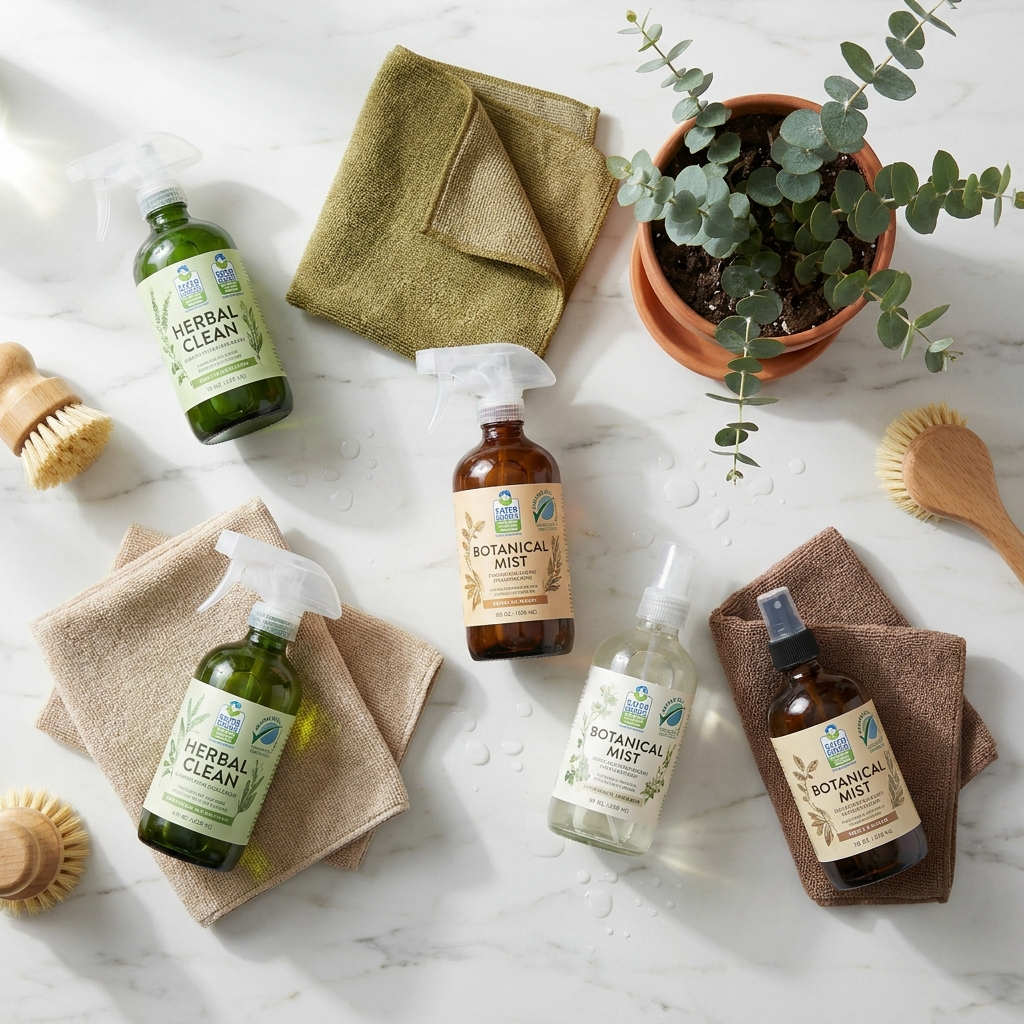
Green cleaning products typically cost 10-30% more per gallon than conventional alternatives. A gallon of Green Seal-certified all-purpose cleaner runs $15-25 compared to $10-18 for traditional formulations. However, concentrated green products often deliver more uses per gallon, with dilution ratios of 1:64 or 1:128 compared to 1:32 for many conventional cleaners.
The Building Owners and Managers Association (BOMA) International reports that green cleaning programs reduce total facility operating costs by 5-12% over three years when accounting for reduced absenteeism, lower liability exposure, and decreased HVAC filter replacement. Harvard T.H. Chan School of Public Health research found that improved indoor air quality from green cleaning increases cognitive function scores by 61% in office workers.
Insurance carriers including Zurich, Chubb, and Liberty Mutual offer 3-8% premium reductions for facilities demonstrating comprehensive green cleaning programs. Workers' compensation claims related to chemical exposure drop by 40-60% when facilities switch to certified green products, according to OSHA incident data.
What Cleaning Products Do Commercial Cleaners Use
Professional commercial cleaning companies use a combination of product types based on the specific task. For daily maintenance cleaning, most janitorial teams rely on neutral pH all-purpose cleaners, glass cleaners, and restroom disinfectants. Floor care requires specialized strippers, finishes, and maintenance products formulated for specific flooring types.
Leading commercial cleaning product manufacturers include Diversey (Suma, Crew, and Oxivir lines), Ecolab (Oasis Pro and Neutral Disinfectant Cleaner), Spartan Chemical (Green Solutions and BioRenewables), and Betco (Green Earth and Symplicity). These companies offer both traditional and green-certified product lines to meet varying facility requirements.
At MB Floor Solutions, we use low-odor chemistry across our commercial cleaning services to minimize disruption to occupied spaces. Our product selection prioritizes both effectiveness and occupant safety, particularly important for healthcare facilities, schools, and office environments where people work throughout the day.
Green Commercial Cleaning Certifications Explained
Third-party certifications provide facility managers with verified assurance that green cleaning products meet specific performance and safety standards. The three most recognized certifications in commercial cleaning are EPA Safer Choice, Green Seal, and UL ECOLOGO.
EPA Safer Choice requires products to meet criteria across functional performance, human health, environmental fate, and packaging sustainability. Products display the Safer Choice label only after the EPA reviews every ingredient against its Master Criteria for Safer Ingredients.
Green Seal certifies products under specific standards: GS-37 covers general-purpose, bathroom, and glass cleaners; GS-40 addresses floor care products; GS-53 covers specialty cleaning products. Each standard specifies maximum VOC content, biodegradability requirements, and prohibited ingredient lists.
UL ECOLOGO certification, managed by Underwriters Laboratories, evaluates products through a lifecycle assessment approach. Products must demonstrate reduced environmental impact from raw material extraction through disposal compared to conventional alternatives.
The Simple Green Lawsuit: Understanding Product Claims
Simple Green, manufactured by Sunshine Makers Inc., faced a class action lawsuit in 2017 alleging that the company's marketing claims of being "non-toxic" and "biodegradable" were misleading. The lawsuit claimed that Simple Green All-Purpose Cleaner contained 2-butoxyethanol, a chemical linked to respiratory irritation and listed by California's Proposition 65 as potentially harmful.
The case highlighted the importance of third-party certification over self-declared environmental claims. Products labeled "green," "natural," or "eco-friendly" without EPA Safer Choice or Green Seal certification may contain ingredients that don't meet rigorous safety standards. Facility managers should verify certifications directly on the EPA or Green Seal databases rather than relying on packaging claims alone.
Following the lawsuit, Simple Green reformulated several products and now offers EPA Safer Choice-certified versions in their product line. This case demonstrates why procurement specifications should require recognized third-party certifications rather than accepting manufacturer marketing claims.
Why Use Green Cleaning Products in Commercial Facilities
Green cleaning products reduce occupant exposure to volatile organic compounds that contribute to sick building syndrome, headaches, and respiratory irritation. The American Lung Association reports that indoor air pollution levels can be 2-5 times higher than outdoor levels, with cleaning products being a primary contributor.
Facilities pursuing LEED certification earn up to 2 points under the Indoor Environmental Quality credit category for implementing green cleaning programs. The U.S. Green Building Council's LEED v4.1 standard specifically references EPA Safer Choice and Green Seal certifications as acceptable verification methods.
Employee productivity improvements from better indoor air quality translate to measurable financial returns. A study by the World Green Building Council found that improved air quality increases productivity by 8-11%, representing $20-40 per square foot annually in enhanced worker output for typical office spaces.
Industry-Specific Recommendations
Healthcare Facilities
Hospitals, clinics, and medical offices require EPA-registered disinfectants for patient care areas, operating rooms, and isolation spaces. Green products work well for administrative areas, lobbies, and general circulation spaces. The CDC's Guidelines for Environmental Infection Control specify that healthcare facilities must use products with demonstrated efficacy against healthcare-associated pathogens.
For specialized healthcare cleaning needs like stretcher and wheelchair sanitization, EPA-registered hospital-grade disinfectants remain the standard. However, cubicle curtain cleaning and general floor maintenance can utilize green products without compromising patient safety.
Office Buildings
Commercial office spaces represent the ideal application for green cleaning products. Daily tasks like desk wiping, trash removal, glass cleaning, and floor maintenance don't require aggressive disinfection. Green products effectively handle routine soil removal while improving indoor air quality for the 8-10 hours employees spend in the building daily.
Restrooms and break rooms benefit from a hybrid approach: green all-purpose cleaners for general surfaces with EPA-registered disinfectants for toilets, urinals, and food preparation areas. This targeted approach minimizes chemical exposure while maintaining hygiene standards.
Educational Institutions
Schools and universities increasingly adopt green cleaning programs to protect students and staff. Children are particularly vulnerable to chemical exposure due to their developing respiratory systems and higher breathing rates relative to body weight. The Healthy Schools Campaign reports that green cleaning programs reduce asthma-related absences by 15-25% in participating schools.
Retail and Hospitality
Customer-facing businesses must balance cleanliness perception with actual hygiene. Green cleaning products with pleasant, natural scents (citrus, lavender, eucalyptus) can enhance the customer experience while maintaining cleanliness. Traditional disinfectants remain appropriate for food service areas, restrooms, and high-touch surfaces like door handles and checkout counters.
Implementing a Hybrid Cleaning Program
Most commercial facilities achieve optimal results with a hybrid approach that uses green products for 70-80% of cleaning tasks and reserves traditional cleaners for specific applications. This strategy maximizes indoor air quality benefits while ensuring adequate disinfection where needed.
Green product applications: General floor cleaning, glass and mirror cleaning, dusting, carpet maintenance, office surface wiping, lobby and common area cleaning, and pH-sensitive surfaces like marble and terrazzo.
Traditional product applications: Restroom disinfection, kitchen and food service areas, outbreak response, heavily soiled surfaces, grease removal, and healthcare patient care areas.
For commercial tile and grout cleaning, traditional alkaline cleaners often prove necessary to remove embedded soils from grout pores. However, daily maintenance between deep cleanings can utilize green neutral cleaners to preserve grout integrity and minimize occupant exposure.
Product Selection Checklist for Facility Managers
Before purchasing cleaning products for your commercial facility, verify these criteria to ensure you're getting genuinely effective and safe formulations:
- Certification verification: Check EPA Safer Choice database or Green Seal website for active certification status
- Ingredient disclosure: Manufacturers should provide complete ingredient lists, not just "proprietary blend" descriptions
- Dilution ratios: Compare cost per ready-to-use gallon, not concentrate price alone
- Surface compatibility: Verify product is appropriate for your flooring types (VCT, LVT, marble, terrazzo, concrete)
- Fragrance content: Unscented or naturally scented products reduce allergy and sensitivity complaints
- Training requirements: Some green products require specific application methods for effectiveness
- Storage stability: Green products may have shorter shelf lives (12-18 months vs 24-36 months for traditional)
Floor Care Considerations: Green vs Traditional
Floor maintenance represents a significant portion of commercial cleaning budgets, with floor stripping and waxing typically costing $0.80-1.20 per square foot. Green floor care products have made substantial advances, with several Green Seal-certified floor finishes now matching traditional products in durability and gloss retention.
Green floor strippers use hydrogen peroxide or citrus-based solvents instead of ammonia or butyl cellosolve. These products typically require 15-30 minutes of dwell time compared to 5-10 minutes for aggressive traditional strippers, adding labor costs to the equation. However, reduced ventilation requirements and elimination of harsh chemical odors allow work during occupied hours in some facilities.
For commercial floor deep cleaning, green neutral cleaners work effectively for routine maintenance. Auto-scrubbers with green-certified solutions remove daily soils without degrading floor finish, extending the time between strip and wax cycles from 6-9 months to 9-12 months in many facilities.
Indoor Air Quality Impact
The comparison between green and traditional cleaning shows significant differences in VOC emissions. Traditional cleaners release 50-300 grams of VOCs per liter, while certified green products emit 0-50 grams per liter. These compounds contribute to ozone formation, respiratory irritation, and the distinctive "cleaning chemical" smell that many building occupants find objectionable.
Facilities with poor ventilation or sealed building envelopes (common in South Florida's climate-controlled environments) experience amplified effects from cleaning product emissions. Green cleaning programs combined with proper commercial air duct cleaning can reduce indoor VOC concentrations by 40-60%, according to ASHRAE research.
Building managers should coordinate cleaning schedules with HVAC operation to maximize air exchange during and after cleaning. Running ventilation systems at 100% outside air for 2-4 hours after cleaning significantly reduces residual chemical concentrations regardless of product type.
Making the Right Choice for Your Facility
The decision between green and traditional cleaning products depends on your facility type, occupant sensitivity, regulatory requirements, and sustainability goals. Most commercial facilities benefit from a thoughtful hybrid approach rather than an all-or-nothing commitment to either category.
Start by auditing your current product inventory and identifying opportunities to substitute green alternatives for low-risk applications. Work with your cleaning service provider to develop specifications that balance effectiveness, safety, and cost. Request documentation of product certifications and training protocols to ensure proper implementation.
For South Florida commercial facilities seeking professional guidance on implementing effective cleaning programs, contact MB Floor Solutions for a free on-site assessment. Our team serves 150+ businesses across Miami-Dade, Broward, and Palm Beach Counties with customized cleaning solutions that prioritize both results and occupant wellbeing.
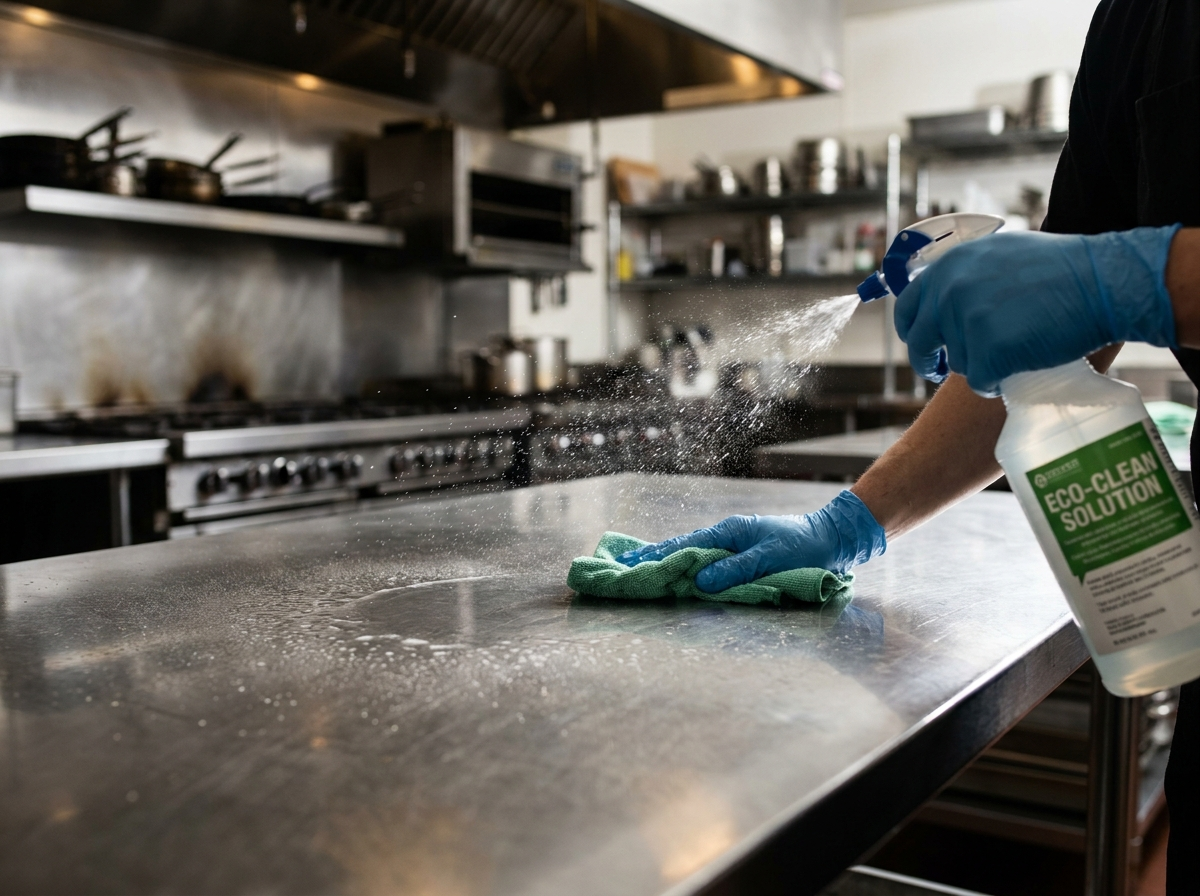
Get a Free Cleaning Assessment for Your Facility
MB Floor Solutions provides customized commercial cleaning programs for offices, healthcare facilities, retail spaces, and warehouses throughout South Florida. Call (954) 380-3050 or visit us online to schedule your consultation.
Request Your Free Quote