
Prepare for cubicle curtain cleaning with a practical room list, temporary-privacy questions, curtain return checks and an exception log for your facility.

Before a cubicle curtain cleaning visit, settle four practical decisions: who releases each room, who approves temporary privacy arrangements, how curtains will be matched to their return locations, and who resolves exceptions. Use the worksheet below to prepare a room-by-room plan with your facility team and MB Floor Solutions.
Adapt these suggested records to your facility's policies and agree the responsibilities with MB before the visit. Your authorized facility team should make room-access and clinical decisions.
Confirm the service scope
MB Floor Solutions describes a service that includes removing existing curtains, installing clean temporary curtains for privacy, laundering and sanitizing the originals, rehanging them in the correct positions, and adding service-date labels. Its cubicle curtain cleaning and maintenance page describes completing that sequence within one visit. Confirm how the proposed visit applies to your room list and any access restrictions.
Ask MB to confirm the temporary-curtain sizes and attachment compatibility, how each curtain will stay linked to its location, and the arrangements for unavailable rooms or damaged curtains. Keep the agreed answers with the service scope so your team and the contractor can refer to the same plan.
Name the people who can make decisions
Identify a facility contact and an alternate for the visit. Record who can release a room for work, who approves the temporary privacy arrangement, and who owns the curtain inventory. Those roles may belong to different people; list each responsibility against a name and contact method.
For isolation rooms or other restricted areas, ask the authorized facility team to confirm whether they belong in the work list and what instructions apply. Give the contractor a clear route for asking questions when a room's status changes.
- Room release: Who tells the crew that a room or bay is available?
- Temporary privacy: Who checks and accepts the agreed arrangement?
- Curtain inventory: Who can resolve identification or return-location questions?
- Exceptions: Who can approve a revised sequence or follow-up visit?
- Completion: Who receives the records and reviews outstanding items?
Build the room and curtain list
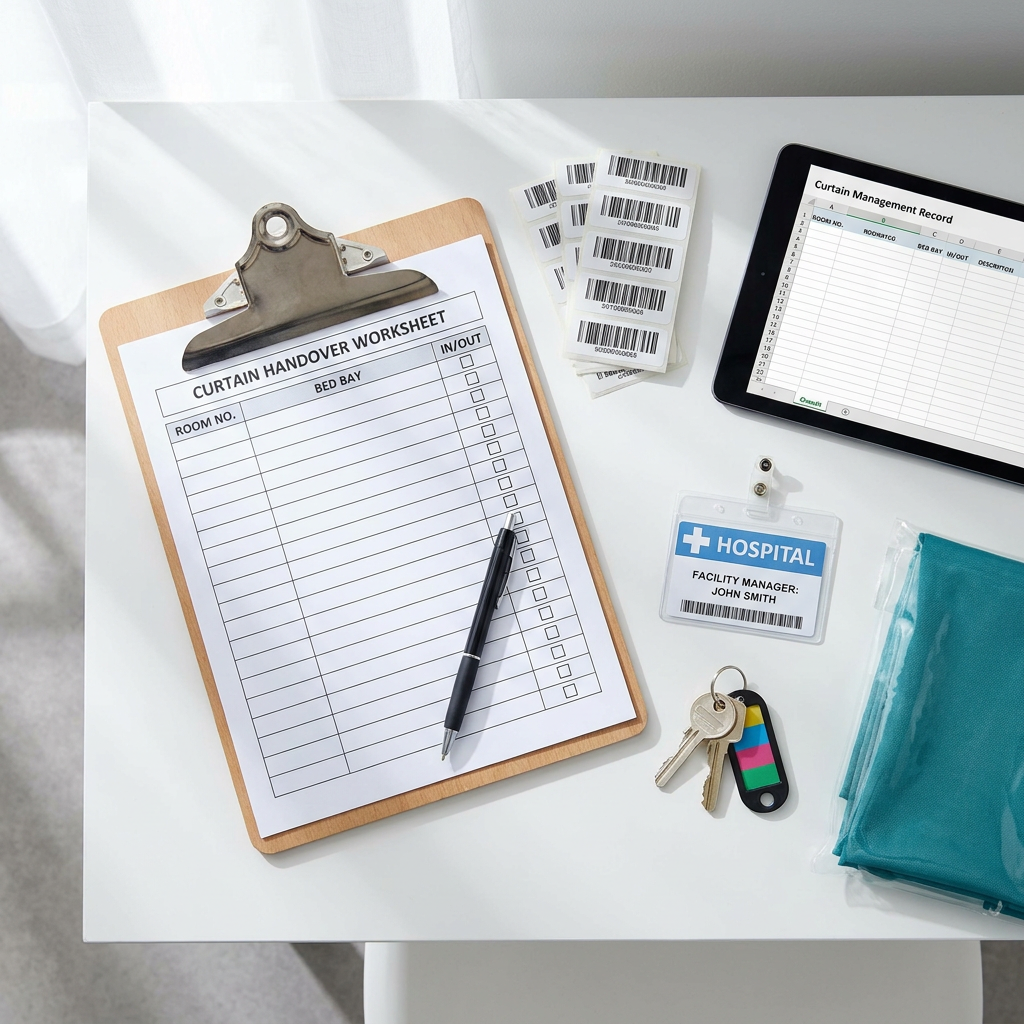
Choose the fields that help your team identify each curtain and its destination. Ask MB which details it needs for the assessment and which records it can maintain during the visit. Keep one row per curtain or clearly identified position.
| Suggested field | What to record |
|---|---|
| Building, floor and unit | The service location |
| Room or bay and curtain position | The intended return position within the room |
| Existing ID tag or barcode | The identifier to confirm with MB before laundering |
| Dimensions and mesh-top details | Size information for the service assessment |
| Fabric and color | A description to check at return |
| Hook or carrier details | Attachment information for assessing compatibility |
| Room availability | The release contact and any agreed restrictions or deferral |
| Existing condition | Damage notes and a photo reference, if your facility permits photographs |
Ask how the location identifier will remain associated with the curtain through removal, laundering and rehanging. Confirm which record your team will receive and who will check it against the room list.
Agree the temporary privacy arrangement
MB's service description includes clean temporary curtains while the originals are being cleaned. Before the visit, ask who supplies those curtains, which sizes and attachments are available, and who on the facility side will accept them for each room. Ask your facilities or safety lead to identify any applicable fabric or fire-rating requirements. [3]
Record the agreed arrangement on the room list. Include a contact for situations where a temporary curtain does not fit or the planned room is unavailable. Let the authorized facility contact decide the next step before that room's work proceeds.
Plan for exceptions before the crew arrives
Use this table to agree who will make each decision and how the outcome will be recorded. Add any site-specific situations identified during the assessment.
| Situation | Decision to agree | Record to keep |
|---|---|---|
| Room unavailable | Who approves moving to another room or deferring the work? | Room ID, contact and revised plan |
| Restricted room | Who confirms access and the applicable facility instructions? | Authorized contact and agreed scope |
| Temporary curtain does not fit | Who approves a suitable alternative or deferral? | Affected position and agreed next step |
| Damaged curtain or attachment | Who decides repair, replacement and any cost responsibility? | Condition note, decision owner and action |
| Missing or incorrectly returned curtain | Who investigates and resolves the discrepancy? | Curtain ID, expected location, owner and follow-up date |
Close the visit with a return check
Walk through the completed room list with the agreed contact. Compare the returned curtains with their recorded positions and review the service-date labels described in MB's scope. Note deferred rooms and unresolved items separately so they remain visible after the crew leaves. [3]
A simple closeout record can include:
- The curtain or position checked and its return location.
- The service date shown on the label. [3]
- Any mismatch, damage question or deferred work.
- The person responsible for the next action and the agreed follow-up date.
- The facility contact receiving the completed record.
Ask the receiving contact to acknowledge the completed work and list any open items. Agree how those items will be checked again and who will confirm they are resolved.

Prepare your first room list
Start with one unit or a clearly defined group of rooms. Complete the location fields you already know, identify the decision-makers, and send the remaining questions to MB with your proposed scope. Request a cubicle curtain cleaning assessment and ask for written confirmation of the visit's responsibilities and handoffs.