An adaptable walkthrough guide and exception record for accepting a completed commercial deep clean: compare against scope, log exceptions, name follow-up owners.

One way to organize an acceptance walkthrough is to compare each room with the written scope. Record what matches the agreed tasks, what does not, what was already damaged and what was excluded. The worksheet below is an optional, adaptable tool, not a regulatory form. Your signed agreement and facility rules come first. [2]
Which rooms and tasks are in the written scope, and what was the baseline?
Start with the scope, because it defines what "done" means. A contractor guide notes that two providers can quote the same building with entirely different scopes, including one "promising 'deep cleaning' annually without specifying what that covers" (Janitech). Confirm what "deep cleaning" meant in your agreement before you inspect.
That guide also advises a task list in which every task is mapped to every area (Janitech). Bring these to the walkthrough:
- The room-by-room task list from the agreement or quote, including any changes.
- The exclusions, such as areas that were inaccessible or services quoted separately.
- Any pre-work notes and dated photos of baseline condition, such as chipped tile, stained carpet or worn finish. If none exist, note that on the record.
What can you judge during the walkthrough, and what may need more evidence?
Visible during the walk
Use the inspection criteria in your agreement, if it specifies any. For an optional observation checklist, consider these questions and record only what you actually see: [8] [2]
- Do corners and edges have visible debris? [8] [5]
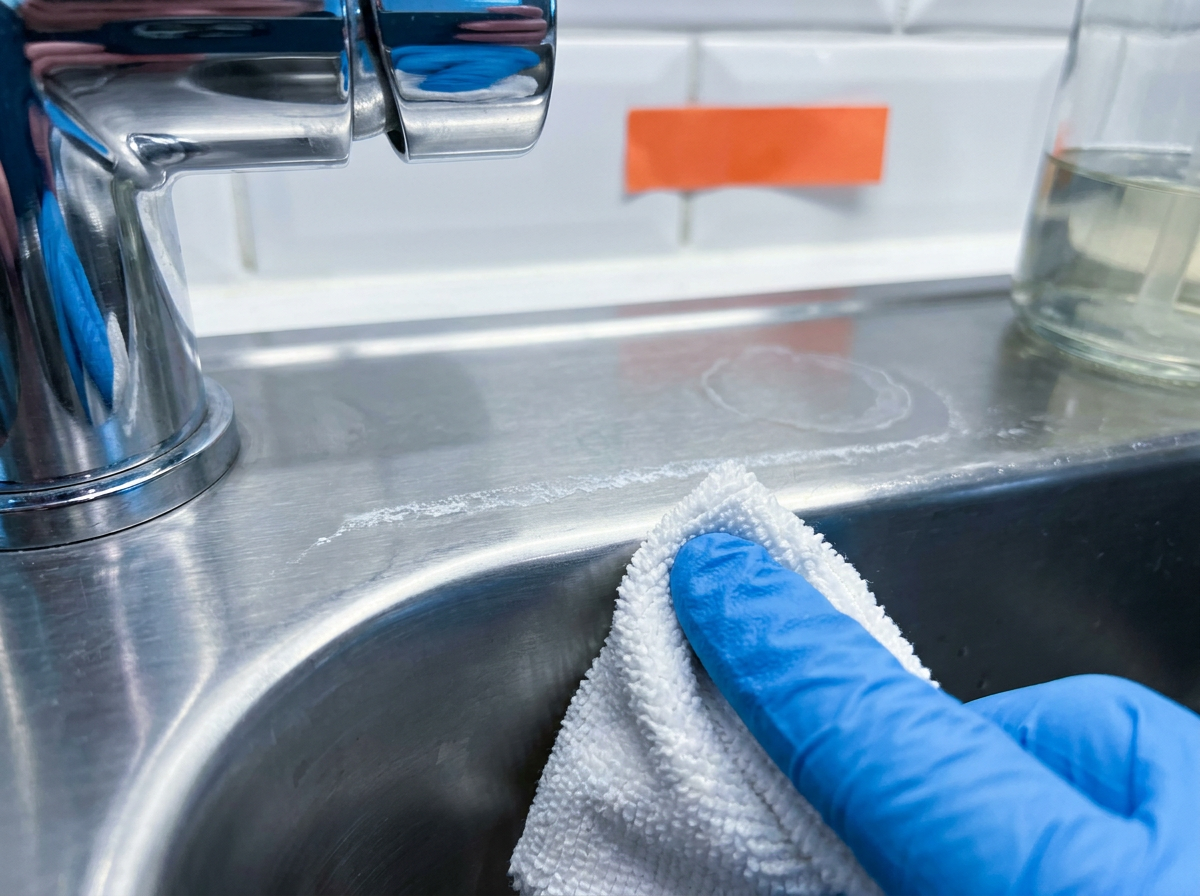
- Are there visible streaks, spots or residues on surfaces included in the scope? [8] [5]
- Does a mark appear in a pre-work photo, or is its origin uncertain?
- Has the room been used since cleaning finished?
Record the inspection time and any areas you could not view. Keep uncertain observations as questions for the provider rather than assigning a cause.
Questions you may want to ask the provider
Depending on the scope, it can help to ask what products and methods were used, whether any areas were blocked, and whether any work was left unfinished. Attach any answers you receive to the record.
Appearance has limits
A trade-association article makes the point that even though a restroom surface "appears clean, bright, and shiny and there are no visible signs of soil, it may still harbor contaminants" (Facilities Manager, 2011). A walkthrough therefore shows how a space looks, not whether it is free of contaminants. Follow your facility's own procedures for anything beyond appearance, and ask facility leadership who handles such questions.
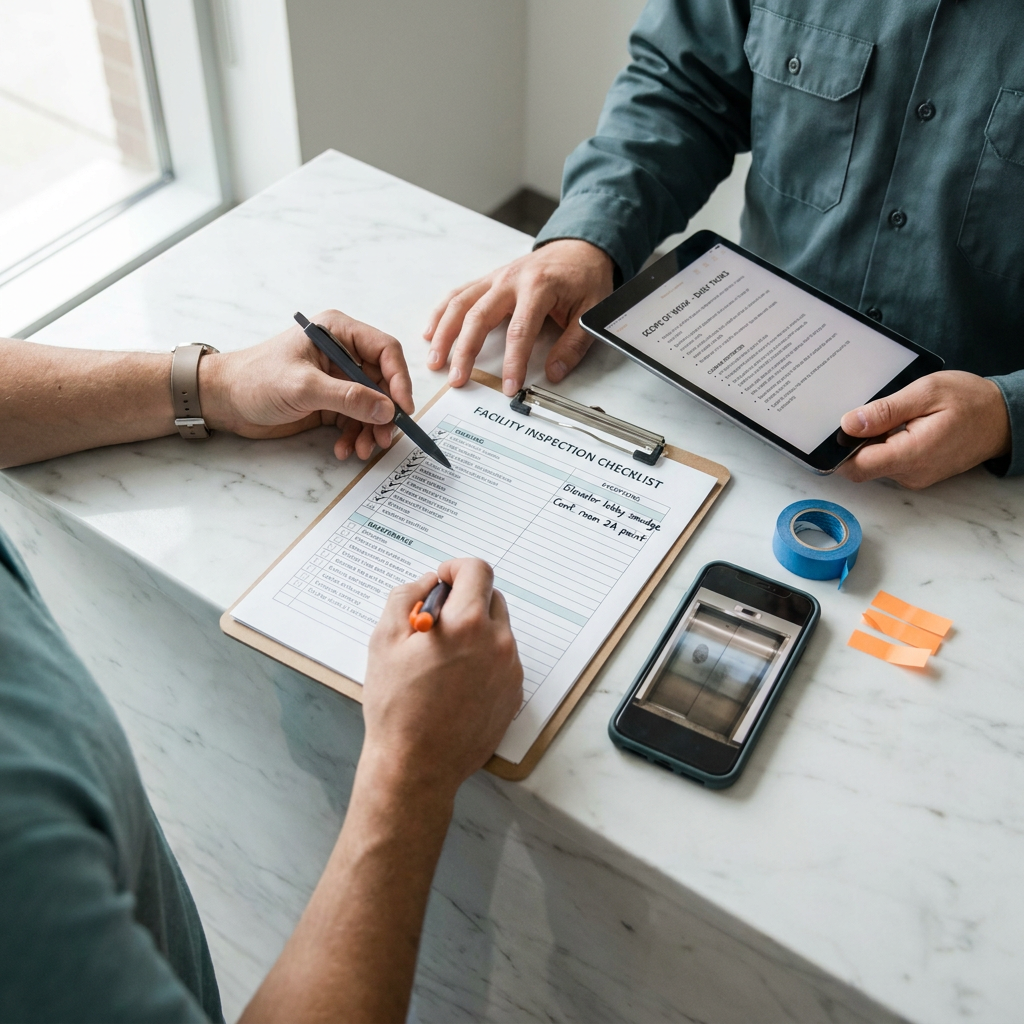
What do the agreement and facility requirements say about photos, acceptance and corrections?
Read these provisions before the walk. Useful things to look for:
- Whether photos are required or permitted, and who keeps them.
- Any acceptance window for reporting issues.
- How corrections are requested and handled. [2]
- What happens to items still unresolved at sign-off.
- Facility rules on access, escorts or documentation.
The Janitech guide lists a quality assurance process, meaning how inspections happen and how issues are reported and resolved, as one element of a scope of work (Janitech). If your agreement does not describe one, you may want to discuss and document a process with the provider that is consistent with the agreement.
Sample acceptance record: linking each observation to a task, owner and follow-up
Use this optional record to connect each observation with the relevant task and follow-up. Adapt the fields to your agreement.
| Field | What to enter |
|---|---|
| Room / area | Name or number as used in the scope |
| Scope line | The agreed task this relates to |
| Baseline reference | Pre-work note or photo ID, or "none" |
| Observation | What you see, in plain words, and viewing distance or time if recorded |
| Photo ID and date | Matches the image file |
| Status | Accepted / correction requested / excluded / pre-existing / disputed / question for provider |
| Responsible person | Named individual at the provider or facility |
| Agreed date | Date the parties agree for the follow-up |
| Who confirms | Person the parties agree will verify |
| Reinspection date and result | Date, result and initials |
| Sign-off | Both parties, with date |
What belongs on a punch list?
As a suggested convention, the punch list holds items tied to a scope line that need correction or an answer. Pre-existing damage and excluded work can stay on the same record under their own status, which helps keep them distinct from missed work. Check your agreement for any provisions addressing these categories, and discuss anything it leaves unclear with the provider.
Who confirms that an issue has been addressed?
One arrangement to discuss is that the provider reports the correction as done and a named person at the facility verifies it and initials the reinspection column. Agree with the provider who verifies and what evidence, such as a revisit or a dated photo, allows an item to be closed.
Planning the next project
When you scope work, you can ask your provider to include a walkthrough and exception-handling plan in the proposal. If you are considering MB Floor Solutions, confirm with them what their proposal covers; see the commercial cleaning services page or call (954) 380-3050.