
Understand carpet wicking and recurring spots after commercial cleaning. Use a practical observation checklist and plan the next assessment with your cleaner.

Carpet wicking is one possible reason a spot reappears after cleaning: water-soluble material can move toward the yarn tips as the carpet dries. A returning mark can also have other causes. As an optional planning step, a facility manager can document the pattern and ask the cleaner to review the area. [2]
This guide helps you prepare for that conversation. It does not diagnose the cause from photographs, and it does not promise that every recurring spot can be removed.
Key Points
- Wicking is a narrow term for water-soluble material moving upward or outward during drying. [2]
- Residue, tracked-in contaminants, incomplete drying, wear and a fresh spill can look similar. [4] [2]
- Timing alone does not identify the cause. [2] [4]
- Documentation and a return visit are suggested planning steps, not a diagnostic procedure.
- Ask for the installed carpet's care documents to be reviewed instead of assuming a stronger product is the answer.
What carpet wicking means
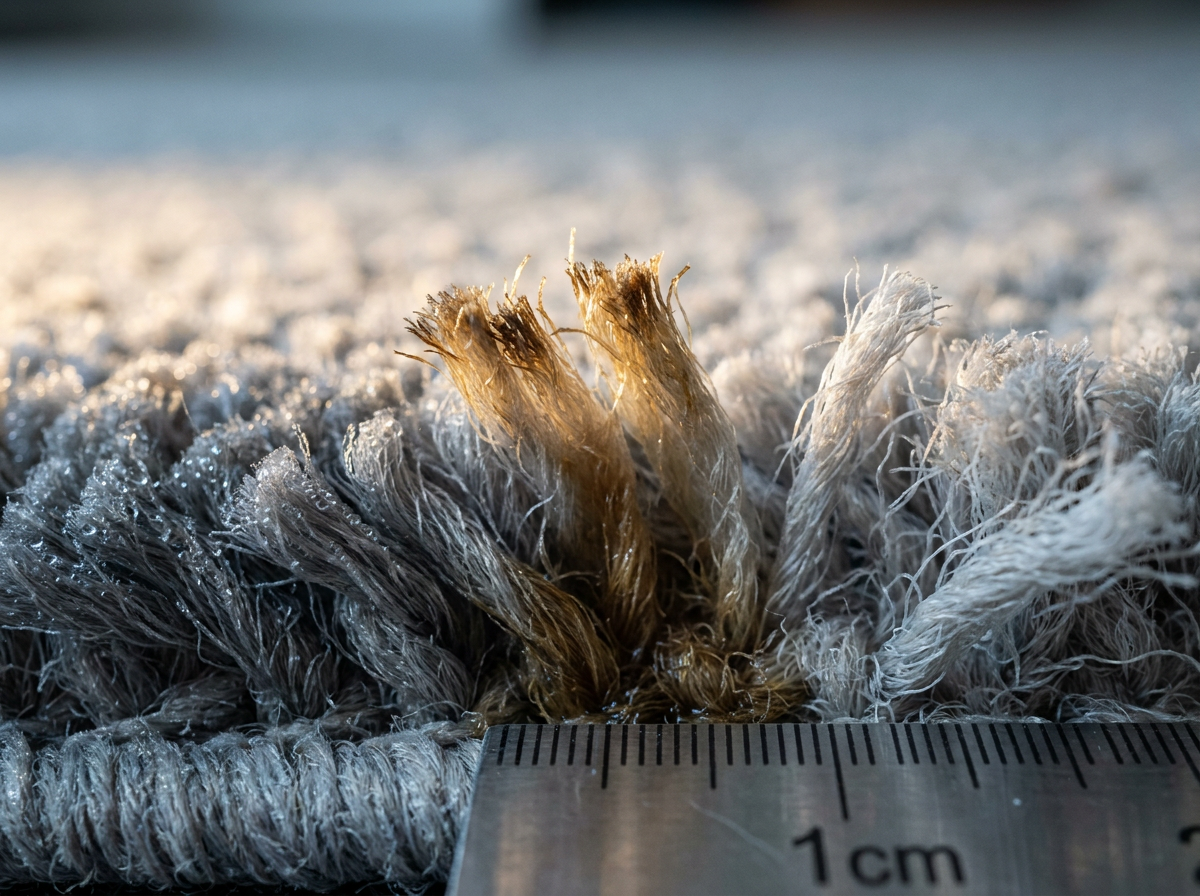
Section 22 of the IICRC carpet tip sheet describes wicking as the upward or outward movement of water-soluble material on carpet fiber surfaces during drying.
The same section explains that cleaning cannot always remove all deeply embedded soil. Soil left at the base of the yarns or on the backing can move to the yarn tips and show again after drying (IICRC tip sheet, section 22).
The tip sheet is consumer guidance (IICRC tip sheet). This article leaves out its do-it-yourself treatment steps, which are not a commercial work order.
Other reasons a mark can appear again
Section 23 covers rapid resoiling, meaning carpet that becomes visibly soiled sooner than it should after cleaning. Its listed causes include detergent or soap residue, contaminants tracked in from outside, and carpet not thoroughly dried before the space reopened (IICRC tip sheet, section 23). It says that finding the reason can take some detective work with input from the cleaner (IICRC tip sheet, section 23).
Other look-alikes exist. The sheet notes that wicking usually occurs in high-traffic areas where wear may still be obvious (IICRC tip sheet, section 22), and that browning is sometimes confused with soil wicking (IICRC tip sheet, section 24). A new spill in the same place is also possible. Timing alone does not establish which explanation applies, so an assessment is the sensible next step. [4]
Record what happened
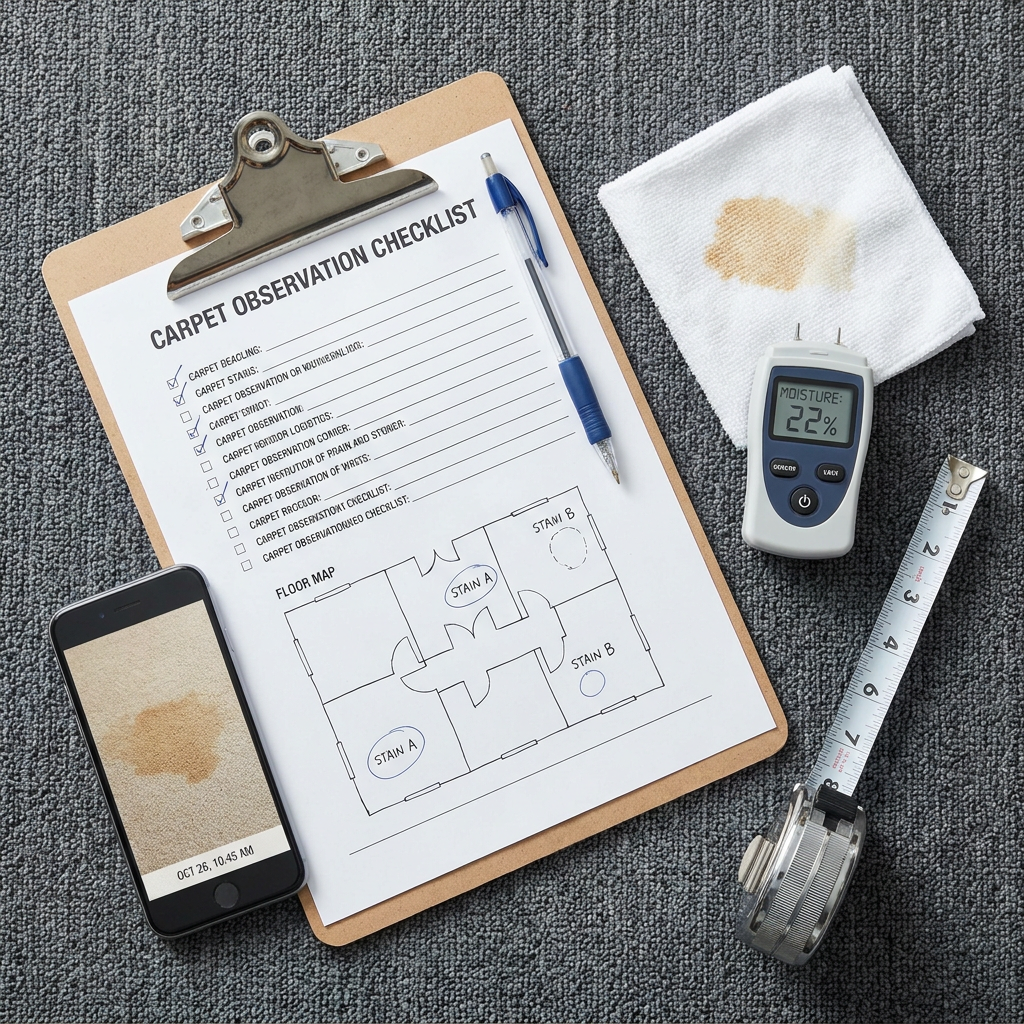
A specific record is a practical way to brief the cleaner, rather than reporting only that the carpet is dirty again. The worksheet below is an optional planning aid, not a diagnostic test.
| What to record | Useful detail |
|---|---|
| Exact location | Room, doorway, workstation or another fixed reference. |
| Before and after photographs | Similar lighting, with an object that shows scale. |
| When the mark returned | During drying, before reopening, or after traffic resumed. |
| Known spill history | What was spilled, if known. Mark uncertain details as unknown. |
| Previous treatment | The actual products and methods used by staff or contractors. |
| Carpet identity | Manufacturer, product name and care documents when available. |
| Other conditions | Persistent dampness, nearby leaks, unusual odor or new traffic patterns. |
The tip sheet advises telling the technician which spotting chemicals were used since the last cleaning, because special rinsing methods may be needed (IICRC tip sheet, section 23). Product names are therefore worth keeping. Store the record with the original work order and consider naming one person to collect updates, so later reports share one reference.
Request a return visit with a clear scope
If the carpet still does not look normal after drying, the tip sheet suggests setting up a return visit with a certified technician (IICRC tip sheet, section 22). A request might read: "This mark was visible again after the last cleaning. Here are the location, photographs, timing and products previously applied. Please review the likely cause and recommend a next step that fits the carpet's care documents."
Ask what the provider needs to inspect first. Confirm whether the visit is assessment only, a limited test, or approved corrective work, and ask for the scope of each in writing rather than assuming they match.
If the carpet stays damp or water may be entering the building, consider asking whether a separate moisture assessment is needed, rather than handling it only through a recurring-spot work order.
Agree on a limited test and follow-up
This visit-planning checklist is also optional. If the cleaner proposes a test, you may want to agree on:
- The exact test area, photographed beforehand.
- How the proposed method relates to the installed carpet's care instructions.
- What result is realistic, and what would make the provider stop or change the plan.
- Exclusions, meaning areas or conditions the test will not cover.
- Access, including restrictions, ventilation arrangements and the reopening instructions the provider specifies for the proposed work.
- Who will inspect afterward, and when.
- Whether the provider considers the test representative of other locations.
Record the result before approving broader treatment. If the appearance keeps returning, ask the provider to reassess the explanation rather than repeat the same approach.
Check the installed carpet's care documents
Before staff spot-treat again, request the installed carpet's own care documents and ask the cleaner to review them. If they conflict with other guidance, including a consumer sheet like the one cited here, ask the cleaner to help resolve it. Keep product names or labels so the next person knows what has already been applied.
Retaining records is useful whatever the eventual assessment finds, including wear, color change or a new spill. The aim is to choose an appropriate next step, not to attach a wicking label to every returning mark.
Close the work order with useful information
At handoff, keep the assessment, approved treatment, products used, access instructions and follow-up contact. Add a photograph of the reviewed area and note any unresolved limitations. Use the same location description in future reports so recurring complaints can be compared.
If you manage a South Florida commercial property with a spot that keeps returning, you can review MB Floor Solutions' commercial carpet cleaning service or contact the team to request an assessment, with your location, photographs and treatment history ready.