
Investigate sticky floors after mopping with a practical checklist for cleaner residue, equipment, floor finishes and professional assessment.

Sticky floors after mopping are best treated as a question to investigate, not a problem to fix by guessing. One flooring manufacturer's guidance for vinyl floors points to leftover cleaning chemistry and the condition of cleaning equipment as places to look. This guide helps a South Florida facility manager gather information and prepare a useful request for an assessment. [1]
What one manufacturer says about residue on vinyl floors
Mannington Commercial, a flooring manufacturer, wrote about luxury vinyl tile (LVT) and sheet vinyl. It says that when the water evaporates, the chemistries are left behind creating a residue that can attract more soil. It also says that even when flat mops are used according to the manufacturer's instructions, they can hold so many chemicals and water that the floor becomes over saturated.
That guidance covers only those two flooring types, and the manufacturer also promotes its own products. It does not diagnose stickiness. It does support looking at the cleaning process, including the tools, before assuming a floor must be replaced. [1]
Know your floor
The same article starts with a basic question: does the floor have a floor finish, or is it factory coated? It notes that the process used to maintain factory-applied coated floors can be used on floors that have floor finish, but not necessarily the other way round. It adds that sheet vinyl and LVT do not need floor finish.
For your property, this means the flooring and any coating are worth identifying before anyone chooses a correction. If you do not know what is underfoot, say so when you ask for help. For anything beyond vinyl, ask the flooring supplier or manufacturer for floor-specific instructions rather than relying on a general online tip. [1]
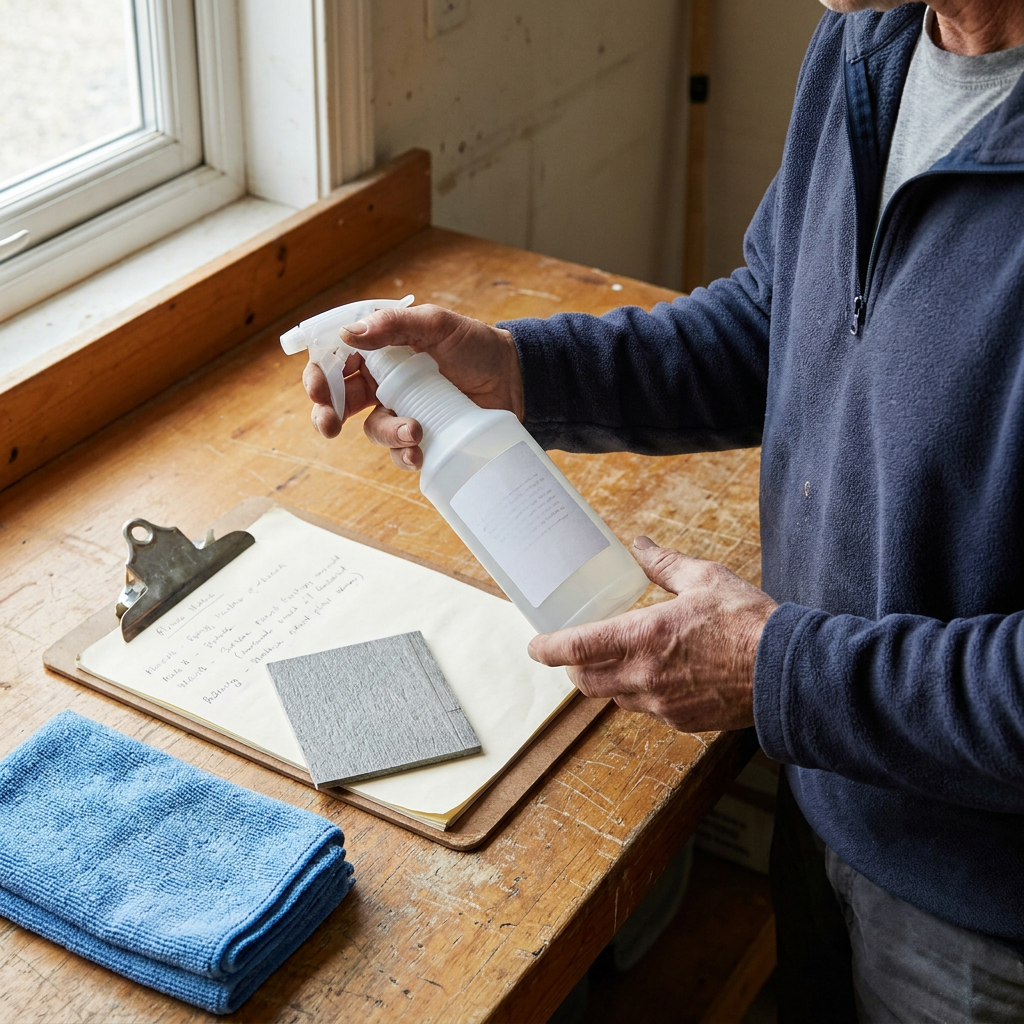
Optional notes to gather before you call
None of the following is a test protocol. These are simply details that make an assessment conversation more specific, and a qualified floor-care professional can tell you which of them matter.
| Note | Why it helps the conversation |
|---|---|
| Where the complaint occurs | Lets the assessor ask whether the whole area or particular rooms are affected |
| When it began and what changed | Gives context on products, staff or floor treatments |
| Cleaning product label and how it is prepared | Lets the assessor compare your routine with the manufacturer's instructions |
| Mops, pads and equipment in use | Mannington's guidance on vinyl discusses tools and equipment care [1] |
| Flooring and any coating, if known | Identifies what the assessor is dealing with |
| Photos of the affected area | Optional visual record to share |
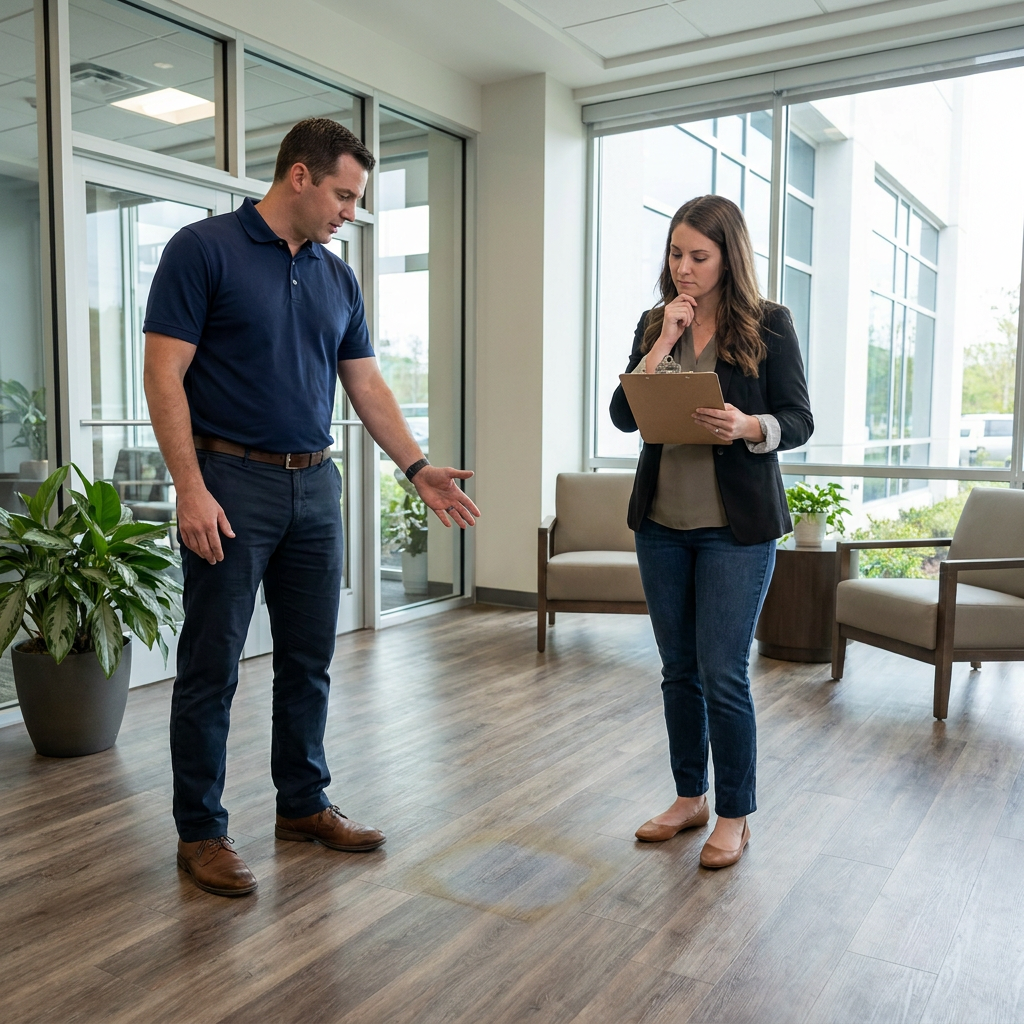
When a professional assessment makes sense
Consider an assessment when the problem continues, when nobody can identify the floor or its coating, or when the surface looks different from before. Ask any proposal to state which condition it addresses and what work it includes.
MB Floor Solutions lists deep cleaning and strip and wax as separate services on its site, and its deep cleaning page describes a process that starts with a site assessment to identify floor type, soil load and access. This is the provider's own description of its service, not independent evidence that either service is right for your floor. Ask any proposal to explain which condition each service addresses. [5]
A handoff checklist for your team
- Name the room, flooring and finish, including any unknowns.
- Note when the complaint began and what changed beforehand.
- Attach the current cleaning-product label and preparation method.
- Describe the mops, pads or machines in use.
- Include photos or observations you want the assessor to see.
- Decide who approves any next step before the area reopens.
Common questions
Does a sticky floor always need stripping?
The sources used here do not establish that it does. Mannington's vinyl guidance, for example, says LVT and sheet vinyl do not need floor finish, so removal of a finish may not even apply. Identify the floor first. [6] [1]
Should the team increase the cleaner concentration?
Ask the assessor to review the product label and the flooring manufacturer's maintenance instructions before any change in the amount of product used. Mannington's guidance on vinyl notes that leftover chemistry can form residue that attracts soil. [1]
What should I send when requesting help?
Send your city, facility type, approximate affected area, floor identity if known, recent cleaning history and preferred access window. Request a floor assessment from MB Floor Solutions and ask for a written scope based on those conditions. [7] [6]
Conclusion
Start with what you can document: where the problem is, what products and tools are used, and what the floor actually is. Then get floor-specific guidance before paying for a correction.