Hot water extraction outperforms true steam cleaning for commercial carpets. Learn which method works best for offices, healthcare, and retail facilities.
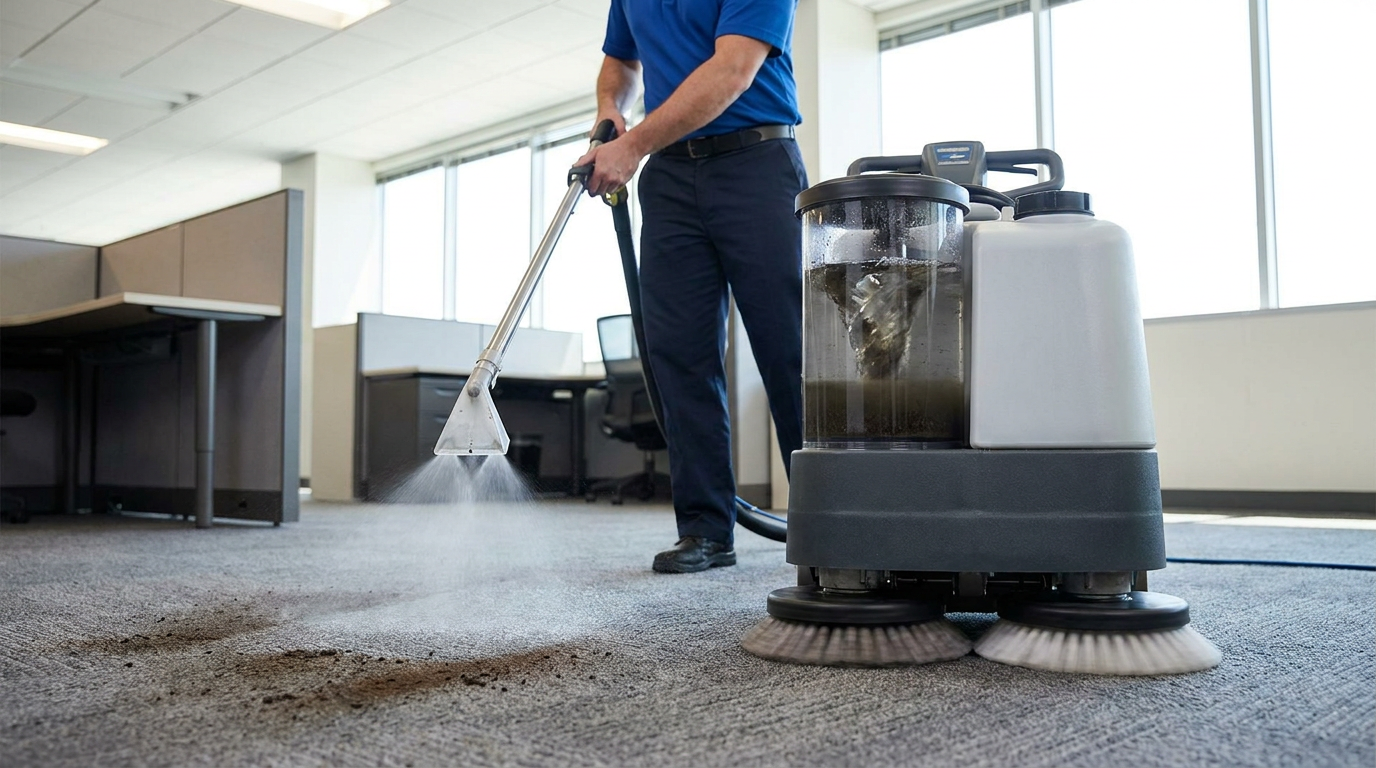
Hot water extraction is the superior method for deep cleaning commercial carpets, removing up to 97% of dirt and bacteria according to industry standards. True steam cleaning works better for hard surfaces like tile and grout. Most facility managers asking about "steam cleaning" actually need hot water extraction, which uses pressurized heated water and immediate vacuum recovery to flush contaminants from carpet fibers.
- Hot water extraction removes 97% of dirt and bacteria; true steam cleaning lacks the flushing power for deep carpet soil removal
- Commercial extraction costs $0.15 to $0.50 per square foot; low-moisture methods cost $0.06 to $0.25 per square foot
- High-traffic commercial spaces need extraction every 3 to 6 months with interim low-moisture cleaning monthly
- Drying time for extraction is 4 to 8 hours; low-moisture bonnet methods dry in 1 to 2 hours
- IICRC and Carpet and Rug Institute recommend periodic hot water extraction for warranty compliance
Understanding the Terminology: What Facility Managers Actually Need
The commercial cleaning industry uses "steam cleaning" and "hot water extraction" interchangeably, creating confusion for facility managers. According to Commercial Cleaning Depot, carpet extractors and steam cleaners serve fundamentally different purposes. True steam cleaners produce dry or wet vapor at temperatures exceeding 212 degrees Fahrenheit. They excel at sanitizing hard surfaces like tile, grout, and metal but lack the water volume and extraction power needed for carpet deep cleaning.
Hot water extraction machines, often called carpet extractors, inject pressurized water heated to 150 to 200 degrees Fahrenheit mixed with cleaning solution deep into carpet fibers. Powerful vacuum systems immediately recover the water along with dissolved soil, allergens, and bacteria. This flush-and-extract process is what most people mean when they request "steam cleaning" for commercial carpets.
The distinction matters for budgeting and scheduling. A true steam cleaner costs $500 to $2,000 for commercial units. Professional carpet extractors range from $2,060 for portable units to $15,000 or more for truckmounted systems. Facility managers who understand this difference can specify the right service and avoid paying for equipment that cannot deliver the results they need.
Hot Water Extraction: The Industry Standard for Deep Cleaning
The Institute of Inspection, Cleaning and Restoration Certification (IICRC) and the Carpet and Rug Institute (CRI) both recognize hot water extraction as the primary method for restorative carpet cleaning. These organizations set the standards that most carpet manufacturers reference in their warranty requirements. Failing to use approved cleaning methods can void warranties on commercial carpet installations costing $3 to $8 per square foot.
Hot water extraction works by breaking the bond between soil particles and carpet fibers through a combination of heat, agitation, and chemistry. The cleaning solution emulsifies oils and suspends particulates. Pressurized water flushes these contaminants to the surface. Immediate vacuum extraction removes the dirty water before it can resettle. This process reaches the carpet backing where 80% of soil accumulates over time.
Commercial truckmount extractors from manufacturers like Prochem, Butler, and Hydramaster generate water temperatures up to 250 degrees Fahrenheit and vacuum pressures exceeding 14 inches of mercury. These specifications far exceed what portable units or true steam cleaners can achieve. The result is faster soil removal, shorter drying times, and less residue left behind.
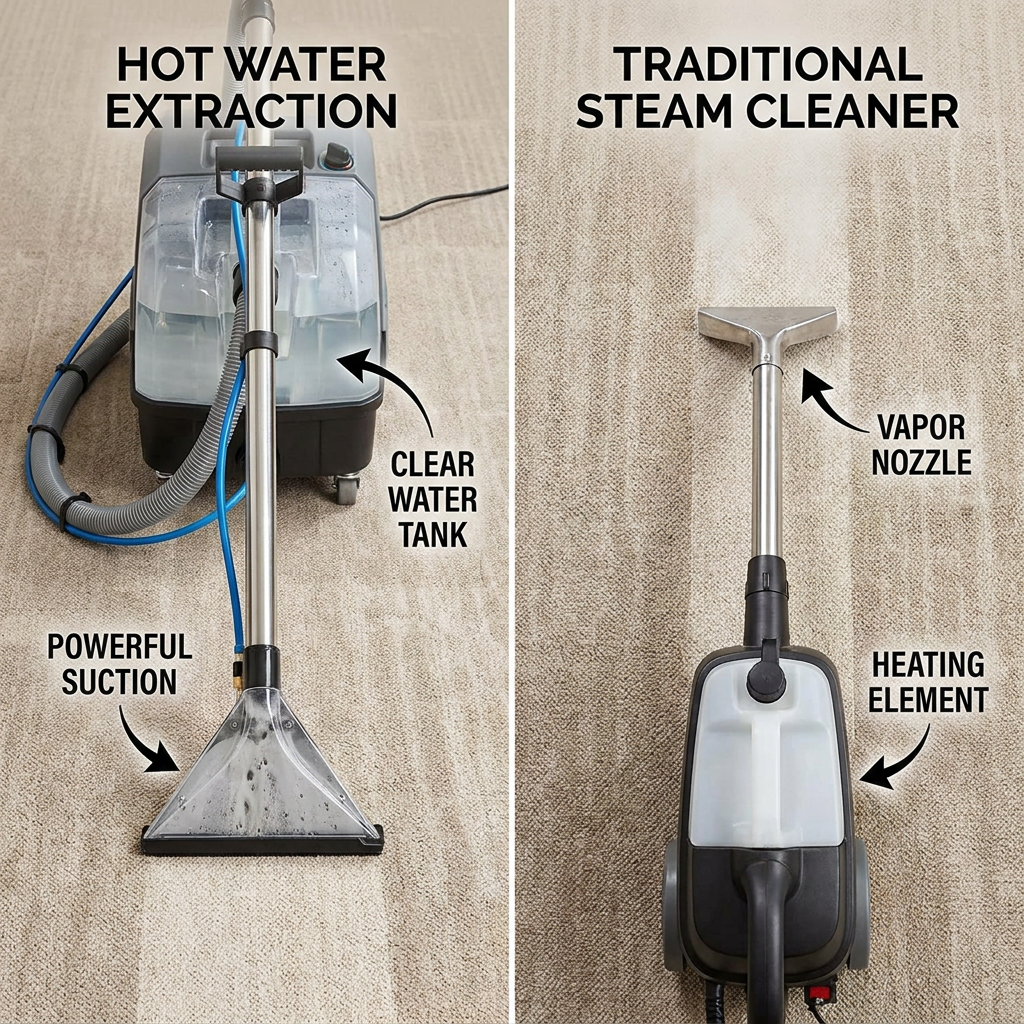
Method Comparison: Extraction vs Steam vs Low-Moisture
| Factor | Hot Water Extraction | True Steam Cleaning | Low-Moisture Bonnet |
|---|---|---|---|
| Soil Removal Depth | Deep (to carpet backing) | Surface only | Top third of pile |
| Drying Time | 4 to 8 hours | 30 minutes to 2 hours | 1 to 2 hours |
| Cost per Square Foot | $0.15 to $0.50 | $0.10 to $0.30 | $0.06 to $0.25 |
| Bacteria Removal | Up to 97% | Surface sanitization | Limited |
| Best Application | Restorative cleaning | Hard surfaces | Interim maintenance |
| Warranty Compliance | Manufacturer approved | Not recommended | Supplemental only |
When Hot Water Extraction is the Right Choice
High-traffic commercial environments benefit most from hot water extraction. Office lobbies, retail aisles, healthcare corridors, and restaurant dining areas accumulate soil rapidly. According to RBM Services, professional extraction extends commercial carpet life by removing abrasive particles that cut fibers with every footstep. Without periodic deep extraction, carpet in 500-visitor-per-day environments shows visible wear within 18 to 24 months.
Restorative cleaning situations demand extraction. End-of-lease cleanouts, post-construction cleanup, and water damage recovery all require the flushing power that only extraction provides. Bonnet cleaning or steam alone cannot remove construction dust embedded in carpet backing or restore water-damaged fibers to acceptable condition.
Healthcare facilities and schools face stricter hygiene requirements. The Centers for Disease Control and Prevention (CDC) guidelines for environmental infection control recommend methods that remove, rather than simply redistribute, contaminants. Hot water extraction satisfies this requirement by physically removing allergens, bacteria, and pathogens from the facility.
When Low-Moisture Methods Work Better
Facilities that cannot tolerate extended drying times benefit from low-moisture bonnet or encapsulation cleaning. Call centers, 24-hour operations, and retail stores during peak seasons need carpets back in service within 1 to 2 hours. Low-moisture methods use 90% less water than extraction, dramatically reducing dry time.
Interim maintenance between deep cleanings is the ideal application for bonnet methods. A commercial office with 200 employees should schedule commercial carpet cleaning using low-moisture techniques monthly and hot water extraction every 6 to 12 months. This combined approach maintains appearance while controlling long-term soil buildup.
Delicate natural fiber carpets, including wool, silk, and jute, may require gentler approaches. These materials can shrink, distort, or lose color when exposed to the water volumes used in extraction. A qualified technician can assess fiber content and recommend appropriate methods. Synthetic commercial carpets, which comprise 95% of installations, tolerate extraction without issue.
Cleaning Frequency Guidelines by Facility Type
Commercial carpet cleaning frequency depends on foot traffic, soil load, and facility type. The Building Service Contractors Association International (BSCAI) publishes maintenance schedules that facility managers across Miami-Dade, Broward, and Palm Beach Counties reference for budgeting. These recommendations account for South Florida's humidity, which accelerates mold growth in improperly maintained carpets.
| Facility Type | Hot Water Extraction | Interim Low-Moisture |
|---|---|---|
| Healthcare Facilities | Every 3 to 4 months | Monthly |
| Retail (High Traffic) | Every 3 to 6 months | Every 2 to 4 weeks |
| Corporate Offices | Every 6 to 12 months | Quarterly |
| Schools and Universities | Every 4 to 6 months | Monthly during sessions |
| Restaurants and Hospitality | Every 3 to 4 months | Weekly to biweekly |
Cost Analysis for South Florida Commercial Facilities
Commercial carpet cleaning costs in Miami-Dade, Broward, and Palm Beach Counties range from $0.15 to $0.50 per square foot for hot water extraction. Minimum service charges typically start at $200 to $300 regardless of area size. A 10,000 square foot office can expect to pay $1,500 to $3,500 for comprehensive extraction cleaning with pre-treatment, spot removal, and deodorizing.
Low-moisture interim cleaning costs $0.06 to $0.25 per square foot. The same 10,000 square foot office would pay $600 to $1,500 for bonnet or encapsulation service. Combining both methods in an annual maintenance program typically costs 15% to 25% less than extraction-only approaches while delivering better long-term results.
After-hours and weekend scheduling adds 10% to 20% to base pricing. Healthcare facilities requiring infection control protocols or HIPAA-compliant service may see additional charges of $0.05 to $0.10 per square foot. These premiums reflect specialized training, documentation requirements, and liability considerations. For detailed pricing across all floor types, review our South Florida commercial cleaning cost comparison.
Equipment Differences That Affect Results
Truckmount extractors deliver superior results compared to portable units. These vehicle-mounted systems generate water temperatures 50 to 100 degrees higher and vacuum pressures 40% stronger than portable equipment. The unlimited hot water supply means technicians never compromise cleaning power mid-job. Facilities with 5,000 or more square feet of carpet should specify truckmount service.
Portable extractors serve smaller spaces and areas truckmounts cannot reach. High-rise office buildings, interior rooms far from parking access, and facilities with security restrictions may require portable equipment. Quality portable units from Mytee, EDIC, and Sandia can deliver acceptable results when operators compensate with additional passes and dwell time.
True steam cleaners from manufacturers like Dupray, Reliable, and Vapor Clean produce excellent results on hard surfaces. According to US Cleaning Tools, these units excel at sanitizing tile, grout, and sealed hard floors. However, their limited water output and lack of extraction capability make them unsuitable as primary carpet cleaning equipment.
Indoor Air Quality and Health Considerations
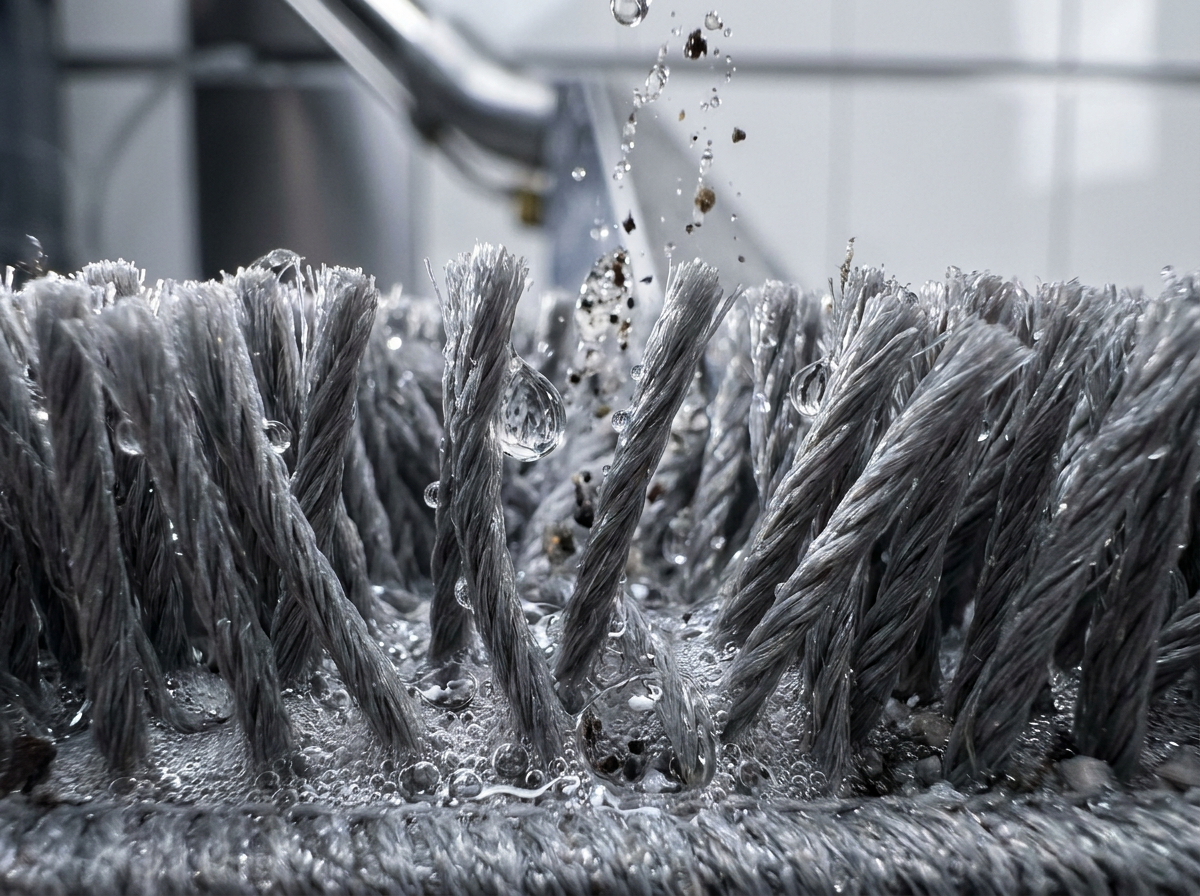
Commercial carpets trap 8 to 10 times their weight in soil, allergens, and biological contaminants. The Environmental Protection Agency (EPA) identifies carpets as significant reservoirs for indoor air pollutants. Regular extraction cleaning improves measurable indoor air quality by removing these accumulated contaminants rather than simply suppressing them.
Healthcare facilities face Joint Commission and state health department requirements for environmental cleanliness. Hot water extraction satisfies these requirements when performed by trained technicians using appropriate chemistry. Facilities seeking comprehensive infection control should integrate carpet care with commercial air duct cleaning for maximum impact on indoor air quality.
Employees in buildings with poorly maintained carpets report 20% to 40% more respiratory symptoms, headaches, and fatigue according to occupational health research. The cost of absenteeism and reduced productivity far exceeds the investment in proper carpet maintenance. A 200-employee office losing one sick day per employee annually to poor air quality sacrifices $40,000 to $60,000 in productivity.
Frequently Asked Questions
Do professional carpet cleaners use steam?
Professional carpet cleaners primarily use hot water extraction, not true steam. The equipment heats water to 150 to 200 degrees Fahrenheit and injects it under pressure into carpet fibers. Vacuum systems immediately extract the dirty water. This process is often called "steam cleaning" but produces no actual steam. True steam cleaners, which generate vapor at 212 degrees or higher, work better for hard surfaces than carpets.
Do steam cleaners work better than carpet cleaners?
Carpet extractors outperform steam cleaners for carpet deep cleaning. Steam cleaners lack the water volume to flush embedded soil from carpet fibers and have no extraction capability to remove dissolved contaminants. Steam cleaners excel at sanitizing hard surfaces like tile, grout, and sealed floors. For carpets, hot water extraction with a commercial carpet extractor delivers superior soil removal, allergen reduction, and long-term fiber preservation.
Is a carpet extractor better than a carpet cleaner?
Carpet extractors represent the professional-grade category of carpet cleaning equipment. Consumer-grade "carpet cleaners" from brands like Bissell and Hoover use similar principles but with significantly less water pressure, heat, and vacuum power. Commercial extractors remove 2 to 3 times more soil than consumer units. For facilities with more than 1,000 square feet of carpet, professional extraction services deliver better results than any consumer equipment.
Do commercial carpet cleaners work better than home carpet cleaners?
Commercial carpet cleaning equipment dramatically outperforms residential units. Truckmount extractors generate 200 to 250 degree water temperatures compared to 120 to 140 degrees from home machines. Vacuum recovery rates reach 14 inches of mercury versus 4 to 6 inches for consumer units. These differences translate to 60% to 80% better soil removal, faster drying times, and longer-lasting results. Facilities investing in professional commercial cleaning see carpet lifespans extend by 3 to 5 years.
Choosing the Right Method for Your Facility
The optimal approach combines hot water extraction for periodic deep cleaning with low-moisture methods for interim maintenance. This strategy balances thorough soil removal with operational convenience. Most commercial facilities in South Florida benefit from quarterly to semi-annual extraction with monthly bonnet or encapsulation cleaning.
Facility managers should request documentation of equipment specifications, technician certifications, and cleaning chemistry from prospective vendors. IICRC certification indicates training in proper techniques and equipment operation. Insurance certificates should show general liability coverage of $1 million or more for commercial work.
After-hours availability matters for facilities that cannot close during business hours. Professional commercial cleaning companies offer evening, overnight, and weekend scheduling to minimize disruption. Carpet cleaned at 8 PM can be fully dry and ready for traffic by 6 AM the following morning with proper equipment and technique.
For a comprehensive assessment of your facility's carpet cleaning needs, contact a commercial cleaning services provider serving Miami-Dade, Broward, and Palm Beach Counties. Professional evaluation considers traffic patterns, soil load, carpet type, and operational constraints to recommend the most effective maintenance program.
Get a Free Commercial Carpet Assessment
MB Floor Solutions provides professional commercial carpet cleaning across Miami-Dade, Broward, and Palm Beach Counties. Our team will evaluate your facility and recommend the right combination of extraction and maintenance methods for your specific needs.
Request Your Free Quote