Learn proven methods to remove black scuff marks from VCT, LVT, and commercial floors permanently. Includes prevention strategies and when to call professionals.
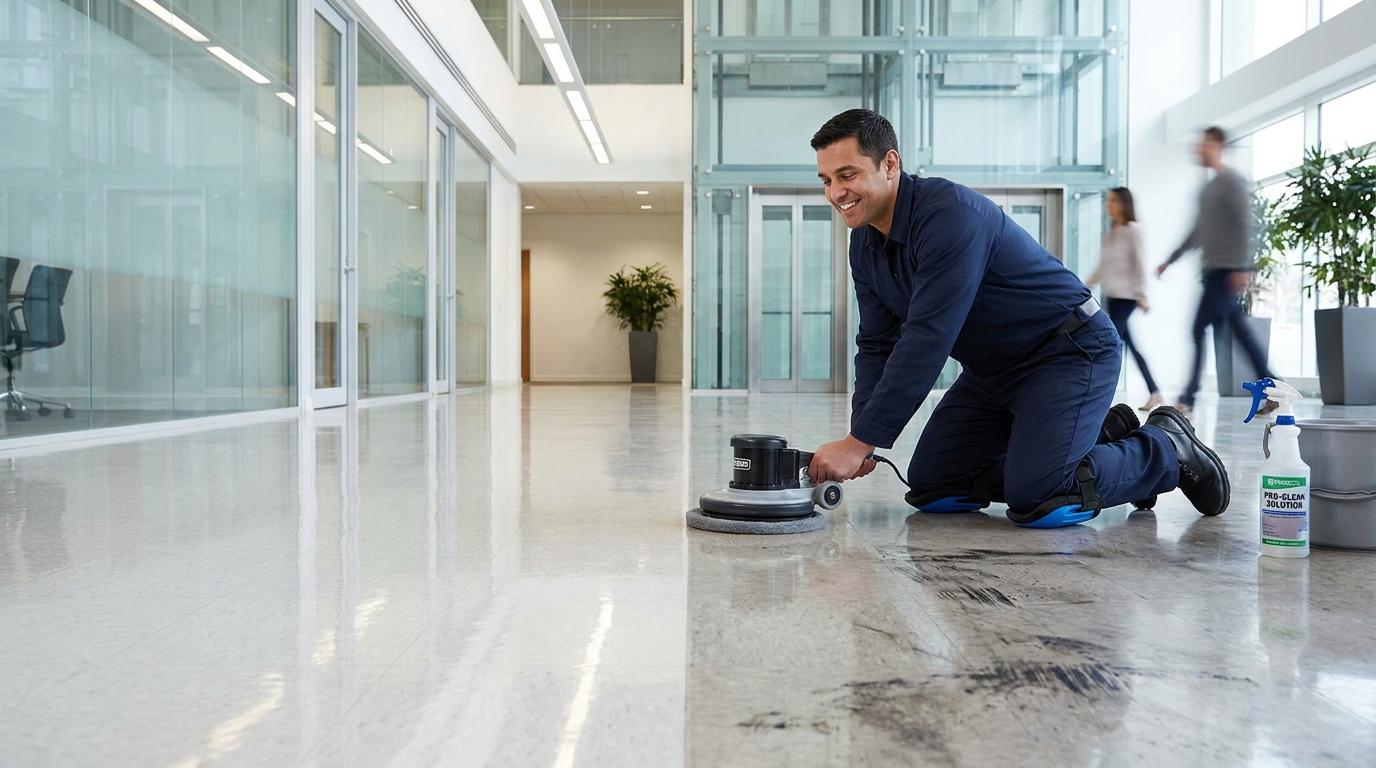
Black scuff marks on commercial floors are removed permanently by addressing both the surface residue and the underlying floor finish. Tennis balls work for light marks, while melamine foam erasers and commercial degreasers handle stubborn scuffs. For lasting results, facilities must combine proper removal techniques with protective floor finishes that resist future marking.
- Tennis balls remove 70-80% of light scuff marks without chemicals in under 30 seconds per mark
- Melamine foam erasers (Magic Eraser) eliminate stubborn scuffs but can dull floor finish if overused
- Commercial floor finish with 3-5 coats provides 6-12 months of scuff resistance on VCT floors
- Prevention through non-marking rubber wheels and entrance matting reduces scuff marks by 60-75%
- Professional scrub and recoat services cost $0.25-0.45 per square foot and restore scuff-resistant finish
Why Black Scuff Marks Appear on Commercial Floors
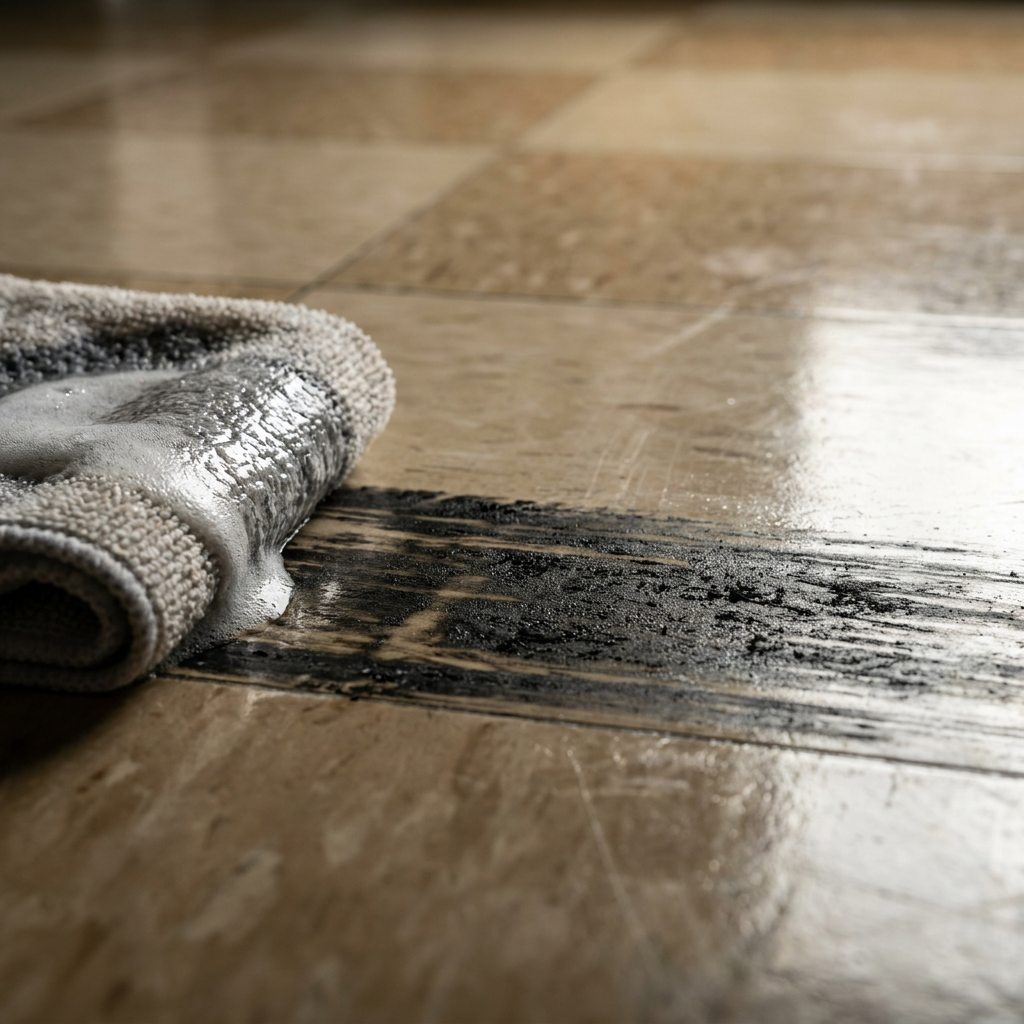
Scuff marks are oil-based rubber deposits transferred from shoe soles, equipment wheels, and furniture legs onto floor surfaces. According to Imperial Dade's floor care research, these marks consist of carbon black pigment mixed with rubber polymers that bond to floor finishes through friction and heat generated during contact.
VCT (vinyl composition tile) and LVT (luxury vinyl tile) floors in South Florida commercial buildings are particularly susceptible. The combination of high foot traffic, humidity levels averaging 75-85%, and frequent equipment movement creates ideal conditions for scuff accumulation. Healthcare facilities, retail stores, and educational institutions report the highest scuff mark frequency.
Standard mopping and daily cleaning cannot remove these marks because water-based cleaners do not dissolve oil-based rubber deposits. The marks penetrate the top layer of floor finish, requiring mechanical action or chemical solvents for complete removal.
Four Proven Methods for Scuff Mark Removal
Method 1: Tennis Ball Technique
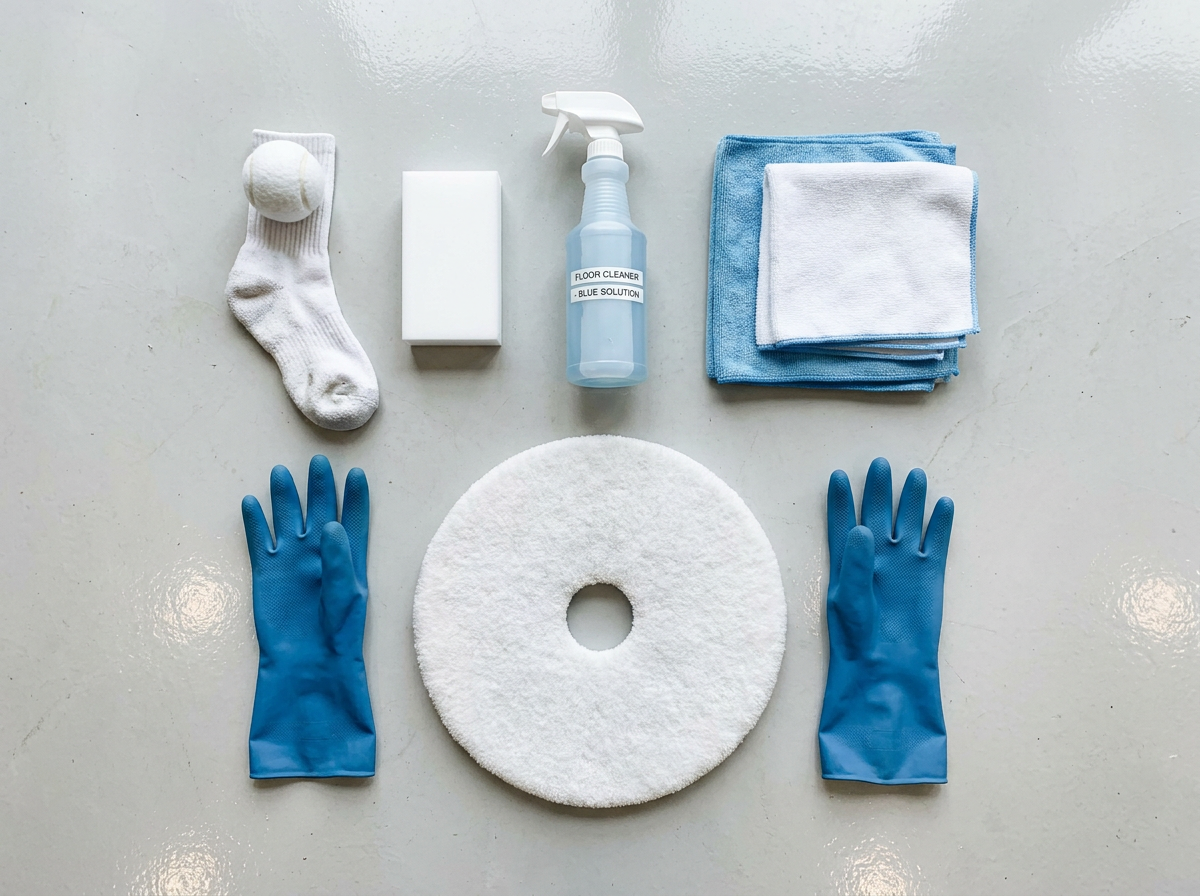
The tennis ball method removes light to moderate scuff marks without chemicals or equipment. Cut an X-shaped slit in a tennis ball and attach it to a broom handle for standing operation. The felt exterior acts as a mild abrasive that lifts rubber deposits without damaging floor finish.
This technique works best on fresh marks less than 48 hours old. Apply moderate downward pressure and rub in circular motions for 15-30 seconds per mark. Facilities report 70-80% success rates on standard VCT and LVT flooring. The method fails on deeply embedded marks or floors with worn finish.
Method 2: Melamine Foam Erasers
Melamine foam products like Mr. Clean Magic Eraser work through microscopic abrasion. The foam's structure contains millions of tiny air pockets that act like fine sandpaper at 3,000-4,000 grit. According to Lowe's floor care guidelines, these erasers remove stubborn marks that resist other methods.
Dampen the eraser with water and apply light pressure in circular motions. Avoid excessive scrubbing, which can dull floor finish and create visible patches. Test in an inconspicuous area first. Replace erasers when they compress to less than half their original thickness.
Method 3: Commercial Degreaser Application
Oil-based scuff marks respond to commercial degreasers formulated for hard floor surfaces. Products containing d-limonene (citrus-based solvent) or butyl-based cleaners dissolve rubber deposits without damaging most floor finishes. Apply directly to marks, allow 2-3 minutes dwell time, then agitate with a white scrub pad.
Rinse thoroughly after treatment. Residual degreaser left on floors attracts dirt and can compromise floor finish adhesion during future maintenance. This method works on all commercial floor types including concrete, epoxy, and terrazzo.
Method 4: Auto-Scrubber with Scuff Removal Pad
For facilities with widespread scuff marks across large areas, auto-scrubbers equipped with red or white scrub pads provide efficient removal. Set the machine to low speed (175-300 RPM) and use a neutral pH cleaner. Higher speeds and aggressive pads risk stripping floor finish.
This method combines removal with routine maintenance. Facilities servicing 10,000+ square feet find auto-scrubbing more cost-effective than spot treatment. Professional commercial floor scrubbing and waxing services complete this process in 2-4 hours for mid-sized facilities.
Removal Methods Comparison by Floor Type
| Floor Type | Best Method | Avoid | Time Per Mark |
|---|---|---|---|
| VCT (Vinyl Composition Tile) | Tennis ball or melamine foam | Acetone, harsh solvents | 15-45 seconds |
| LVT (Luxury Vinyl Tile) | Melamine foam with light pressure | Abrasive pads, steel wool | 20-60 seconds |
| Concrete/Epoxy | Commercial degreaser | Acidic cleaners | 2-3 minutes |
| Terrazzo | pH-neutral cleaner with soft pad | Vinegar, citrus cleaners | 30-90 seconds |
| Marble | Stone-safe cleaner only | All abrasives, acidic products | 1-2 minutes |
| Linoleum | Baking soda paste | Ammonia, bleach | 1-3 minutes |
How to Get Scuff Marks Off Concrete Floors
Concrete floors in warehouses and manufacturing facilities present unique challenges. The porous surface allows rubber deposits to penetrate deeper than sealed floors. Start with a commercial degreaser at full concentration applied directly to marks. Allow 5-7 minutes dwell time before scrubbing with a stiff nylon brush.
For sealed concrete or epoxy-coated floors, use the same approach but reduce dwell time to 2-3 minutes to prevent finish damage. Pressure washing at 2,000-3,000 PSI removes stubborn marks on unsealed concrete but requires proper wastewater containment in commercial settings.
Facilities with persistent concrete floor scuff issues benefit from commercial floor deep cleaning services that combine mechanical scrubbing with industrial-grade chemistry. These treatments remove embedded marks while preparing surfaces for protective sealers.
Are Scuff Marks Permanent?
Scuff marks are not permanent when addressed promptly with appropriate methods. Fresh marks (under 72 hours old) remove with 85-95% success using basic techniques. Marks left untreated for weeks or months become increasingly difficult as rubber polymers oxidize and bond more firmly to floor surfaces.
The appearance of permanence often indicates worn or damaged floor finish rather than irremovable marks. When scuffs resist multiple removal attempts, the underlying finish has likely deteriorated. Professional assessment determines whether spot treatment or complete floor refinishing provides the most cost-effective solution.
Certain floor types show scuffs more prominently. High-gloss finishes and light-colored flooring display marks that would be invisible on matte or darker surfaces. This visibility difference affects perception but not actual removability.
Prevention Strategies for Long-Term Results
Floor Finish as Scuff Barrier
Commercial floor finish creates a sacrificial layer that absorbs scuff marks instead of the flooring material itself. Quality finishes from manufacturers like Diversey, Betco, and Spartan Chemical provide 6-12 months of protection when properly applied. The ISSA (International Sanitary Supply Association) recommends 3-5 coats for high-traffic commercial environments.
Professional commercial floor stripping and waxing services in South Florida typically cost $0.85-1.20 per square foot depending on county and facility type. This investment provides scuff resistance while improving overall floor appearance and extending flooring lifespan.
Equipment and Furniture Modifications
Replace standard black rubber wheels and casters with non-marking alternatives. Gray or white rubber compounds contain less carbon black pigment and leave minimal residue. Polyurethane wheels eliminate marking entirely but cost 2-3 times more than standard rubber.
Install felt pads or non-marking glides on furniture legs. Replace worn pads every 6-12 months or when black residue becomes visible on pad surfaces. Chair mats under rolling office chairs reduce floor contact and associated scuffing by 80-90%.
Entrance Matting Systems
Proper entrance matting captures abrasive particles and reduces shoe-related scuffing throughout facilities. The Carpet and Rug Institute recommends 15-18 feet of matting at each entrance for effective soil capture. This length allows 6-8 footsteps per person, removing most debris before it reaches interior floors.
Commercial-grade entrance mats with scraper and wiper zones cost $50-150 per linear foot but reduce interior floor maintenance costs by 40-60%. Weekly mat cleaning maintains effectiveness and prevents captured soil from redistributing.
When to Call Professional Floor Care Services
DIY methods work for isolated scuff marks and routine maintenance. Professional intervention becomes necessary when marks cover more than 10% of floor area, when removal attempts damage floor finish, or when scuffs reappear within days of treatment.
Commercial floor care professionals bring industrial equipment and chemistry unavailable to facility staff. Auto-scrubbers with variable speed drives, burnishing machines operating at 1,500-2,500 RPM, and commercial-grade finish products deliver results impossible to replicate with consumer tools.
Facilities in Miami-Dade, Broward, and Palm Beach Counties face additional challenges from humidity and sand infiltration. Local professionals understand these regional factors and adjust techniques accordingly. MB Floor Solutions provides free on-site assessments to evaluate floor conditions and recommend appropriate treatment plans.
Cost Comparison: DIY vs Professional Treatment
| Approach | Cost (5,000 sq ft facility) | Time Required | Results Duration |
|---|---|---|---|
| Tennis ball spot treatment | $5-15 (supplies) | 2-4 hours staff time | 1-2 weeks |
| Melamine foam treatment | $25-50 (supplies) | 3-5 hours staff time | 2-4 weeks |
| Professional scrub and recoat | $1,250-2,250 | 3-5 hours (after hours) | 3-6 months |
| Professional strip and wax | $4,250-6,000 | 6-10 hours (overnight) | 6-12 months |
The cost analysis reveals that professional services provide better long-term value for facilities with recurring scuff issues. While DIY methods cost less upfront, the labor hours required and shorter results duration often make professional treatment more economical over 12-month periods.
Maintenance Schedule for Scuff-Free Floors
Implementing a structured maintenance schedule prevents scuff accumulation and extends floor finish life. The Building Service Contractors Association International (BSCAI) recommends the following frequency based on traffic levels:
Daily: Dust mop all hard floor surfaces to remove abrasive particles. Spot treat visible scuff marks using tennis ball or melamine foam methods. This takes 15-30 minutes for a 5,000 square foot facility.
Weekly: Damp mop with neutral pH cleaner. Inspect high-traffic areas for scuff accumulation. Address problem areas before marks become embedded. Budget 1-2 hours for thorough weekly maintenance.
Monthly: Auto-scrub all hard floor areas or schedule professional scrubbing service. This removes embedded soil and light scuffs while refreshing floor appearance. Professional services complete monthly maintenance in 2-4 hours for mid-sized facilities.
Quarterly to Semi-annually: Professional scrub and recoat service applies 1-2 fresh finish coats over existing floor finish. This restores scuff resistance without the time and cost of complete stripping. Schedule during low-occupancy periods for minimal disruption.
Annually: Complete strip and wax service removes all old finish and applies fresh coats. This addresses accumulated damage and resets floor protection. Most South Florida commercial facilities benefit from annual refinishing due to high humidity and traffic levels.
Special Considerations for Healthcare and Retail Facilities
Healthcare facilities face strict infection control requirements that limit cleaning product options. The CDC and EPA provide lists of approved disinfectants and cleaners for medical environments. Scuff removal products must appear on these lists or receive facility infection control approval before use.
Hospitals and clinics also require minimal floor drying time to prevent slip hazards. Low-moisture methods like tennis ball and melamine foam work well in these settings. For larger treatment areas, professional services using fast-drying chemistry complete work during low-census periods.
Retail environments prioritize appearance and cannot tolerate visible floor damage during business hours. After-hours and overnight service scheduling allows complete scuff removal without customer impact. Many South Florida retailers schedule monthly maintenance between 10 PM and 6 AM to maintain pristine floor appearance.
Frequently Asked Questions
How to get black scuff marks off flooring?
Start with the least aggressive method appropriate for your floor type. Tennis balls work for light marks on VCT and LVT. Melamine foam erasers handle stubborn scuffs on most surfaces. Commercial degreasers remove deep marks from concrete and epoxy. Always test in an inconspicuous area first and avoid abrasive methods on natural stone or unsealed surfaces.
What removes black scuff marks most effectively?
Melamine foam erasers remove the widest range of scuff marks across floor types. The microscopic abrasive action lifts rubber deposits without harsh chemicals. For extremely stubborn marks, commercial degreasers containing d-limonene or butyl compounds dissolve rubber polymers that resist mechanical removal.
How do you remove tire marks from commercial floors?
Tire marks from forklifts, pallet jacks, and delivery vehicles require stronger treatment than shoe scuffs. Apply commercial degreaser at full concentration and allow 5-10 minutes dwell time. Agitate with a stiff brush or floor machine equipped with a stripping pad. Multiple treatments may be necessary for heavy deposits. Consider installing polyurethane wheel covers on frequently used equipment to prevent future marking.
Can vinegar remove scuff marks from floors?
Vinegar is ineffective for scuff mark removal and can damage certain floor types. The acetic acid in vinegar does not dissolve oil-based rubber deposits. Additionally, vinegar etches marble, terrazzo, and other calcium-based flooring materials. Avoid vinegar on waxed floors as it strips finish and dulls appearance.
How often should commercial floors be maintained to prevent scuff buildup?
High-traffic commercial facilities require daily dust mopping, weekly damp mopping, and monthly deep cleaning or auto-scrubbing. Professional scrub and recoat services every 3-6 months maintain scuff-resistant finish. Annual strip and wax service provides complete floor restoration. Facilities with heavy equipment traffic may need more frequent professional maintenance.
Get a Free Floor Assessment
MB Floor Solutions provides free on-site evaluations for commercial facilities in Miami-Dade, Broward, and Palm Beach Counties. Our team identifies the best approach for your specific floor type and scuff severity, with after-hours scheduling available.
Schedule Your Free Assessment