Commercial floor stripping and waxing costs $0.50 to $3.00 per square foot. Learn the exact breakdown of labor, materials, equipment, and hidden fees.
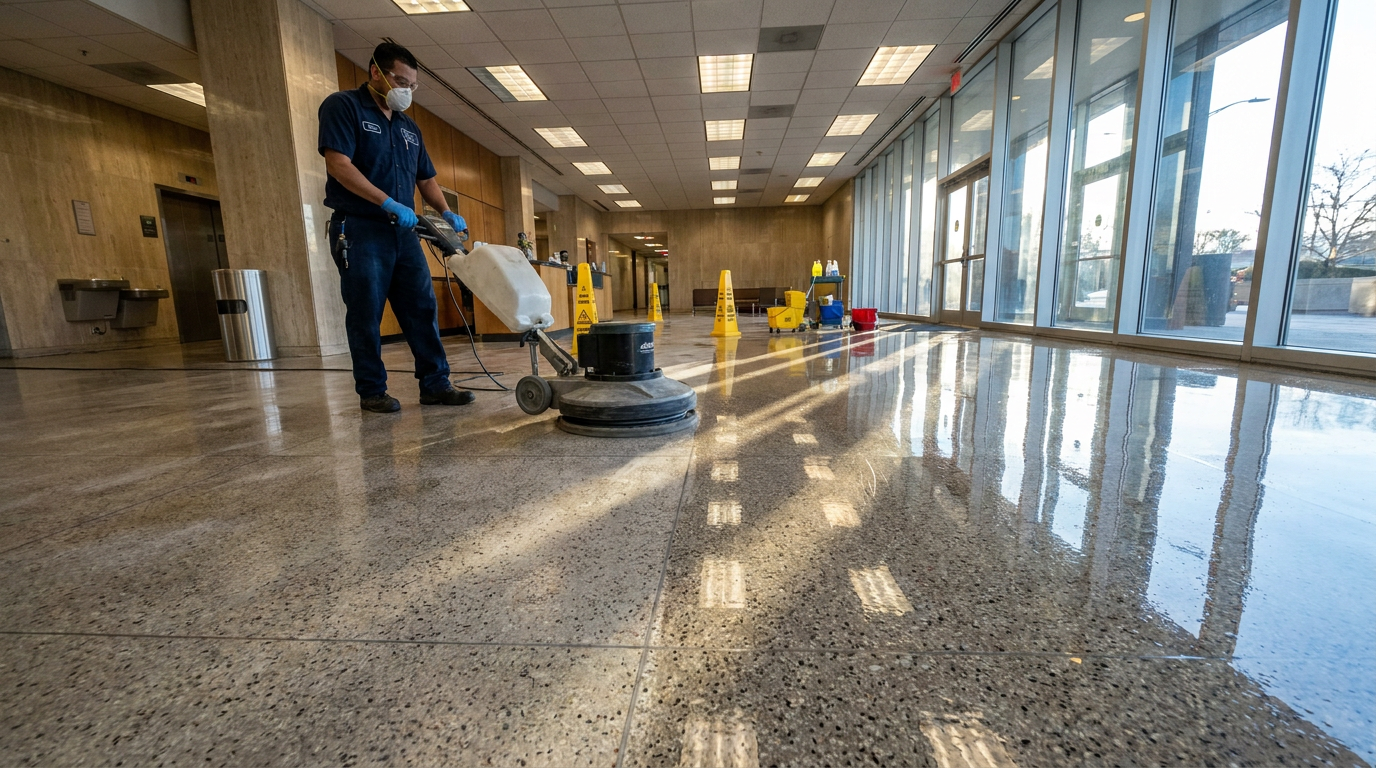
Commercial floor stripping and waxing costs between $0.50 and $3.00 per square foot, with most South Florida facilities paying $0.80 to $1.20 per square foot for professional service. The total breaks down into four components: labor (45 to 55 percent), materials (20 to 25 percent), equipment (15 to 20 percent), and overhead plus profit margin (10 to 15 percent).
- Labor accounts for 45 to 55 percent of total cost, averaging $35 to $65 per hour for trained technicians
- A 10,000 square foot commercial space typically costs $8,500 to $12,000 for complete strip and wax
- Three to five coats of floor finish are standard; each additional coat adds $0.08 to $0.12 per square foot
- After-hours service adds 15 to 25 percent to base pricing but eliminates business disruption
- Miami-Dade facilities pay $0.85 to $1.15 per square foot; Palm Beach runs $0.90 to $1.20 per square foot
The Four Cost Components of Floor Stripping and Waxing
Every quote you receive for commercial floor stripping and waxing contains four distinct cost categories. Understanding these components helps facility managers evaluate bids accurately and negotiate from an informed position. According to The Janitorial Store, floor care represents one of the most profitable service categories for cleaning companies, which means pricing varies significantly between providers.
The International Sanitary Supply Association (ISSA) publishes cleaning time standards that professional companies use for bidding. These standards indicate that stripping requires 250 to 350 square feet per labor hour, while wax application covers 1,500 to 2,000 square feet per labor hour. These benchmarks explain why labor dominates your invoice.
Labor: The Largest Line Item at 45 to 55 Percent
Skilled floor technicians in South Florida command $35 to $65 per hour, depending on experience and certifications. A 5,000 square foot office requires approximately 14 to 20 labor hours for complete stripping and 2.5 to 3.5 hours for wax application. This translates to $490 to $1,300 in labor costs before materials, equipment, or profit margin.
Labor costs fluctuate based on floor condition. Floors with heavy wax buildup from years of improper maintenance require 30 to 50 percent more stripping time. Healthcare facilities following CDC cleaning guidelines often need additional labor for compliance documentation and specialized protocols.
Materials: 20 to 25 Percent of Your Invoice
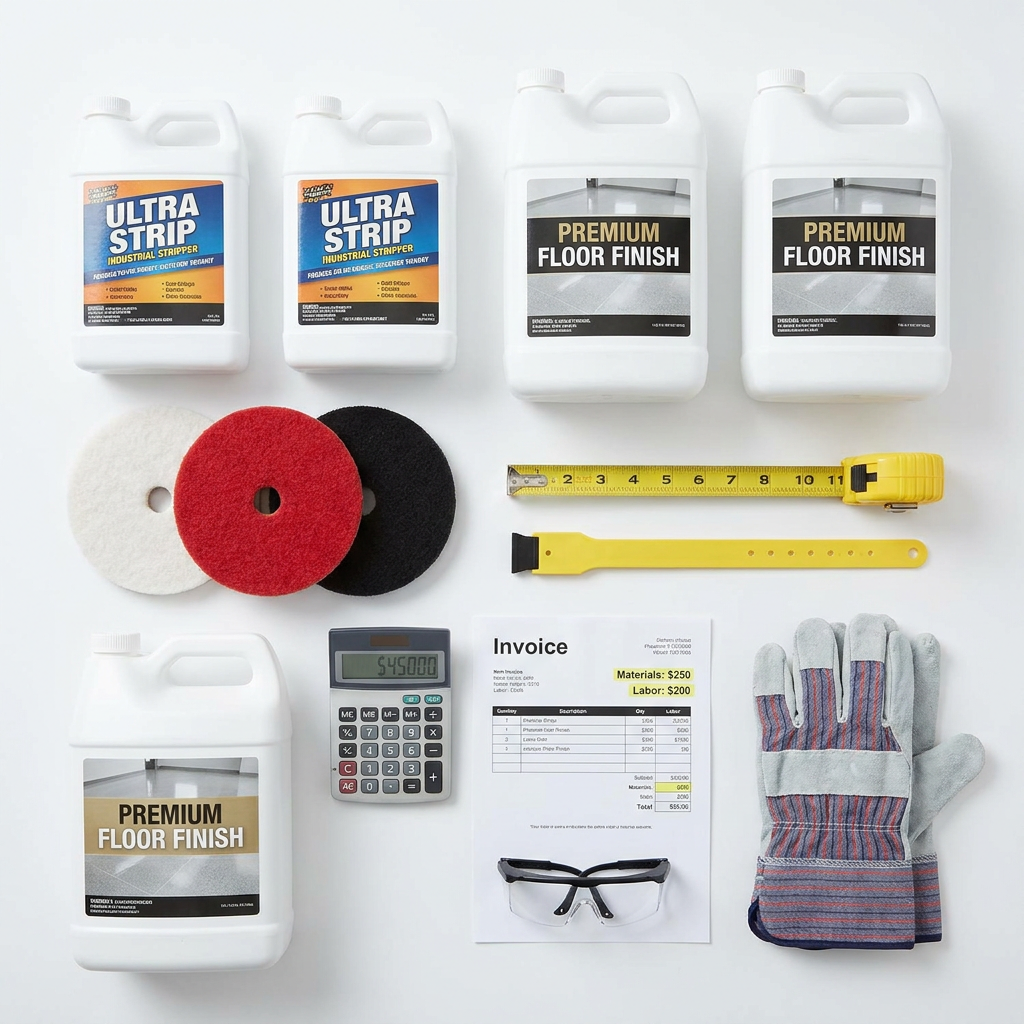
Floor stripping chemicals, wax finish, and consumables constitute the second-largest expense category. Commercial-grade floor stripper costs $15 to $40 per gallon, with coverage rates of 400 to 600 square feet per gallon depending on wax buildup thickness. High-solids floor finish ranges from $45 to $120 per five-gallon pail, covering 1,800 to 2,200 square feet per gallon per coat.
A standard three-coat application on 5,000 square feet requires approximately seven gallons of finish, costing $63 to $168 in materials. Five-coat applications for high-traffic areas like retail stores or school corridors increase material costs by 40 to 67 percent.
Equipment: 15 to 20 Percent Allocation
Professional floor care demands specialized equipment that most facilities do not own. According to Homewyse cost data, equipment allowances for a typical project run $35 to $53 for daily rental of a 24-inch rotary floor machine. Auto-scrubbers, wet vacuums, and burnishing equipment add another $75 to $150 per project day.
Companies that own their equipment amortize these costs across multiple jobs. A commercial-grade 20-inch floor machine costs $1,200 to $2,500, while ride-on auto-scrubbers range from $8,000 to $25,000. These capital investments factor into per-square-foot pricing even when not itemized separately.
Overhead and Profit Margin: 10 to 15 Percent
Insurance, workers compensation, vehicle costs, administrative expenses, and profit margin comprise the final cost component. Commercial cleaning companies in Florida carry general liability coverage of $1 million to $2 million per occurrence, with annual premiums of $2,500 to $8,000. Workers compensation insurance adds 8 to 15 percent to labor costs.
Reputable companies maintain profit margins of 8 to 15 percent after covering all direct and indirect costs. Quotes significantly below market rates often indicate inadequate insurance coverage, undertrained staff, or corner-cutting on materials.
Complete Cost Breakdown by Square Footage
The following table provides detailed cost breakdowns for common commercial facility sizes in South Florida. These figures reflect 2026 pricing for VCT, LVT, and commercial vinyl sheet flooring in average condition requiring standard three to five coat applications.
| Facility Size | Labor Cost | Materials | Equipment | Total Range |
|---|---|---|---|---|
| 2,500 sq ft (small office) | $875 to $1,375 | $375 to $625 | $150 to $250 | $1,750 to $2,875 |
| 5,000 sq ft (medical clinic) | $1,750 to $2,750 | $750 to $1,250 | $250 to $400 | $3,500 to $5,500 |
| 10,000 sq ft (retail store) | $3,500 to $5,500 | $1,500 to $2,500 | $400 to $650 | $7,000 to $11,000 |
| 25,000 sq ft (school) | $8,750 to $13,750 | $3,750 to $6,250 | $750 to $1,250 | $17,500 to $27,500 |
| 50,000 sq ft (warehouse) | $15,000 to $22,500 | $6,500 to $10,000 | $1,200 to $2,000 | $30,000 to $45,000 |
These ranges assume standard business-hours scheduling. Facilities requiring overnight or weekend service should budget an additional 15 to 25 percent for after-hours premiums.
Regional Pricing Variations Across South Florida
Floor stripping and waxing costs vary by county due to differences in labor markets, commercial real estate density, and competitive landscapes. According to HomeGuide's 2026 pricing data, location significantly impacts what businesses pay for identical services.
Miami-Dade County facilities typically pay $0.85 to $1.15 per square foot for professional strip and wax service. The dense commercial market in areas like Brickell, Coral Gables, and Doral creates competitive pricing, though parking constraints and loading dock access can add surcharges of $50 to $150 per visit.
Broward County pricing runs slightly lower at $0.80 to $1.10 per square foot. Fort Lauderdale, Hollywood, and Pembroke Pines offer easier facility access compared to Miami-Dade, reducing logistical costs that get passed to customers.
Palm Beach County commands premium pricing of $0.90 to $1.20 per square foot. Higher commercial rents, longer travel distances between job sites, and affluent market expectations contribute to elevated rates in West Palm Beach, Boca Raton, and Jupiter.
Floor Type Impact on Stripping and Waxing Costs
Not all commercial flooring responds identically to stripping and waxing processes. The flooring material directly affects chemical selection, labor time, and finish compatibility. Understanding these differences helps facility managers budget accurately and avoid surprise charges.
VCT (Vinyl Composition Tile): The Industry Standard
VCT remains the most common commercial flooring in schools, healthcare facilities, and retail environments. Standard stripping and waxing protocols apply, with costs falling within typical ranges of $0.80 to $1.20 per square foot. VCT accepts multiple finish coats well and responds predictably to commercial strippers.
Armstrong Flooring, Mannington Commercial, and Tarkett manufacture the majority of VCT installed in South Florida commercial spaces. These products require pH-neutral daily cleaners and periodic scrub and recoat maintenance between full strip cycles.
LVT (Luxury Vinyl Tile): Premium Pricing Considerations
LVT flooring from manufacturers like Shaw Contract, Interface, and Karndean requires modified stripping procedures. Many LVT products feature factory-applied polyurethane coatings that react poorly to aggressive strippers. Costs run 15 to 30 percent higher than VCT at $0.95 to $1.50 per square foot.
Some LVT installations should not receive traditional wax applications. Facility managers should verify manufacturer recommendations before authorizing strip and wax services. Improper treatment voids warranties and can permanently damage the flooring surface.
Linoleum: Specialized Chemical Requirements
Genuine linoleum from Forbo Marmoleum or Armstrong requires alkaline-sensitive stripping chemicals. Standard floor strippers damage linoleum's linseed oil composition, causing discoloration and surface degradation. Specialized linoleum strippers cost 40 to 60 percent more than standard products.
Labor time increases 20 to 35 percent for linoleum due to gentler stripping processes and longer dwell times. Total costs for linoleum strip and wax range from $1.10 to $1.75 per square foot.
Terrazzo and Marble: Different Process Entirely
Natural stone and terrazzo floors do not receive traditional strip and wax treatment. These surfaces require diamond honing and polishing processes that cost $3.00 to $8.00 per square foot. Facility managers with marble or terrazzo flooring should budget separately from standard VCT maintenance.
Hidden Costs That Inflate Your Final Invoice
The per-square-foot quote you receive rarely represents the complete cost. Several common factors add 10 to 40 percent to initial estimates. Identifying these variables during the bidding process prevents budget overruns and vendor disputes.
Floor Condition Surcharges
Floors with heavy wax buildup, ground-in soil, or previous coating failures require additional stripping passes. Each additional stripping cycle adds $0.15 to $0.25 per square foot. Floors that have not been stripped in three or more years commonly require two to three stripping passes.
Black heel marks, adhesive residue, and rust stains require spot treatment before stripping begins. Spot treatment charges range from $25 to $75 per affected area, depending on stain type and size.
Furniture Moving Fees
Standard quotes assume clear floor space. Moving desks, chairs, filing cabinets, and equipment adds $0.10 to $0.20 per square foot or $50 to $150 per room. Heavy items like safes, server racks, or medical equipment may require additional labor or specialized moving services.
Facility managers can reduce costs by coordinating internal staff to relocate lightweight furniture before the floor crew arrives. This approach typically saves 8 to 12 percent on total project cost.
After-Hours and Weekend Premiums
Healthcare facilities, retail stores, and schools often require overnight or weekend service to avoid disrupting operations. After-hours premiums add 15 to 25 percent to base pricing. Weekend work commands 20 to 35 percent premiums in most South Florida markets.
Holiday scheduling during Thanksgiving, Christmas, or spring break periods may incur additional premiums of 30 to 50 percent due to limited crew availability.
Minimum Charges for Small Projects
Most professional floor care companies maintain minimum project charges of $350 to $750, regardless of square footage. A 500 square foot break room that would calculate to $400 to $600 based on per-square-foot pricing may still incur the minimum charge, effectively raising the per-square-foot rate to $0.70 to $1.50.
How Number of Wax Coats Affects Pricing
The number of finish coats directly correlates with durability, gloss level, and cost. Understanding the trade-offs helps facility managers make informed decisions based on traffic patterns and maintenance budgets.
| Number of Coats | Added Cost per Sq Ft | Expected Durability | Best Application |
|---|---|---|---|
| 2 coats | Base price | 2 to 4 months | Low-traffic storage areas |
| 3 coats | +$0.08 to $0.10 | 4 to 6 months | Standard offices, clinics |
| 4 coats | +$0.16 to $0.22 | 6 to 9 months | Retail, schools, corridors |
| 5 coats | +$0.24 to $0.34 | 9 to 12 months | High-traffic retail, hospitals |
High-solids floor finishes from manufacturers like Diversey, Betco, and Spartan Chemical offer 18 to 25 percent solids content. These premium products cost more per gallon but require fewer coats to achieve equivalent protection, potentially reducing total project cost for high-traffic applications.
Scrub and Recoat vs. Full Strip: Cost Comparison
Not every floor maintenance cycle requires complete stripping. Scrub and recoat services remove the top layer of worn finish and apply one to two fresh coats, extending the interval between full strip jobs. This maintenance approach costs 40 to 60 percent less than full stripping.
A 10,000 square foot facility paying $8,500 for full strip and wax might spend only $3,400 to $5,100 for scrub and recoat service. Implementing quarterly scrub and recoat cycles can extend full strip intervals from annually to every 18 to 24 months.
The ISSA Cleaning Industry Management Standard (CIMS) recommends scrub and recoat every 60 to 90 days for high-traffic commercial spaces. This maintenance schedule reduces total annual floor care costs by 25 to 35 percent compared to relying solely on annual strip and wax.
Questions Facility Managers Should Ask Before Signing
Evaluating floor care bids requires specific questions that reveal service quality and potential hidden costs. The following inquiries help distinguish professional providers from cut-rate operators.
Insurance and Bonding Verification
Request certificates of insurance showing general liability coverage of at least $1 million per occurrence and workers compensation coverage. Verify the certificate names your facility as an additional insured. Uninsured contractors expose your organization to significant liability if accidents occur.
Chemical and Equipment Specifications
Ask which stripping chemicals and floor finishes the contractor uses. Professional companies specify brand names and product numbers. Vague answers like "commercial grade" or "professional strength" often indicate inferior products that reduce durability.
Crew Size and Timeline
Determine how many technicians will work on your project and the expected completion timeline. A 10,000 square foot facility should require a crew of three to four technicians working eight to ten hours. Quotes promising completion in half that time suggest inadequate stripping or insufficient finish coats.
Warranty and Callback Policy
Reputable companies offer 30 to 90 day warranties covering finish failure, peeling, or yellowing not caused by improper maintenance. Request the warranty terms in writing before signing any service agreement.
DIY vs. Professional Service: True Cost Analysis
Some facility managers consider in-house floor stripping to reduce costs. This approach rarely delivers the expected savings when accounting for all direct and indirect expenses.
Equipment rental for a 5,000 square foot project runs $150 to $300 per day for floor machine, wet vacuum, and mop buckets. Chemical costs add $75 to $150 for stripper and finish. Total material and equipment expenses reach $225 to $450.
However, untrained staff typically require 50 to 100 percent more time than professional crews. A project that professionals complete in eight hours may take in-house staff 12 to 16 hours. At an average loaded labor cost of $25 per hour, this adds $300 to $400 in hidden labor expense.
Quality differences also affect long-term costs. Improperly applied finish fails 30 to 50 percent faster than professional applications, requiring more frequent maintenance cycles. The apparent savings from DIY service often disappear within six to twelve months.
Maximizing Value From Your Floor Care Investment
Strategic decisions before, during, and after strip and wax service significantly impact both immediate costs and long-term floor appearance. These practices help facility managers extract maximum value from every floor care dollar.
Schedule During Low-Traffic Periods
Booking service during naturally slow periods eliminates after-hours premiums. Schools should schedule during summer break or winter holiday. Retail facilities benefit from January or August timing when foot traffic drops 20 to 40 percent from peak seasons.
Bundle Multiple Services
Contractors often discount bundled services by 10 to 20 percent. Combining strip and wax with tile and grout cleaning in restrooms or carpet cleaning in offices reduces mobilization costs that get passed to customers.
Implement Proper Daily Maintenance
Daily dust mopping and weekly damp mopping with pH-neutral cleaners extend finish life by 30 to 50 percent. Placing walk-off mats at entrances captures 80 to 90 percent of incoming soil before it reaches finished floors. These low-cost practices significantly reduce annual floor care expenses.
Establish Annual Service Agreements
Committing to annual or multi-year service agreements typically reduces per-service pricing by 10 to 15 percent. Contractors value predictable revenue and reward customers who provide scheduling certainty. For a comprehensive overview of all available services, visit the commercial cleaning services page.
Frequently Asked Questions About Floor Stripping Costs
How often should commercial floors be stripped and waxed?
Most commercial facilities require full strip and wax every 12 to 18 months, with scrub and recoat service every 60 to 90 days between full strips. High-traffic retail and healthcare environments may need full stripping every 6 to 9 months. Low-traffic office spaces can extend intervals to 18 to 24 months with proper daily maintenance.
Why do quotes vary so much between contractors?
Quote variations of 30 to 50 percent typically reflect differences in insurance coverage, chemical quality, number of finish coats, and labor expertise. The lowest bid often excludes furniture moving, uses inferior products, or applies fewer finish coats. Always compare quotes on equivalent scope before selecting a provider.
Can I strip floors without waxing them?
Stripping without waxing leaves VCT and linoleum vulnerable to permanent staining, moisture damage, and accelerated wear. Bare floors also create slip hazards and violate many commercial lease maintenance requirements. Strip-only service costs 40 to 50 percent of full strip and wax but provides no protective benefit.
What causes floor finish to yellow or peel?
Yellowing results from using ammonia-based cleaners, excessive finish buildup, or UV exposure near windows. Peeling indicates inadequate floor preparation, incompatible finish products, or moisture intrusion from below the slab. Both conditions require complete stripping and proper reapplication to correct.
How long before we can walk on newly waxed floors?
Light foot traffic can resume 30 to 60 minutes after final coat application. Heavy traffic, rolling chairs, and equipment should wait 24 hours for full cure. Premature heavy traffic creates permanent scuff marks and reduces finish durability by 20 to 40 percent.
Get Your Free Floor Assessment
MB Floor Solutions provides free on-site assessments and written quotes for commercial facilities across Miami-Dade, Broward, and Palm Beach Counties. Our team services over 150 businesses and more than 1 million square feet throughout South Florida.
Schedule Your Free Assessment