Janitorial services handle daily cleaning tasks while commercial cleaning includes specialty work like floor stripping and deep cleaning. Learn which you need.
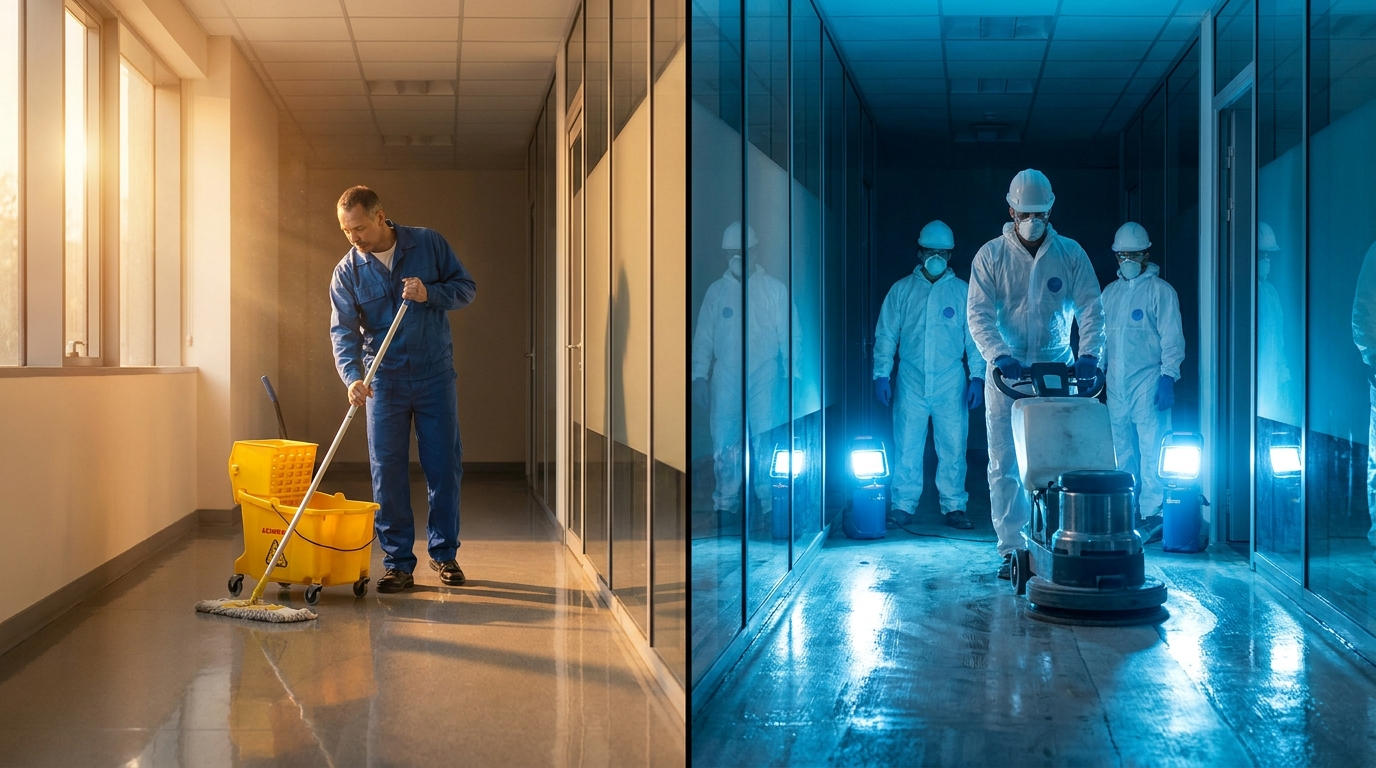
Janitorial services cover routine, recurring tasks like trash removal, restroom sanitation, and daily mopping. Commercial cleaning is a broader category that includes janitorial work plus specialty services such as floor stripping and waxing, carpet extraction, post-construction cleanup, and deep disinfection. The main distinction comes down to frequency and scope: janitorial maintains cleanliness daily, while commercial cleaning restores, refreshes, or remediates with specialized equipment.
- Janitorial services occur daily or 3-5 times weekly; commercial cleaning is scheduled monthly, quarterly, or as needed
- Janitorial costs $0.20-$0.28 per square foot monthly (5x weekly); specialty commercial cleaning is priced per project
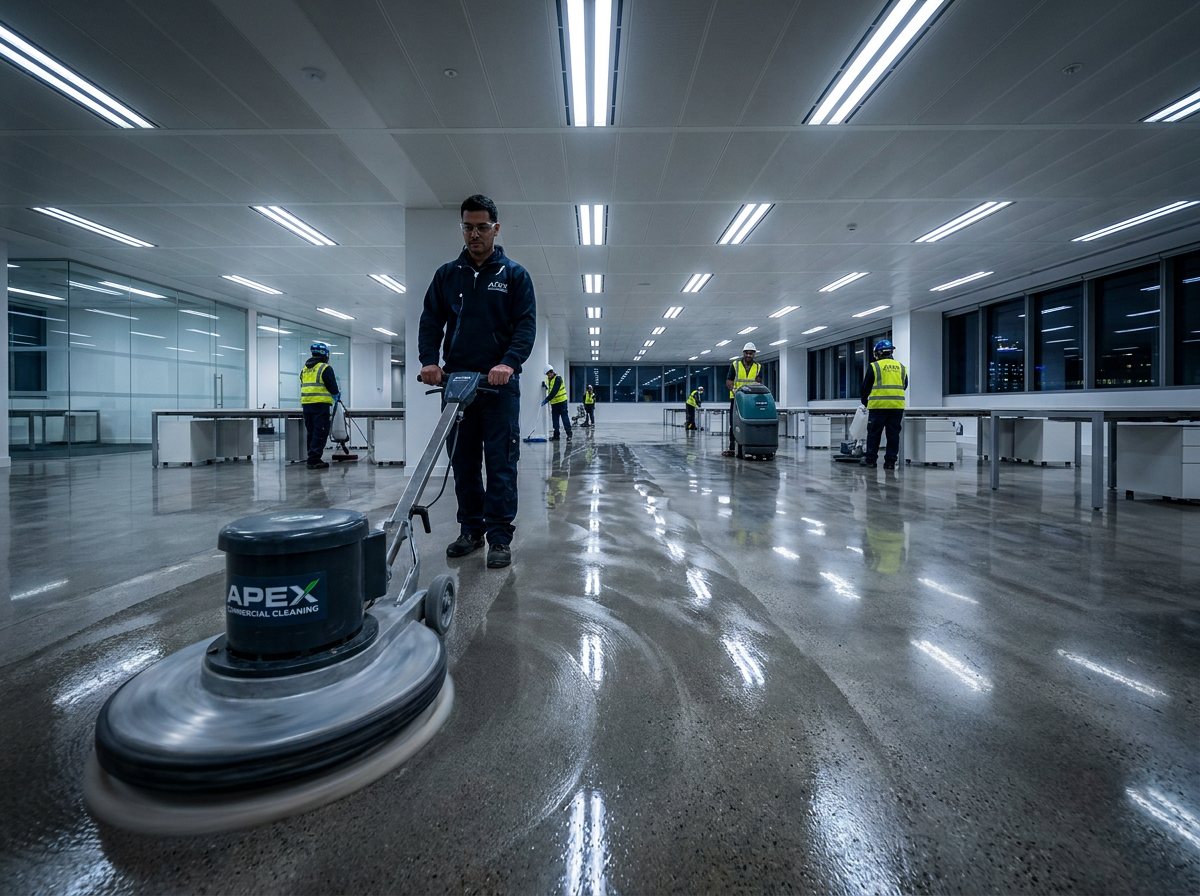
- Commercial cleaning requires specialized equipment like auto-scrubbers, buffers, and extractors
- Most facilities need both: janitorial for maintenance plus commercial cleaning for periodic restoration
Defining Janitorial Services
Janitorial services refer to the routine cleaning tasks performed on a scheduled basis to maintain a facility's baseline cleanliness. According to JAN-PRO's industry overview, these services focus exclusively on day-to-day maintenance rather than intensive restoration work.
Standard janitorial tasks include emptying trash receptacles, sanitizing restrooms, vacuuming carpeted areas, mopping hard floors, wiping down surfaces, and cleaning break rooms. These activities require general cleaning supplies and equipment rather than specialized machinery.
Frequency typically ranges from daily service (5-7 days per week) for high-traffic facilities to 2-3 times weekly for smaller offices. Healthcare facilities, schools, and retail spaces often require daily janitorial service to meet hygiene standards.
Common Janitorial Service Tasks
- Trash and recycling removal from all areas
- Restroom cleaning, sanitization, and restocking supplies
- Vacuuming carpets and rugs in traffic areas
- Dust mopping and wet mopping hard floors
- Surface wiping on desks, counters, and common areas
- Break room and kitchen cleaning
- Glass and mirror cleaning at entry points
- Spot cleaning visible stains or spills
Defining Commercial Cleaning Services
Commercial cleaning encompasses all cleaning services performed in business environments, including janitorial work plus specialty and project-based services. As Nilfisk's professional cleaning guide explains, routine janitorial work ensures a clean environment daily, while scheduled commercial cleaning addresses long-term maintenance and hygiene needs.
Specialty commercial cleaning services require trained technicians and professional-grade equipment. Floor stripping and waxing, for example, involves removing old finish with chemical strippers, preparing the surface, and applying 3-5 coats of commercial floor finish. This process takes 4-8 hours for a 5,000 square foot space.
Other commercial cleaning specialties include carpet extraction using truck-mounted equipment, marble and terrazzo polishing with diamond abrasives, tile and grout restoration, and electrostatic disinfection for healthcare environments.
Specialty Commercial Cleaning Services
- Floor stripping, waxing, and refinishing (VCT, LVT, vinyl)
- Carpet deep cleaning and extraction
- Hard floor scrubbing and recoating
- Natural stone polishing (marble, terrazzo, granite)
- Tile and grout deep cleaning and sealing
- Post-construction cleanup
- Pressure washing exterior surfaces
- Air duct and HVAC cleaning
- Electrostatic disinfection
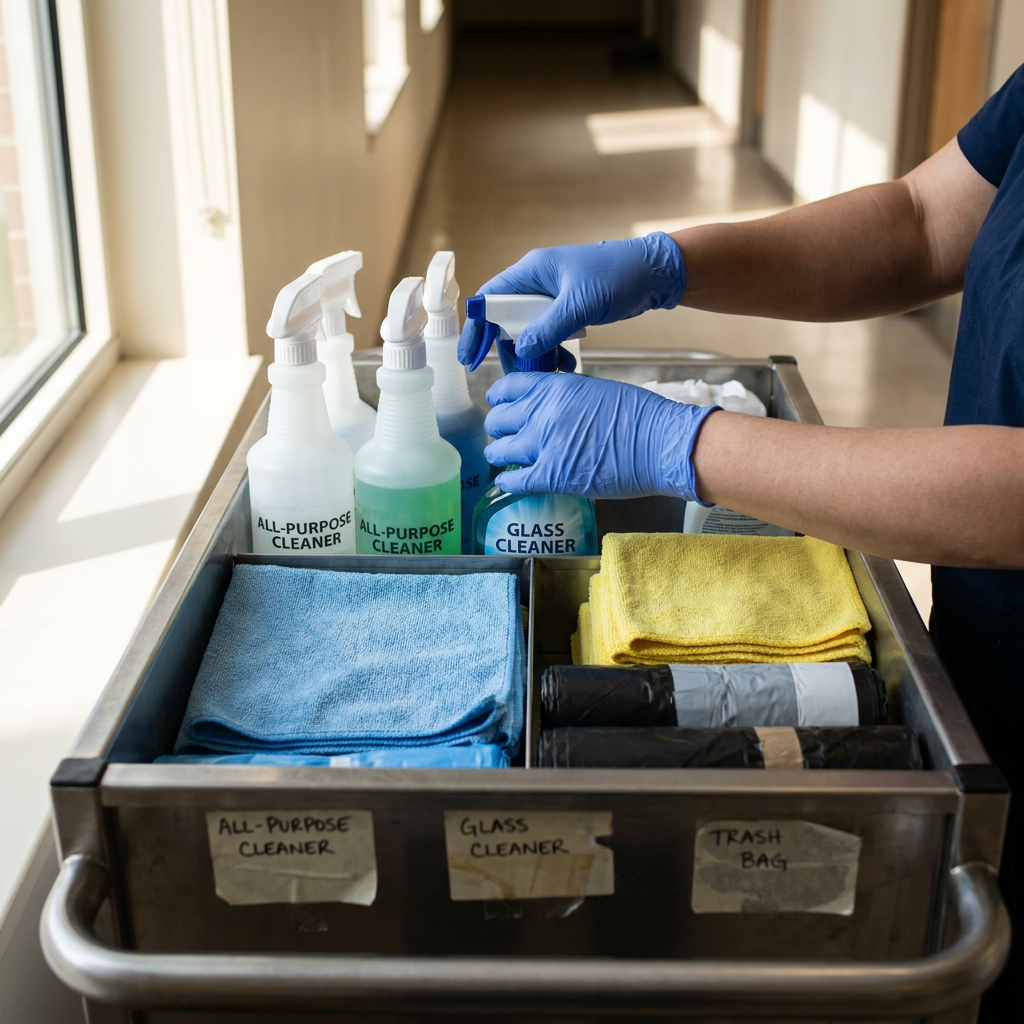
Side-by-Side Comparison: Janitorial vs Commercial Cleaning
Understanding the practical differences helps facility managers budget appropriately and scope cleaning programs correctly. The table below summarizes how these service categories differ across key factors.
| Factor | Janitorial Services | Commercial Cleaning |
|---|---|---|
| Frequency | Daily to weekly (recurring schedule) | Monthly, quarterly, or project-based |
| Scope | Maintenance and upkeep | Restoration, deep cleaning, specialty work |
| Equipment | Mops, vacuums, basic supplies | Auto-scrubbers, buffers, extractors, sprayers |
| Training Required | General cleaning procedures | Equipment certification, chemical handling |
| Pricing Model | Monthly contract ($0.20-$0.28/sq ft) | Per project or per visit ($0.85-$1.20/sq ft for floor work) |
| Typical Duration | 2-4 hours per visit | 4-12 hours depending on service |
| Results | Maintains cleanliness standards | Restores appearance, extends asset life |
Pricing Differences: What to Expect
Janitorial services are typically priced as recurring monthly contracts based on square footage and service frequency. According to industry data from the Building Service Contractors Association International (BSCAI), small offices (under 5,000 square feet) pay $600-$1,200 monthly for 5x weekly janitorial service. Medium facilities (5,000-15,000 square feet) range from $1,200-$3,000 monthly.
Commercial cleaning specialty services use project-based pricing. Floor stripping and waxing costs $0.85-$1.20 per square foot in South Florida markets. Carpet extraction runs $0.15-$0.35 per square foot. These services are scheduled quarterly, semi-annually, or annually depending on traffic levels.
A 10,000 square foot medical office might budget $2,000 monthly for janitorial service plus $1,500-$2,000 quarterly for floor maintenance. This combined approach keeps daily operations clean while preserving flooring investments long-term.
Which Service Does Your Facility Need?
Most commercial facilities require both janitorial services and periodic commercial cleaning. The question is not which one to choose but how to balance both within your maintenance budget. As US&S facility management guidance notes, janitorial cleaning focuses on daily maintenance while commercial cleaning provides deeper, specialized work on a less frequent schedule.
Janitorial-Only May Work If:
- Your facility has low foot traffic (under 50 visitors daily)
- Flooring is new and under warranty with minimal wear
- Budget constraints limit periodic specialty work
- Lease terms include landlord-provided deep cleaning
Add Commercial Cleaning Services When:
- VCT or vinyl floors show scuff marks, yellowing, or worn finish
- Carpets have visible traffic lanes or embedded soil
- Grout lines are discolored despite regular mopping
- Indoor air quality complaints increase (HVAC cleaning needed)
- Post-construction dust remains after renovation
- Healthcare compliance requires documented deep disinfection
Industry-Specific Considerations
Different facility types have unique cleaning requirements that affect the janitorial versus commercial cleaning balance. Healthcare facilities face the most stringent standards, with CDC and OSHA guidelines requiring documented disinfection protocols beyond standard janitorial scope.
Healthcare Facilities
Hospitals and clinics need daily janitorial service plus specialized commercial cleaning for infection control. This includes tile and grout deep cleaning in patient areas, cubicle curtain sanitization, and equipment disinfection for stretchers and wheelchairs. The Joint Commission and state health departments audit these protocols during inspections.
Educational Institutions
Schools require 5x weekly janitorial service during academic sessions plus summer deep cleaning programs. Floor stripping and waxing typically occurs during breaks when classrooms are empty. The average K-12 school spends $3.50-$4.50 per square foot annually on combined cleaning services according to American School & University facility benchmarks.
Retail and Hospitality
Customer-facing businesses prioritize appearance, requiring both frequent janitorial service and periodic floor restoration. Retail stores with polished concrete or VCT floors typically schedule scrub and recoat services every 60-90 days to maintain shine in high-traffic areas.
Office Buildings
Class A office space commands premium rents and requires corresponding maintenance standards. Building managers typically contract janitorial service 5x weekly with quarterly carpet cleaning and annual floor refinishing. Common areas like lobbies may need more frequent attention than tenant spaces.
The Four Types of Commercial Cleaners
Understanding cleaner categories helps specify the right products for each task. The Occupational Safety and Health Administration (OSHA) and Environmental Protection Agency (EPA) classify commercial cleaning products into four main categories based on their function and active ingredients.
Detergents are surfactant-based cleaners that lift soil and grease from surfaces. They work on most daily cleaning tasks but do not kill pathogens. Examples include dish soap, all-purpose cleaners, and floor cleaning solutions.
Disinfectants are EPA-registered products that kill bacteria, viruses, and fungi on hard surfaces. They require specific contact times (typically 1-10 minutes) to achieve stated efficacy. Quaternary ammonium compounds and sodium hypochlorite solutions are common active ingredients.
Sanitizers reduce bacterial counts to safe levels as defined by public health standards. They are less potent than disinfectants but work faster, making them suitable for food contact surfaces. Sanitizers must reduce bacteria by 99.9% within 30 seconds.
Degreasers are alkaline-based cleaners designed to cut through heavy grease and oil deposits. They are essential for commercial kitchens, automotive facilities, and industrial environments where standard detergents cannot penetrate accumulated grime.
Three Main Categories of Cleaning Services
The commercial cleaning industry organizes services into three primary categories based on scope and application. This framework helps facility managers communicate needs clearly when requesting quotes from service providers.
Routine cleaning encompasses daily janitorial tasks that maintain baseline cleanliness. This includes all standard janitorial services performed on a recurring schedule. The goal is preventing soil accumulation rather than removing embedded contamination.
Deep cleaning involves intensive, periodic cleaning that addresses areas beyond routine maintenance. This category includes carpet extraction, floor stripping, grout restoration, and air duct cleaning. Deep cleaning restores surfaces to near-original condition.
Specialty cleaning covers services requiring specific expertise, equipment, or certifications. Examples include biohazard remediation, post-construction cleanup, healthcare terminal cleaning, and natural stone restoration. These services often require documented training and specialized insurance coverage.
How to Choose the Right Cleaning Partner
Selecting a cleaning vendor requires evaluating capabilities across both janitorial and commercial cleaning categories. A provider offering only janitorial services may not have the equipment or expertise for periodic deep cleaning, forcing you to manage multiple vendors.
Request documentation of insurance coverage, including general liability (minimum $1 million per occurrence) and workers' compensation. Verify that the provider carries pollution liability if they perform pressure washing or use chemical strippers that generate wastewater.
Ask about equipment inventory. A capable commercial cleaning provider should own auto-scrubbers, carpet extractors, floor buffers, and pressure washing equipment rather than renting for each project. Owned equipment indicates established operations and consistent service capability.
Review references from facilities similar to yours in size and industry. A provider experienced with healthcare facilities understands compliance requirements that may not apply to general office cleaning. Industry-specific experience reduces the learning curve and compliance risk.
Frequently Asked Questions
Is janitorial the same as commercial cleaning?
No. Janitorial services are a subset of commercial cleaning focused on routine, recurring maintenance tasks. Commercial cleaning is the broader category that includes janitorial work plus specialty services like floor restoration, carpet extraction, and deep disinfection. Think of janitorial as daily maintenance and commercial cleaning as the full spectrum of business cleaning services.
What is the going rate for janitorial cleaning?
Janitorial services typically cost $0.20-$0.28 per square foot monthly for 5x weekly service in South Florida markets. A 5,000 square foot office pays $600-$1,200 monthly. Rates vary by frequency, scope, and geographic location. Healthcare facilities and spaces requiring after-hours service command premium pricing of 15-25% above standard rates.
What are the four types of cleaners?
The four main cleaner types are detergents (lift soil with surfactants), disinfectants (kill pathogens with EPA-registered active ingredients), sanitizers (reduce bacteria to safe levels quickly), and degreasers (cut through heavy grease with alkaline chemistry). Each serves a distinct purpose, and proper cleaning programs use the right product for each task.
What are the three types of cleaning services?
Commercial cleaning divides into routine cleaning (daily janitorial maintenance), deep cleaning (periodic intensive restoration like floor stripping and carpet extraction), and specialty cleaning (services requiring specific expertise such as biohazard remediation or natural stone polishing). Most facilities need all three categories on different schedules.
Is floor stripping and waxing janitorial or commercial cleaning?
Floor stripping and waxing falls under commercial cleaning, specifically the deep cleaning or specialty category. This service requires trained technicians, professional equipment, and specialized chemicals. It is performed quarterly to annually rather than as part of routine janitorial schedules. The process takes 4-8 hours and requires floor closure during application and curing.
How often should commercial floors be stripped and waxed?
High-traffic facilities like retail stores and schools need floor stripping and waxing every 6-12 months. Lower-traffic offices may extend to 12-18 months between full strip cycles. Between stripping, schedule scrub and recoat services every 60-90 days to maintain appearance and extend the time between full restorations.
Need Both Janitorial and Specialty Floor Care?
MB Floor Solutions LLC provides comprehensive commercial cleaning services across Miami-Dade, Broward, and Palm Beach Counties. From routine maintenance to specialty floor restoration, get a free on-site assessment for your facility.
Request Your Free Assessment