Discover the top summer cleaning challenges for commercial buildings and proven solutions. Learn how humidity, foot traffic, and heat impact your facility.
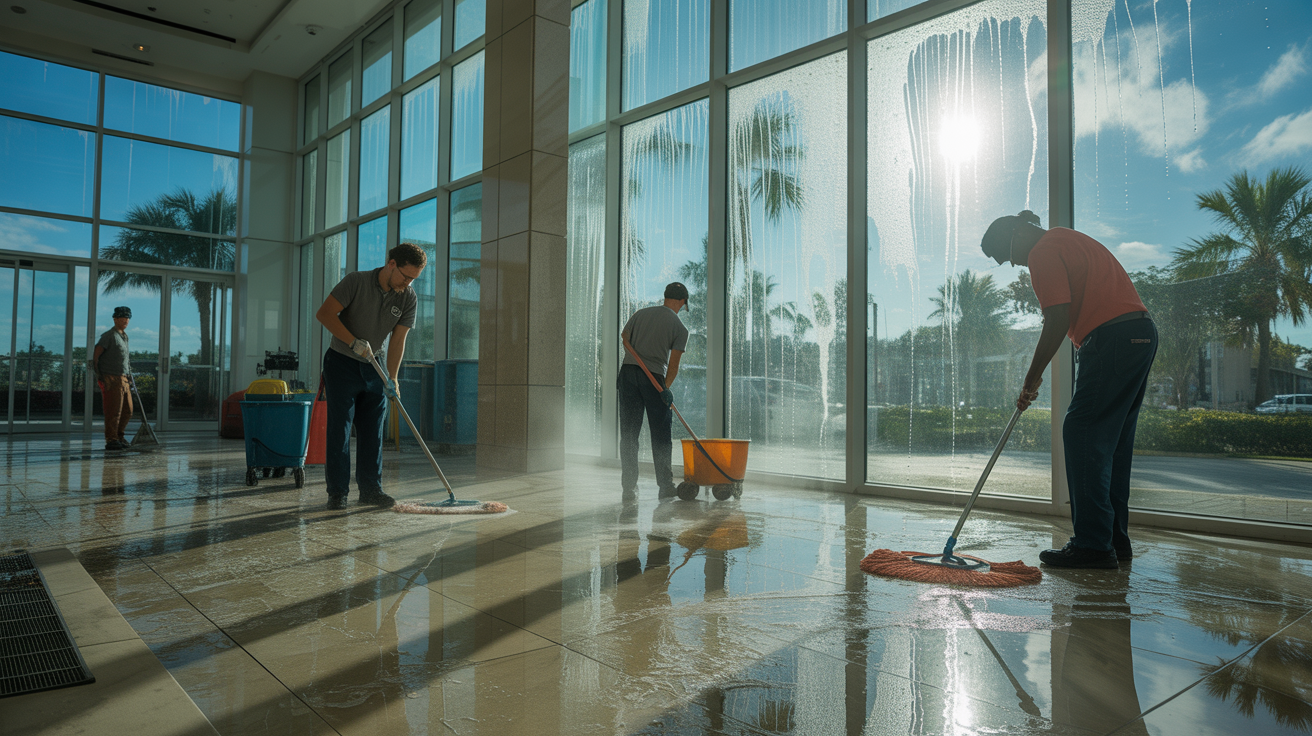
Commercial buildings face five primary summer cleaning challenges: humidity-driven mold growth, increased foot traffic debris, HVAC system strain, elevated pest activity, and accelerated waste accumulation. South Florida facilities experience these issues at higher intensity, with humidity levels reaching 80-90% and temperatures exceeding 90 degrees Fahrenheit from June through September.
- 70% of commercial facilities report HVAC mold spikes during summer months
- Cleaning frequency must increase 30-40% in high-traffic areas during peak summer
- Humidity above 60% accelerates bacterial growth on surfaces within 24-48 hours
- Commercial buildings see 25% higher waste volumes in retail spaces during summer
- HVAC filters require replacement every 30-45 days instead of the standard 90-day cycle
Humidity and Mold Growth: The Primary Summer Threat
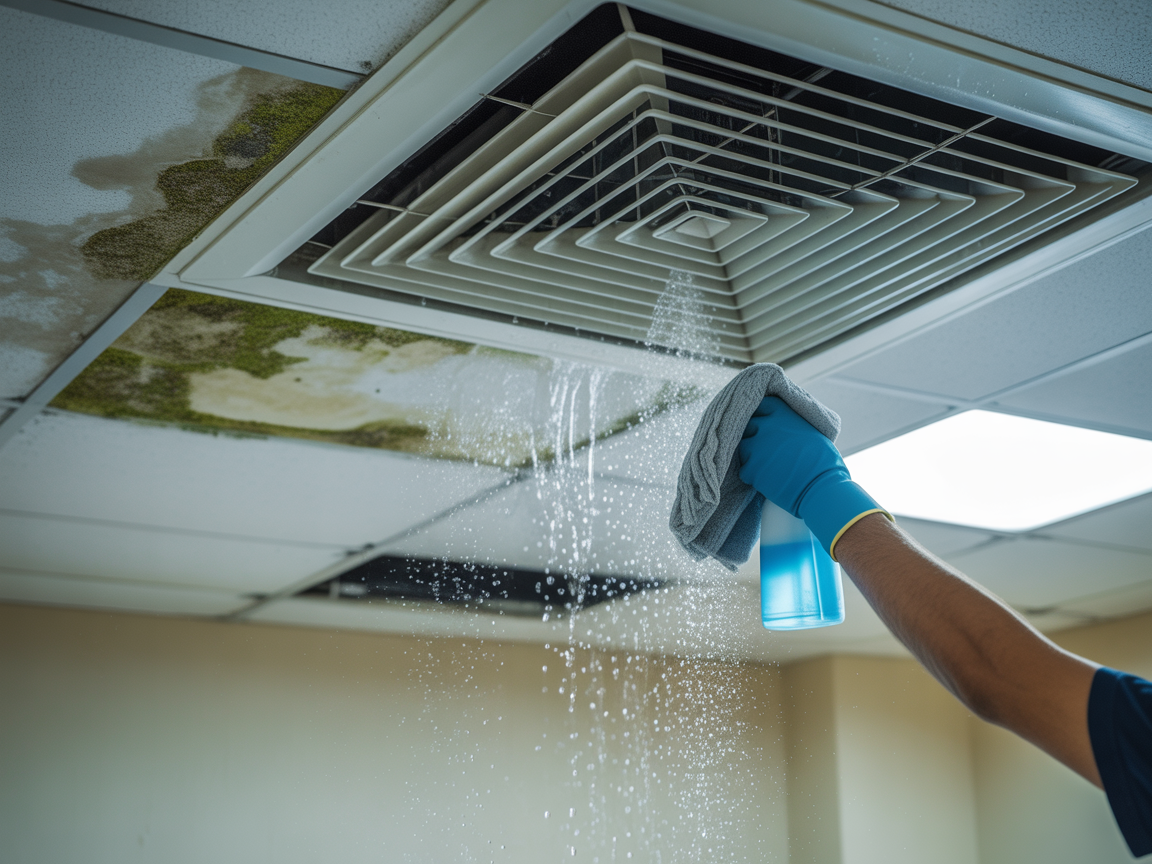
South Florida's summer humidity creates ideal conditions for mold colonization in commercial spaces. Mold spores germinate within 24-48 hours when relative humidity exceeds 60%, and summer months in Miami-Dade, Broward, and Palm Beach counties consistently reach 75-90% humidity. Healthcare facilities, offices, and retail spaces face particular vulnerability in areas with poor air circulation.
The financial impact is significant. Mold remediation costs range from $10-25 per square foot for surface treatment, escalating to $50-75 per square foot for structural remediation. Prevention through proper cleaning protocols costs a fraction of reactive treatment, typically $0.15-0.30 per square foot for enhanced summer cleaning schedules.
High-Risk Areas for Mold Development
Restrooms, break rooms, and areas near exterior doors experience the highest mold risk. HVAC drip pans accumulate standing water that becomes a breeding ground within 48 hours if not properly maintained. Carpeted areas near entrances trap moisture from foot traffic, creating hidden mold colonies beneath the surface.
Our commercial cleaning services include targeted humidity monitoring and treatment protocols specifically designed for South Florida's climate conditions.
Increased Foot Traffic and Floor Maintenance Demands
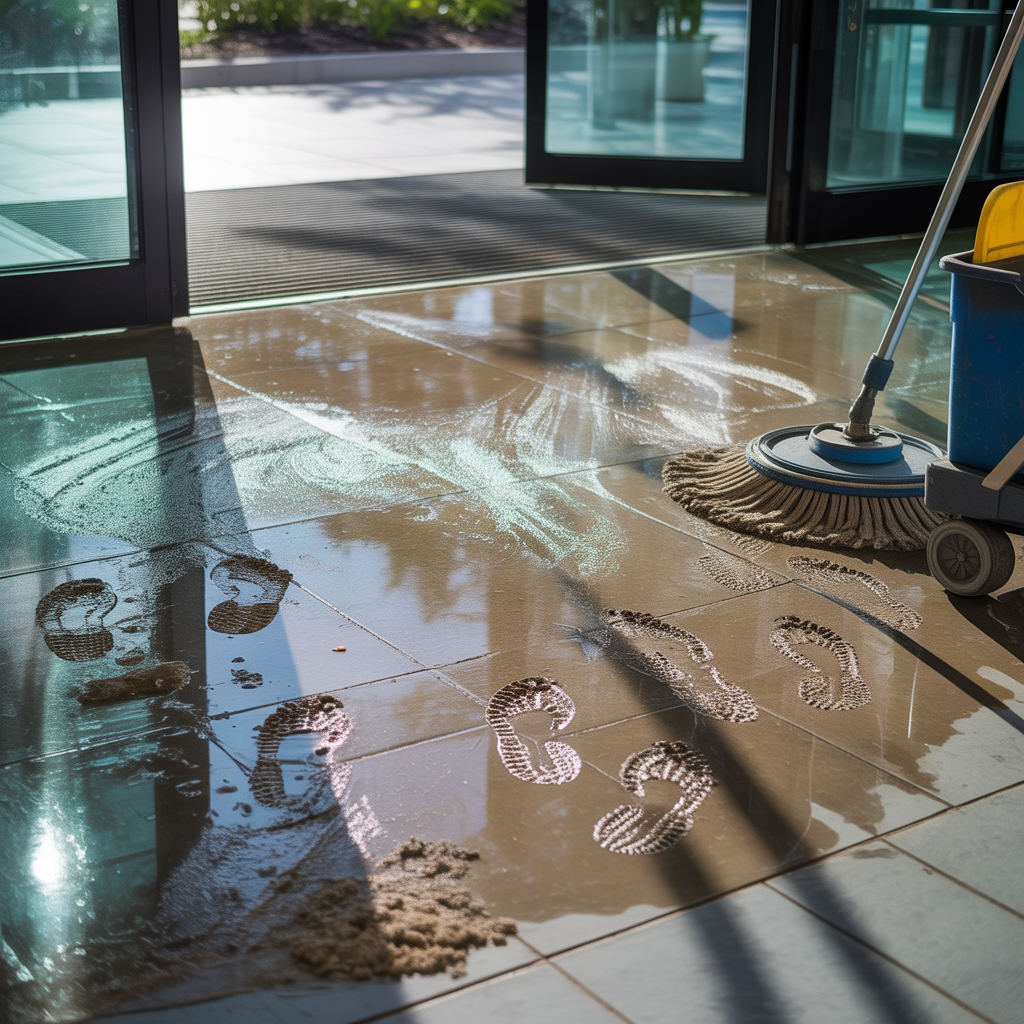
Summer brings 20-35% more foot traffic to retail spaces and commercial buildings as tourism peaks and school schedules shift. This increased activity deposits sand, dirt, pollen, and moisture throughout facilities. Entry points become particularly problematic, with tracked-in debris spreading 15-20 feet into buildings during rainy summer afternoons.
Hard surface floors require cleaning frequency increases from daily to twice-daily in high-traffic zones. Carpet areas need extraction cleaning every 2-3 weeks instead of monthly schedules. The combination of outdoor debris and air conditioning creates rapid soil accumulation as temperature differentials cause moisture condensation on floor surfaces.
Floor Type-Specific Summer Challenges
| Floor Type | Summer Challenge | Recommended Frequency |
|---|---|---|
| VCT/LVT | Finish breakdown from humidity | Strip and refinish every 4-6 months |
| Marble/Terrazzo | Etching from acidic spills | Polish quarterly, seal annually |
| Carpet | Moisture retention, mold growth | Extract every 2-3 weeks |
| Concrete | Oil and fluid staining | Scrub weekly, seal every 6 months |
Professional floor maintenance using auto-scrubber technology removes embedded debris that traditional mopping leaves behind. This equipment extracts soil while applying cleaning solution, preventing the moisture accumulation that accelerates summer floor degradation.
HVAC System Strain and Air Quality Degradation
Commercial HVAC systems work 40-60% harder during South Florida summers, running nearly continuously to maintain comfortable temperatures. This increased operation circulates more air through filters, accelerating clogging and reducing efficiency. A system running at 80% efficiency due to dirty filters increases energy costs by 15-20% while simultaneously degrading indoor air quality.
Outdoor condenser units accumulate debris from summer storms, landscaping activities, and increased pollen counts. Vegetation growing within 2 feet of units restricts airflow, forcing compressors to work harder and shortening equipment lifespan. Professional cleaning of condenser coils every 4-6 weeks during summer maintains optimal efficiency.
Indoor Air Quality Metrics
Summer pollen counts in South Florida reach 500-1,000 grains per cubic meter during peak periods. Combined with mold spores from humidity, indoor air quality can deteriorate rapidly without proper filtration and cleaning. Healthcare facilities require HEPA filtration and surface cleaning protocols that capture 99.97% of particles 0.3 microns and larger.
Ductwork accumulates dust and biological contaminants at accelerated rates during summer. Professional duct cleaning every 12-18 months, with inspections every 6 months during high-use seasons, prevents recirculation of allergens and pathogens throughout commercial spaces.
Pest Activity and Prevention Challenges
Summer heat drives pests indoors seeking cooler temperatures and water sources. Commercial buildings experience 45-60% increases in pest sightings from June through September. Ants, roaches, and flies become particularly problematic in food service areas, break rooms, and restrooms where moisture and organic matter accumulate.
Cleaning protocols must address pest prevention through elimination of food sources and moisture. Trash receptacles require daily sanitization during summer months. Floor drains need weekly treatment with enzymatic cleaners to prevent organic buildup that attracts pests. Exterior entry points require inspection and sealing as part of comprehensive summer maintenance.
Critical Pest Prevention Cleaning Tasks
- Daily: Empty and sanitize all trash receptacles, wipe food preparation surfaces, clean spills immediately
- Weekly: Deep clean floor drains, sanitize dumpster areas, inspect and clean entry mats
- Monthly: Clean behind and under equipment, inspect storage areas, treat exterior perimeter
- Quarterly: Professional pest inspection, seal identified entry points, replace worn door sweeps
Waste Management and Odor Control
Summer heat accelerates organic waste decomposition, creating odor issues within 4-8 hours instead of the 24-48 hours typical in cooler months. Commercial buildings with food service operations face particular challenges as dumpster areas become breeding grounds for bacteria and pests. Philadelphia's recent mandate requiring recycling plans for all commercial properties reflects growing regulatory attention to waste management compliance.
Retail spaces experience 25% higher waste volumes during summer tourism peaks. This increased volume, combined with faster decomposition rates, requires more frequent collection schedules. Interior trash receptacles need twice-daily service in high-traffic areas, and exterior dumpsters may require daily pickup instead of standard twice-weekly service.
Odor Control Strategies
Enzymatic cleaners break down organic matter at the molecular level, eliminating odor sources rather than masking them. Application to trash receptacles, drains, and dumpster areas creates lasting odor control that survives South Florida's summer heat. Standard deodorizers evaporate within 2-4 hours at temperatures above 85 degrees Fahrenheit, making enzymatic treatment the more effective long-term solution.
Restroom odor control requires increased attention during summer months. Higher humidity prevents natural evaporation of moisture, allowing bacteria to thrive on surfaces. Touchpoint sanitization frequency should increase from twice daily to every 4-6 hours in facilities with heavy traffic.
Staff Scheduling and Vacation Coverage
Summer vacation schedules create staffing gaps that impact cleaning consistency. Facilities report 20-30% staff shortages during peak vacation weeks from mid-June through mid-August. This reduction in available personnel coincides with increased cleaning demands, creating a significant operational challenge.
Cross-training staff on multiple cleaning functions provides flexibility during shortage periods. Prioritization matrices help teams focus on critical tasks when operating with reduced personnel. High-touch surfaces, restrooms, and entry points maintain standard frequencies while lower-priority tasks shift to extended schedules temporarily.
Outsourcing Considerations
Professional cleaning services offer scalable solutions during summer staffing challenges. Contract cleaning provides consistent coverage regardless of vacation schedules, with trained personnel who understand seasonal cleaning requirements. Experienced commercial cleaning partners maintain staffing levels through cross-training and flexible scheduling that in-house teams often cannot match.
The cost comparison favors outsourcing for many facilities. In-house cleaning staff costs $15-22 per hour plus benefits, training, equipment, and supervision overhead. Professional services typically range from $0.08-0.15 per square foot, with all personnel, equipment, and supplies included.
Energy Efficiency and Cleaning Coordination
Commercial electricity demand rose 2% nationally through the first nine months of 2025, driven partly by hot summers increasing cooling needs. Cleaning operations must coordinate with energy management to minimize additional heat generation and HVAC strain. Scheduling floor care equipment operation during off-peak hours reduces both energy costs and interference with building cooling systems.
Auto-scrubbers and carpet extractors generate heat during operation. Running this equipment during early morning or evening hours, when outdoor temperatures drop and HVAC systems face less demand, reduces overall energy consumption by 8-12%. This scheduling also allows floors to dry before peak occupancy, reducing slip hazards.
Sustainable Cleaning Practices
Low-odor chemistry reduces volatile organic compound emissions that contribute to indoor air quality degradation and HVAC system strain. Professional-grade cleaning products designed for commercial applications provide effective cleaning with minimal environmental impact. These products also reduce the need for ventilation during and after cleaning, preserving conditioned air.
Water-efficient cleaning methods become particularly important during summer drought conditions common in South Florida. Auto-scrubber technology uses 50-70% less water than traditional mop-and-bucket methods while achieving superior soil removal. This efficiency reduces both water consumption and drying time.
Healthcare Facility-Specific Summer Challenges
Healthcare facilities face heightened summer cleaning requirements due to infection control standards and vulnerable patient populations. Summer respiratory illness patterns differ from winter, with increased cases of fungal infections and heat-related conditions that require modified cleaning protocols. Surface contamination rates increase 15-25% during summer months due to higher pathogen survival rates in humid conditions.
Operating rooms, patient rooms, and waiting areas require enhanced disinfection frequencies during summer. Terminal cleaning protocols may need modification to address humidity-related contamination risks. Our healthcare facility cleaning expertise includes understanding of Joint Commission requirements and CDC guidelines for seasonal infection control.
Compliance Documentation
Regulatory inspections often increase during summer months as health departments respond to seasonal illness patterns. Maintaining detailed cleaning logs with timestamps, products used, and staff signatures provides documentation for compliance verification. Digital logging systems enable real-time tracking and immediate access to historical records during inspections.
Frequently Asked Questions
What are the best HVAC maintenance tips for summer in commercial buildings?
Replace filters every 30-45 days during summer instead of the standard 90-day cycle. Clean condenser coils monthly and maintain 2-foot clearance around outdoor units. Schedule professional tune-ups in late spring before peak cooling demand begins. Monitor refrigerant levels and inspect ductwork for leaks that reduce efficiency by 20-30%.
How do summer heat waves impact energy costs for office cleaning?
Heat waves increase cleaning-related energy costs by 15-25% due to extended HVAC operation during equipment use. Scheduling floor care during off-peak hours (before 7 AM or after 7 PM) reduces this impact. Using low-heat equipment and ensuring proper ventilation coordination minimizes additional cooling demands.
What recycling compliance rules apply to commercial properties in summer?
Commercial recycling requirements vary by municipality, but enforcement often increases during summer due to higher waste volumes. Philadelphia now mandates recycling plans for all commercial properties with inspection reports beginning summer 2026. South Florida jurisdictions require separation of recyclables with fines ranging from $100-500 per violation.
How do you prevent mold growth during humid summer months in warehouses?
Maintain relative humidity below 60% through dehumidification and ventilation. Clean and dry any water intrusion within 24 hours. Apply antimicrobial treatments to susceptible surfaces monthly. Ensure adequate air circulation with industrial fans positioned to eliminate dead air zones where moisture accumulates.
What sustainable cleaning practices reduce waste in retail spaces year-round?
Implement concentrated cleaning products that reduce packaging waste by 80%. Use microfiber systems that eliminate disposable mop heads and reduce water consumption by 90%. Establish recycling stations with clear signage to improve customer compliance. Partner with waste management services offering composting for organic materials.
Creating Your Summer Cleaning Action Plan
Effective summer cleaning requires proactive planning rather than reactive responses. Begin preparation in late April or early May by auditing current cleaning frequencies, inspecting HVAC systems, and reviewing staffing schedules for vacation coverage. This 4-6 week lead time allows for equipment maintenance, supply ordering, and staff training before summer demands peak.
Document baseline conditions including floor appearance, air quality readings, and pest activity levels. These benchmarks enable objective evaluation of summer cleaning effectiveness and support budget justifications for enhanced services. Regular photography of high-traffic areas provides visual documentation of maintenance standards.
Partner with professional cleaning services that understand South Florida's unique summer challenges. Local expertise in humidity management, storm response, and tourism-driven traffic patterns ensures appropriate service levels throughout the season. Request a consultation to develop a customized summer cleaning protocol for your facility.
Prepare Your Facility for Summer Cleaning Challenges
MB Floor Solutions provides professional commercial cleaning services throughout Miami-Dade, Broward, and Palm Beach counties. Our team understands South Florida's unique summer demands and delivers consistent results with 24/7 flexible scheduling.
Get a Free Quote Today