Introduction: The Science of Professional Floor Maintenance Scheduling
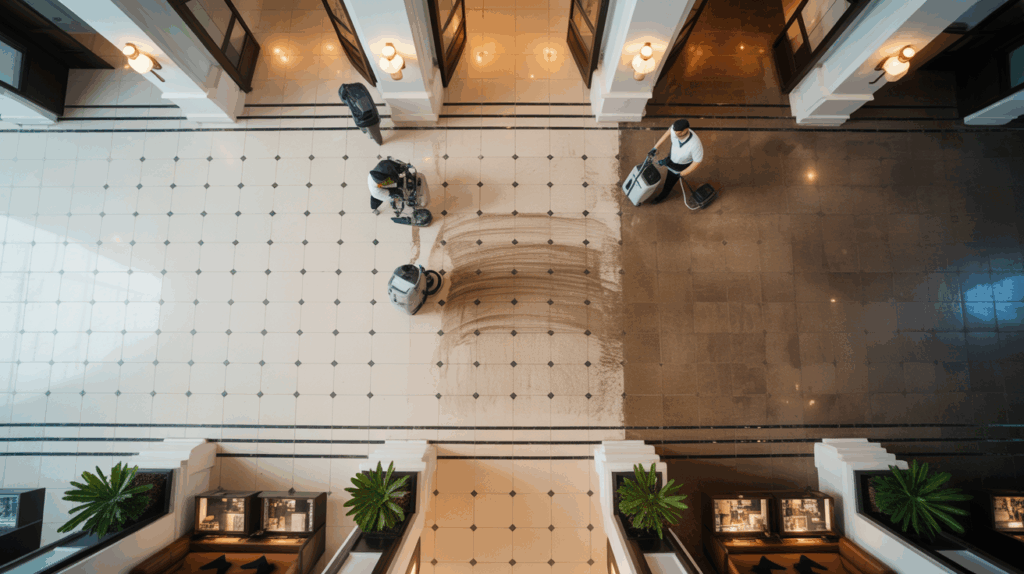
Professional floor maintenance services require strategic scheduling to deliver optimal results while maximizing your investment. In Miami's demanding commercial environment, the difference between proper and improper maintenance scheduling can mean the difference between floors lasting 15 years versus 6 years.
After managing maintenance schedules for over 500 commercial properties across Miami-Dade, Broward, and Palm Beach counties, we've identified the precise scheduling formulas that maximize floor performance while minimizing disruption and costs.
This comprehensive guide provides the exact scheduling frameworks used by successful South Florida businesses to maintain pristine floors year-round.
Understanding Professional Floor Maintenance Services
Core Service Categories
Professional floor maintenance services encompass multiple service levels, each requiring different scheduling approaches:
Daily Maintenance Services:
- Surface cleaning: Dust mopping, spot cleaning, entrance maintenance
- Traffic area attention: High-wear zone care and protection
- Safety maintenance: Spill response and slip hazard elimination
- Appearance upkeep: Maintaining professional presentation standards
Periodic Deep Services:
- Machine scrubbing: Deep cleaning with professional equipment
- Extraction cleaning: Moisture and soil removal from floor surfaces
- Protective treatments: Wax application, sealing, and coating renewal
- Restoration services: Stripping, refinishing, and surface repair
Specialized Services:
- Stone polishing: Marble, terrazzo, and granite restoration
- Concrete polishing: Surface enhancement and protection
- Grout cleaning: Deep sanitization and sealing
- Emergency response: Damage repair and urgent cleaning
Service Frequency Factors
Determining optimal maintenance frequency requires analyzing multiple variables unique to each Miami commercial facility:
Primary Scheduling Variables:
- Light traffic (under 50 people daily): Reduces maintenance frequency by 30-50%
- Moderate traffic (50-200 people daily): Standard scheduling applies
- Heavy traffic (200-500 people daily): Increases frequency by 50-100%
- Extreme traffic (500+ people daily): May require daily professional attention
Floor Material Considerations:
- Natural stone: Requires gentler, more frequent maintenance
- Sealed surfaces: Maintenance focused on protective coating preservation
- Porous materials: More frequent deep cleaning to prevent staining
- High-gloss finishes: Daily attention to maintain appearance standards
Environmental Factors:
- Miami humidity: Increases mold prevention requirements
- Salt air exposure: Accelerates maintenance needs near coast
- Construction activity: Temporary schedule increases during nearby projects
- Seasonal variations: Hurricane season and tourist influx adjustments
Comprehensive Scheduling Framework by Floor Type
Natural Stone Floor Maintenance Schedule
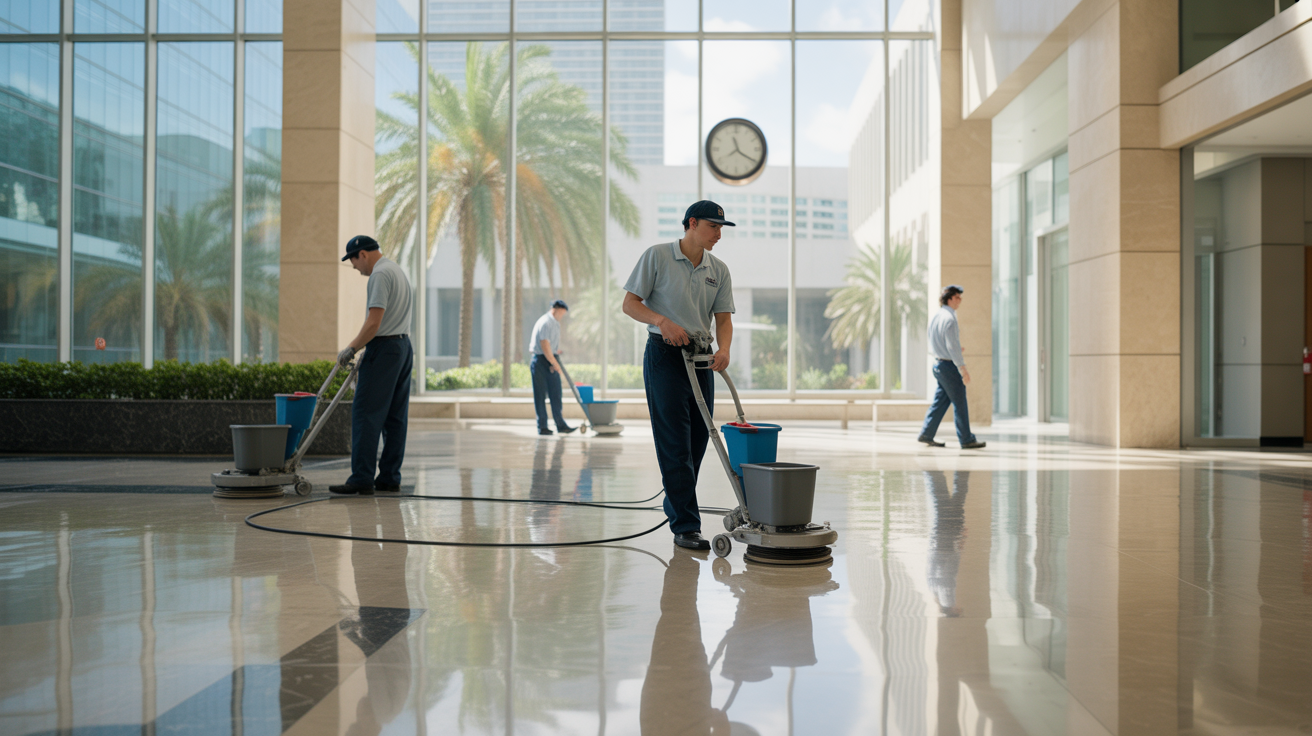
Marble, terrazzo, and limestone floors represent significant investments requiring specialized scheduling approaches in Miami's climate:
| Service Type | Light Traffic | Moderate Traffic | Heavy Traffic | Miami Climate Adjustment |
|---|---|---|---|---|
| Daily maintenance | 3x weekly | Daily | Daily + spot checks | +20% frequency |
| Deep cleaning | Monthly | Bi-weekly | Weekly | Hurricane season: +50% |
| Light polishing/buffing | Quarterly | Every 6-8 weeks | Every 4-6 weeks | Salt air areas: more frequent |
| Full restoration polishing | Every 2-3 years | Every 18-24 months | Annually | Professional assessment required |
| Sealing service | Annually | Annually | Every 8 months | Humidity consideration |
Vinyl and LVT Maintenance Schedule
Luxury vinyl tile and traditional vinyl flooring require different approaches than natural stone but benefit significantly from proper scheduling:
Optimal LVT Maintenance Frequency:
- Daily maintenance: High-traffic areas daily, other areas 3-5x weekly
- Machine scrubbing: Weekly to bi-weekly depending on traffic
- Deep extraction: Monthly in Miami's humidity (bi-weekly during rainy season)
- Protective coating renewal: Every 6-12 months based on wear patterns
- Strip and recoat: Every 18-36 months depending on traffic and maintenance quality
VCT (Vinyl Composite Tile) Schedule:
- Daily dust mopping: All areas with any foot traffic
- Wet mopping: High-traffic areas daily, others 3x weekly
- Machine scrubbing: Weekly minimum, high-traffic areas twice weekly
- Spray buffing: Monthly to maintain gloss and protection
- Strip and wax: Every 12-18 months or when buildup becomes visible
Concrete Floor Maintenance Schedule
Polished and sealed concrete floors have gained popularity in Miami commercial spaces due to durability and aesthetic appeal:
Polished Concrete Scheduling:
| Maintenance Level | Frequency | Service Description | Miami Considerations |
|---|---|---|---|
| Level 1 - Daily | Daily | Dust mopping, spot cleaning | Extra attention to salt tracking |
| Level 2 - Routine | 2-3x weekly | Damp mopping with neutral cleaner | pH-balanced for humidity |
| Level 3 - Periodic | Weekly | Machine scrubbing with auto scrubber | Enhanced for high-humidity removal |
| Level 4 - Intensive | Monthly | Deep cleaning with specialized equipment | Mold prevention protocols |
| Level 5 - Restoration | Annually | Repolishing and sealer application | Hurricane season assessment |
Traffic-Based Scheduling Optimization
High-Traffic Zone Management
Miami commercial facilities typically experience uneven traffic patterns requiring zone-based scheduling approaches:
Zone Classification System:
- Daily professional attention required
- Multiple service touchpoints throughout day
- Preventive treatments every 2-4 weeks
- Immediate response protocols for issues
- Daily maintenance with enhanced weekend service
- Weekly deep cleaning minimum
- Monthly protective treatments
- Quarterly assessment and adjustment
- 3-5x weekly routine maintenance
- Bi-weekly to monthly deep cleaning
- Quarterly protective treatments
- Semi-annual deep assessment
- 2-3x weekly basic maintenance
- Monthly deep cleaning adequate
- Semi-annual protective treatments
- Annual assessment and planning
Peak Hour Scheduling Strategies
Miami's diverse business environment requires scheduling that accommodates varying peak hours:
Business Type Scheduling Adaptations:
- Financial districts: Early morning (5-7 AM) and evening (6-8 PM) service windows
- Retail spaces: Late evening or early morning before opening
- Healthcare facilities: 24-hour rotating schedule with minimal disruption protocols
- Hospitality venues: Coordinated with guest patterns and event schedules
- Industrial facilities: Shift-change windows and scheduled downtime
Seasonal Scheduling Adjustments for South Florida
Hurricane Season Intensification
Miami's hurricane season (June-November) requires significant maintenance schedule modifications:
- Frequency increase: 50-100% more frequent deep cleaning due to tracked moisture
- Rapid response capability: 24-hour emergency service availability
- Preventive treatments: Enhanced sealing before storm season
- Post-storm protocols: Immediate assessment and restoration services
- Mold prevention: Aggressive moisture control and sanitization
Tourist Season Considerations
South Florida's peak tourist seasons (December-April, July-August) impact commercial floor maintenance needs:
Tourism Impact Adjustments:
- Increased foot traffic: 25-75% higher maintenance frequency
- Extended service hours: Accommodation of longer business hours
- Enhanced appearance standards: More frequent cosmetic treatments
- Rapid response protocols: Faster resolution of appearance issues
Rainy Season Adaptations
Miami's wet season (May-October) creates unique maintenance challenges requiring schedule modifications:
- Entrance area focus: Daily professional attention to high-moisture zones
- Moisture extraction: Weekly deep extraction vs. monthly during dry season
- Mold prevention: Enhanced sanitization and faster drying protocols
- Protective treatments: More frequent sealing and coating applications
Service Provider Scheduling Coordination
Multi-Service Integration
Professional floor maintenance services work best when integrated with other facility maintenance schedules:
Coordinated Service Planning:
- HVAC maintenance: Schedule floor care during system downtime
- Window cleaning: Coordinate to prevent floor damage from water
- Pest control: Floor treatments before and after pest service
- General cleaning: Integrate with overall facility maintenance
- Construction projects: Enhanced protection and post-project restoration
Quality Assurance Scheduling
Professional floor maintenance services include quality control measures that require their own scheduling:
Quality Control Schedule:
- Daily inspections: Service quality verification
- Weekly assessments: Detailed condition evaluation
- Monthly reporting: Comprehensive performance analysis
- Quarterly reviews: Schedule optimization and adjustment
- Annual planning: Strategic maintenance schedule development
Cost Optimization Through Strategic Scheduling
Schedule Efficiency Impact
Proper scheduling optimization can reduce total maintenance costs by 30-50% while improving results:
- Preventive focus: 60-80% reduction in emergency repair costs
- Traffic-based zones: 25-40% reduction in over-servicing waste
- Seasonal adjustments: 20-35% improvement in floor lifespan
- Integrated planning: 15-25% reduction in service redundancy
Long-Term Investment Protection
Strategic scheduling protects your floor investment through systematic care:
Investment Protection Benefits:
- Extended lifespan: Proper scheduling can double floor life expectancy
- Maintained appearance: Consistent professional presentation
- Warranty protection: Scheduled maintenance maintains manufacturer warranties
- Resale value: Well-maintained floors enhance property value
- Operational continuity: Reduced disruption from emergency repairs
Implementation Guide: Creating Your Optimal Schedule
Assessment and Planning Phase
Developing an effective maintenance schedule begins with comprehensive facility assessment:
Step 1: Facility Analysis
- Floor mapping: Document all floor types and their locations
- Traffic analysis: Monitor and measure actual traffic patterns
- Current condition assessment: Evaluate existing floor condition
- Environmental evaluation: Assess climate and exposure factors
- Business operation review: Understand peak hours and operational constraints
Step 2: Service Needs Determination
- Match floor types with appropriate service requirements
- Establish zone-based frequency requirements
- Identify seasonal adjustment needs
- Determine quality standards and expectations
- Plan integration with other facility services
Schedule Development and Optimization
Step 3: Initial Schedule Creation
- Base frequency establishment: Set minimum service levels
- Zone priority assignment: Allocate resources by importance
- Seasonal calendar development: Plan adjustments throughout year
- Quality checkpoints: Build in assessment and adjustment periods
- Emergency protocols: Establish rapid response procedures
Step 4: Implementation and Monitoring
- Begin with conservative frequency and adjust based on results
- Monitor floor condition and appearance continuously
- Track cost efficiency and budget performance
- Gather feedback from building occupants and visitors
- Document lessons learned and successful practices
Measuring Schedule Effectiveness
Key Performance Indicators
Track these metrics to ensure your floor maintenance schedule delivers optimal results:
Quantitative Measures:
- Cost per square foot: Annual maintenance expense tracking
- Emergency call frequency: Unscheduled service requirements
- Floor lifespan projections: Expected replacement timeline extensions
- Service compliance rates: Adherence to scheduled maintenance
- Seasonal cost variations: Budget predictability and control
Qualitative Assessments:
- Visual appearance consistency: Professional presentation maintenance
- Occupant satisfaction: Feedback on cleanliness and appearance
- Visitor impressions: First impression quality maintenance
- Safety incident reduction: Slip-and-fall prevention effectiveness
- Brand image support: Facility appearance alignment with brand standards
Schedule Adjustment Protocols
Effective schedules require regular evaluation and adjustment based on performance data:
Monthly Review Process:
- Analyze service delivery quality and consistency
- Review cost performance against budget
- Assess any emergency or unscheduled service needs
- Evaluate seasonal adjustment effectiveness
- Plan upcoming month's potential modifications
Quarterly Optimization:
- Comprehensive cost-benefit analysis
- Floor condition assessment and projection updates
- Seasonal schedule preparation and adjustment
- Service provider performance evaluation
- Annual budget planning and forecasting
Conclusion: Maximizing Your Floor Maintenance Investment
Professional floor maintenance services deliver maximum value when supported by strategic, data-driven scheduling. The difference between random maintenance and optimized scheduling can represent hundreds of thousands of dollars in savings and dramatically extended floor life.
Miami's unique climate and business environment make strategic scheduling even more critical. The combination of humidity, salt air, high traffic, and year-round operation creates challenges that proper scheduling addresses systematically.
Whether you manage a small office building or a large commercial complex, the principles remain constant: assess thoroughly, plan strategically, implement systematically, and adjust based on performance data.
Remember that professional floor maintenance services are an investment in your facility's long-term success. The right scheduling approach protects that investment while ensuring your business always presents its best image to clients, customers, and employees.
Ready to optimize your floor maintenance schedule?
Get a customized maintenance schedule analysis for your facility. Our experts serve Miami-Dade, Broward, and Palm Beach counties with proven scheduling strategies that maximize floor performance and minimize costs.
Professional floor maintenance services with optimized scheduling, comprehensive quality control, and guaranteed results throughout South Florida.
Get Your Custom Schedule AnalysisWhat maintenance scheduling challenges has your facility faced? Share your experience or contact us for personalized guidance on developing the optimal floor maintenance schedule for your specific needs.